


 EN
 ไทย


Customers Also Purchased


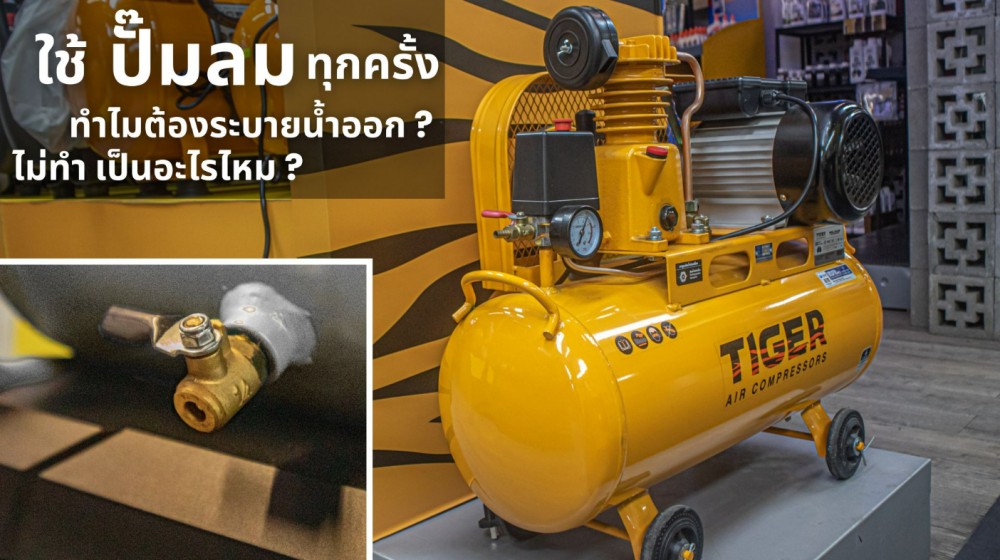
Why do technicians always recommend draining water from Air Pumps every time after use? If you have been using an air compressor for a while, I bet you have experienced this classic situation: finished with work, tired, packing up tools quickly, wanting to get home as fast as possible. But looking at the drain valve under the air tank, a question immediately pops into your head: "Is it really necessary to open and drain the water? Why do many technicians insist on it? And what happens if I don't drain it?"
Among general air compressor users, some might not even know what happens inside the compressor tank after running the machine all day long. In truth, "water" in the air tank is no small matter; it is the culprit that slowly destroys your air compressor without you realizing it. It all stems from simple, unavoidable physics when air is compressed into a tank.
In this article, we will delve into why water forms inside air tanks, what happens if you don't drain an air compressor, how often you should drain it, and why air tanks rust quickly even when the exterior looks pristine. All of this is extremely important, especially for those using pneumatic tools like paint spray guns, pneumatic staplers, or air nailers—from small air accessories all the way to those who just use an air compressor to inflate tires.
What causes water inside an air compressor tank?
Every time we use an air compressor, the unit draws in air and compresses it into a steel tank that is cooler than the outside air. This is the starting point of major ensuing problems: dropped air pressure, damaged pneumatic tools, and the tank rusting from the inside in a way many people never anticipated.
The short answer is condensation.
When an air compressor runs, it draws in ambient air and compresses it into the tank. The air we breathe every day naturally contains moisture, and since Thailand has a hot, humid climate, the air humidity is exceptionally high.
When air is compressed, pressure increases and temperature rises. When this hot air comes into contact with the cooler surface of the steel tank, the moisture instantly condenses into water.
Therefore, water starts accumulating in the air tank from the very first second you start using it. Whether it is a piston compressor (such as a belt-driven compressor or silent air compressor) or a rotary screw compressor, all types produce water; they only differ in volume.
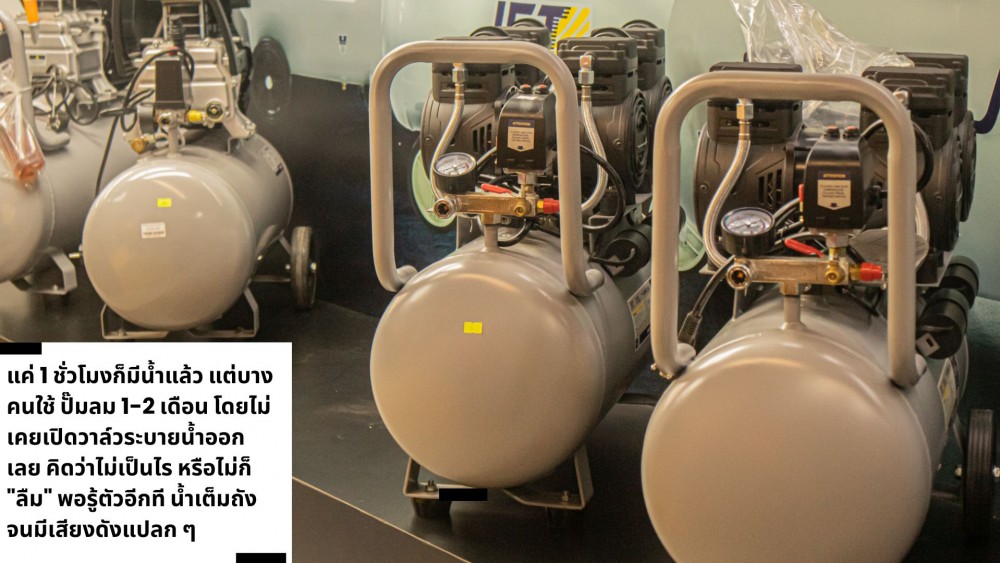
Why does an air tank rust when the exterior still looks brand new?
This is what I want everyone to understand most: rust in an air compressor tank usually starts from the "inside," not the painted, coated exterior that looks pristine and new. The interior is constantly exposed to moisture. Since some tank models are not coated with anti-rust protection on the inside, the risk is even higher. Even with a high-quality, high-priced tank, failing to drain the water leads to the same accumulation of moisture and rust.
What happens if you don't drain the water from an air compressor?
To be honest, it is much riskier than you think! The problems creep in quietly but can destroy everything related to the air compressor without most owners even realizing it. The longer it is left ignored, the more the damage accumulates exponentially. Sometimes by the time you notice, it is already too late. Let's take a look at the kinds of damage we are talking about.
1. The air compressor tank corrodes quickly and has a shorter lifespan than it should
Some people might wonder: What is the difference between a large and small air compressor tank besides storage capacity? Whether the tank is large or small, when water meets steel, it turns into rust. It's really that simple. The air tank is made of steel, and water remains stagnant at the bottom all the time. Combined with hot and humid weather like in Thailand, rust forms twice as fast.
When the tank begins to corrode, thin spots start to develop. And if the air tank ever bursts, it's no joke—the explosive force of compressed air in a tank is several times more powerful than a spray can. Fortunately, most air compressors use high-quality tanks and are equipped with safety valves. However, if the tank is substandard or severely corroded, dangerous accidents can occur that are certainly not worth the risk.
2. Water-contaminated air from the compressor significantly affects air tools
Air with mixed-in moisture can adversely affect everything used with that air compressor and cause cumulative damage throughout the pneumatic system without you even realizing it. For instance, it causes moisture buildup in the pipes, creating a mixture of scale and rust that gradually moves through the air system with every use. Eventually, it clogs air fittings or air valves—the heart of the air compressor system— and internal tool mechanisms, leading to jams, rough operation, or abnormal operating noises.
The more you keep using it, the deeper moisture penetrates into every corner of your pneumatic equipment, silently shortening its lifespan. For example:
- Paint spray guns: uneven color, paint spitting/bubbling, ruining the entire workpiece.
- Air nailers: jammed nails, trapped moisture in the magazine leading to rust.
- Air wrenches / impact wrenches: rusted bearings, abnormal noises.
- Air filters: shorter lifespan due to large amounts of rust.
Even when just inflating tires, moisture can still cause tire valves to deteriorate faster because of the contaminated air.
3. Air compressor loses pressure, fluctuates, and becomes frustrating to use
Having water in the air compressor tank—even a small amount—reduces the actual internal air volume. Therefore, when you use the compressor, air runs out faster, pressure drops more frequently, and the motor has to work much harder.
Many people wonder, "Why did my air compressor, which used to be so powerful, suddenly lose pressure?" One of the most common answers is that there is simply too much water accumulated in the tank.
4. Drain valves and pipes clog easily
The longer you go without draining, the more the bottom drain valve becomes clogged with rust scale, which forms from water deposits and rust flakes accumulating into thick layers. Once it gets stuck shut, you won't be able to drain the water at all.
This doesn't just risk tank corrosion, but it also causes valves to wear out faster than normal—requiring full replacements. In some cases, it can cause pressure inside the tank to build up higher than it should, increasing the risk of air tank leaks or ruptures in ways many people don't anticipate.
How often should you drain water from an air compressor?
In reality, draining water from an air compressor depends on usage. However, the simple rule of thumb is to look back at our actual usage patterns: how hard the air compressor works each day, how often it needs to compress air, and how much moisture is in the operating environment.
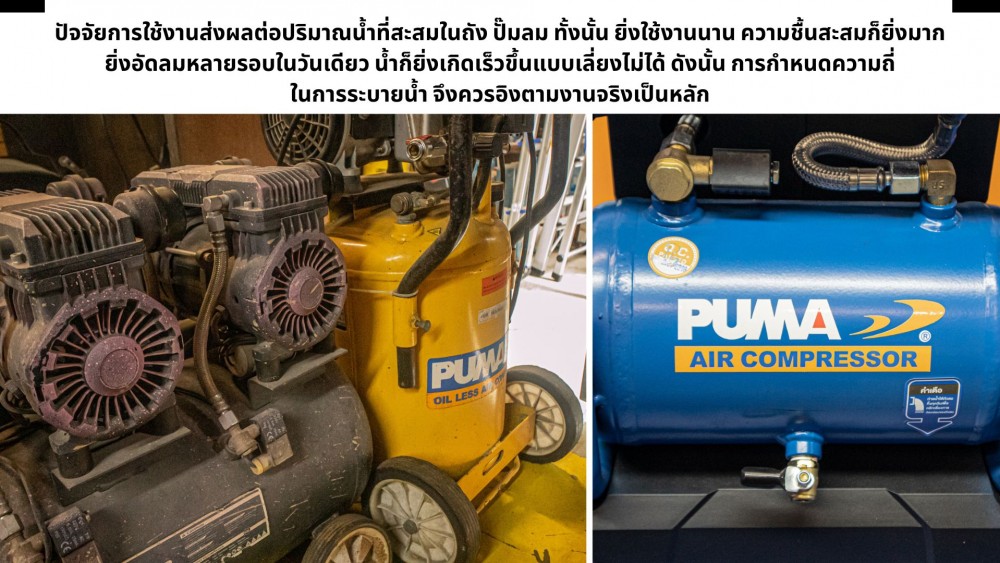
Use daily, drain daily
For a typical piston air compressor, running it for 1–3 hours a day causes water to accumulate very quickly; it should be drained daily. In many cases, if the workplace has high humidity—such as an auto repair shop that also washes cars, or working in a poorly ventilated room—it generates even more water. Daily draining is therefore the easiest and most cost-effective way to extend the life of your air tank.
Heavy all-day use for 5–8 hours: drain both morning and evening
Some places, such as garages requiring continuous use, drain water both before starting work and after wrapping up. This is not only to prevent rapid rust buildup, but also to help stabilize air pressure throughout the day, ensure smoother operation, and reduce moisture entering various pneumatic tools. Doing this noticeably cleans the air system, especially for spray painting, continuous nailing, or air tools that require constant stability.
Used only for tire inflation once every 3–5 days
Even with light use, water still forms. Every time the air compressor starts compressing air, moisture from the ambient air enters the tank regardless of how lightly it is used. Don't assume that not running heavy-duty tools means there is no water in the tank, because water can silently accumulate even from running just a few seconds at a time.
Once accumulated over several consecutive days, it can cause internal tank rust just like heavy use—only the amount of water is smaller.
Therefore, draining every 3–5 days is considered suitable for this type of usage. However, if the air compressor is located in a damp area, such as near a garden, laundry area, or enclosed garage, it should be drained more frequently than usual.
Proper ways to drain water from an air compressor
Remember that every time we turn on an air compressor, we create conditions for moisture to condense inside the tank. Whether used heavily or lightly, all day or for just a few seconds, the air tank cannot escape moisture.
Therefore, the most important thing is to make it a routine habit. Air tanks—whether new, old, expensive, or cheap—operate on the exact same principle: heat meets cold, creating condensed water droplets.
Understanding this gives us a clearer picture that draining water from the tank is not an optional extra step, because it is an indispensable part of using an air compressor. But if you ask whether draining is difficult or what steps are involved, the answer is not complicated at all. Simply:
- Always turn off the machine first, then open the valve For safety and to relieve pressure in the tank
- Tilt the top of the tank slightly upward (if possible) Helps drain all the water out completely, as water pools directly at the bottom of the tank
- If the blown air comes out reddish or brown, the tank has already started to rust You need to pay close attention to this kind of signal, as it is an early sign of air tank deterioration.
- If the valve won't open, do not force it. Because it might damage the valve. You should replace the entire assembly, which is inexpensive and much safer.
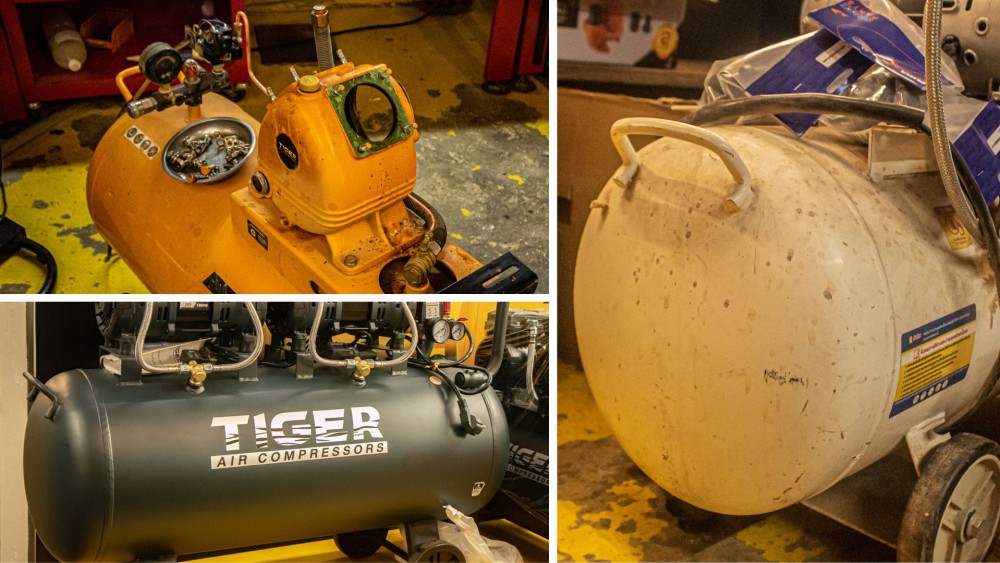
Conclusion: Why do you need to drain water from the air compressor every time?
To sum it up in just one sentence: Not draining the water is practically slowly destroying the air compressor, workpieces, pneumatic accessories, and air tools—definitely causing ruin over time. It is a hidden cost that doesn't appear as an immediate expense, but gradually shows up as premature air compressor failure, tools breaking down more easily, water-contaminated compressed air, ruined workpieces, mysterious drops in air pressure, and valves as well as air systems becoming dirty much faster.
Most importantly, Safety If an air tank deteriorates severely without you noticing, it can explode—and that is an accident not worth the risk at all.
A simple, proven formula regularly practiced by workshops all across Thailand is:
- Drain water daily (or after every use)
- Check the drain valve once a year
- Clean the air filter periodically
- Do not use air hoses with trapped water
- For spray painting jobs, add an extra water separator filter
Draining water is not an optional extra tip, but a simple operating step that will make Air Pumps stay with you for many more years.