


 EN
 ไทย


Customers Also Purchased

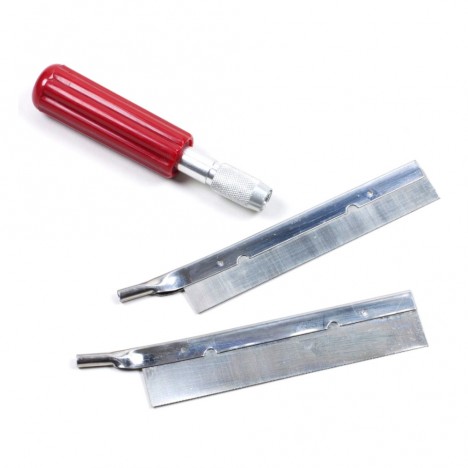


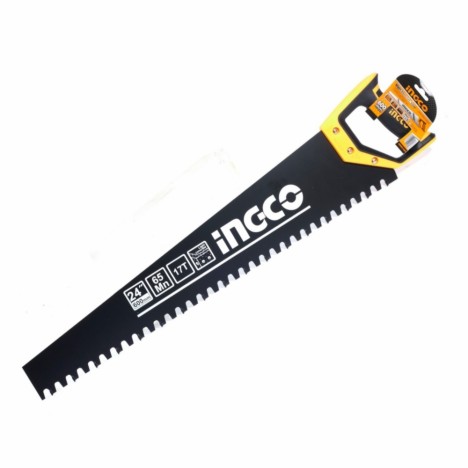

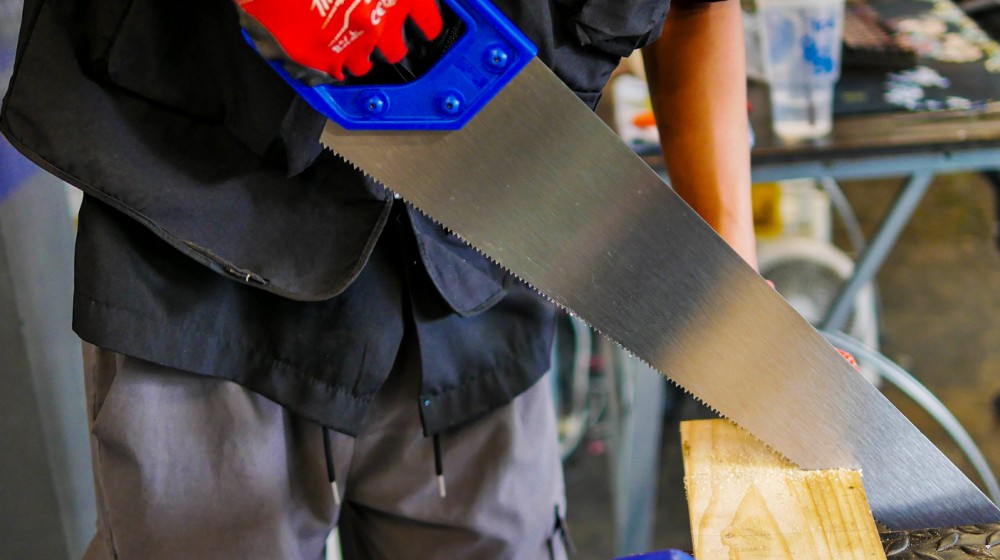
Looking a little deeper, a saw isn't merely meant for severing wood; it's a tool that thoroughly reflects a craftsman's skill—from controlling rhythm and understanding grain direction to achieving flawless, razor-sharp cut surfaces. This is precisely why, even in an era teeming with power tools, the handsaw hasn't faded away. In fact, in certain jobs... it delivers an even cleaner finish than power tools!
A secret many might not realize is that "a saw is a control instrument, not just a cutting tool." It may sound like wordplay, but it's the truth! When sawing, we don't just push down with blunt force; we simultaneously regulate the cut line, speed, and applied pressure. If you catch its rhythm, the saw will literally "talk to your hand," telling you whether the cut is on track or about to drift off course.
In this article, we won't just lecture you on Saws how many types of saws there are, but will take you behind the scenes to look at what people often overlook... Why do some saws glide through effortlessly, while others veer off despite being equally sharp? Why are Japanese saws so incredibly popular? And most importantly, why can someone who truly understands handsaws achieve pinpoint accuracy, even with just a few basic tools in their box!
A saw is more than just a cutting tool
Those who rarely use a saw often think they come down to simply "sharp" or "dull," right? But for seasoned woodworkers, a saw is like a fine-tuned sensor that reveals the personality of the wood! As soon as the teeth bite into the timber, your hand instantly senses whether the wood is hard or soft, straight-grained or interlocked, dense or still damp. This tactile feedback returned right to your hand... is something power tools simply cannot provide.
This is why, in tasks demanding absolute precision—such as mitering, joinery, or cutting tenons—veteran craftsmen still rely on handsaws. It doesn't just cut through; it communicates how you should cut. Once your rhythm settles in, a craftsman knows within just a few strokes whether to ease up, adjust the angle, or pause to reset the line.
So, in an era where everyone is into DIY and craft work, handsaws are far from obsolete. They are classic tools that grant you the ultimate privilege of controlling the workpiece with your own two hands—which is often far more critical than speed!
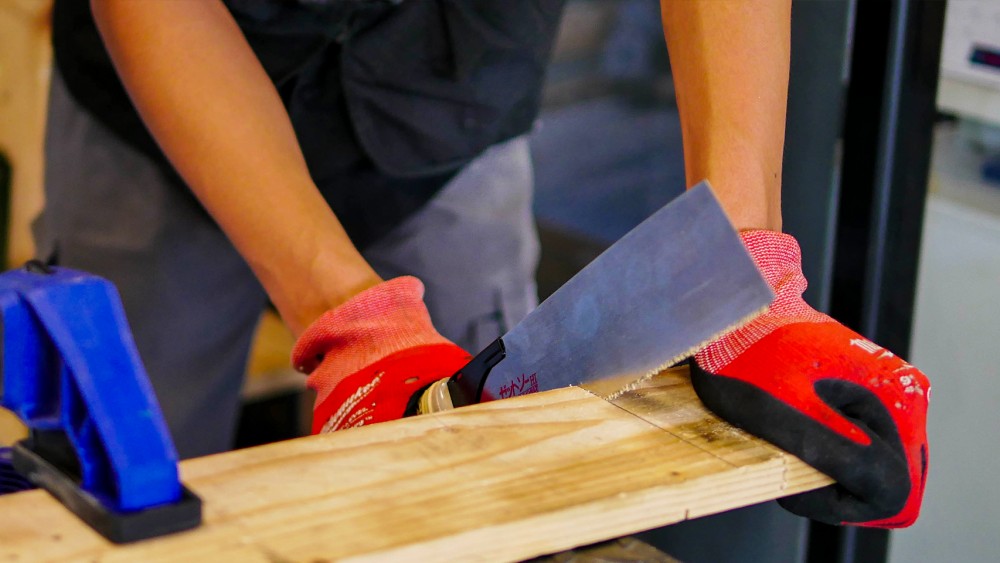
The secret of saw teeth: The little details that change the entire outcome
- Ripping VS Crosscutting: This is crucial! Rip-cut teeth act like "chisels," gouging and lifting wood fibers straight out. In contrast, crosscut teeth are sharpened alternately left and right to function like "knives," slicing wood fibers cleanly apart to leave a smooth, splinter-free finish.
- TPI (Teeth Per Inch): More teeth doesn't always mean better! Don't assume that finer teeth are universally superior—it depends on the job! Fine teeth (high TPI): Ultra-smooth cuts, easy to control, ideal for fine joinery or thin materials. Coarse teeth (low TPI): Rapid material removal, excellent sawdust clearance, ideal for rough cuts where speed matters.
- Tooth Angle: Why is a saw sharp... yet binds during the cut? It's often hiding in plain sight! Sometimes your saw is razor-sharp, but it binds and drags when cutting. The problem isn't sharpness—it's that you're using the "wrong type" of saw (e.g., using a rip blade for crosscutting). The tooth grind angle simply conflicts with the wood grain!
The key to using a saw for ultra-smooth, hitch-free cuts is choosing the right tooth type for the wood grain direction and selecting a tooth pitch (TPI) that matches your work's required finish. At this point, many of you might be wondering... What is TPI? Does a higher tooth count really mean the hand saw cuts better? Let's clear up these doubts right now.
A saw doesn't just cut through—it defines the cut surface quality
When cutting workpieces, many focus only on whether it cuts through. But true craftsmen look closely at the surface after the cut. Because if the cut is razor-sharp, without flared edges or torn grain, what you gain is... tons of sanding effort saved!
Choosing the right saw for the job makes workpiece assembly much easier, giving you tight, precise joints without breaking a sweat. Often, the beauty of fine furniture isn't judged during polishing, but starts right from the very first moment the saw teeth touch the wood.
Even more impressively, some saws are specifically designed for flush cutting! Take Japanese saws, for example; with ultra-thin blades and no tooth set, they allow you to lay the blade flat against the workpiece to trim protruding wood dowels flush with the surface—leaving no frustrating scratches on the surrounding wood.
This is proof that a saw isn't just for chopping wood apart—it's a top-tier finishing tool!
The small kerf that many overlook, yet matters more than you think
- A wide kerf clears sawdust well, reducing blade binding. The downside, however, is that it requires more pushing effort and wastes more wood in the process.
- A narrow kerf yields clean, razor-sharp cuts with minimal wood waste. The trade-off is that the user must have a steady hand and maintain precise blade control. That's why saws designed for millimeter-precise work typically feature ultra-thin blades with little to no tooth set.
Here lies the secret! When a woodworker raves, "Wow... this saw cuts amazingly well!", what they feel isn't just about sharpness. It's the perfect harmony of kerf width, tooth set, blade stiffness, tooth rake angle, and balanced handling. That's why two saws that look virtually identical can feel like night and day in actual use!
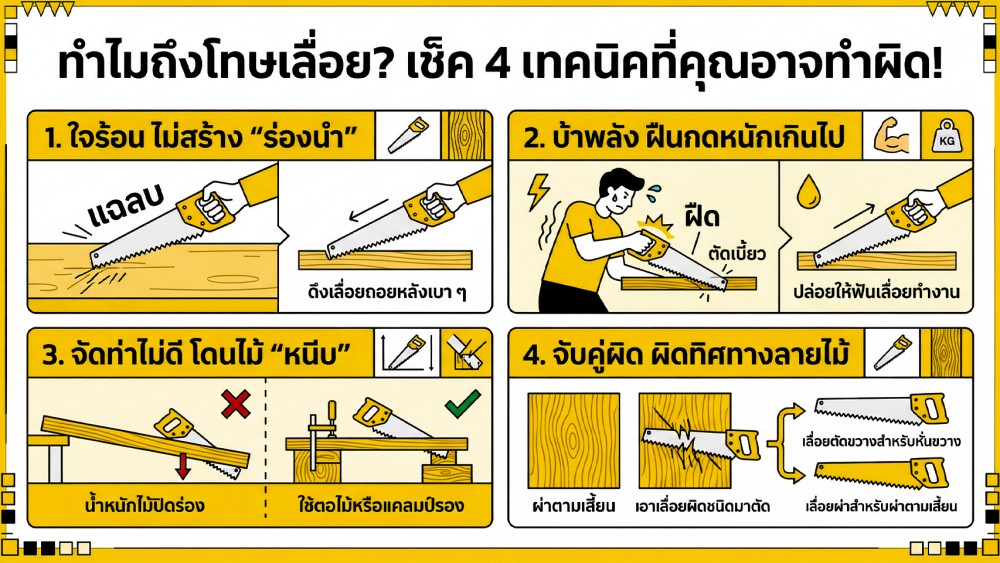
Those skilled with a saw aren't good because of raw strength, but because they "let the saw do the work"
This statement perfectly sums up the essence of sawing. Beginners tend to use brute force, gripping tightly, pushing hard, and rushing the cut. But with more experience, you realize that the right saw doesn't need to be forced. All you need to do is set the proper angle, establish a good starting line, maintain a steady rhythm, and let the saw teeth bite naturally into the material.
At this point, using a saw ceases to be merely tiring work—it becomes smooth and immensely satisfying. You'll begin to recognize which sound signals a clean line, which indicates sticking, what feeling means the grain is tearing, and what feels like a flawless cut. None of this can be learned just by looking at pictures; it starts by seeing a saw as more than just a cutting tool.
Select Saws to suit the application