


 EN
 ไทย



Customers Also Purchased



Anyone who has ever picked up a Welding Wire picked it up and felt the surface isn't the same, the flux looks dull or appears exposed to moisture, questions may follow: Can it still be used? What kind of welding electrode is considered 'depleted' or 'expired'? How do you know when you shouldn't use it anymore? If you force its use, will the weld bead be ruined? Many may view this as a minor issue, but in reality, it clearly impacts work quality, strength, safety, and costs.
Many people think that slightly wet welding electrodes are fine and can be used after wiping them dry. Often, when actually welding with them, you may experience an unstable arc, excessive spatter, porous weld seams, or a weld that looks fine on the outside but has internal defects. This is why damp or water-damaged welding electrodes should never be overlooked, especially for structural work, load-bearing applications, or jobs requiring specific standards.
In this article, we will go through an easy-to-understand breakdown of how to identify damp welding electrodes, how much can be fixed, which ones can still be salvaged, which should be rebaked, and which should simply be discarded to avoid risking future welding quality—including what problems you might face if you force their use.
Why do welding electrodes get damp?
Welding electrodes may look like ordinary metal rods coated with flux (or uncoated in some types), but did you know they are far more sensitive to moisture than you think? This is especially true for flux-coated electrodes, where the flux functions to stabilize the arc, shield the weld pool, and impart desired mechanical properties to the weld bead. When it absorbs moisture from the air or comes into direct contact with water, these properties can change immediately.
In our hot and humid climate, storing welding electrodes in an open area, close to the floor or wall, or leaving the box open for extended periods allows the electrodes to continuously absorb moisture. Sometimes, the electrode may not appear wet to the touch, but the moisture trapped inside the flux is already affecting the weld.
If exposed to driving rain, dripping water, splashes from floor washing, or being left in damp spots on-site, problems will arise even faster. Many see that the surface looks dry and assume it is good to use, but in reality, moisture may already be fully absorbed inside.
How to tell if a welding electrode is damp?
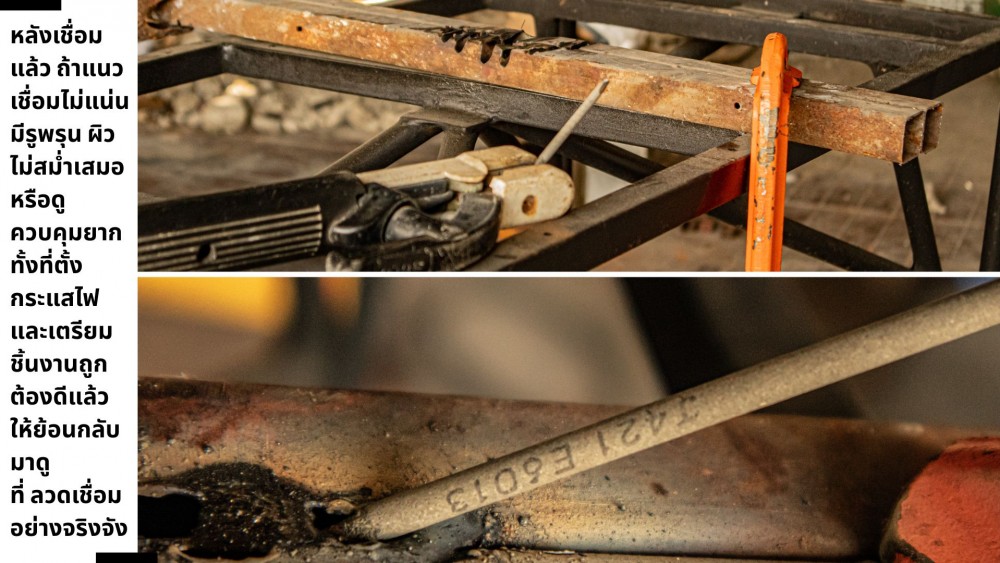
Observing damp welding electrodes involves checking both their external appearance and their behavior during welding. If the flux coating looks dull, discolored, stained, blotchy, cracked, flaking, swollen, or unusually soft, suspect moisture accumulation right away—especially if stored for a long time or under uncertain storage conditions.
Another indicator is behavior during use, such as: Difficulty striking the arc, an unstable arc, popping sounds, excessive spatter, or abnormal smoke and steam. If you encounter these issues, don't rush to blame the welding machine or inverter, as the root cause may very well be the welding electrode itself. Clearing the air: 6 common misconceptions about welding electrodes, explained.
Can water-damaged welding electrodes still be salvaged?
The answer depends on the moisture level, the type of welding electrode, and the criticality of the job. If you only suspect that the electrode absorbed moisture from the air, but the flux has not cracked, flaked, or crumbled, it can in some cases be rebaked to drive out moisture and returned to service.
However, if the welding electrode has been directly exposed to water—such as being soaked by rain, submerged, or subjected to dripping water for a long time until the flux crumbles, falls off, or noticeably degrades—we recommend not forcing its use. Even if the surface appears dry, its internal properties may no longer be the same. Especially for high-quality jobs, discarding compromised electrodes is much more cost-effective than having to gouge out and repair weld seams later.
Which types of welding electrodes require extra caution?
Welding electrodes, especially low-hydrogen types, (AWS E7016 / E7018) are extremely sensitive to moisture because they are specifically engineered to minimize hydrogen in the weld metal. If they absorb moisture, the risk of cracking increases significantly, particularly in thick steel, load-bearing structures, and projects with strict quality specifications.
And even if some types of welding electrodes seem more durable, it does not mean they can be used wet with peace of mind, as it still affects the arc and leads to the possibility of porosity anyway.
How to fix damp welding electrodes
If welding electrodes get damp or wet and you think they are not severely damaged, first separate the suspected damp electrodes from normal ones. Then inspect the flux coating to see if it is cracked, flaking, or deformed. If these symptoms are prominent, reconditioning is usually not worth it.
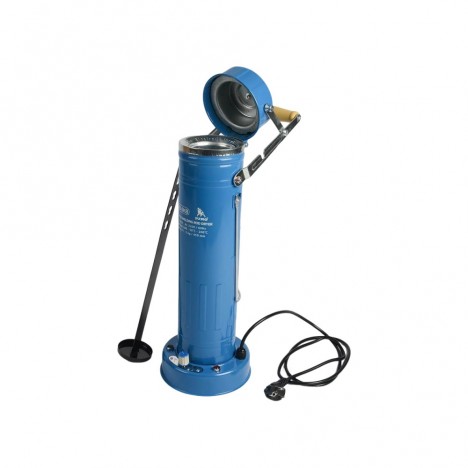
The next step is baking to remove moisture. However, redrying welding electrodes should follow the manufacturer's recommendations or the standards for that specific type of electrode, as each model requires different temperatures. Baking too hot may damage the flux, while baking at too low a temperature will not completely eliminate the moisture.
What you should not do is leave the welding electrodes out in the sun, place them near fire, or use uncontrolled hot air, as this may dry only the surface while the interior remains damp, and it also risks damaging the flux.
After baking, if you plan to use them, test-weld on a scrap piece first to see if the arc is stable, the weld bead is uniform, and there is no porosity. If it is still abnormal, that batch of welding electrodes should not be used further.
Does baking help in every case?
Baking welding electrodes does not restore every piece to brand-new condition. It only helps in cases where the electrodes are still in good condition and have merely accumulated moisture. If they have been heavily exposed to water to the point where the flux is cracked, crumbling, or rusted, baking will not eliminate the risks.
Therefore, you also have to ask whether the quality is still reliable after baking, especially if the job at hand is genuinely critical.
What happens if you force the use of damp welding electrodes?
The most common issues are an unstable arc, difficulty welding, excessive spatter, poor weld appearance, and harder process control. This can be followed by porosity or gas pockets in the weld bead, reducing joint strength—especially for jobs requiring tight, sound welds that meet industry standards.
Another concern to watch out for is that moisture may increase the risk of weld cracking under certain conditions. The scary part is that some issues are not immediately visible; some newly finished welds might look acceptable, but in reality, problems can develop down the line.
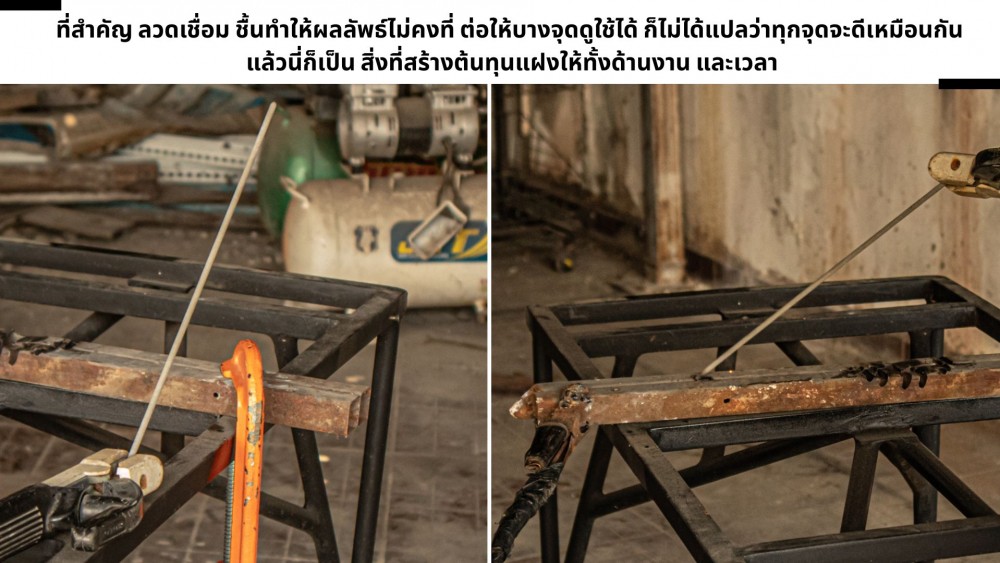
Can they still be used for small jobs?
If it is a small, temporary, or non-load-bearing job, some people might accept the risk of using compromised welding electrodes. Even so, it is not recommended as a normal practice. Even for non-critical jobs, damp electrodes still make welding difficult, waste effort and power, and might require rework anyway.
If absolutely necessary, at least test on scrap pieces first, and do not use them on structural work, load-bearing jobs, or safety-critical applications.
Can defects from damp electrodes be spotted later?
Partially, yes—such as an uneven weld bead surface, surface pores, or abnormal slag. However, some internal problems, like tiny cavities or cracking, might not be visible to the naked eye. This is why prevention from the start is much better than relying on post-weld inspections and repairs.
How to store welding electrodes to prevent moisture?
The best way is to store welding electrodes in a dry place, avoiding direct contact with floors or walls prone to moisture or vapor. If possible, keep them in an airtight container and take out only what is needed for each task. If left in an area with continuous moisture or humidity, even without direct water contact, the flux can gradually absorb moisture unnoticed.
On a job site or in a workshop, clearly separate new electrodes, opened electrodes, and suspect ones to prevent accidental mix-ups. Properly rotate stock and do not leave boxes open for too long. The more systematic your storage is, the lower the risk of welding electrodes degrading unnoticed.
Another common mistake people make is bringing welding electrodes to the work site and leaving them overnight in damp areas, even if they were stored properly beforehand. In the end, problems can still occur down the line. Therefore, proper storage isn't just about keeping them well stored in the warehouse; it also involves monitoring the environment where the welding electrodes are placed during actual use.
- Store welding electrodes off the ground using shelves or pallets. Avoid placing them directly on concrete floors.
- Avoid placing them near walls where condensation, accumulated moisture, or rain splashing may occur.
- Use sealed containers or boxes that help minimize exposure to humid air for opened electrode packs.
- Take out only as many welding electrodes as needed for each round to reduce exposure time to air.
- Clearly separate the status of electrodes, such as new electrodes, opened electrodes, and electrodes requiring inspection.
- Do not leave welding electrodes at the job site overnight, especially in areas with high humidity or where water might splash.
Once a box of welding electrodes is opened, the risk of moisture absorption increases immediately. If not used up within the day, they should be properly stored away rather than left on tables or at the job site. This is because atmospheric moisture gradually accumulates, and the longer the box remains open, the more likely the quality of the welding electrodes will degrade from its original state.
For opened boxes of welding electrodes, take extra care with the following:
- Return them to a sealed container immediately after use; do not leave them out until the end of the day.
- If using them across multiple work areas, divide only what is necessary instead of bringing an entire box and leaving it open.
- If you suspect that welding electrodes have absorbed moisture, separate them from normal electrodes first.
- Opened electrodes should be used before new ones to prevent keeping them in stock for too long.
- For jobs requiring high-quality welds, be stricter than usual regarding the storage of opened electrodes.

Conclusion
If welding electrodes are damp or suspected of being exposed to water, don't just assume they "should be fine to use." First, evaluate the extent of the damage and how critical the upcoming welding job is. If the moisture is minimal and the electrodes are still in good condition, they might be restored through proper re-baking. However, if they have clearly been exposed to water, the flux is damaged, or the job requires high reliability, the safer choice is to not force their use.
Ultimately, keeping welding electrodes dry and properly stored might seem like a small detail, but it directly affects the quality, timing, and reliability of the weld seam. The better you store them, the more consistent the work and the fewer chances of errors.
If you are facing damp welding electrode issues or are unsure whether to continue using them, keep this simple principle in mind: good welding consumables are the starting point of a good weld. Don't let minor reluctance become the cause of ruining an entire workpiece, because in welding, certainty is always more important than guessing.
Welding Wire which is intact, properly stored, and correctly used will serve as a quiet helper ensuring the work turns out well from start to finish.