


 EN
 ไทย



Customers Also Purchased


Has this ever happened to you? When driving nails or using a hammer continuously for a while, your hands start feeling numb, wrists get fatigued, and fingers become stiff—to the point where many wonder... am I holding the hammer wrong, or is this hammer just terrible? Most people might think a hammer is just a hammer used to strike things together, but real tradespeople know full well that each hammer gives a completely different "feel." Some are a joy to strike and feel great in the hand, while others send shocks all the way back up to your elbow on impact, making you dread picking it up again after just a short while.
In this article, I'll take a deep dive into the "hammer shock to the hand" symptom to see where the real root cause lies. Is it the hammer's weight, the handle material, your grip posture, or the material you are striking? Let's unravel the secrets of hammer recoil. I guarantee that after reading this, you will look at hammers differently and be able to choose a trusty hammer that protects your wrists much better!
What is actually happening when your hands go numb from using a hammer?
When we swing Hammers down, the force doesn't just travel forward. There is a "recoil force" traveling backwards from the hammer head, through the handle, and directly into our hand and arm. If you strike repeatedly in rapid succession, your body will eventually protest with fatigue, stiffness, and ultimately hand numbness. But hold on... hand numbness doesn't always mean the hammer is bad! In reality, it is caused by a combination of this "destructive combo" of 3 factors:
- Recoil force from direct impact
- Gripping the handle too tightly (many do this unconsciously)
- Incorrect posture, such as inadvertently raising the shoulder or repeatedly bending the wrist while striking for too long. When these three factors combine, numbness sets in much faster than usual.
Another key factor is that numbness often comes from "unabsorbed impact shock." Have you noticed that hammers of the exact same weight can feel completely different in terms of shock transmitted to the hand? That's because some hammer heads transfer much more bounce-back force into our hands. Think of it like "hard-soled running shoes"—even though you can still run in them, the shock transmitted back up hurts your knees much more!
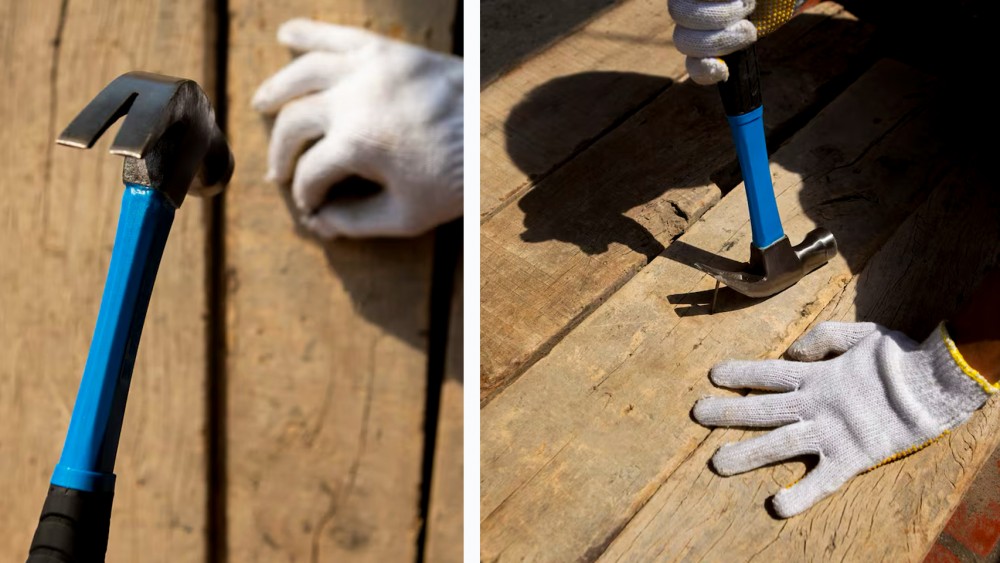
What causes the recoil force from a hammer?
To explain it in the simplest visual terms, "hammer shock to the hand" is caused by "leftover energy." When we swing a hammer down, part of the energy is used to drive the nail or impact the workpiece, but the remaining part that the workpiece doesn't fully absorb... bounces right back up through the hammer handle into our hand. The 4 main factors that cause this recoil force to spike significantly are:
Material being struck (hard on hard = maximum shock)
If we hammer into softwood, the rebound force is minimal because the wood gives way and absorbs the impact. But if you take a steel hammer and strike steel against steel, or use it to chisel concrete, both hard contact surfaces will kick back energy at full blast. Sometimes the hammer isn't bad at all; it's just that when we take on hardcore heavy-duty jobs, a fierce recoil is completely natural.
Off-Angle Strikes (Not Hitting Flat on the Face)
If the hammer face doesn't land dead-center or glances off, the wasted energy turns into "torsional force," causing the hammer to twist or vibrate sharply in your hand. Beginners often make this mistake thinking it's all about swinging as hard as possible. In reality, simply aiming accurately and striking squarely on the face saves your wrists much more than relying on brute force.
Hammer Handle Material (The Shock Absorber)
Hammer heads might look similar, but the handle is what defines the feel.
- Wood handles provide a smooth feel and naturally absorb shock well (provided the shape is good and the wood isn't overly dry).
- Modern fiberglass handles excel at dampening shock vibrations, often featuring a rubber grip sleeve for a secure, comfortable hold.
- Steel handles are ultra-durable and practically indestructible, but unless the manufacturer incorporates shock-absorbing technology... a steel handle is prime for channeling impact force straight into your elbow.
The Hammer Weight "Doesn't Match" the Job
Many people firmly believe that "lighter hammer = easier on the hands," which in actual work isn't always true! If you use a hammer that's too light for a demanding task, you'll have to strike repeatedly in rapid succession, and accumulated vibration will numb your hand just the same. Conversely, if you choose a hammer weighted "just right for the job," simply letting its weight fall naturally finishes the task quickly—resulting in less effort and far less fatigue!
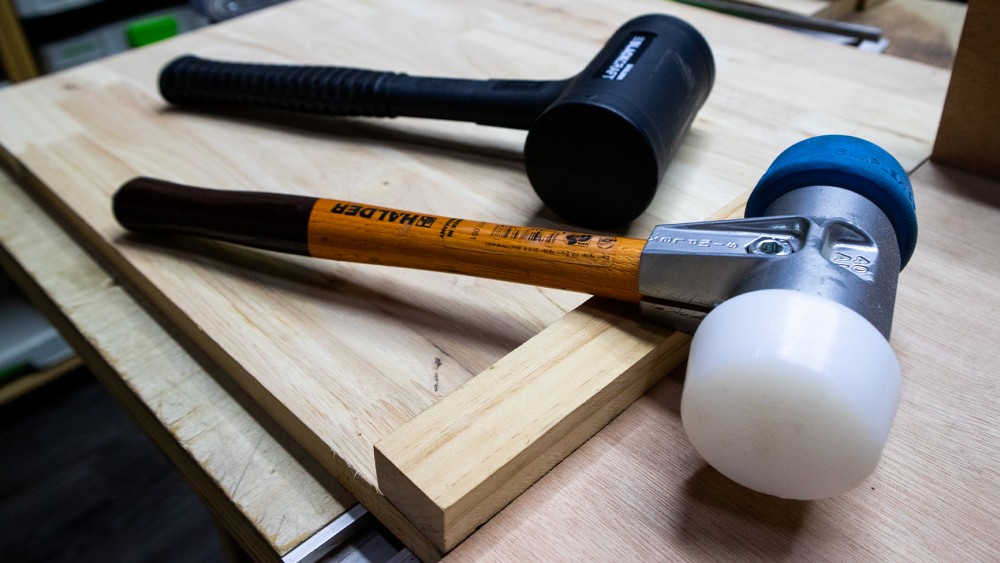
Why Do Different People Using the Same Hammer Feel It Differently?
The answer lies in ergonomics and technique. People with larger hands can grip the handle fully, controlling the rhythm better than those with smaller hands who have to squeeze tightly to prevent slipping. Those who combine power from their elbow and shoulder tend to fatigue much slower than those relying solely on their wrists, and experienced tradespeople let the hammer's weight do the work rather than straining their grip against it.
"...This is why when choosing a hammer, you shouldn't just look at label specs like a 16 oz or 20 oz head weight, leaving many to wonder: What's the difference between 8oz, 16oz, and 20oz hammers? Which ounces should be used for which job? Instead, you should also consider what task it will be used for and how long you'll be using it..."
How to Choose Hammer Handle Materials to Reduce Recoil
- Wood handles (Classic style, natural feel): This is a living legend! Its standout feature is "smoothness," as wood has natural flex that effectively dampens shock vibrations. Strikes feel non-jarring, balance is spot-on, and it never feels cold to the touch. The catch is that it "requires diligent maintenance." If you let the wood dry out, crack, or if the head becomes loose, the feel changes and it immediately turns dangerous. It's best suited for detail-oriented craftsmen who take pride in caring for their tools.
- Fiberglass handles (The balanced hero): This is the most popular "middle ground" today! You get durability, well-balanced weight, and most importantly, designs tailored specifically to "trap shock vibrations" (especially models with rubber grips or multi-layered shock-absorbing structures, making striking very comfortable). If someone asks me where to start for a wrist-friendly hammer, I point straight to fiberglass. It covers everything from odd household fixes to field jobs.
- Steel handles (Indestructible, brute force): The number one advantage is "virtually indestructible strength." Buy one and it will last a lifetime, perfect for ultra-heavy-duty tasks. However... the major downside is that it "vibrates the hands the most"! If the manufacturer hasn't built in a proper shock-dampening system, swinging it against hard materials for long periods will certainly shoot pain straight up to your elbow. Thus, the golden rule when picking a steel-handled hammer is to ensure it has a genuinely thick rubber grip, an ergonomic shape, and most importantly... check the label for "Anti-vibration" or "Shock reduction"!
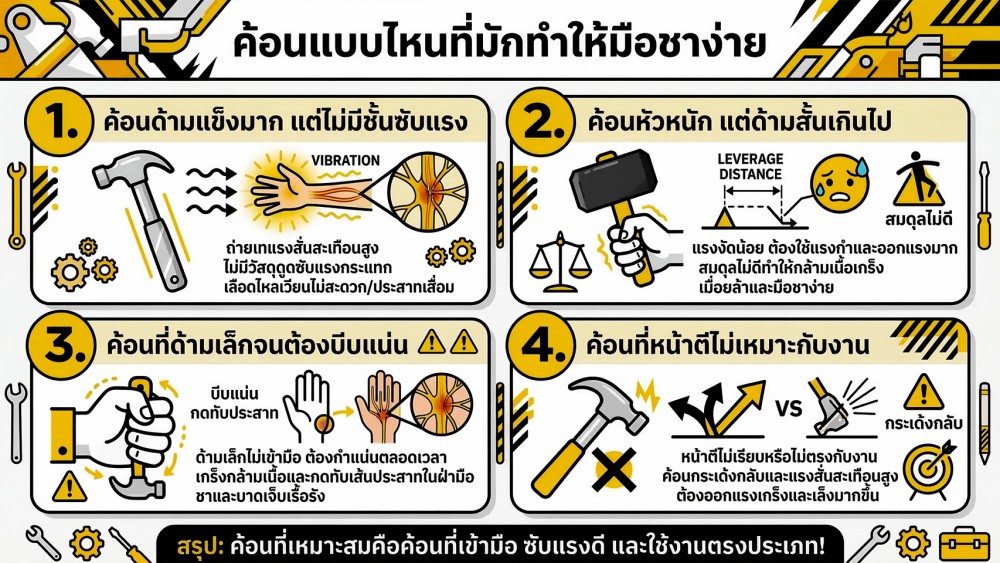
Conclusion
Numb hands from hammer impact aren't caused by force alone; they stem from recoil traveling back into the hand, an overly tight grip, using the wrong hammer for the task, improper weight, poor balance in hand, and striking techniques that waste energy and cause rebound. To solve this issue, look at the hammer as an entire system—not just the head or the price tag.
Finally, if you're experiencing numb hands while using a hammer, don't just assume it's an inevitable part of mechanic or handyman work. Often, it's a sign that the hammer you're using isn't right for the job or doesn't suit your hand. Changing to a slightly better-fitting hammer or tweaking your grip and striking technique just a bit can transform a tiring chore you dread into work that's well-controlled and far more comfortable on your hands.
Select Hammers here