


 EN
 ไทย


Customers Also Purchased


We see it all the time... wondering which hammer to choose to get the job done with just one? Many people tend to pick a solid, heavy-looking hammer first, thinking "heavier = more power = easier hammering," right? It sounds logical, but in practice, the nail won't go in, nails bend, your hand goes numb, your wrist starts aching, or it's simply too heavy for continuous use.
On the other hand, some people fear the weight and pick the lightest hammer on the shelf. When it's time to drive nails, they have to swing repeatedly, tiring themselves out even more, losing control, and sometimes accidentally hitting their fingers... It's a vicious cycle that makes many people "hate hammering," when in reality, they just chose the wrong hammer weight.
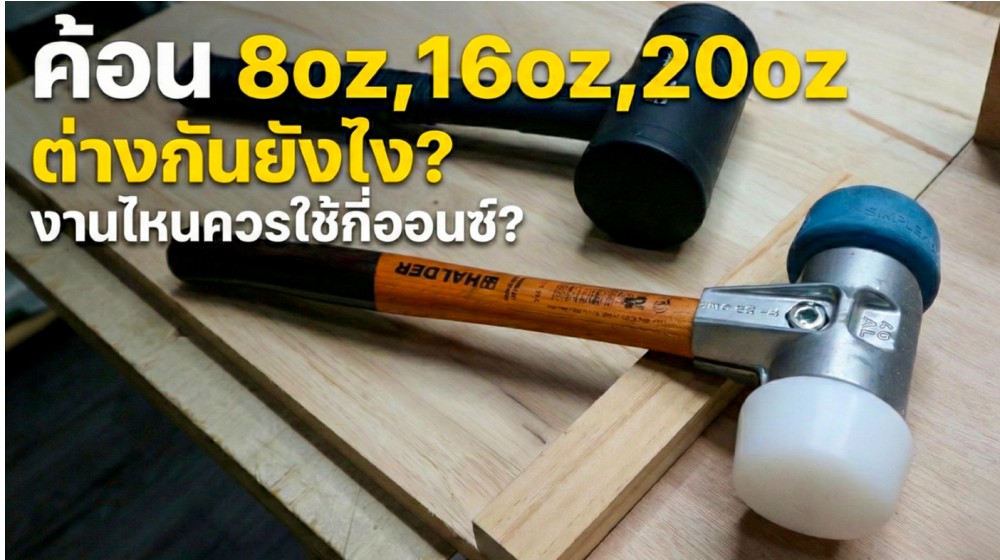
In this article, let's take a casual look at how 8oz, 16oz, and 20oz hammers differ, and which weight you should use for your specific tasks to make hammering effortless, easy to control, fatigue-free, and produce better results.
First of all… what does oz (ounce) on a hammer mean?
What do the numbers 8oz, 16oz, 20oz on a Hammers tell us?" When you see these numbers, don't assume it's the total weight including the handle. This value is purely the hammer head weight. That's because the hammer head is what delivers the impact force to the target, while the handle acts as a "lever" to transfer force and help absorb vibration so your hands don't get wrecked.
- 8 oz - 227 grams: For fine finishing work
- 16 oz - 454 grams: The standard type (All-around)
- 20 oz+ - 567 grams and up: Heavy-duty / Framing & structural work
These numbers define the character of a hammer. But there's a catch: a heavier hammer doesn't always drive nails faster.
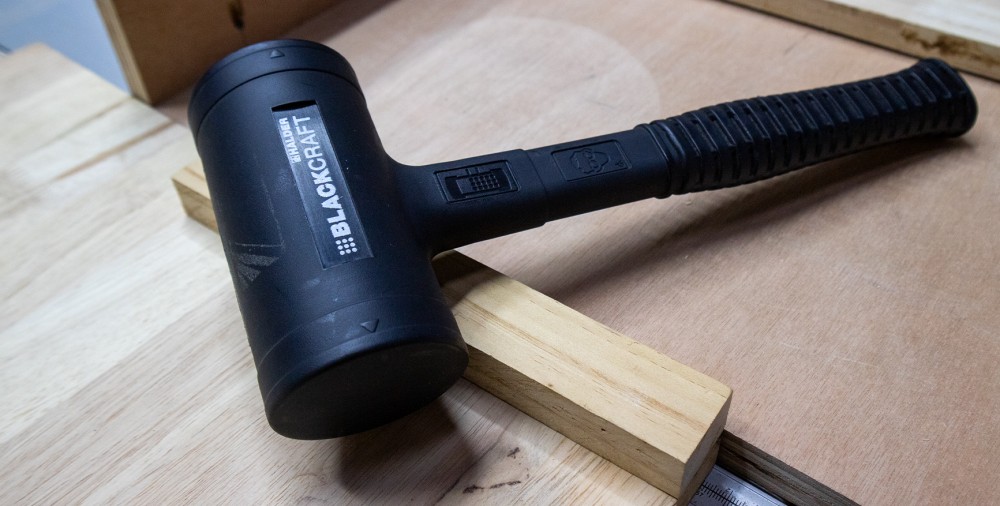
Simple rule: Heavier = fewer swings, but more control required!
To put it simply, hammers fall into two very distinct categories:
- Heavy-head hammers drive nails deeper with a single strike, reducing the number of blows and finishing the job faster. However, if your face alignment isn't straight, the chance of bending nails or missing strikes is higher, and continuous work causes more fatigue.
- Light-head hammers are easy to control and accurate, ideal for delicate work and tight spaces. But it takes more strikes to finish the job. When facing hard materials, you'll start getting frustrated wondering "why won't it go in?"
So the right question isn't "which one hits harder?" but rather what kind of force your job requires and how much accuracy you need. If you only hammer a few times a day at home on delicate tasks, you need control more than raw power. But if you're framing, building structures, or driving many nails, you need power to reduce strokes and save time.
Hammer power comes from 2 things
Let me break it down from a practical user's perspective... striking force doesn't just come from arm muscles, but from this equation: Impact Force = Hammer Head Weight × Swing Speed. This is where most people trip up.
- The light hammer team tries to compensate for weight by 'swinging with full force', resulting in loss of control, crooked nails, and unnecessary arm fatigue.
- The heavy hammer team accidentally goes full power on delicate tasks, resulting in 'damaged workpieces', bent nails, or split wood (plus ruined wrists).
The ultimate trick we always use: stop forcing your muscles, and 'adjust your hand position' on the handle instead.
- Grip the end of the handle: When you need maximum power to give the hammer head the longest swing arc (like swinging a golf club). Used for 'driving the nail deep into wood'.
- Choke up on the handle: Move your hand closer to the hammer head to reduce swing force but increase precision. Used for 'starting a nail' or 'fine finishing work'.
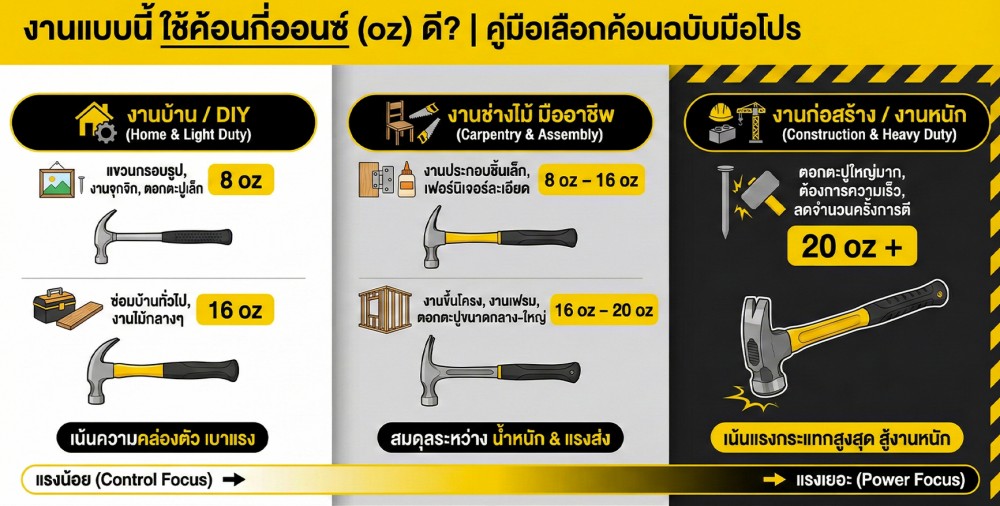
What kind of work is an 8oz hammer suitable for?
To picture an 8oz hammer clearly, we'd call it a hammer for delicate tasks and beginner projects.
- Driving small nails, home DIY projects, small nails for picture frames, thin woodwork, assembling small furniture, and minor odd repair jobs.
- Tasks like "setting a nail" straight before driving it in properly. Beginners often face this: before the nail is even set, the first strike is too hard, causing the nail to slant and bend immediately. An 8oz hammer lets you lightly "tap" the nail into place first, then gradually increase your force on subsequent strikes.
- Tasks where you need to protect the workpiece surface from bruising. For beautiful wood surfaces or workpieces where you don't want marks from missed strikes, a lightweight hammer truly minimizes damage.
- Working in tight spaces. Confined areas often prevent a full swing. A lightweight hammer makes it easier to control direction and reduces the risk of hitting edges or adjacent objects.
Limitations of an 8oz hammer that people often don't know
- When faced with large nails, hardwood, or framing work, it will start to "drain your energy" because you have to strike repeatedly.
- If you are naturally heavy-handed, a light hammer swings quickly, making it easy to inadvertently strike too hard and miss completely.
What kind of work is a 16oz hammer suitable for?
If you had to choose a single hammer weight that offers the most versatility for the majority of buyers, we'd choose 16oz. It sits right in the sweet spot between "power" and "control".
- General carpentry / home repair, driving medium to large nails, assembling wooden structures and frames, and general installation work.
- Tasks that require both speed and control. A 16oz hammer eliminates the need for too many repetitive strikes while still letting you control the rhythm and surface impact easily, without being so heavy that you tire out quickly.
- Beginners looking to upgrade from a small hammer. Many start with a light hammer and feel like, "Why do I have to hit it so many times?" Once you move to 16oz, you'll feel that "it drives itself" without having to force it.
Why 16oz is the standard for so many jobs
Because it's well-balanced. 2–3 inch nails in standard lumber: 16oz handles them comfortably. Continuous work: 16oz is manageable, nowhere near as punishing as 20oz.
What kind of work is a 20oz hammer suitable for?
A heavy-duty hammer focused on fast finishes, but requiring disciplined control. A 20oz hammer clearly helps you reduce the number of strikes needed. When used for the right job, it truly speeds up your work; but used for the wrong job, it brings rapid fatigue and soreness along with it.
- Framing work, structural work, tasks requiring high impact force, driving large nails, and jobs where you need nails sunk quickly.
- High-repetition tasks. A heavy head genuinely reduces the number of strokes—cutting what would take 6–7 strikes down to maybe 3–4, significantly speeding up the work.
- People with good hammer-swinging fundamentals. A heavy hammer requires control over swing direction and impact face angle; if your swing wobbles or hits crookedly, nails bend very easily, and missed strikes carry a much higher risk of causing surface damage.
Cautions for the 20oz hammer
- Fatigues faster, especially when working with raised arms or overhead
- Recoil is felt more distinctly if the handle is poor or the grip posture is incorrect
- Detailed work: 20oz delivers more force than necessary, easily bruising or breaking the workpiece
Why do some people get tired using a 16oz hammer... while others find a 20oz hammer more comfortable?
Many people think weight is everything, but in reality, a hammer's weight isn't the whole story. There are 3 other factors that can completely change how a hammer feels in your hand... How Much Does Hammer Weight Affect Your Wrist? Answers from Daily Pros
Hammer handle length: short for easy control, long for more power
- Long handle: provides more power from a wider swing arc, driving nails flush more easily, but harder to control and causes fatigue faster during continuous use
- Short handle: easy to control, suitable for tight spaces and detailed work, but has less swing power
Simple trick: If you're a beginner, don't start with "heavy + long handle" at the same time. The chances of fatigue and missing swings are very high
Handle material and shock absorption: directly related to "numb hands"
- Wood handle: soft feel, absorbs shock well, but quality and head fastening must be checked
- Fiberglass/composite handle: durable, consistent, many models are designed to help reduce vibrations
- Steel handle: strong, but without a grip or shock-absorbing system, hands can become numb more easily
If you often hammer and feel "numbness up to your wrist", don't just blame the weight right away—take a look at the handle and grip too
Swinging technique: the most important and immediately fixable factor
With a heavy hammer, there's no need to swing with full force. Many people fail because they "fight the hammer," swinging at full power every time until fatigued and out of control. Here's the trick we regularly use:
- Let the hammer do the work for you; no need to force it
- Strike with a steady rhythm, focusing on square face contact rather than sheer force
- Start with a "tap" to set the nail straight, then increase the tempo
- For precision work, choke up near the hammer head to control the force.
- For heavy-duty work, grip the end of the handle to increase swing power.
Many people who try this immediately notice that the work gets done faster because it is "more accurate," not because it is "harder."
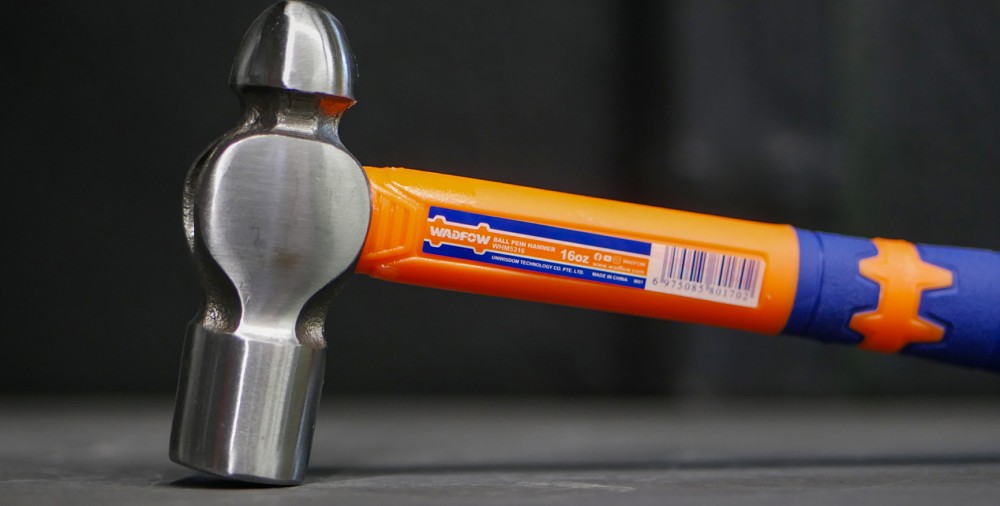
If you truly have to buy just one hammer, choose a 16oz and adjust your grip technique.
To put it into perspective, "grip technique" can turn an ordinary hammer into a master tool. If you are still hesitating, undecided, or looking for a single all-around hammer for the house... we recommend starting with a 16oz (454 g) hammer. This is the most balanced weight—not too heavy to cause fatigue, yet not too light to fail driving nails. But... the secret trick that makes a single 16oz hammer versatile for anything is changing your grip distance.
- Precision Mode: Move your hand up to grip near the hammer neck, similar to holding a pen. The pivot point becomes shorter, allowing for precise directional control. Perfect for starting nails or driving small nails without worrying about bruising your fingers.
- Heavy-Duty Mode: Slide your hand back to the very end of the handle to utilize the full leverage from the handle length. Perfect for driving nails flush or demolition work.
In short, just by adjusting your grip... you get 2 hammer characteristics in a single handle. Save money without needing to buy multiple sizes!"
Summary
Finally, if you want "the hammer to work for you" rather than fighting against it, remember one thing: the right hammer weight is the one you can strike accurately and consistently without fatiguing quickly. And if you're still undecided, keep this in mind: start with a 16oz first, then add an 8oz or 20oz based on the tasks you do most often. Choosing the right hammer weight means faster work, cleaner results, and your hands will thank you.
Select Hammers to suit the application