


 EN
 ไทย


Customers Also Purchased




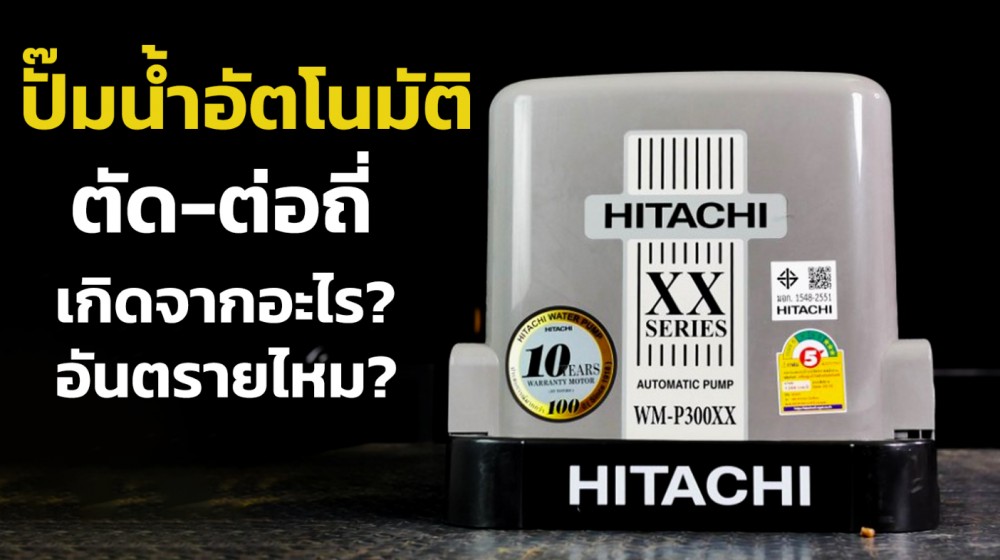
Have you ever been sleeping peacefully late at night, only to suddenly hear a "click... hum... click... hum" and wake up startled by the noise? The sound of an automatic water pump starting and stopping, starting and stopping, cycling back and forth every 2–3 seconds—even though no one in the house is using water at all. Or maybe... no, water flowing strongly, then weakly, which is utterly frustrating.
The real answer lies somewhere in between. In some cases, it's not immediately dangerous, but leaving it unattended over time definitely increases the risk of premature failure. More importantly... this symptom is usually a "warning sign" that the plumbing system or certain settings are out of balance. In this article, we'll demystify this issue completely so you can fix it right at the source, avoid getting ripped off by technicians, and, most importantly... get your peaceful sleep back!
What Does Automatic Water Pump "Rapid Cycling" (Short Cycling) Mean?
We think many people are confused about what rapid cycling actually looks like and what it means. Simply put, it means: Automatic Water Pump It turns on and then shuts off abnormally fast, repeating this cycle much more frequently than it should. For example:
- Turning on the tap slightly for a gentle flow, yet the pump starts and stops every 2–10 seconds.
- Using water intermittently (washing dishes/washing hands), and the pump seems to "struggle," cycling on and off at almost every rhythm.
- At night when no water is being used, but the pump turns on by itself for a short burst and then shuts off.
Normally, an automatic pump operates like this:
- Pressure in the pipes drops (because you turned on the water).
- The pump "cuts in" (turns on) to increase pressure and supply water.
- When you turn off the water, the pressure reaches the set point, and the pump "cuts out" (stops).
Therefore, if it is rapid cycling, it means the pressure in the system is fluctuating, or the pump perceives that the pressure is constantly dropping and rising, forcing it to keep turning on and off accordingly.
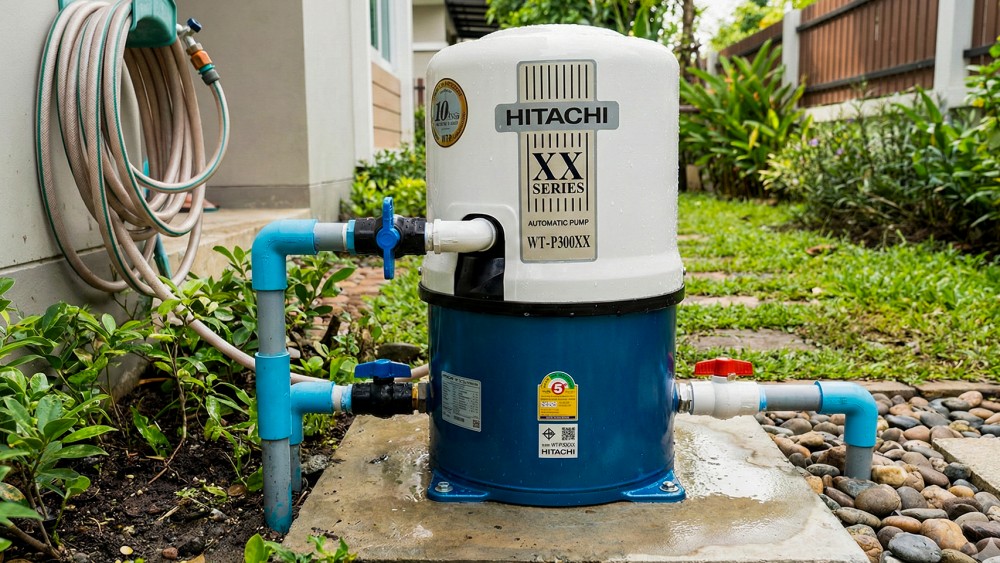
Is it dangerous if you let the automatic water pump keep rapid cycling like this?
Many people fear that an automatic water pump that "short-cycles (cuts in and out frequently)" will suddenly explode or cause an immediate house fire. Generally, it doesn't go to that extreme, especially if the electrical wiring is installed correctly with proper grounding and standard residual current devices. However... what you should genuinely be concerned about are the long-term effects and hidden risks, because this symptom is like the "machine telling you it's unwell," just like when we get sick. Now, let's check out: 5 Habits That Cause Automatic Water Pumps to Break Down Prematurely Without You Realizing!
Automatic water pump wears out faster (frequent starts = more strain than running steadily)
Each motor start draws higher current than during normal operation and generates more heat. Frequent cutting in and out causes:
- Motor heat accumulation (especially on hot days or in poorly ventilated pump rooms)
- Contacts/pressure switch/control unit to work harder than they should
- Valves/diaphragm/seals and control components to deteriorate prematurely
Homes that let the pump continuously short-cycle for months often end up with "the pump not completely broken yet, but starting to act up"—such as getting louder, becoming harder to start, or producing less stable pressure than before.
Piping system becomes more prone to water hammer
Although it doesn't happen in every home, houses with tightly clamped pipes or fast-closing valves are more likely to experience water hammer shocks with frequent cycling, leading to:
- Hearing a "thud!" / "clunk!" sound along the pipe run
- Certain pipe joints loosening/leaking faster in the long run
Electricity bills may increase "without you noticing"
Frequent stopping and starting consumes more energy than running steadily. And if there is a small leak or pressure drops on its own at night, the pump keeps getting triggered repeatedly (even when no water is actually being used).
In some cases, it is a sign of a "leak" that can escalate
In many homes, frequent cutting in and out doesn't start from a broken automatic pump, but rather from minor leaks such as a dripping faucet, a leaking toilet fill valve, or a seep at an underfloor joint. If left unaddressed for a long time, it can lead to:
- Higher water bills / accumulated moisture
- Mold / musty odors
- Damage to floors or walls
Quick takeaway to remember
- In most cases, it is not an "immediate hazard" that shows results on that day
- However, leaving it unattended for a long time = premature pump failure + risk of pipe leaks/high electricity bills/property damage (and ultimately, it usually ends up costing far more than fixing it early on).
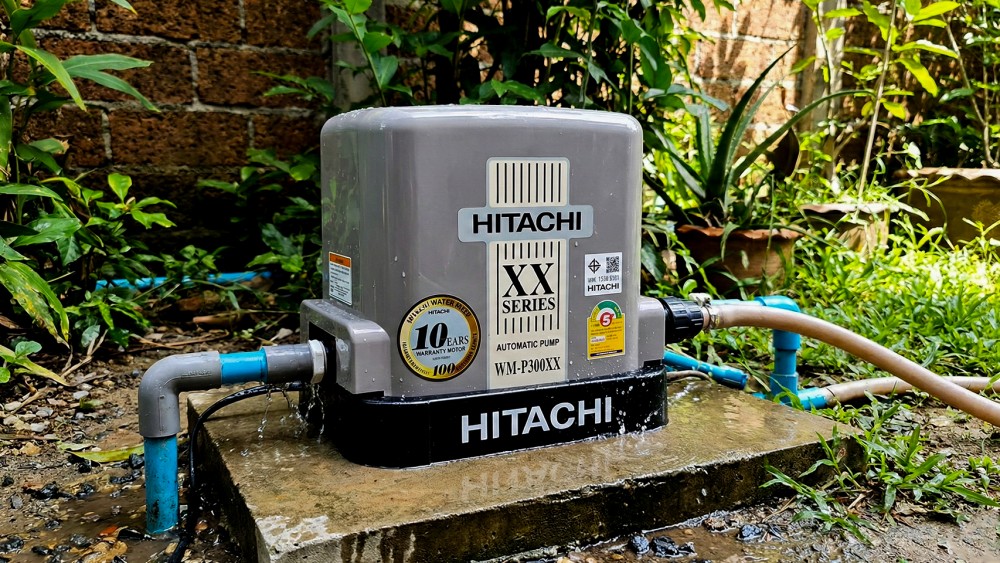
Top Common Causes of Automatic Water Pump "Rapid Cycling"
Water Leaks/Seepage in the System
This is indisputably the most common primary cause. The reason an automatic water pump cuts in and out frequently on its own—or kicks on briefly every 5 minutes even when no one is using water—is primarily due to a "loss of system pressure." Simply put, there must be a leak somewhere. These leaks can be deceptively hidden; don't just look for puddles of water on the floor, as the real culprit is usually very well disguised.
- A worn flapper valve or stuck float valve, causing water to seep into the toilet bowl bit by bit, almost invisibly (but the pump notices!).
- Washing machine inlet valves, water filter fittings, or faucets dripping just one drop per minute.
- In-wall/underground pipes: This is a tough one. Quietly leaking beneath the floor, you often won't notice until your water bill skyrockets.
We once encountered a case where a homeowner was spooked at 2 AM—the automatic pump kicked on every 15 minutes, making them think it was haunted. In the end, we had them shut off the toilet supply valves room by room... and bingo! On the 2nd floor, the toilet float valve wasn't sealing completely, letting a silent, hairline trickle of water run through. Once the float valve was replaced, the pump went completely quiet immediately.
Pressure Tank: Loss of Air Pressure / Leaking Tank / Damaged Diaphragm
Think of the pressure tank as a soft cushion (buffer) containing compressed air. Its job is to store pressure like a spring, so when you turn on a faucet briefly to wash your hands, the pump doesn't need to start up because the pressure from the tank pushes the water out first.
- Overly eager pump: The moment a faucet is opened, the pump turns on immediately (no delay buffer).
- Rapid cycling like a machine gun: "Click.. Click.. Click.."—the pump cycles very rapidly even when only a single faucet is slightly open.
- Pulsating water flow: The water coming out of the faucet surges—strong-weak-strong-weak—alternating annoyingly.
Bare-Hand Check
- Listen to the tap sound: Try tapping on the steel tank. A "hollow/resonant" sound = normal (air is present). A "dull/solid" sound = abnormal (water has completely replaced the air, or it is waterlogged).
- Press the air valve: Locate the air charging valve (like a car tire valve) and press it gently. Air hissing out = diaphragm is still good (it might just be low on air pressure). Water squirting out = bad news! The internal diaphragm bladder has ruptured, and replacing the tank is the only option.
Leaking Check Valve Causing Spontaneous Pressure Drops
A check valve functions like a "security guard": its job is to allow water to flow out of the pump into the house, but strictly "prohibit" it from backflowing into the storage tank. When the guard falls asleep on the job (the valve fails to seal tightly), once the pump shuts off, the water pressure stored in the pipes gradually leaks back into the storage tank. System pressure continually drops until it reaches the cut-in threshold, and the pump kicks on with a "click!" to repressurize—repeating this cycle endlessly.
100% Accurate Troubleshooting Method: No guessing required; simply follow these steps.
- Wait for the pump to run until it cuts off (silent).
- Close the outlet water valve (the valve sending water into the house) immediately.
- Keep an eye on the pump: if the pump stays "completely quiet" for a long time = the check valve is good (indicating the leak is in your house's piping). If the pump still "turns on by itself" even after the outlet valve is closed = the check valve is definitely leaking! (Because water is flowing back the original way, not into the house).
Water is used at a flow rate so low that the automatic water pump cannot maintain pressure control.
This symptom often leaves homeowners scratching their heads because after checking everything, there are no leaks! Yet the automatic water pump still cycles rapidly only when using water: gently washing your face, using a fine-spray shower head, or while a water purifier is running. Imagine the automatic water pump as a "balloon blower" and the faucet as a "tiny pinhole." When you open the faucet to just a trickle (tiny pinhole) while the pump blows air at full force (high flow), the balloon stretches tight to maximum capacity in a split second, causing the pressure switch to immediately "cut off"... But the moment it cuts off, even that tiny bit of escaping water causes the balloon to deflate, prompting the switch to "kick on" again... continuing this vicious cycle endlessly until you turn the tap on stronger.
Try turning that same faucet on fully. If the sound of the automatic water pump changes from "thump... thump... thump" to "hummmmm..." (running smoothly and continuously), it means the pump is perfectly fine; it is simply "too powerful for the demand" of that particular moment.
Pressure switch/automatic control unit malfunction
If you are sure there are no leaks in the house and the pressure tank is normal, but the pump still cycles rapidly "without reason" (such as cycling even when opening the tap fully), the problem lies with the commander. Signs of a malfunctioning switch: Normally, a pressure switch has an appropriate gap between the "cut-in point" and "cut-out point". However, if the component degrades:
- The range is too narrow: Fatigued springs cause parameter deviations; even a slight shift in pressure triggers the switch to cut in and out immediately, like a jumpy person.
- Dirty contact points: Soot buildup or melted contacts disrupt the electrical flow, causing the pump to jerk or stutter.
If it is a round canister or rectangular box pressure switch (costing a few hundred baht), "replacing the entire unit" is more worthwhile than repairing it, because once the spring is fatigued, no amount of tuning will make it as stable as before. However, if it is a newer constant-pressure pump model (using a flow sensor/pressure sensor), you will need to call the service center to calibrate it.
Clogged pipes/filters cause pressure to rise abnormally fast.
This symptom is like trying to blow air into a straw with the end pinched... blowing until you turn blue in the face, yet only a tiny puff of air escapes, sending the pressure in your mouth through the roof until you have to stop breathing (the pump cuts out). Once you release the breath, only a bit of air comes out, requiring you to blow again, over and over. The pump is "getting confused": when the outlet is blocked (such as a clogged filter), the water pressure directly at the pump outlet spikes rapidly, tricking the pump into thinking "the tap is closed / the pipes are full" and shutting it off... But in reality, water is barely trickling from the faucet. As soon as the pressure drops slightly, the pump panics and kicks back on, resulting in "rapid cycling" even though the water is merely dripping.
- Whole-house water filter: suspect #1. A pitch-black filter cartridge will obstruct water flow until the pump can go no further.
- Under-sink angle valve: Some homeowners fear excessive water pressure and leave it half-closed, not realizing that this creates a bottleneck for the pump.
- Shower heads with tiny holes coated in limescale buildup are solid walls that the pump cannot penetrate.
Conclusion
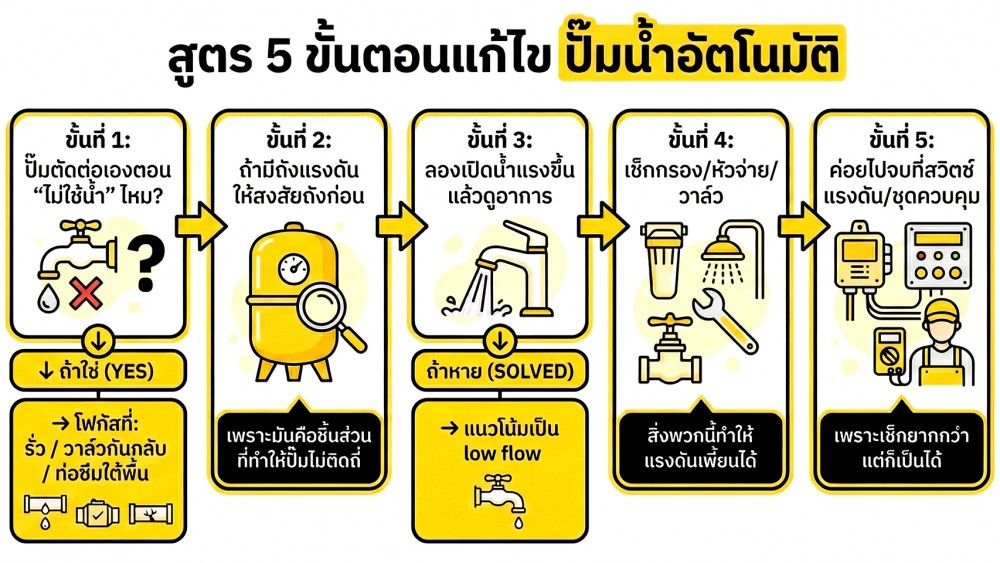
An automatic water pump that cycles rapidly usually doesn't mean the automatic water pump is broken right away. Instead, it is telling us that the system pressure is unstable. The most common causes are minor leaks or pressure control components not functioning at their best. If you troubleshoot in the order we have explained, you can eliminate half of your worries, and it usually ends with fixing a small issue without having to buy a new one.
Select Automatic Water Pump here