


 EN
 ไทย


Customers Also Purchased


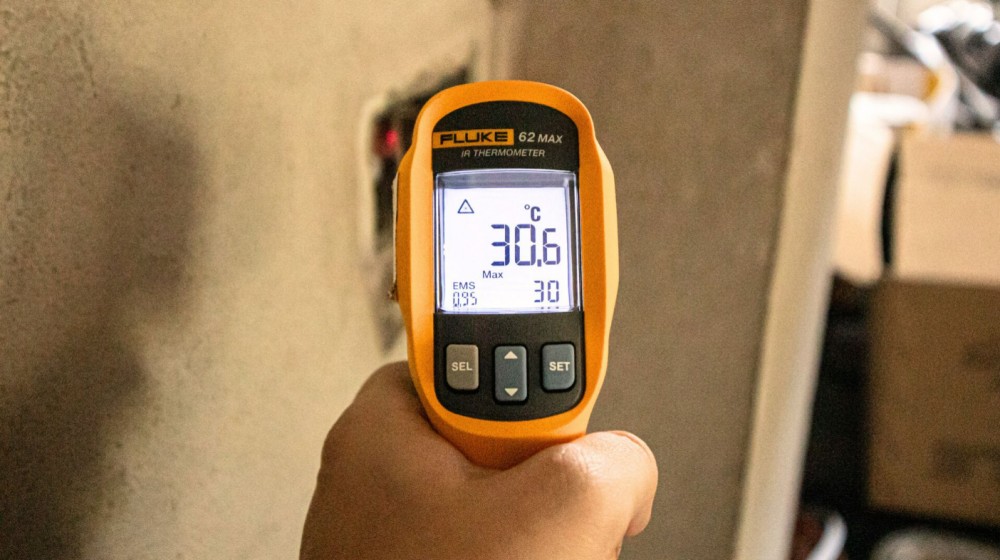
Moisture Meter Digital thermometers in particular play a crucial role in trade and industrial work, as they can accurately measure the temperature of machinery, equipment, or various materials. Using a digital thermometer not only allows for real-time monitoring of equipment operating conditions, but also helps prevent damage from heat buildup that could affect tool performance and lifespan—especially in applications requiring strict temperature control, such as electrical systems, HVAC installation, maintenance, or even construction where monitoring material temperatures leads to better results.
If you are a technician or DIY enthusiast looking for a reliable thermometer, this article will help you decide which type best suits your needs.
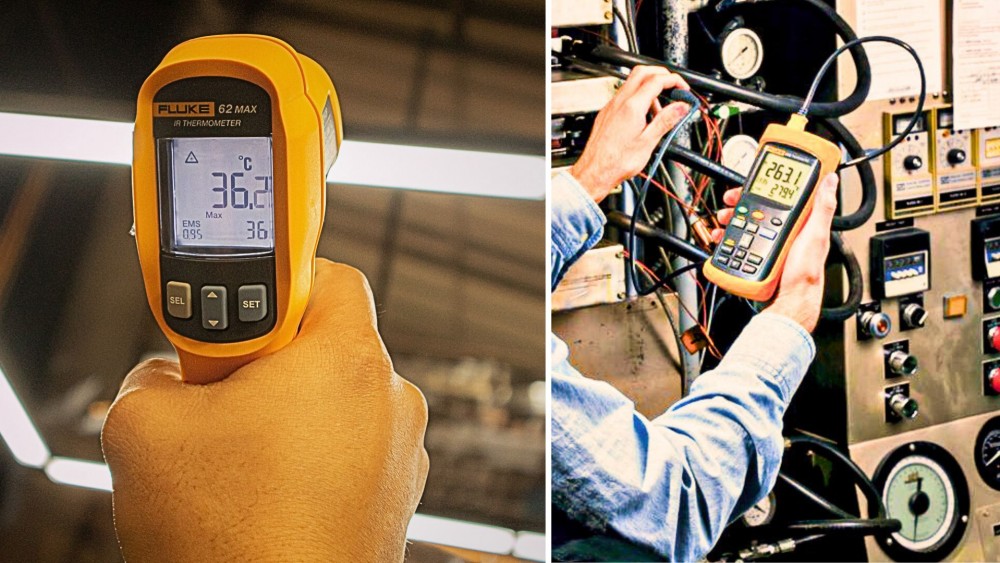
Digital Thermometer: Contact vs. Infrared
Temperature measurement is an essential component across many technical fields, whether in maintenance, quality control, or machine performance inspection. Digital thermometers are primarily available in two types: contact thermometers and infrared thermometers. Each type has its own distinct advantages and limitations. To choose the right one for maximum efficiency, it helps to understand the features and applications of both types.
Contact Thermometer
Contact thermometers must directly touch the surface of an object to measure its temperature. They offer high accuracy, measure values directly, and are unaffected by external ambient conditions. This type of thermometer is suitable for applications requiring precision and stability, such as temperature control in manufacturing processes, engineering work, and the food industry where accurate temperature measurement is essential to ensure products meet quality standards.
Advantages of contact thermometers:
- Provides high accuracy due to direct contact with the object.
- Unaffected by ambient temperatures.
- Offers various options categorized by sensor type, such as thermocouples, thermistors, and RTDs, which are ideal for high-precision applications.
Limitations:
- Requires direct contact with the object, which may be inconvenient in certain situations, such as measuring extremely hot objects.
- Can be influenced by the thermal conductivity of the measured object, sometimes requiring wait time for thermal equilibrium.
- Not suitable for measuring objects with extremely high temperatures or hard-to-reach areas.
Infrared Thermometers
Infrared thermometers can measure the temperature of an object without contact. They are suitable for tasks requiring speed and safety, such as inspecting temperatures of operating machinery, furnaces, or high-temperature areas that are hazardous to touch directly. They are easy to use—simply point at the object's surface and read the value from the display screen.
Advantages of infrared thermometers:
- Measures temperature from a distance without touching the object.
- Reduces risks from high temperatures or hazardous areas.
- Can measure the temperature of moving objects, such as machine components or conveyor belts.
- Easy to use and delivers immediate results without waiting for temperature equilibration.
Limitations:
- Readings may be affected by environmental conditions such as steam, dust, or uneven object surfaces.
- Has limitations when measuring reflective objects, such as polished metals, which may require tools with emissivity adjustment.
- May not be as accurate as contact thermometers for applications requiring high precision.
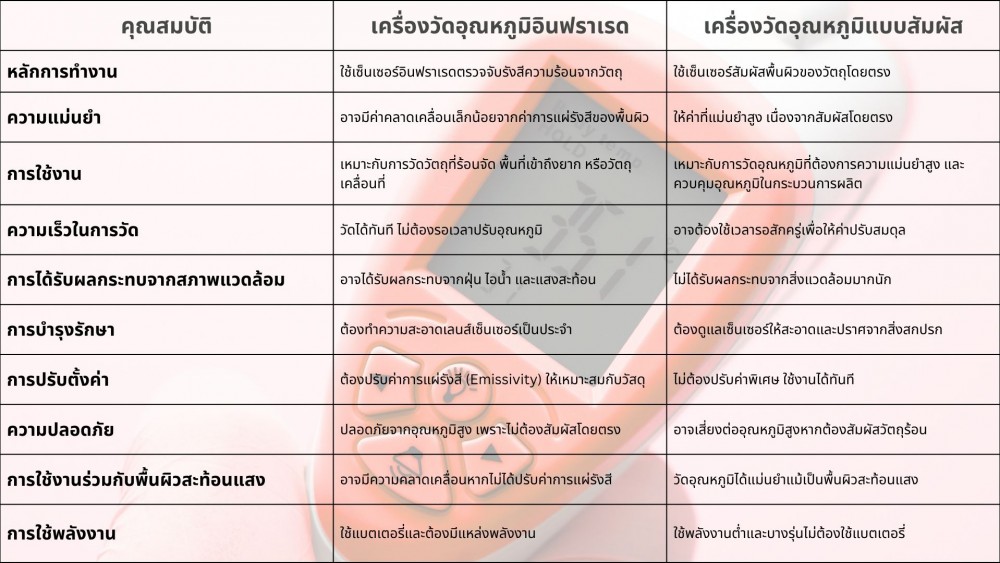
Choosing the Right Thermometer
1. Choose the type suitable for the specific task
Choosing the right thermometer for the job is an important factor in ensuring smooth and accurate operations. Contact thermometers and infrared thermometers each have different advantages and limitations; considering the appropriate type primarily depends on the nature of the application.
- If you need to measure the temperature of materials that can be touched directly, such as steel pipes, electronic components, or metal surfaces that are not excessively hot, contact thermometers are a suitable choice as they provide high accuracy and stability.
- If you need to measure the temperature of extremely hot objects or in environments that are dangerous for direct contact—such as smelting furnaces, operating engines, or high-voltage electrical systems—infrared thermometers should be selected. They can read values from a distance without contact, reducing the risk of damage and danger to the user.
- For tasks requiring temperature monitoring of moving objects, such as parts on conveyor belts, mechanical machinery, or equipment that needs continuous temperature tracking, infrared thermometers enable fast and accurate measurements without interrupting the workflow.
- In cases where you need to measure the temperature of highly reflective materials, such as aluminum or stainless steel, it may be necessary to use an infrared thermometer with adjustable emissivity to achieve higher measurement accuracy.
Therefore, selecting the appropriate type of thermometer for the application's characteristics is a crucial factor in working efficiently, minimizing errors, and increasing operational safety.
2. Supported Temperature Range
The supported temperature range is another critical factor to consider when choosing a thermometer. Each type of thermometer has a different measurement range; some models can measure from below freezing point up to over 1000 degrees Celsius, depending on the sensor used and the device's technology.
- Contact thermometers generally support a very wide temperature range, especially thermocouple sensors, which can measure temperatures from -200°C to over 1300°C. They are ideal for industrial applications that require temperature inspection of machinery, furnaces, or manufacturing processes requiring precise temperature control.
- Infrared thermometers offer a fairly diverse range of supported temperatures depending on the model and sensor quality. Standard models can measure temperatures from -50°C to 600°C, while heavy-industry specific models can handle temperatures exceeding 1000°C. However, the accuracy of infrared thermometers can be affected by the emissivity of the measured target's surface.
If a wide temperature range is required, choose a thermometer that supports a measurement range adequate for your application to ensure that the instrument operates properly and with maximum efficiency.
3. Accuracy
The accuracy of a thermometer is also a crucial factor affecting measurement precision, especially in applications requiring strict temperature control, such as manufacturing processes that demand fractional-degree temperature control.
- Contact thermometers typically offer higher accuracy because they make direct contact with the surface of the object being measured. However, factors such as a delay in heat transfer from the object to the instrument's sensor can cause measurement deviations.
- Infrared thermometers can also provide good accuracy, but emissivity must be configured appropriately for the object's surface; otherwise, measurement errors may occur, particularly when measuring objects with highly reflective surfaces like polished metal or dark, glossy materials.
Thermometer accuracy is usually specified as ± degrees Celsius or Fahrenheit; the smaller the error margin, the more accurate the instrument. Choose an instrument with the highest suitable accuracy for the application to achieve correct results and minimize measurement errors.
4. Special Features and Ease of Use
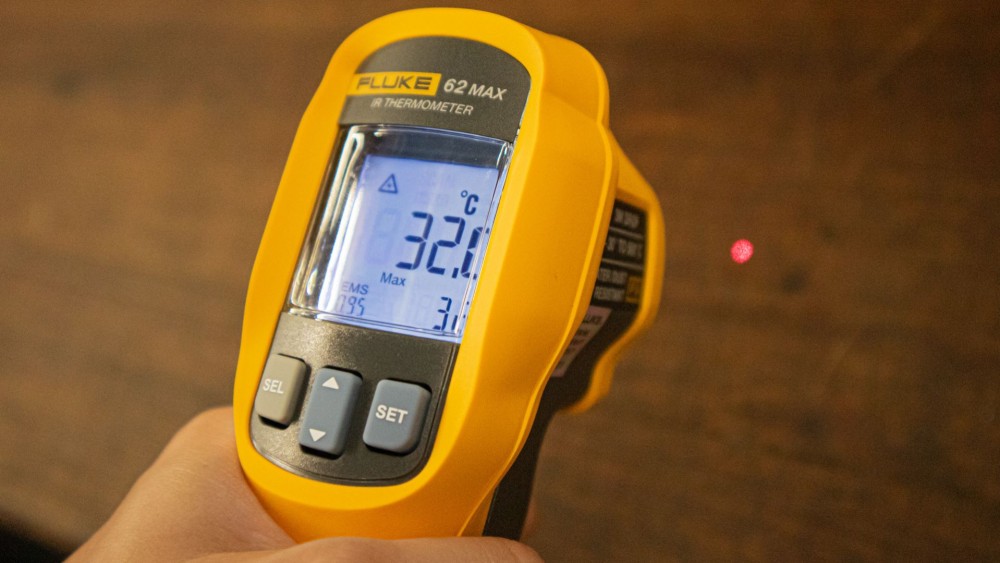
- Digital display: Shows temperature readings clearly and legibly, even in low-light environments.
- Data Logging: Enables recording of temperature measurements for subsequent analysis, ideal for continuous temperature monitoring tasks.
- Emissivity Adjustment: On infrared thermometers, adjusting this setting increases measurement accuracy when working with objects that have different reflective properties.
- Connectivity system: Some models can connect to a smartphone or computer via Bluetooth or Wi-Fi to transmit data and analyze results in real time.
- Multiple measurement modes: Supports Single Spot measurement, Scanning, and Continuous Measurement.
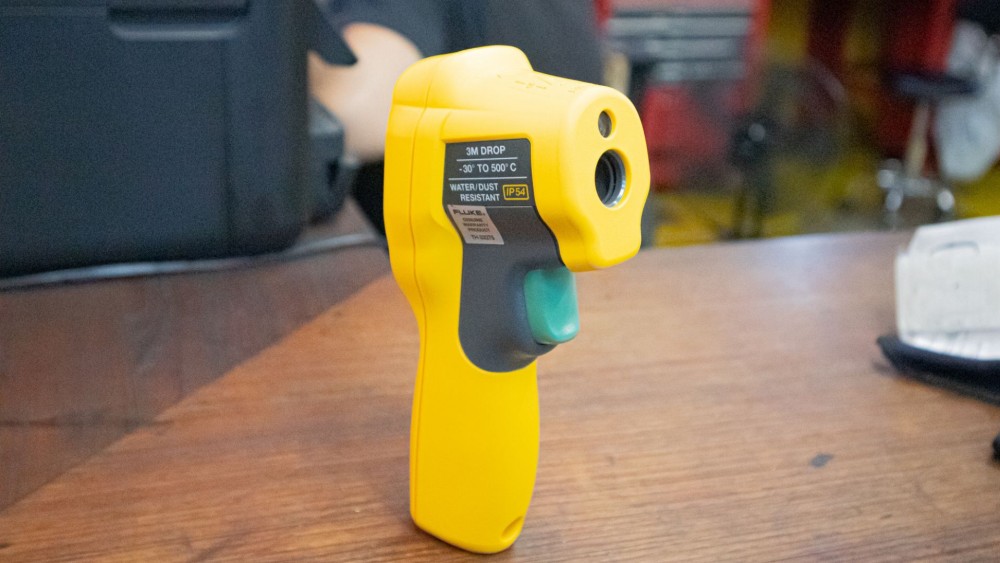
- Design and durability: Thermometers engineered to resist impacts, dust, and water, ideal for use in challenging environments.
- Power and battery: Options powered by rechargeable batteries or lithium-ion cells provide longer runtime without frequent battery replacements.
Conclusion
Digital thermometers are essential tools for technicians and industrial applications, available in both contact and infrared types, each with its own advantages and limitations. Choosing the right thermometer requires considering various factors such as the type of measurement task, supported temperature range, accuracy, and special features that enhance work efficiency. If you need high accuracy and are measuring objects that can be touched, choose a contact thermometer, whereas for tasks requiring convenience, speed, and safety, an infrared thermometer is more suitable.
Understanding the pros and cons of Moisture Meter each type will help you choose the right equipment that best meets your application needs.