


 EN
 ไทย



Customers Also Purchased


Anyone who has experienced this knows it is both frustrating and hilarious at the same time. Right after measuring, you feel super proud: "Wow, that's spot on!" But when you come back to install it later, it turns out to be visibly crooked! That's the exact moment when many people realize that, without knowing it, they had accidentally been using the spirit level on the wrong side.
Sometimes we think that the simplest-looking hand tools are often the ones that trick us the most. A spirit level fits right into that category because it has no buttons, no indicator lights, and no warning beeps whatsoever! There is only a vial and a small air bubble for us to watch. Yet... it secretly hides a whole lot of "usage techniques." If no one has ever taught you or you haven't learned through trial and error, you often ruin quite a few jobs before you finally get the hang of it.
Speaking quite honestly, using a Water level wrong side is nothing to be ashamed of. Everyone has made that mistake. Sometimes we even tell ourselves, "Well, that's just the tuition fee for learning the trade." As long as you know how to hold it next time, use the correct side, and double-check, your work will turn out looking neat and precise just like a professional tradesman's.
What is a spirit level, and why is it so important?
First, let's get to know the "spirit level" more clearly. It is a very serious alignment measuring tool, yet its operating principle is incredibly simple: it just uses an air bubble in a small vial to indicate whether your workpiece is horizontal (level) or vertical (plumb). If the bubble rests right in the center, your work is straight; but if it leans to either side, get ready to redo it. The greatest advantage of a spirit level is that it requires no batteries and no complicated technology at all—just pick it up, place it down, look, and you get the answer in seconds.
The irony is that... even though a spirit level is easy to use and looks simple to anyone, there are still "pitfalls" that constantly catch us off guard—especially using the spirit level on the wrong side! We admit that we have experienced this firsthand ourselves. At the time, we thought, "All good, it's totally spot on!" In the end, it was so crooked that everything had to be dismantled and redone—wasting both time and energy, to the point where looking back now, we still chuckle at ourselves.
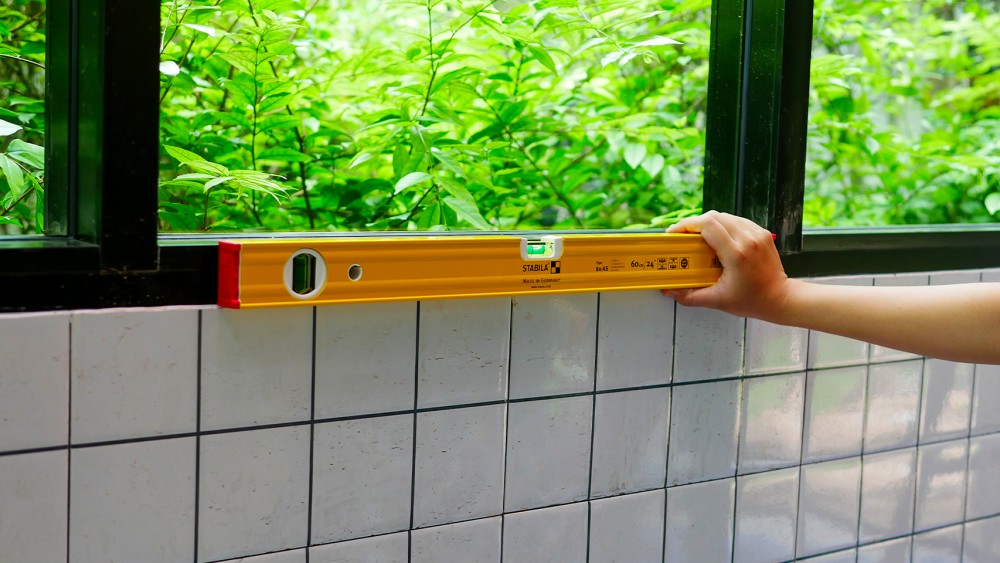
What does using a spirit level on the wrong side mean?
When we pick up a spirit level to use, it's really not just about "placing it down and looking at the bubble." There are subtle details that many people overlook. One of them is that the two main sides of the spirit level are designed for different purposes.
- The smooth, flat surface: This is the standard side that most craftsmen place against materials, whether wood, steel, or concrete, because it is machined to be perfectly straight.
- The other side: Some models feature scale markings, grooves, or magnets for convenient use on steelwork. It might sound like they can be used interchangeably, but in reality, that's not always the case.
- Some spirit levels have a precision surface on only one side. If we accidentally place the other side—which wasn't designed to sit flush against the workpiece—the bubble you see might "deceive your eyes," making you think the work is level when it actually isn't.
- Especially with cheap spirit levels, the vial calibration might not be 100% accurate. If you flip it over and place it on the opposite side, the reading changes immediately. That means your work could be crooked right from the start.
A true story seen with my own eyes: an entire row of kitchen cabinets ended up crooked!
I've experienced this firsthand. I remember clearly when two of us were helping a friend build built-in kitchen cabinets. While working, we were totally confident, checking every single step with a spirit level—there was no way we could mess up. Honestly, back then we felt like real pros.
But right after finishing assembly… reality hit us hard in the face. When closing the cabinet doors, they didn't align properly. The gap in the middle was visibly uneven, to the point where anyone walking by would ask, "Did you mean to make it crooked?" At that moment, our faces dropped; the whole team just stared at each other in utter confusion.
Until finally, someone said, "Try flipping the spirit level to the other side." As soon as we did that, the bubble went all the way to the other end! We instantly realized: we had been using the wrong side from the very start! The entire setup was tilted. We had to dismantle and redo everything. That day was a mix of exhaustion, laughter, and pure frustration.
Whenever you use a spirit level, don't forget to double-check that the side you're placing down was actually designed for measuring. Otherwise, the project you worked so hard on might have to be torn down and redone, just like mine.
Consequences of using a spirit level on the wrong side
The real culprit is "unnoticeable tilting." When you check and feel 100% confident that the work is level, it might actually be subtly slanting more and more. By the time you notice, you've already made significant progress. Once you spot it, it's too late to fix easily—you have to tear down and rebuild, wasting an entire day's hard work! It's utterly frustrating.
- Wasted time on rework: Especially in construction or woodwork/built-ins, if it tilts from the very beginning, every subsequent step will be thrown off like a domino effect. In the end, you have to go back and restart from scratch.
- Wasted materials and extra costs: Cut lumber, drilled drywall sheets, or placed building materials—if cut to the wrong size or placed incorrectly, they basically have to be thrown away. That's money vanishing right before your eyes.
- Loss of credibility: Especially if you're a contractor taking on client projects, this is a major issue. A visibly crooked job won't be excused no matter how much you explain that the tool was inaccurate or that you tried your best; clients won't buy it. The trust they once had in you disappears in an instant.
We believe no one wants to run into these situations because they are truly exhausting. Therefore, before starting any job, take a moment to inspect your spirit level and make sure you're using the correct side—rather than dealing with headaches later.
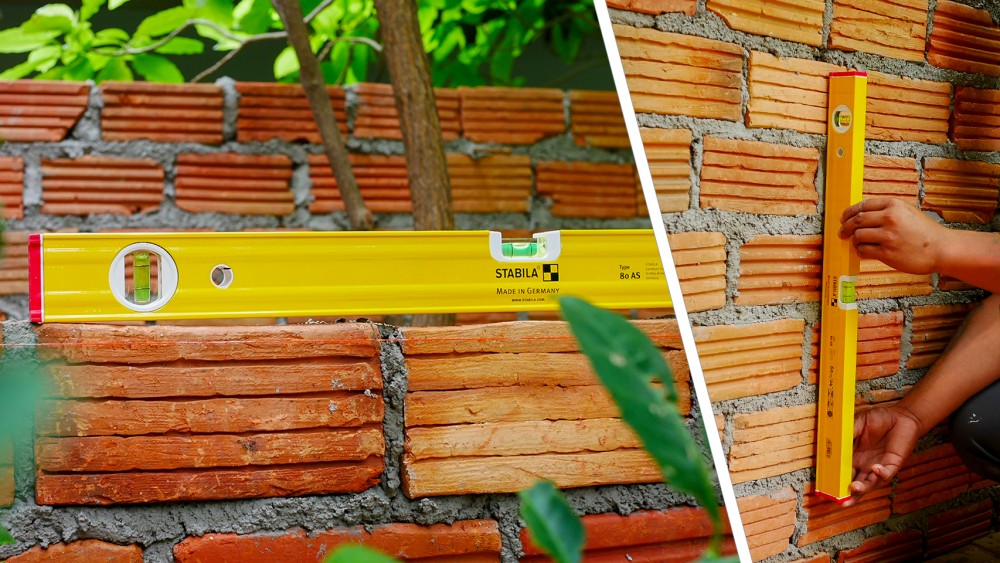
How do you check if you are using the correct side of a spirit level?
We have a few simple tricks to share, just in case you want to be sure that the spirit level you're using is "truly level" and not tricking you with air bubbles.
- Flip it back and forth: This is the easiest way. Place the spirit level down and check the bubble, then flip it over end-to-end to the exact same position. If the reading is identical, you're good to go. But if it differs, one side is definitely lying to you.
- Check the contact surface: Higher-grade spirit levels usually have evenly smooth contact surfaces on both sides, but some models are designed with a "primary edge" meant for frequent use. Take a look at the design or check the manual first to know which side should be used primarily.
- Test on a known level surface: Such as a factory-precision steel table or a perfectly calibrated aluminum frame. Place the level down and flip it end-to-end. If the readings don't match, you can definitely tell that one side is inaccurate.
Speaking frankly, we don't have to wait until making a mistake on the job site. Just running this simple test beforehand gives you peace of mind in the field—no need to worry about crooked work and getting teased by your boss or coworkers. Wrong usage, ruined results! 7 common mistakes when using a spirit level This is truly what many people have encountered.
Small tips for using a spirit level that save our handyman work
- Don't trust a spirit level just once: After checking, try flipping it end-to-end to verify. The air bubble doesn't lie, but sometimes the tool body itself might be slightly off. If you check twice and get the same reading, then you can be 100% confident.
- Use a long spirit level for critical jobs: Many prefer short ones because they are easy to carry, but for work requiring true precision—like installing countertops or long shelving—a larger level is better. Longer means more accurate because it averages out the plane better.
- Check your spirit level regularly: Don't forget, a spirit level is like a person—it can get "tired" too. Especially if it has been dropped or taken a hard hit, the bubble might not align properly anymore. A simple method is to test it on a verified flat surface or table, flipping it end-to-end to see if the reading stays the same.
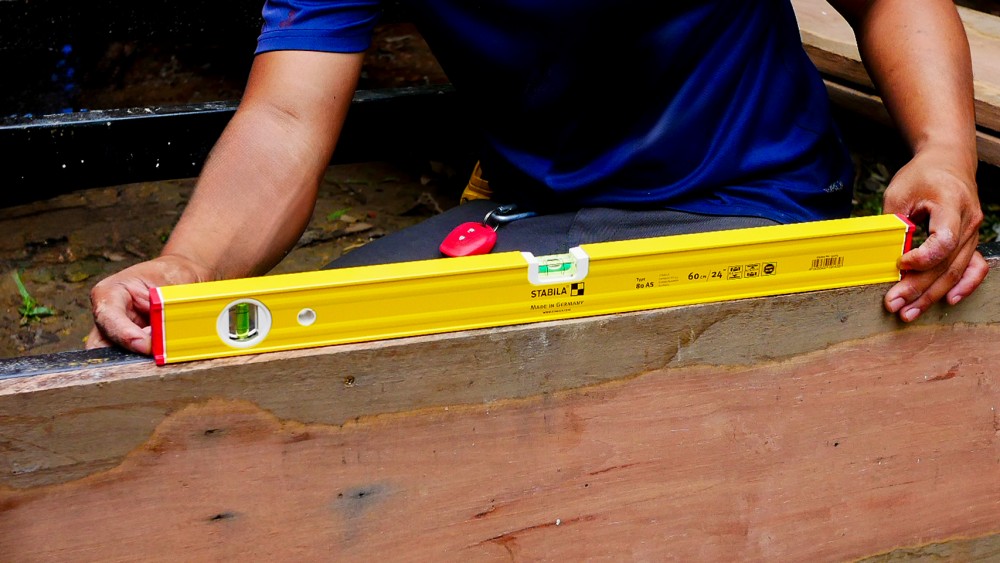
Using the wrong side of a spirit level might seem like a small detail, but the consequences are bigger than you think: crooked work, wasted time, wasted materials, and a tarnished reputation. Knowing how to use it correctly and investing in quality tools will definitely pay off in the long run.
Select Water level More