


 EN
 ไทย


Customers Also Purchased


A spirit level is one of those seemingly simple yet essential tools for every type of craftsmanship—from installation work, cabinetry, and construction to MEP systems like electrical and plumbing. This tool is designed to allow technicians to precisely control the horizontal level and vertical plumb of workpieces, which directly affects the aesthetic appeal, structural integrity, and overall safety of the entire installation.
This article takes a deep dive into 7 common mistakes when using a spirit level, Water level along with prevention methods and proper application techniques to ensure all your work is accurate, aligned, and professional in every dimension.
1. Using a Bent or Damaged Spirit Level Without Realizing It
A spirit level that has undergone heavy use, frequent impacts, or improper storage—such as being stored under heavy tools or kept in extreme heat—can develop a warped body. Even slight bending is enough to throw off readings. Furthermore, internal vials may develop hairline cracks or loose bubbles, and level line markings can fade over time. Even if the exterior looks normal, the tool may no longer provide accurate readings unless thoroughly inspected.
- Inaccurate readings result in the entire installation tilting off-alignment. For example, installing curtain rails, shelving, or even structural posts with a slightly misaligned spirit level can cause the entire system to be crooked, requiring a complete dismantle and rework.
- It impacts precision work such as interior decorating or built-in furniture that demands absolute level accuracy for visual appeal. If the spirit level is off by even a few millimeters, it can lead to uneven gaps, uneven surfaces, or distorted furniture that clients will notice immediately.
Prevention Method
- Check the straightness of the body by placing the spirit level on a flat surface, such as a table or smooth concrete floor. Read the bubble position, then flip the spirit level end-for-end and place it in the exact same spot. If the reading remains identical, the tool is still true; if there is a discrepancy, you should consider replacing it.
- If the vial is cloudy, has abnormal bubbling, or has faded calibration lines, replace it immediately. These signs indicate that the spirit level has degraded and can no longer provide accurate readings.
- Store it in a case lined with foam or cushioned padding to protect it from shocks during transit or from having other tools stacked on top, which could bend the body or knock the vials out of calibration.
2. Using a Spirit Level on a Dirty Surface
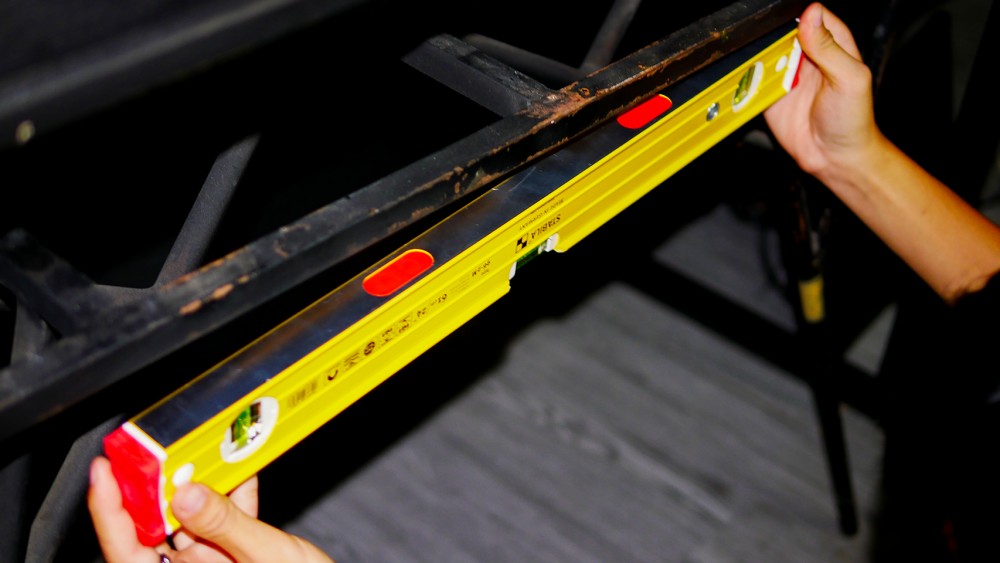
Dust, mortar debris, or oil stains clinging to a surface prevent the spirit level from sitting flush against the workpiece being measured. This can tilt the spirit level slightly without the user noticing, causing the bubble to shift out of place and yielding readings that do not reflect the true line of the workpiece. In some cases, slick oil residues can cause the spirit level to slip or slide during use—especially on metal surfaces—making measurements unreliable and leading to installation or construction errors.
- Uneven tile installation can happen when sand or adhesive residue gets stuck under the spirit level, preventing it from resting flat against the tile. This leads to unnoticed inaccurate readings, causing adjacent tiles to end up out of level with one another.
- Tilting when measuring steel framing occurs when metal filings are stuck to the contact edge or rust spots are present, preventing the spirit level's edge from making direct contact with the steel surface and resulting in distorted readings.
Solution
- Always wipe the surface with a clean cloth before placing the spirit level, especially in areas with direct contact, such as wood edges, steel framing, or concrete slabs, ensuring the level sits flush without interference to the bubble reading.
- Inspect the contact edge of the tool for foreign debris like mortar chunks, wood shavings, or grease stains, and clean them off completely with a small brush or dry cloth before use.
3. Placing the Spirit Level in the Wrong Position
Placing a spirit level on a spot that is not a direct reference line—such as on frame moldings, compressible shims like foam or uneven wood, or unlevel surfaces like wet mortar or unaligned tiles—will produce readings that do not match the true level of the workpiece. The bubble will not indicate properly due to uneven pressure on the spirit level, resulting in fixtures like curtain rods, shelves, or doors ending up crooked or misaligned without you noticing.
- Curtain rails may end up tilted unnoticed, making the installation look untidy and spoiling the room's overall aesthetic. Particularly in interior decorating where millimeter-level precision is vital, a small installation error can necessitate taking everything down and starting over completely.
- Plumbing pipes experiencing backflow due to the mistaken belief that they were installed level. This can lead to incomplete drainage, standing water, or water flowing back toward the source, causing unpleasant odors or plumbing leaks in the long run.
Guidelines for accurate placement
- Place it on the actual target surface, such as the edge of installed tiles, the edge of secured wooden framing, or a properly leveled and completely dry concrete base, so that the reading from the spirit level accurately reflects the actual alignment of the structure.
- Use a stable support, such as a sturdy, flat piece of wood, if it is necessary to place the spirit level on a curved or uneven surface like round pipes or arched beams, ensuring the spirit level sits completely flush and does not slip while measuring.
4. Misreading the bubble relative to the indicator lines
A spirit level is designed with 2 indicator lines in the vial, spaced just enough for the air bubble to move freely. Both lines serve as the boundaries of a position called the "balanced level line." If the air bubble is not centered between these lines, it indicates that the surface or structure being measured is tilted and not at the desired level or plumb. This can result in crooked installations or a lack of balance in construction or assembly work.
- "Eyeballing" it without verifying whether it is truly centered, which often stems from rushing or habit—especially when working in low-light areas or at awkward viewing angles.
- Viewing at an angle rather than parallel to the vial causes parallax error, making the bubble appear centered when it is actually not correctly leveled.
Proper reading method
- Keep your line of sight parallel to the spirit level, with your eyes directly aligned with the vial. Avoid looking from above or below, as this will make the bubble appear displaced from its actual position.
- Use natural light or an auxiliary light, especially when working in low-light areas such as enclosed rooms or in the evening, to see the bubble as clearly as possible and minimize reading errors.
5. Failing to flip the level to double-check the reading
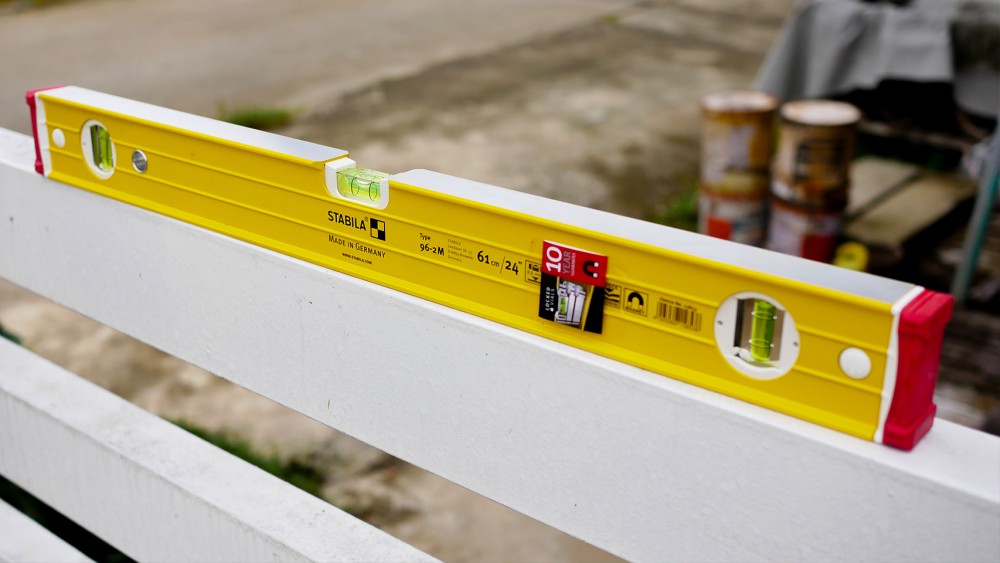
A spirit level can become inaccurate in one direction without your knowledge, especially if the body gets warped or the internal vial becomes unstable. Flipping the spirit level around on the same surface and re-reading it in the same spot helps verify whether the reading is accurate and reliable. If both readings match, the tool is still in good working order. However, if there is even a slight difference, consider replacing or calibrating it before using it on high-precision tasks.
- Inadvertently misaligning an entire column base, causing the entire structure to be off-line from the start. The load transferred to the foundation may distribute unevenly, increasing the risk of structural settlement or causing torsional stress in upper floors over the long term.
- Laying a sloped floor under the assumption that it is level, causing functional problems such as wobbly tables, water draining in the wrong direction or pooling in bathrooms and balconies, or even noticeable unevenness underfoot when walking.
Simple technique
- Place the spirit level, take a reading, and then flip it end-to-end on the same line—keeping it in the exact same spot but rotated 180 degrees—and observe the bubble's position again.
- If both readings match, the tool remains accurate and can be used with confidence. However, if the bubble shifts beyond the acceptable tolerance, it is recommended to calibrate or replace it immediately.
6. Using the wrong type of spirit level for the job
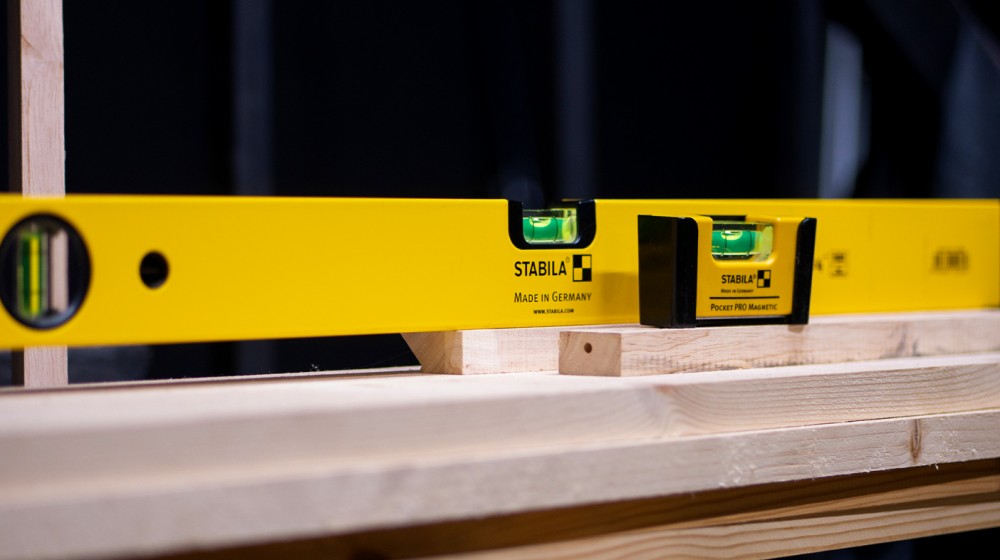
From standard box levels and magnetic levels to digital and laser levels, each type has its own strengths and limitations. For instance, standard box levels are suitable for general household tasks or tight spaces; magnetic levels are ideal for steelwork where hands-free operation is needed; digital levels offer high precision and are best for fine-detail work such as machinery installation; and laser levels are great for long-distance measurements or room-wide layout alignment. Choosing the wrong type for your application makes work difficult, leads to errors, and may yield subpar results.
- Using a pocket-sized spirit level for large-scale masonry work, which is not suitable for job site conditions that demand durability and long-term accurate readings. Because pocket-sized spirit levels are typically short, they cannot adequately span the measuring surface, and errors may occur due to uneven manual hand pressure.
- Using a non-magnetic model on steel structures leads to an unstable hold, especially when working vertically or when the spirit level needs to remain attached to the workpiece while adjusting positions. Without magnets, you have to hold it with your hand the entire time, increasing the chance of slipping and misreading.
How to choose properly
- Interior work: Choose a short, lightweight, and easy-to-use model, such as a 20–40 cm length. Suitable for installing shelves, picture frames, wall cabinets, or indoor furniture where an overly long measuring span is not required and work must be done in confined spaces.
- Structural work: Choose a long model with magnets, such as 60–120 cm in length, to cover a wider leveling span. Used for wooden frames, steel frames, or walls, equipped with built-in magnets to securely adhere to steel so leveling is convenient even when working alone.
- Precision work: Choose a digital or laser model. Ideal for installation work requiring high accuracy, such as installing machinery, aligning piping systems, or measuring levels over distances of several meters, requiring both precision and ease of reading.
7. Neglecting maintenance, leading to unnoticed tool deterioration
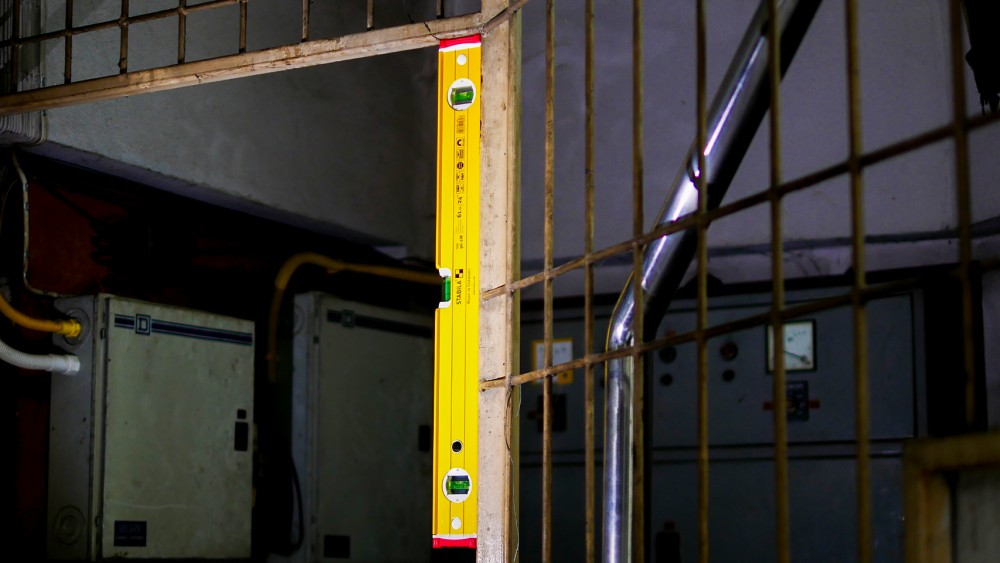
A spirit level that is dirty, dropped, or stored in humid conditions will deteriorate quickly, significantly reducing reading accuracy. The body may warp, the vials may crack, the level lines may fade, and the internal fluid may evaporate or form sediment, preventing the bubble from moving freely. Additionally, moisture causes mold, clouding, or rust at contact points, especially when used with steel or on construction sites. This rapidly shortens tool life and may require premature replacement.
- Clean immediately after use, especially around the vial, which is the most critical part for bubble indication. Wipe dry with a microfiber or soft cloth; avoid harsh chemical cleaners, as they can cause the level lines to fade.
- Do not store in extremely hot areas or under direct sunlight, as excessive heat can cause the fluid in the vial to expand, creating internal pressure that leads to leaks or faster deterioration.
- Store in a separate case away from heavy tools to prevent the spirit level from being crushed or impacted by other equipment, such as wrenches, hammers, or power tools, which could unwittingly warp the body.
Check regularly
- Verify accuracy every 3–6 months by placing the spirit level on a flat surface and flipping it 180 degrees to compare the readings. If both readings match, the spirit level is still working properly.
- If you begin to notice irregular bubble movement or inconsistent readings—such as the bubble not gliding smoothly, faded level lines, or values that do not reflect actual conditions—it is recommended to replace it immediately to avoid errors during installation work.
Conclusion
A spirit level may look like a small, simple tool, but using it incorrectly even slightly can cause damage across the entire system—whether in small installations like picture frames or large structures like building columns. Accuracy is the heart of safety, aesthetics, and credibility in the eyes of your clients.