


 EN
 ไทย


Customers Also Purchased




Gentle sunlight on a Sunday morning shines into our backyard. The trees and plants we planted... have started to grow and interfere with our daily life! Now it's time for us to "handle" it! There is no tool or equipment more suitable than a “Pruning Saw” at a time like this!
Many people might think... just having a pruning saw should be enough, right? Not at all! It's much more exhausting than you think! You'll run into various obstacles, whether it's strained wrists, numb hands, tight shoulders, or a saw that won't cut smoothly or keeps jamming... This is the reality many have experienced. But don't worry! We have solutions to help you “cut smoothly without arm fatigue,” without having to slash away with all your might like cutting bamboo in a samurai movie!

Start by understanding that pruning saws don't just come in one type
Before walking you through sawing techniques, we need to choose the “star of the show” first: the pruning saw itself! But wait... there's another crucial factor that is often overlooked: what type of pruning saw are you using? That's the real point! Because there isn't just one type. Each type of pruning saw is designed for different tasks, such as horizontal cutting, cutting high branches, or even jobs requiring continuous effort over several hours. Put simply, if you choose right from the start, your job will be much lighter! Pruning saws come in straight blade, curved blade, folding, pole-extension, and electric types, each with its own advantages. You can choose the right pruning saw for your specific job to ensure smooth, seamless, and efficient operation.
- Straight blade saw: Ideal for small to medium branches and best for sawing in directions where you can easily control your force.
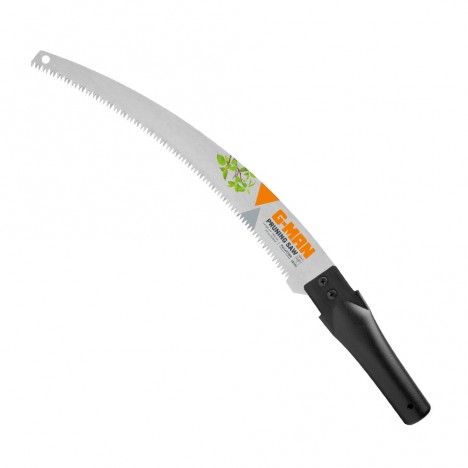
- Curved blade saw: Designed to work with gravity, making it ideal for cutting high or angled branches.
- Folding saw: Highly portable and easy to use for light-duty tasks (a personal favorite).
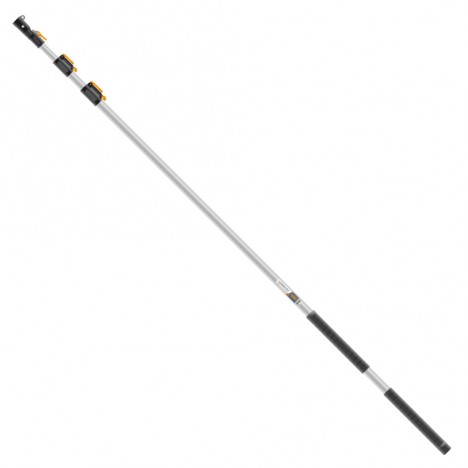
- Pole saw / High-reach pruning saw: Reduces the need for climbing, preventing accidents when cutting overhead branches.

Grip the pruning saw correctly to reduce strain
Don't rush—saw with a steady rhythm
Let the rhythm guide you. Sawing wood doesn't actually require much brute force; it just requires a coordinated "push and pull" rhythm. It's really that simple. Especially with sharp-toothed saws, let the saw blade do the work rather than forcing it with your arm.
If you can't picture it, imagine cycling up a hill: if your pedaling rhythm is uneven, you waste a lot of energy, right? But if you pedal smoothly along with your cadence, everything feels noticeably lighter. Sawing works on a very similar principle.
The secret is to apply more force on the pull stroke (the return stroke) than on the push stroke. By design, most pruning saws cut best on the pull stroke toward yourself. If you let the saw teeth bite into the wood naturally, you barely need to use any extra effort. Pushing forcefully doesn't help you cut faster; it only wears you out and leaves you needing a massage—a waste of time! Haha.

Always start sawing in the right position
Stay cool! Before making every cut, take it easy and don't rush. Check these points first: Is the cut far enough from the main trunk? Leaving a small branch collar prevents damage to the tree and helps it heal and sprout well. Is the branch within a controllable range? If you have to reach out fully every time, it won't be sustainable and will definitely cause unnecessary shoulder pain. Is there enough clearance around it for a full sawing stroke? If anything is in the way, clear it first so your sawing rhythm isn't interrupted.
Pruning Saw Guide: Fine Tooth vs. Coarse Tooth – Which is Best? Fine-tooth pruning saws: Ideal for softwoods, dry wood, or small branches requiring neat, precise cuts. Coarse-tooth pruning saws: Ideal for hardwoods, large branches, or jobs that require fast cutting.

Don't forget to take breaks and switch hands when using a pruning saw
If you need to saw several branches in a row, take some breaks! Rest every 10–15 minutes. Don't think that rushing to finish quickly is better, because in the end, your body, arms, and shoulders will definitely pay the price! There's no rush: pause to stretch your muscles, grab a sip of coffee, and then get back to it. This approach definitely works better than pushing yourself until you're completely exhausted—there's no benefit to that.
And if you are right-handed and have been using that side all day, try switching to your left hand. It might feel strange at first, and your cuts might be slightly crooked or slower, but it allows the other side's muscles to rest and greatly reduces fatigue. It's like shifting gears on an uphill road—it might not make you faster immediately, but it definitely lets you go further! Most importantly, I think everyone relates to this: once we're exhausted, we don't want to do anything except lie down and sleep!
