


 EN
 ไทย


Customers Also Purchased


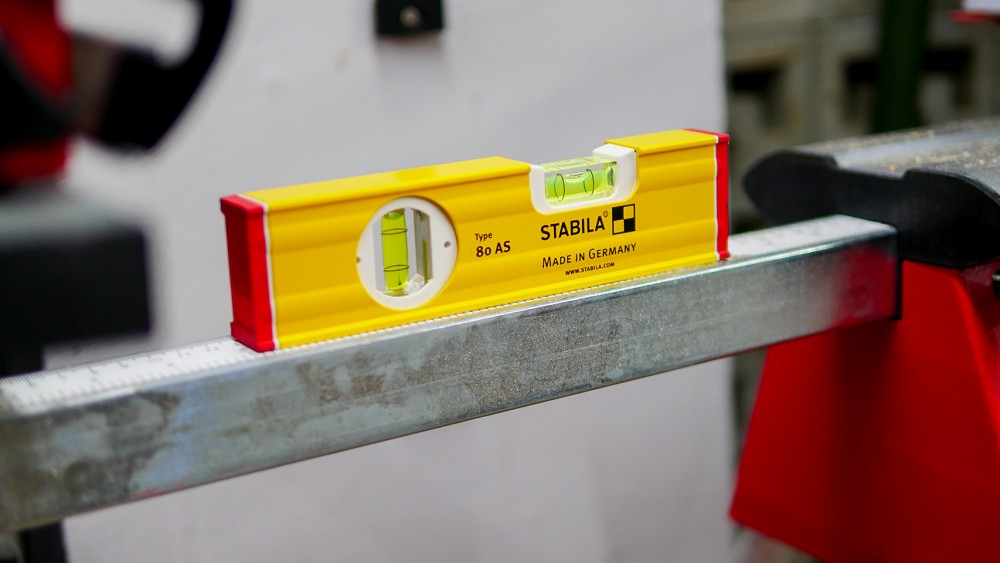
Has this ever happened to you? You grab a Water level to measure a shelf, look at the bubble, and it's right in the center. But the moment you step back to look—why does it look completely tilted?! You turn left, turn right, tilt your head, and it still looks crooked. You start doubting whether your eyes are playing tricks on you or if the spirit level is actually off!
If you've ever faced this problem, let's find out together why it feels that way! Here are some simple techniques to check if your spirit level is truly accurate—no complicated tools needed. Just a bit of curiosity and a closer look. After reading this, you'll be much more confident that it's straight.
Why does it look tilted, even after using a spirit level?
Perception doesn't match the eyes
- Sometimes our eyes can be easily deceived. For example, if surrounding walls, floors, or even furniture are slightly tilted, or feature slanted wood grain or tile patterns, we might perceive whatever is placed in front of us as tilted too—even when it's actually perfectly straight!
- Room lighting can also play tricks on us. If light comes from only one side or shadows fall unevenly, it can make a shelf or picture frame appear tilted when it might actually be perfectly level! This is especially true when mixing warm yellow light with cool white light, which distorts visual perception even further.
A spirit level might be inaccurate without you realizing it
- Don't just assume it's accurate because the bubble is in the center; it could be misleading! Many people don't realize that a loose vial or a single hard impact can throw off its accuracy. Even if the bubble appears centered, a slightly shifted vial will lead to incorrect measurements.
- Our local weather can be quite extreme, swinging from scorching heat to freezing cold (especially with the AC blasting). Extreme temperatures affect the materials of a spirit level, causing slight expansion or contraction. Using it under consistently extreme hot or cold conditions can introduce subtle measurement errors that easily go unnoticed.
How to check if your spirit level is still accurate?
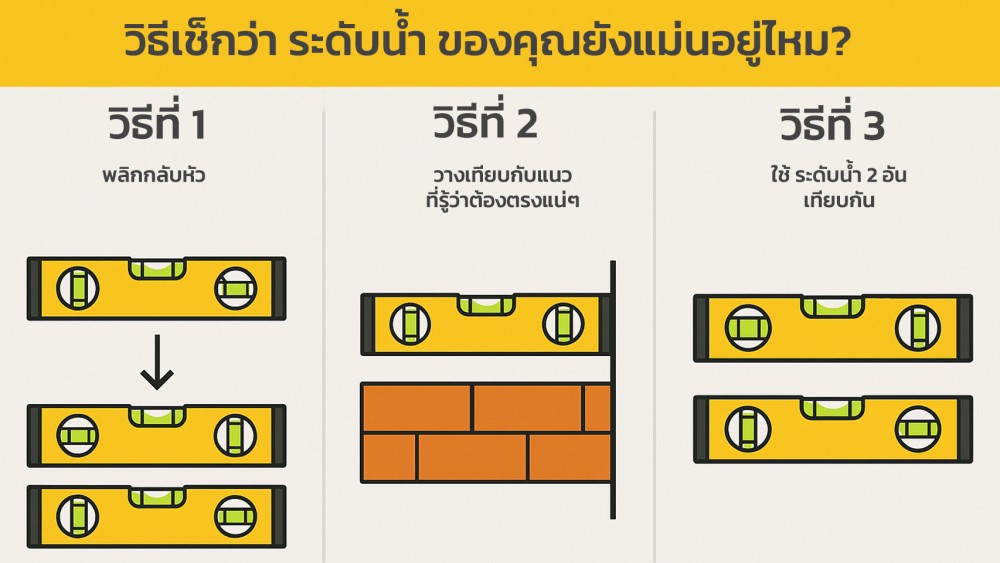
Method 1: Flip it 180 degrees
- Start by placing the spirit level on a surface you are sure is truly flat, such as a smooth wooden tabletop or a straight shelf. Even a slight sag or bump in the surface can affect the bubble's position.
- Carefully observe the position of the bubble. Take your time to check if it is truly centered and not leaning to either side. Even a millimeter off shouldn't be ignored, as it can make a shelf look noticeably crooked.
- Next, flip the spirit level 180 degrees end-to-end, swapping the positions of the ends, and place it back on the exact same spot. This allows you to check whether the bubble settles in the identical position.
- If the bubble remains in the exact same position after flipping, your spirit level is reliable and ready to use, giving you confidence that your work won't be skewed by an inaccurate tool.
- However, if the bubble noticeably shifts from its original position, your tool is likely inaccurate. It's best to retire it or replace it with a new one to avoid unnoticed mistakes and wasted time fixing crooked work later.
Method 2: Compare against a known straight reference
Find something you are certain is straight, such as a window frame, column, or well-crafted door jamb. Place your spirit level against it. If the bubble stays steady and centered, it's fine. But if it shifts off-center against a surface that is definitely plumb or level, the tool itself may be faulty.
Method 3: Compare 2 spirit levels against each other
If you're lucky enough to have 2 spirit levels, try placing them side-by-side to compare. Place them in the exact same spot, then observe if the bubble rests in the same position on both. If they match, you can rest assured; it means both are reliable. But if the readings don't match, trust the one you previously tested using the end-for-end flip method and confirmed to be accurate—that one is more trustworthy.
How to choose a spirit level for precise accuracy?
So, how do you choose a spirit level that is truly accurate and won't deceive your eyes? What should a good spirit level have? Material, length, and accuracy
Check the Accuracy
- If you need to do work requiring millimeter precision, such as woodworking or built-in furniture installation, I recommend choosing an accuracy of ±0.5 mm/m or better. This gives you peace of mind that you won't have to redo the work due to misaligned leveling.
- For general household use, like hanging picture frames, installing small shelves, or organizing rooms, an accuracy of ±1.0 mm/m is perfectly adequate. It doesn't need to be professional-grade precision, but I still recommend choosing a trustworthy brand so you don't have to second-guess whether your tool is true every time you use it.
Brand Matters
- Anyone who has used a brand like Stabila knows how truly reliable it is—both in terms of measurement accuracy, durability, and tightly fitted vials that don't easily loosen. Moreover, many models can handle heavy-duty use without fear of breaking down.
- Very cheap spirit levels might measure accurately when brand new, but after a short period of use, occasional drops, or impacts, their accuracy starts to drift without you even realizing it. Then you're left wondering why the job looks crooked, even though you measured it!
Choose the Right Spirit Level Size for the Job
- Small spaces: 20–30 cm — Ideal for working in tight areas, such as leveling cabinet shelves, drawers, or small DIY projects where you don't want a cumbersome long bar. It fits easily into a tool bag and is lightweight too!
- General household tasks: 60 cm — This is considered a versatile medium size that handles all sorts of jobs, whether installing shelves, mounting a TV, or aligning furniture straight. It's easy to use, convenient to carry, and perfect for DIY enthusiasts at home.
- Structural or long-span work: 100 cm and above — If you need to check long continuous lines, such as aligning walls, laying floor tiles, or leveling steel beams, this is where you should use a spirit level of 1 meter or longer. A longer bar makes it much easier to sight a straight line accurately without wasting time moving between multiple points, while also minimizing the chance of error.
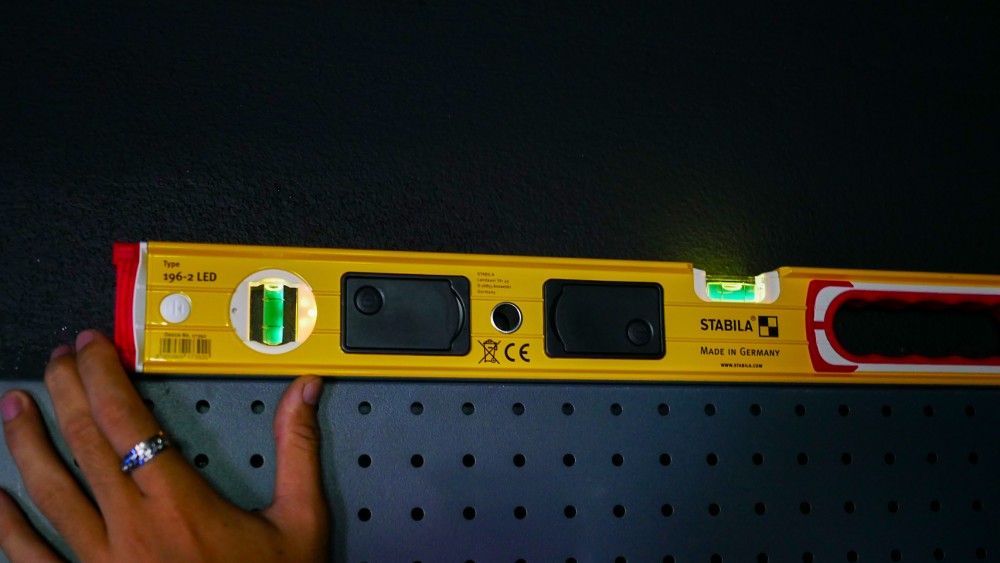
Extra Features Help a Lot
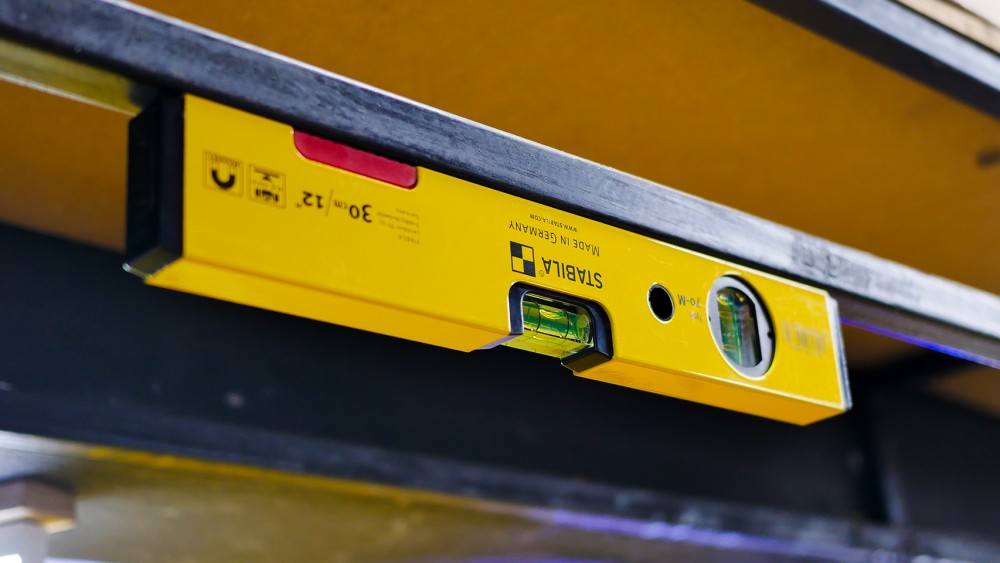
- Magnetic: For anyone frequently working with steel framing, pipes, or metallic materials, this feature is a lifesaver. Just place the spirit level on the surface, and it sticks securely. No need to hold it with both hands, making work much more convenient and far more accurate.
- Lighted or glow-in-the-dark vials: Ever worked at night or in poorly lit corners where you had to strain your eyes just to tell if the bubble was centered? This feature helps immensely by making the bubble clearly visible even in the dark or during late-night jobs, eliminating the hassle of holding a flashlight.
- Multiple vials: Some models feature horizontal, vertical, and 45-degree angle vials. If you need to install stair railings, diagonal shelving, or want to mount decorative items on an angle, this feature makes measuring angles easy without guessing or searching for a protractor.
- Digital: Anyone who appreciates exact numeric precision will love this feature. It displays the angle clearly in numbers, so there's no need to strain your eyes reading a bubble. Just look at the screen to know immediately if it's level or by how many degrees it's tilted. Easy to use and extremely accurate.
Select Water level to suit the application