


 EN
 ไทย


Customers Also Purchased


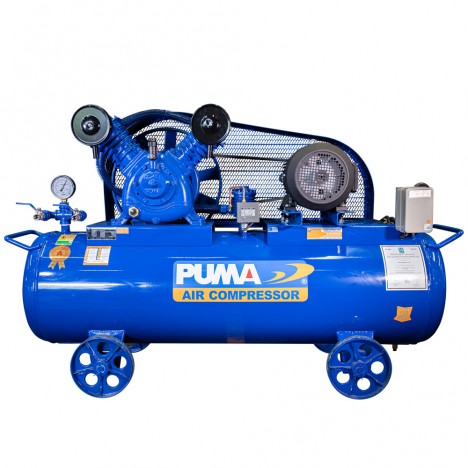


Air compressors are widely used equipment in auto repair shops, vehicle maintenance, construction, DIY projects, manufacturing, and industrial operations. There are several types available; two of the most popular are belt-drive air compressors and direct-drive air compressors. Each type has its own advantages, disadvantages, operating characteristics, and suitability for different applications. This article compares belt-drive and direct-drive air compressors to help you choose the right compressor for your needs.
Basic differences between various types of air compressors
An air compressor is a tool used to generate air pressure and is widely utilized in industry and general applications, such as automotive work, construction, and various manufacturing fields. There are several types of air compressors, each with distinct features and applications, such as piston compressors, rotary screw compressors, rotary vane compressors, and centrifugal compressors. They differ in operating mechanisms, air pressure generation capability, continuous duty cycle, price, and maintenance requirements depending on their design and intended purpose.
Belt Drive Air Compressors
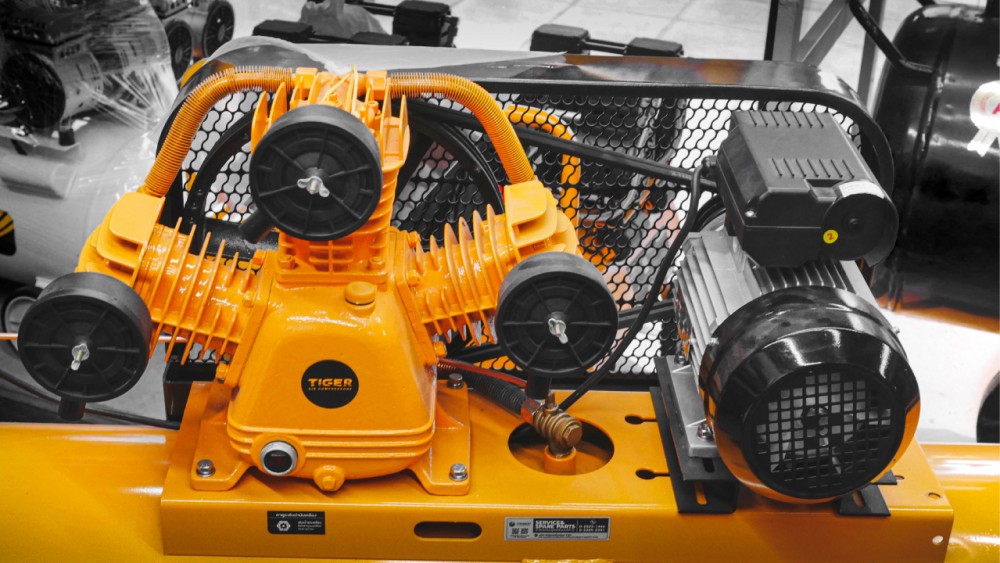
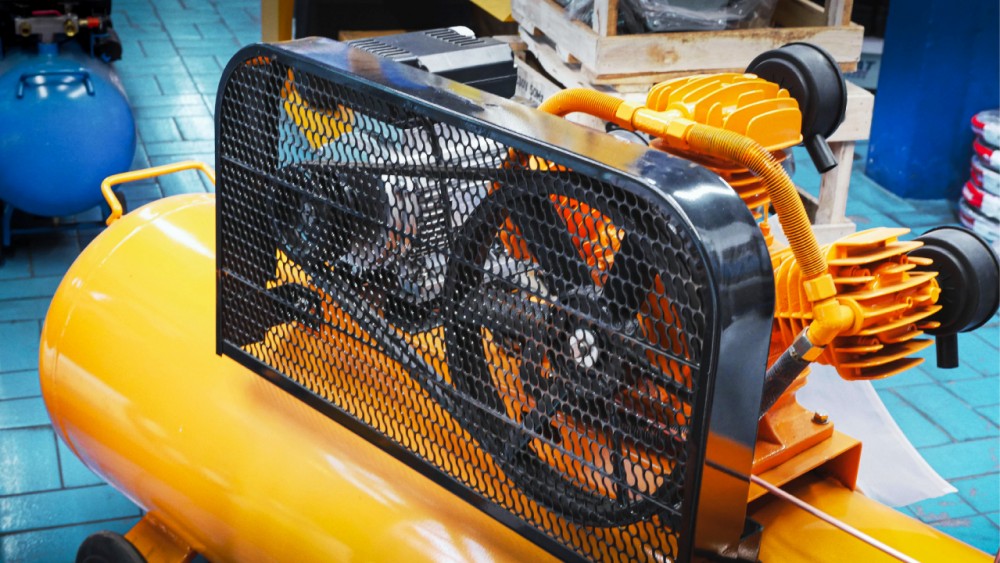
A belt-driven air compressor operates by using a belt to transfer power for generating air. The belt is mounted between the compressor motor and the piston drive or "rotor." While the compressor motor is running, the belt transmits power to the piston to build up air pressure. The pulley ratio determines the maximum pressure (PSI) and the airflow capacity in CFM (cubic feet per minute). Generally, most piston air compressors are belt-driven.
- Advantages of belt-drive air compressors
The main advantage ofBelt Drive Air Compressors is the flexibility to adjust CFM and PSI values by altering the belt and pulley system. This is an advantage for facilities that may need to adjust their operating pressure, such as woodworking shops or auto repair garages. Additionally, belt-drive air compressors generally have a lower initial purchase price.
The pulley system connecting the belt between the motor and the air pump determines the conversion of motor RPM to pump speed. Adjusting the belt and pulleys can alter the maximum pressure and affect the airflow rate (CFM) of the machine. These variables have an inverse relationship: when one increases, the other must decrease. You can achieve higher CFM at lower PSI, or higher PSI at lower CFM, but you cannot increase both simultaneously (without changing the motor horsepower). For example, you can adjust a compressor rated at 100 CFM at 125 PSI to deliver a higher CFM at 100 PSI by changing the pulley system. However, the increase in CFM will also depend on other design factors of the air compressor.
Belt-drive air compressors have other advantages as well, such as being easy to maintain. Although they require more frequent maintenance, inspecting and replacing the belt is straightforward and convenient.
- Considerations for belt-drive air compressors
Belt-drive air compressors must be inspected regularly to ensure there is no wear, that alignment is correct, and that tension is optimal. If the belt and pulley system is not properly aligned, the compressor will not operate at peak efficiency and may fail to deliver the required air pressure and volume.
The belt on a belt-drive air compressor wears down over time. Check if the belt appears glazed, brittle, cracked, or excessively stretched, which indicates it is time for a replacement. Although changing a belt is not difficult, the cost of spare parts and labor accumulates over the lifespan of the machine.
Problems with belt-driven air compressors may occur sooner when operating under unsuitable environmental conditions, such as frequent temperature fluctuations or extreme temperatures (either excessively hot or cold), which increase stress on the belt and lead to premature wear. A belt-driven air compressor is not the best choice if you need to store the machine outdoors or in environments with improper temperatures or excessive humidity.
Direct-Drive Air Compressors
In a direct-drive air compressor, the motor is connected directly to the air compressor via a crankshaft. When the motor rotates, the crankshaft moves pistons (for reciprocating air compressors) or drives couplings that turn rotors (for rotary screw air compressors). The compressor's speed and airflow (CFM) are directly determined by the motor speed (RPM). The mechanism of a direct-drive air compressor is very straightforward, designed with minimal moving parts. Most air compressors over 50 horsepower are typically direct-drive models.
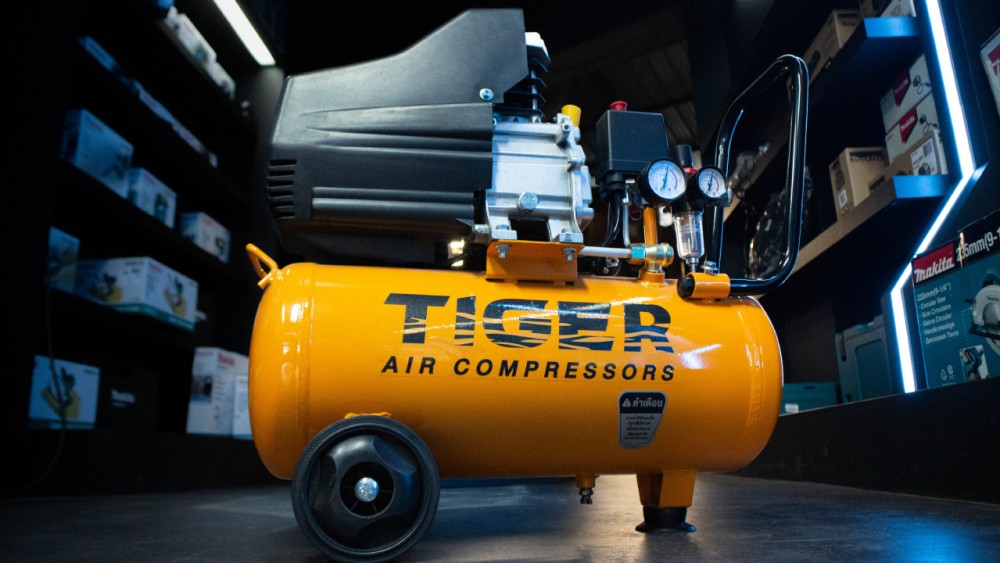
Direct-drive air compressors come in both geared and non-geared types. In non-geared units with a direct connection, the internal moving parts always run at the same speed as the motor. In geared direct-drive compressors, speed can be adjusted by changing gear settings. Some manufacturers utilize gearing systems so that the same motor size can be used across compressors with different horsepower ratings and airflow (CFM) outputs.
- Advantages of Direct-Drive Air Compressors
Direct-drive air compressors generally feature longer lifespans and less downtime. Compared to belt-driven air compressors, direct-drive models have fewer moving parts, which translates to reduced maintenance, less wear and tear, and higher reliability. Without belts to replace, you save time and maintenance costs throughout the machine's operating life.
Direct-drive air compressors are also more energy-efficient. Because there is no power loss from belt slippage or degradation, less energy is lost between the motor and the air end. This means a direct-drive compressor uses less electricity than a belt-driven compressor of equivalent horsepower. Over time, this yields significant energy savings.
The absence of belts also means this type of air compressor is more durable in harsh environments. If your compressor must endure extreme heat or cold, a direct-drive unit may be the best choice.
- Considerations for Direct-Drive Air Compressors
One primary drawback is the initial purchase price, as direct-drive air compressors are generally more expensive than belt-driven models. There are also additional factors to consider, such as repair costs when maintenance is needed. Because the motor is directly connected to the air end, disassembling and repairing a direct-drive compressor is more difficult if problems arise and typically requires highly skilled technicians. For this reason, professional maintenance and repair services are recommended for direct-drive compressors.
In direct-drive air compressors without adjustable gearing, airflow (CFM) and pressure levels cannot be easily modified. While it is theoretically possible to change the horsepower and motor speed (CFM output) on geared compressors, this is generally not feasible for end-users to perform after installation.
Factors to Consider When Buying: Direct-Drive vs. Belt-Driven Air Compressors
Several factors should be considered when choosing between a direct-drive and a belt-driven air compressor, including your application pattern, available budget, operating environment, and maintenance capabilities. Note that rotary screw compressors are more likely to be direct-drive (especially higher horsepower models), while most piston compressors are belt-driven. Let's look at the key considerations when choosing one over the other.
1. Air Demand Requirements
First, assess your compressed air requirements to determine the maximum total CFM needed per day. Consider how frequently you use the air compressor—continuous operation or intermittent use? For high-CFM demands and continuous duty, a direct-drive rotary screw compressor is almost always the optimal choice. Large compressors (50 HP and above) are typically only available in direct-drive configurations. Direct-drive compressors offer greater durability and reliability, providing a major advantage for continuous operation and high CFM requirements.
On the other hand, if your CFM demands are modest and you anticipate needing to adjust the compressor's PSI and CFM output in the future, a belt-driven compressor may be a better fit.
2. Budget
When evaluating the cost differences between direct-drive and belt-driven compressors, two factors must be considered: upfront capital cost and total lifetime cost.
- Belt-driven compressors are typically cheaper than direct-drive models of the same horsepower and CFM. If you are seeking to minimize initial capital expenditure, this may be the right option for you.
- However, direct-drive compressors often offer lower total lifetime costs due to reduced maintenance expenses and a longer operational lifespan. If properly maintained, a direct-drive unit will deliver reliable operation for years. Direct-drive compressors also incur lower energy costs thanks to their superior efficiency.
3. Efficiency
In terms of efficiency, direct-drive air compressors win hands down, as energy is transmitted much more efficiently through the drive mechanism compared to belt and pulley systems. Even when a belt-driven compressor is perfectly calibrated, some energy is still lost to friction, heat, and "belt slippage." Higher efficiency translates to lower energy costs for direct-drive compressors.
4. Operating Environment
If your air compressor will be used in extremely hot or cold environments, consider a direct-drive unit. The belts inBelt Drive Air Compressorsare sensitive to fluctuating temperatures and exposure to corrosive chemicals. Operating a belt-driven compressor outdoors or in harsh indoor environments reduces belt life and leads to more downtime and maintenance. Excessive wear also decreases the overall lifespan of the machine. The simpler mechanism in direct-drive compressors enables them to withstand harsh conditions better.
5. Maintenance
In terms of maintenance time and frequency, direct-drive air compressors stand out. Direct-drive air compressors do not require much maintenance since there are no belts to inspect and replace. However, keep in mind that maintenance for direct-drive compressors typically costs more and requires specialized maintenance skills. You need to consider whether you want to perform maintenance in-house or plan to hire a technician to maintain the compressor.
Conclusion
Direct-drive air compressors offer advantages in terms of simplicity, energy efficiency, and durability in harsh environments. Because there are no belts to inspect and replace frequently, they experience less downtime and lower maintenance costs in the long run. They are also more energy-efficient than belt-driven compressors due to the absence of belt power loss. However, the initial cost for direct-drive compressors is generally higher, and necessary repairs requiring specialist services can be more expensive.
For applications requiring high CFM and continuous duty, direct-drive air compressors are the best choice. However, if your CFM demand is not very high and you may need to adjust PSI and CFM in the future, a belt-driven compressor might be more suitable. Additionally, if you prefer to perform maintenance in-house and your maintenance team has the knowledge and time to replace belts, a belt-driven compressor could be the better option.
Other Related Articles - How to Choose the Right Large Belt-Driven Air Compressor for Your Job