


 EN
 ไทย


Customers Also Purchased


In a system,Water Pumps issues with Water hammer and Cavitation often occur unexpectedly and have a significant impact on performance and the service life of the syWater Pumpsdirectly. In this article, we will examine what water hammer and cavitation are and how to prevent them, in order to understand how to manage and optimize your systemWater Pumpsto be more efficient throughout its required operating time. Therefore, let us begin this study with an understanding of the nature and impacts of water hammer and cavitation in the system.Water Pumpstogether right now.
What are Water Hammer and Cavitation?
Water Hammer or hydraulic shock is a phenomenon that occurs in piping systems when the flow of water is stopped or changes direction rapidly. It is caused by the surge of water pressure that occurs when water suddenly stops flowing, resulting in high-pressure shock waves that may cause damage to the piping system in the future. This can be caused by turning a machine on or offWater Pumpsabruptly, improper piping design, or lack of flexibility.
Cavitation or vapor cavity formation is a phenomenon that occurs due to a rapid pressure drop, which may result from closing a water valve abruptly or a sudden change in the direction of water flow. This causes voids or bubbles in the liquid that collapse rapidly, generating shock waves within the piping system that adversely affect the pumpWater Pumpsdirectly, as it can cause pressure and heat buildup inside the pump, resulting in damage to components and the internal structure of the pump.
Causes of Water Hammer and Cavitation
Causes of Water Hammer and Cavitation include:
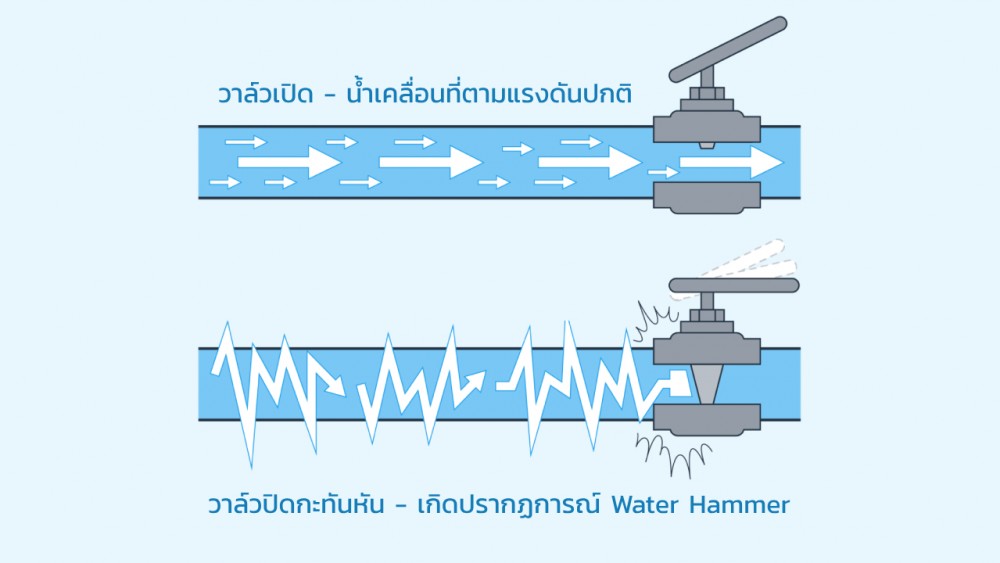
Water Hammer
A major cause of water hammer is a sudden change in flow velocity within the pipe, such as abruptly closing a gate valve. When such a change in velocity occurs, the momentum of the fluid (momentum = quantity of motion of an object) is converted into an impact force on the gate valve and pipe walls, causing damage.
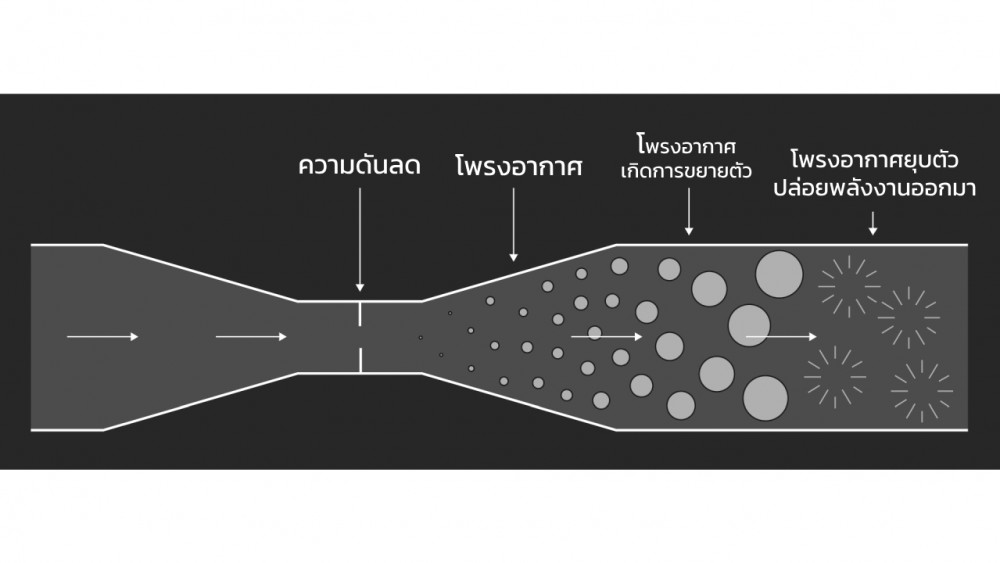
Cavitation
The cause of cavitation is the phase change of water into vapor due to pressure. When the local static pressure drops below the vapor pressure at that temperature, water changes state from liquid to vapor, forming vapor bubbles. This is divided into 3 stages:
1. Primary Cavitation Stages In this stage, cavitation occurs from the phase change of water from liquid to vapor due to static pressure falling below the vapor pressure at that temperature.
2. Secondary Cavitation Stages In this stage, cavitation occurs from the expansion of the vapor bubbles formed in the previous stage.
3. Tertiary Cavitation Stages In this stage, cavitation occurs from the breakdown of vapor bubbles formed in the previous stage through an implosion, causing damage to the systemWater Pumpsand pipes.
Signs of Water Hammer and Cavitation
Signs of Water Hammer and Cavitation include:
Water Hammer
- Loud noise: Loud noise occurring in the pipe when a valve is closed rapidly, indicating an abrupt change in water velocity.
- Vibration: Pipe vibration caused by rapid pressure changes, which can result in damage to the pipes and attached equipment.
- Damage: Damage occurring in the piping system and installed equipment, such as damage to joints, welds, elbows, tees, and measuring instruments, leading to breakdowns, leaks, etc., which require immediate repair.
Cavitation
- Rhythmic loud noise: Noise occurring in the pipe as water changes state from liquid to vapor, indicating the occurrence of cavitation.
- Pulsating vibration: Vibration of the pipe occurring due to rapid pressure changes from water hammer, which can also trigger cavitation subsequently if heat accumulates inside the pipe from excessive pressure.
- Damage: Damage occurring in the piping system and installed equipment, such as damage occurring toWater Pumpssuch as impellers, pump casings, piping systems, valves, and other connected equipment breaking down or experiencing pressure drops, etc.
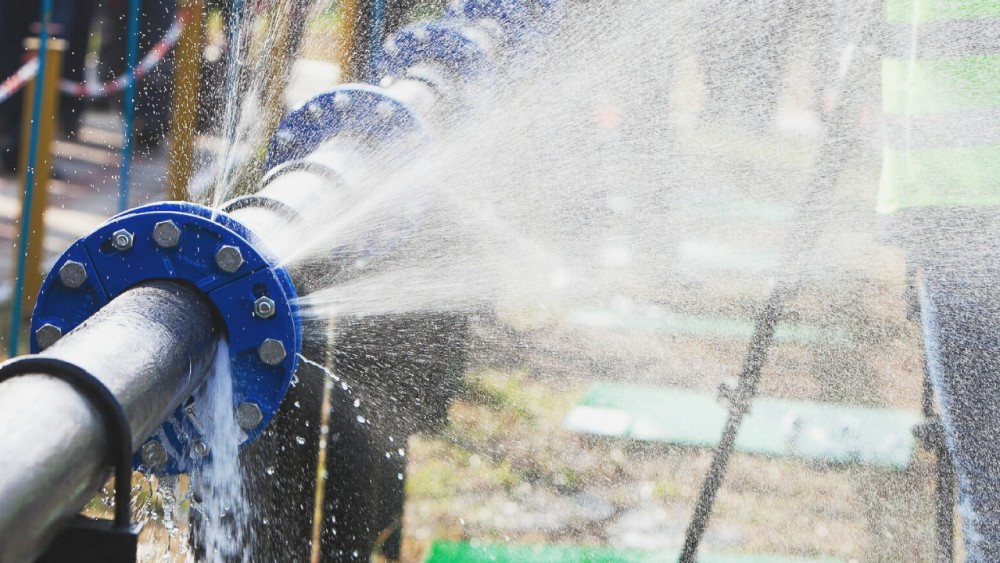
Damage caused by water hammer and cavitation in water pump systems
Water hammer and cavitation are problems that can cause damage in the systemWater Pumpsas well, which can create powerful water shockwaves through the piping system, causing pipes, joints, or system equipment to suffer damage such as:
- Damaged pipe joints: The strength of joints, welds, elbows, and tees can be degraded or deteriorate more rapidly.
- Water seepage or leakage: Water hammer and cavitation can cause leaks, which can accumulate and become increasingly severe, causing pipes orWater Pumpsto rupture and crack due to water pressure acting as a catalyst.
- Damage to theWater Pumps It can likely affect the deterioration of valves Electric Centrifugal Pumps and other related equipment in the system, including rapid erosion of pipe walls, which affects the overall service life and efficiency of the water system.
- Accidents: If not prevented, danger to operators can occur because when water hammer and cavitation occur—especially Stage 2 cavitation where vapor bubbles violently implode—it causes damage to the piping system Water Pumps directly and can cause flow retardation of water in the piping system.
Basic prevention of water hammer and cavitation
Two phenomena that threaten piping systems, causing loud noise, vibration, damage, and reduced operational efficiency. We will introduce basic prevention methods—let's see what you can do.
1. Reduce flow velocity Closing a gate valve suddenly or abrupt changes in flow velocity inside the pipe can cause water hammer and cavitation. Therefore, the velocity should be reduced slowly to diminish the momentum of the fluid that could otherwise turn into impact force against the gate valve and pipe walls.
2. Install protective devices Devices such as Pressure Relief Valves, Air Chambers, Air Inlet-Relief Valves, Surge Suppressors, and Surge Tanks can help reduce damage from Water Hammer by lessening the intensity of pressure surges, preventing hazards from excessive system pressure, and venting air from the piping.
3. Gradually shut off the water discharge In cases where the prime mover is a constant-speed motor, the discharge gate valve should be closed gradually to reduce the likelihood of Water Hammer.
4. Inspect and maintain the piping system Regular inspection and maintenance of the piping system helps prevent Water Hammer by checking the structural integrity of pipes and equipment, as well as cleaning and replacing damaged components.
5. Use an Air Chamber An Air Chamber is a device that helps absorb water shock waves within the pipe. Consisting of a tank containing air connected downstream on the delivery pipe, it serves to reduce the shock severity when pressure rises abruptly.
Basic tips for water pump and piping system maintenance
First and foremost, start with proper installation. Installing the water pump according to the manufacturer's instructions is essential, as incorrect installation can cause issues and pump failure. Using poor-quality pumps can also lead to various problems, including pump breakdowns. Therefore, you should always source pumps from reliable manufacturers to prevent issues and ensure efficient, dependable pump performance.
Water pumps require regular maintenance and servicing to function properly, helping reduce potential damage from debris accumulation or other issues that may arise in the pumping system. Because pump components deteriorate over time and must be replaced, failing to replace them according to the manufacturer's schedule can cause unexpected pump failure and is one of the causes of Water Hammer and Cavitation.
Conclusion
Properly designing and installing pipes, piping systems, and water pumps, selecting suitable pumps and accessories, and installing pressure regulators in the system are all simple ways to prevent Water Hammer and Cavitation, helping the piping system operate efficiently and have a long service life. Another precaution is user operation, which must also be kept in mind: always follow the instructions and user manual to avoid damage to the pump itself as well as harm to the operator.
FAQ - Frequently Asked Questions
1. How is Cavitation related to Water Hammer?
- Cavitation can be triggered by Water Hammer, especially when the system pressure drops rapidly. This can create vapor bubbles that can collapse and cause damage to the system.
2. How can Water Hammer and Cavitation be detected?
- By monitoring system pressure and flow rates, listening for abnormal noises or vibrations in the system, and performing regular system inspections and maintenance.
3. What are the methods to prevent Water Hammer and Cavitation?
- Design pipes with appropriate sizes
- Use pressure relief devices
- Install flexible vibration joints
- Select suitable equipment
- Control system pressure
- Install air release points
Additional articles - 10 Causes and Symptoms Indicating Your Water Pump Is Having Problems