


 EN
 ไทย


Customers Also Purchased


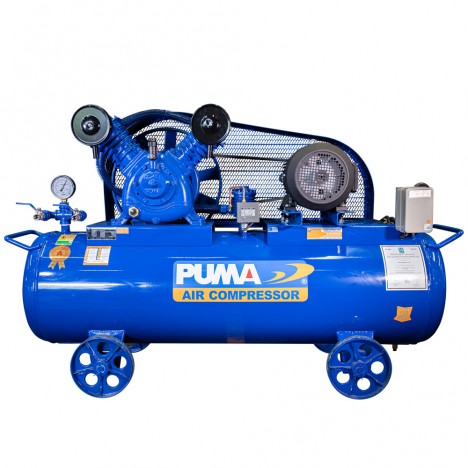

Abnormal air compressor issues can occur after the pump has been used for a while. Various components of the air compressor often suffer wear and tear or deterioration, which is completely normal for air compressors that are used regularly or at any usage frequency. Air compressors made with high-quality materials may deteriorate a bit more slowly, whereas mid-range or lower-priced models degrade faster depending on the quality of internal materials and the design of each model. Due to this factor, many people ask: how can you tell when an air compressor is starting to have problems so that issues can be resolved quickly and maintenance performed to keep the compressor operating at full efficiency and safe for users?
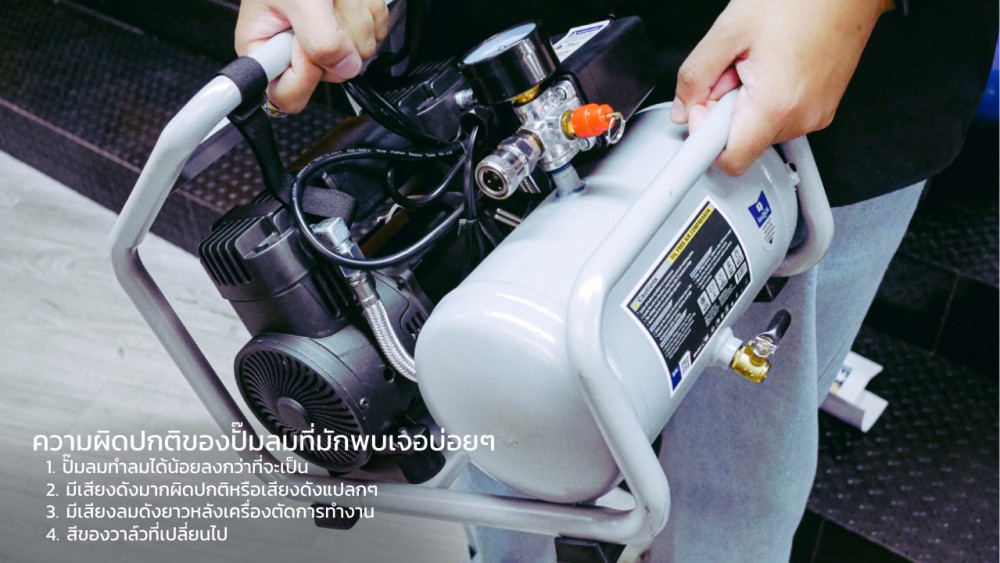
Frequently Encountered Air Compressor Abnormalities
Let's take a look at what warning signs indicate thatAir Pumpsis having problems
1. The air compressor produces less air than it should Normally, power tools that run daily for multiple cycles will see a decrease in efficiency. As for an air compressor producing less air, if you have inspected and found no leaks at the joints or tank, yet the compressor is still slow to build pressure and noticeably takes longer, it is possible that compressor components are starting to deteriorate. Take it to a tool repair shop immediately for an inspection.
2. Abnormally loud or strange noises You might notice that the air compressor is unusually loud when running, or makes strange sounds, such as metal clanking. This may be caused by internal parts that are worn out or damaged. Turn it off, inspect, and repair it immediately for safety and to prevent further damage.
3. Prolonged hissing sound after the compressor shuts off Typically, when an air compressor fills the tank completely, there will be a brief discharge sound. However, if you notice a continuous, much longer hissing sound after the pressure switch cuts off, it could be caused by a leaking valve, an improper valve seal, or a faulty relief valve.
4. Discoloration of the valves During general use of an air compressor, dust often adheres to the intake or exhaust valves. If dust accumulates in these two areas, it can cause air in the pipes to backflow into the compressor head. This creates heat buildup around the pump head or various joints, causing the valves to change color or fade. Dust should be cleaned regularly to ensure smooth operation of the air compressor.
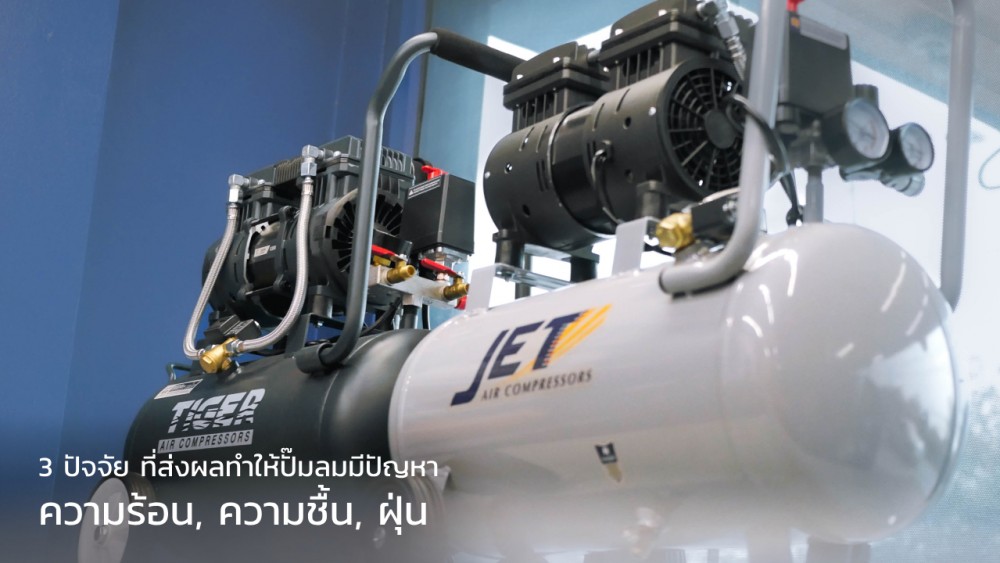
Factors that cause problems in air compressors
heat,
Heat is one of the main problems for Air Pumpssignificantly, because heat can affect an air compressor in many ways and accelerate wear and tear. For example, it causes issues with the engine oil system by rapidly increasing oil viscosity, reducing cooling efficiency, and causing a higher rate of oil consumption than normal. Various plastic and rubber parts of the air compressor are also affected, deteriorating faster and causing rubber to become brittle, crack, or tear. Furthermore, heat directly impacts the Pressure Dew Point, placing an excessive load on the compressor and shortening its lifespan.
Moisture
Another equally impactful factor that significantly accelerates the degradation of an air compressor's lifespan is atmospheric humidity. Moisture in the air is quite difficult to control, especially in our climate with its rain, wind, and cold seasons. Moisture directly affects various air compressor systems; for instance, it makes it harder to draw air through the air filter as moisture accumulates in the filter element, creating more air resistance in that area. It is also the cause of water condensation inside the system, which forms water droplets, forcing the machine to work harder and accelerating rust within the air compressor system.
Dust
Dust is commonly found in every area and environment, especially in factories or job sites where dust is abundant, depending on the specific surroundings. However, degradation caused by dust is relatively easy to control and prevent to some extent. Let's first look at the impact of dust on an air compressor: first, it clogs the air filter, reducing intake and exhaust air flow, and can increase power consumption when too much builds up. Dust also causes the machine to run hotter because when it clogs various components, the machine cannot dissipate heat quickly enough, leading to faster deterioration of internal spare parts from accumulated heat.
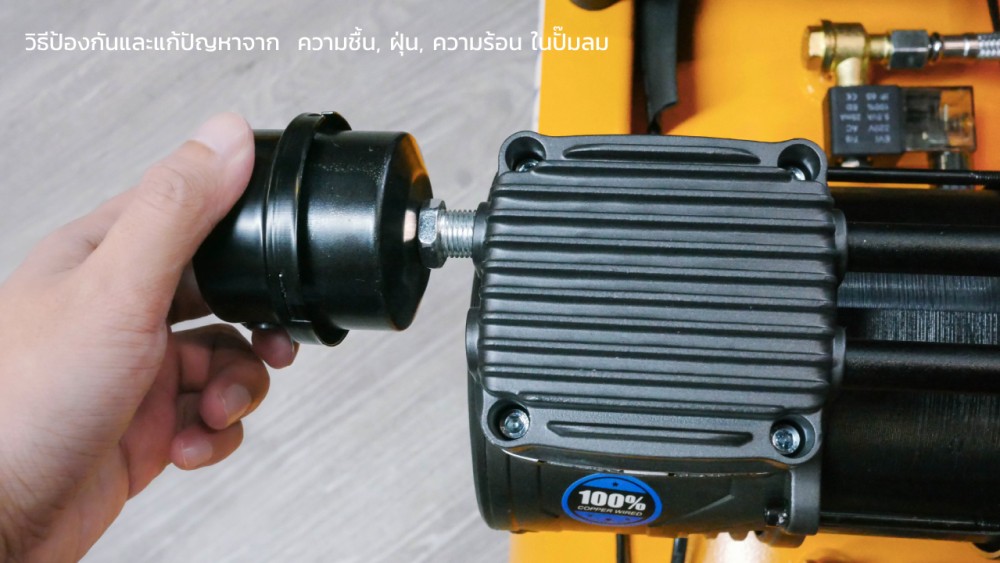
How to prevent and solve problems from moisture, dust, and heat in air compressors
Preventing and resolving problems caused by moisture, dust, and heat in an air compressor can be done as follows:
- Moisture
Use an air filter capable of removing moisture from the air, apply additional desiccants, keep the system clean, and maintain the air system in good working order.
- Dust
Use an air filter with effective dust filtration capabilities and keep internal components clean.
- Heat
Allow the machine to operate in conditions with good heat dissipation, such as having an appropriate ventilation system and keeping the cooling system clean. Additionally, methods such as installing temperature and humidity control systems can be used to help reduce issues caused by moisture and heat in the air compressor.
Conclusion
There are several ways to correct air compressor problems to ensure they operate at full efficiency, such as periodically inspecting and cleaning internal components, replacing carbon brushes or engine oil at recommended intervals, replacing worn or damaged parts, and operating the air compressor properly and carefully. This type of maintenance will help reduce compressor wear and tear and extend its service life.
Other related articles - How to properly select and install an air compressor for any application