


 EN
 ไทย


Customers Also Purchased


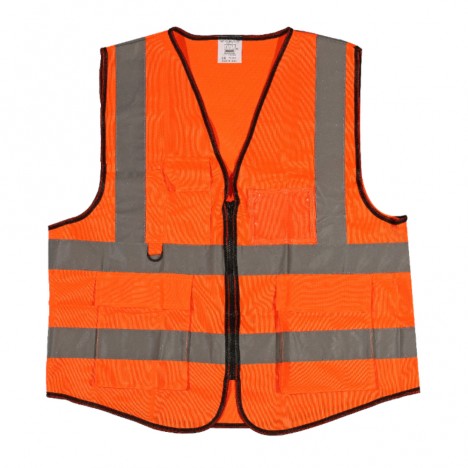
Reflective Vest Called a Safety Vest in English, it is worn for safety in hazardous areas or to clearly identify roles and positions. It is therefore no surprise that reflective vests come in so many different colors.
Read more >>> How Do Different Colors of Reflective Vests Differ? <<<
Besides choosing a color suitable for the job, reflective vests also have other important features to consider before choosing one. This article compiles methods for choosing a reflective safety vest so that readers can understand and choose the vest best suited for their work.
***If anyone has additional questions, feel free to ask or leave a comment to chat at the bottom of the article***
Essential Features of Reflective Safety Vests
1. Must meet ANSI standards
Reflective safety vests will indicate whether they meet American National Standards Institute (ANSI) standards, and are categorized into Roadway (R), Off-Road (O), or Public Safety (P). Type R is designed for high visibility, easily and clearly seen day and night, ideal for working near highways or roadsides. Type O provides limited visibility, suitable for indoor work such as in warehouses or factories. Type P is designed for public safety personnel, including EMS workers and police officers.

ANSI also rates reflective safety vests into classes ranging from Class 1 to Class 3. The higher the class, the more complex it is, as it must ensure visibility under conditions beyond the ordinary. For example, a Class 2 reflective vest increases visibility over longer distances, while Class 3 provides better visibility when the wearer is against complex backgrounds where seeing them is difficult.
2. Must have the right color
The right color means clear and compliant with international standards so that everyone understands the color's meaning consistently and can clearly spot it in emergencies or hazardous situations. Most reflective safety vests are fluorescent yellow or orange, but other colors such as green, pink, red, and blue also exist, offering low or no fluorescence.
High-visibility reflective vests usually feature reflective stripes that are light gray or dark gray. When illuminated by car headlights, they reflect like a light bulb. This is considered the most visible design, used in high-risk work conditions such as highway work, traffic control, special emergencies, or nighttime construction.

3. Material must suit the work environment
The materials of reflective safety vests vary, ranging from mesh, canvas, PPE fabrics, to various blends. The mesh type helps keep the wearer cool on hot days and wicks away sweat well, making it ideal primarily for daytime and outdoor sunny use. Some reflective safety vests are made of flame-resistant (FR) materials, making them non-flammable or self-extinguishing; these are mostly used for firefighters or jobs with fire hazard risks, such as gas station attendants.
4. Must provide comfort and a proper fit
Reflective safety vests come in various sizes, from size S up to XXXL, because they must be worn over regular work uniforms, which might include bulky cold-weather gear. Reflective vests are therefore sized larger than regular clothing so that the wearer does not feel restricted and can move freely and agilely. However, avoid choosing one that is too loose to prevent fabric from snagging or getting caught in other work equipment, especially when working near machinery.
Generally, reflective safety vests feature zippers or hook-and-loop fasteners for quick, easy putting on and taking off. Zippered reflective vests are more reliable and easier to use, while hook-and-loop fasteners only secure certain points. However, there are also designs utilizing both zippers and hook-and-loop closures to allow customized tightness in certain areas.

7 Ways to Choose a Reflective Safety Vest
1. Choose colors suitable for the work environment
If working indoors, such as in warehouses, shopping malls, factories, etc., choosing a darker colored safety vest is easier to spot. This is because indoor areas often have bright lighting that makes everything appear uniformly distinct; darker objects will stand out more than other things. However, there is an exception for those working near machinery, who should use orange or red.
On the other hand, for outdoor work where light intensity and weather conditions cannot be controlled, choose bright colors such as yellow or green, which are easier to see, especially on overcast days, and contrast well with the sky. However, this is not always fixed, as more specific color selections exist, such as wearing orange during the day and wearing yellow with reflective stripes at night, for example.
Read more >>> How Do Different Colors of Reflective Vests Differ? <<<

2. Choose a safety vest of adequate quality
Safety vests are categorized into different classes, but it is not always necessary to choose a high class. Just choose one suitable for the job. Each class is suitable for the following tasks:
- Class 1 : For construction workers in low-traffic areas with speed limits under 40 km/h. They should be orange or yellow and usually have narrow gray reflective stripes over the shoulders and around the torso.
- Class 2 : For those working in normal traffic areas with a high risk of being struck by vehicles if drivers fail to see them, in areas with speed limits under 80 km/h. The reflective stripes are wider than Class 1.
- Class 3 : This will be a short-sleeved reflective shirt, not just a vest, with reflective strips that are wider and more visible than the first 2 types. Suitable for emergency personnel, survey crews, utility workers, and construction workers in high-risk areas, crowded spaces, or areas with very poor visibility, requiring extra caution and safety.
Read more about the classes >>> Did you know? How to identify a quality reflective vest? <<<
3. Comprehensively consider the weather conditions of use
Safety vests for different weather conditions feature different fabrics. Particularly abroad where weather varies widely: during early autumn, spring, and summer, workers can be more comfortable wearing mesh fabrics that provide good ventilation, while in winter, models lined with insulating materials are chosen.
However, for Thailand, where the weather is hot, very hot, and extremely hot, you will find mostly mesh safety vests on the market, except for dark-colored safety vests worn indoors where designs are more flexible and the fabric can withstand frequent washing.

4. Consider the fabric quality of the safety vest
Similar to point 3, but durability, water resistance, and fire resistance must also be considered. Or if working in areas with hazardous substances, materials with special properties beyond the ordinary must be considered, such as for workers in gas stations, mines, or certain chemical laboratories, etc.
5. Look for additional functions that fit the job better than standard safety vests
Some jobs may require more than just high visibility and job identification, such as heat dissipation, reflective lettering, or full-color printing. You do not need to choose one with everything; just select what is beneficial to the job.
For example, having the word POLICE or EMERGENCY printed prominently makes the wearer clearly identifiable in unexpected situations such as car accidents or fires. This helps officials work more conveniently, reach the scene quickly without crowds blocking the way, and allows victims to ask for help from the right personnel.
However, printed text or logos must not cover so much fabric area that they compromise high-visibility safety properties.

6. Choose designs that enhance work performance
A safety vest becomes more than just safety apparel when designed for greater utility, such as having multiple pockets suitable for carrying small tools like calculators, pencils, pens, and tape measures. Some models feature special fasteners or breakaways that prevent the vest from being torn from the body when pulled excessively or accidentally caught on something while working. This feature is essential for construction site personnel, as it helps prevent accidents if the vest becomes entangled or caught in large, hazardous equipment or machinery.
7. Consider who will be wearing the safety vest
Safety vests are not designed for all body types. For example, standard safety vests do not cater well to women's anatomy. The vest might be too large or loose, impairing agility while working and posing a snagging risk around various equipment and machinery. If female workers are to wear them, choose certain brands of safety vests that can be adjusted for a snugger fit.

Read more >>> Reflective Vest <<< more