


 EN
 ไทย


Customers Also Purchased


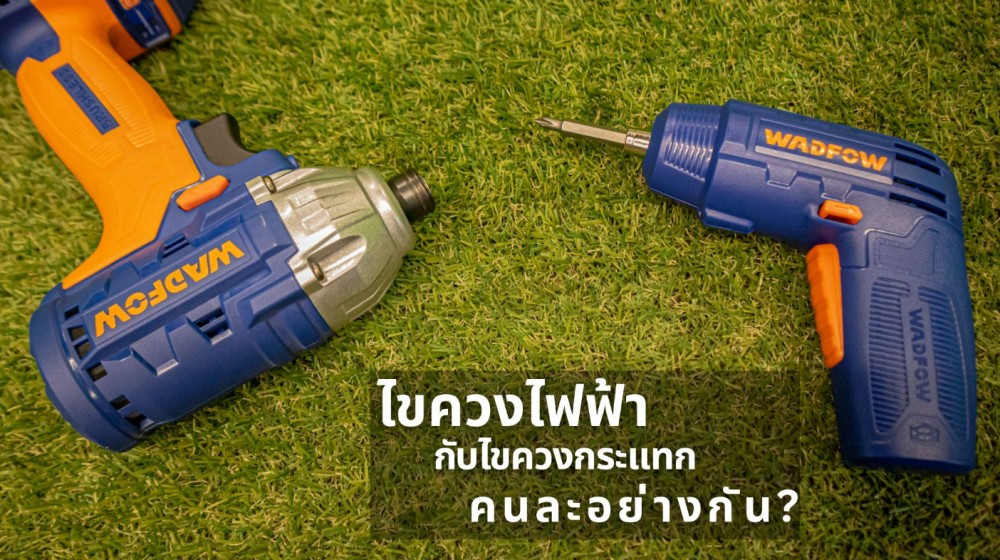
Imagine this: you want to buy a lightweight tool for driving screws, so you browse online stores or walk right into a shop. You spot a tool labeled with “Cordless screwdriver”, and right next to it is another tool also used for driving screws. But when you pick it up, it turns out to be an Impact Driver Seeing this, you can't help but wonder, “Wait, are these actually the same tool or not?”
I've faced this exact dilemma myself. At the time, I just wanted an effortless screwdriver. When I asked a friend, they said, “Oh, just use an electric screwdriver.” But when I searched online, all I found were impact drivers nearly as big as drills, even though I just wanted a compact tool to assemble furniture at home. That sparked a big question in my mind: “Are electric screwdrivers and impact drivers really the same tool?”
In this article, I'd like to invite everyone to dive deep into whether electric screwdrivers and impact drivers are actually variations of the same tool or completely different. Where did this confusion start? How do they differ? And when it comes to real-world use, how should we choose the right one to get the best value?
What does "Electric Screwdriver" actually mean?
Before getting into the differences between an electric screwdriver and an impact driver, I'd like to clarify what the term “electric screwdriver” actually refers to. Get to know electric screwdrivers: What is an impact driver? How does it differ from drills and impact wrenches? When hearing this term, many people might think of a small power tool for driving general screws. However, the reality is more nuanced because the term is sometimes also used to refer to impact drivers, leading to easy confusion.
At first glance, electric screwdrivers and impact drivers belong to the same functional category: working with screws. This makes it even more confusing for buyers. Establishing a clear foundational understanding first—whether regarding their origins or applications—will help us see the full picture and avoid confusion when making a purchase.
What most people understand as an “Electric Screwdriver”
Generally, if we look up the definition or the fundamental concept of the tool, Electric Screwdriver is a tool that uses an electric motor instead of manual effort to tighten or loosen screws. It's easy to use, requires minimal effort, and is usually small and compact—ideal for everyday tasks around the home or office, such as assembling furniture, mounting shelves, or driving small screws.
Why do some places call an Impact Driver an electric screwdriver?
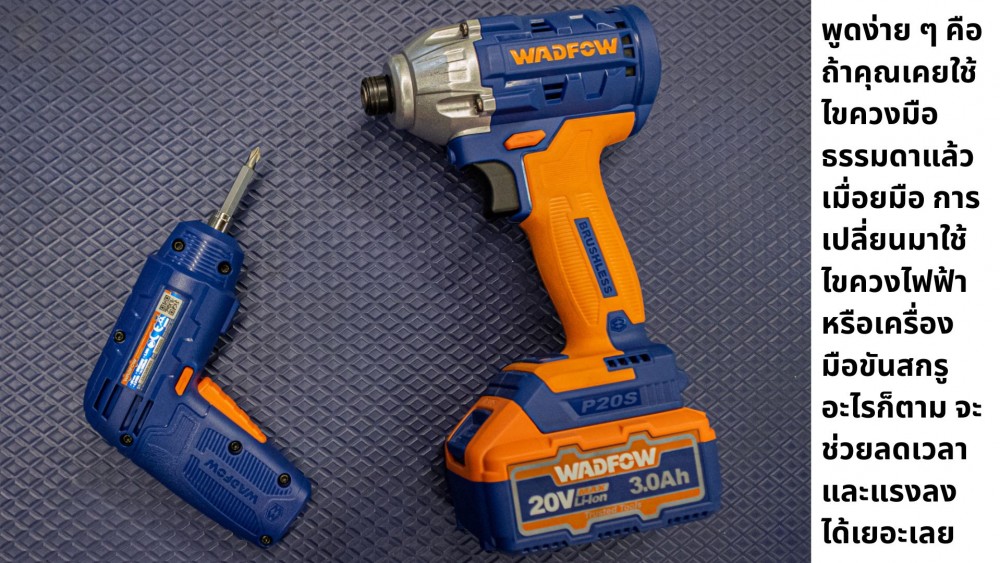
Here lies the problem: many stores or international brands categorize tools under the term Power Screwdriver or Electric Driver as well as Impact Driver in the same category. As a result, when translated into Thai, it's often shortened and the entire category is simply called "electric screwdriver" across the board.
The result is confusion for buyers and readers alike. Sometimes you just want an electric screwdriver to tighten furniture screws, but end up picking an impact driver instead—even though it's actually way too powerful for the task.
How is an impact driver different from an electric screwdriver?
Before we make a clear comparison, I'd like to lay a little groundwork. Many people may have heard of impact drivers before, but aren't quite sure how they differ from standard electric screwdrivers. Understanding this first will help you see why this tool is considered unique and allow you to make more accurate choices in real-world situations.
How an Impact Driver Works
An impact driver features a motor and mechanical system designed to deliver high torque combined with rotational "impacts". This makes it much easier to loosen or drive very tight screws or bolts, making it ideal for heavy-duty tasks such as carpentry, construction, or jobs involving long screws that need to be driven deep into hardwoods.
Unlike a regular electric screwdriver that focuses considerably on speed and convenience, an impact driver is all about power.
Key Observations of an Impact Driver
- Larger and heavier than an electric screwdriver This means holding it for extended periods can cause more hand fatigue, but the trade-off is greater durability. If you hold both, you can immediately tell which one is sturdier.
- Loud operation noise Because the impact mechanism is actively engaged. This sound is a signature characteristic that many recognize immediately, and it reflects a level of power that far exceeds a standard electric screwdriver.
- Significantly higher torque Ideal for industrial or serious trade work, especially tasks involving long screws or hard materials like hardwood or metal. While a standard electric screwdriver might manage to get the job done, it takes much longer and some models might struggle entirely, whereas an impact driver handles it with ease.
So why are both called the same thing?
In some countries, particularly in Asian markets, the term "Electric Screwdriver" covers all power tools that use a motor to drive bits for fastening screws or small bolts instead of manual screwdrivers—whether standard or impact. When producing brochures or translating website copy, it is sometimes shortened to "electric screwdriver," causing overlapping definitions.
General User Perspective
Another reason is that non-professional users often don't distinguish between an impact driver and an electric screwdriver. They only know that "it's an electric tool that helps drive screws," concluding simply that they are all electric screwdrivers. I used to be one of them, until I learned that they really aren't the same. While you can refer to them collectively, it can lead to confusion and misunderstandings.
Electric Screwdriver vs Impact Driver: Which should you choose?
If your work involves assembling flat-pack furniture bought from a store that needs screw fastening, or mounting shelves for home installations, a standard electric screwdriver is more than enough. It's compact, lightweight, easy to use, and won't easily strip screws or damage the workpiece.
Know Before You Choose: How Are Impact Drivers Used, and What Makes Them Truly Worth It? If you are a tradesperson or need to use an electric screwdriver heavily all day long, Or if you encounter long screws that need to be driven into hardwood or structural work, an impact driver is the answer. Its higher torque allows you to finish the job faster and prevents the motor from overheating due to heavy loads.
Precautions when choosing
- You shouldn't buy an impact driver if you only plan to assemble small furniture, as it will be too powerful and could strip the screws.
- You shouldn't buy a standard electric screwdriver if you need it for construction work or hard materials, as it simply won't be able to handle it.
Are these two types of screwdrivers really "different things"?
Now that we've dug deep into the definitions, it's pretty clear, isn't it? That An impact driver is not an ordinary electric screwdriver, even though both fall under the category of "power screwdriving tools". I just wanted to share this knowledge for anyone looking to buy an electric screwdriver. In the end, no matter what you call this tool, choosing the right tool for the job is the most important thing.
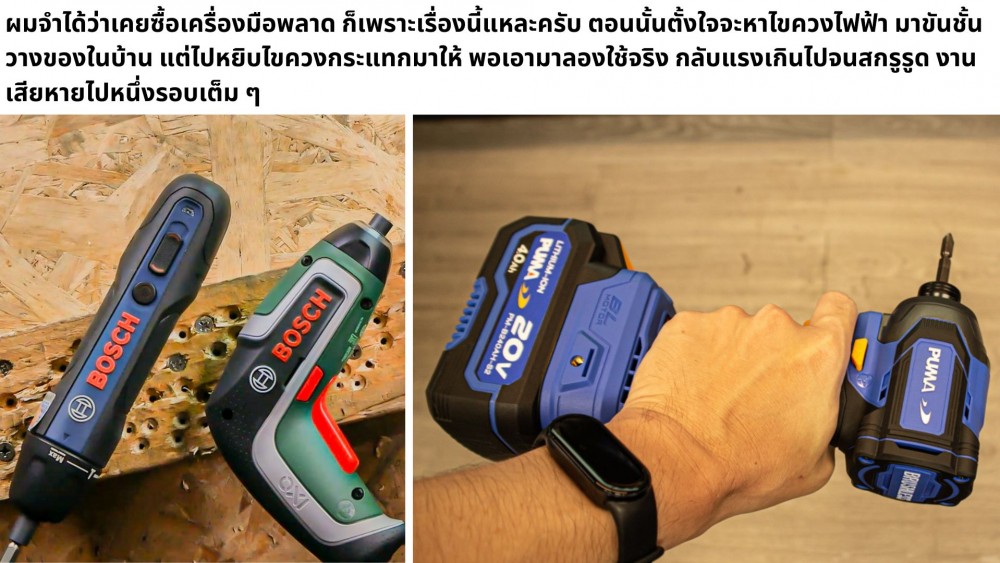
Real-world use and hands-on experience with the tools made me realize that not knowing the clear differences can waste time and ruin your work unnecessarily. So I wanted to share this as a lesson for anyone looking to buy tools.
Additional tips for choosing an electric screwdriver
In reality, the word "screwdriver" covers many types: from ordinary manual screwdrivers we see used daily in every household, to electric drills or cordless drills equipped with screwdriver bits that can also function as screwdrivers.
In addition, there are specialized electric screwdrivers designed specifically for speed and convenience, with no impact mechanism like an impact driver. Therefore, when we simply say "electric screwdriver", it is a very broad term that can be interpreted in many ways.
Other specialized electric screwdrivers
Besides standard electric screwdrivers and impact drivers, there are specialized electric screwdrivers designed for specific applications, such as drywall screw guns that focus on high speed and precise depth control, as well as industrial electric screwdrivers used on assembly lines. Each type has its own strengths and limitations. By this point, we know that the term "electric screwdriver" isn't limited to just small household models or impact drivers used for heavy-duty tasks.
Check the torque
For standard electric screwdrivers, the torque does not need to be very high—around 3–5 Nm is sufficient. But for impact drivers, it ranges from over 25 up to 100 Nm or more.
Voltage affects motor power
Screwdrivers with small batteries (around 3.6V) are suitable for light tasks. But for more versatile DIY projects, you should opt for 12V or higher. Meanwhile, impact drivers typically start at 12V and go up to 18V or 20V.
Don't forget about driver bits
Can an impact driver use any bit as long as it has a hex shank, is that true? Good screwdriver bits help extend the lifespan of your tools and make your work neater. Whether using an electric screwdriver or an impact driver, it is always worth investing in quality bits.
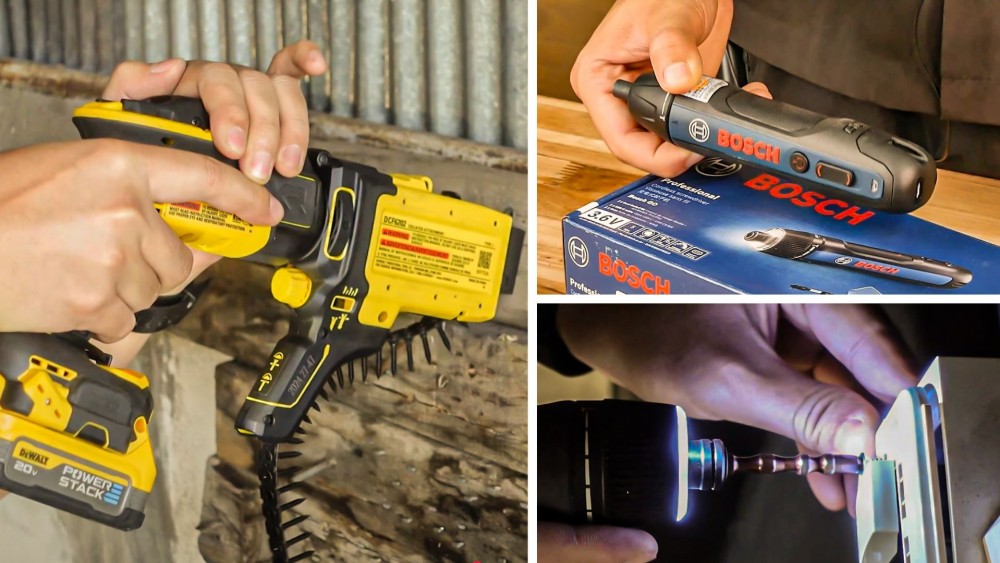
Conclusion: What you call it does not matter as much as using it for the right job.
Finally, I would like to leave you with this: the confusion that arises is not a mistake, but rather an opportunity for us to learn and choose the right tools more accurately. To reiterate, standard electric screwdrivers and impact drivers are not the same, but the term "electric screwdriver" can encompass impact drivers as well, and referring to them collectively is not wrong. Just remember that
- Cordless screwdriver is a tool born for everyday convenience,
- Impact driver is a tool born for heavy-duty tasks and serious trade work.
So before your next purchase, do not forget to ask yourself: "What kind of work will I be using it for?" This answer will help you avoid spending money unnecessarily and get Cordless screwdriver that truly meets your needs.