


 EN
 ไทย


Customers Also Purchased
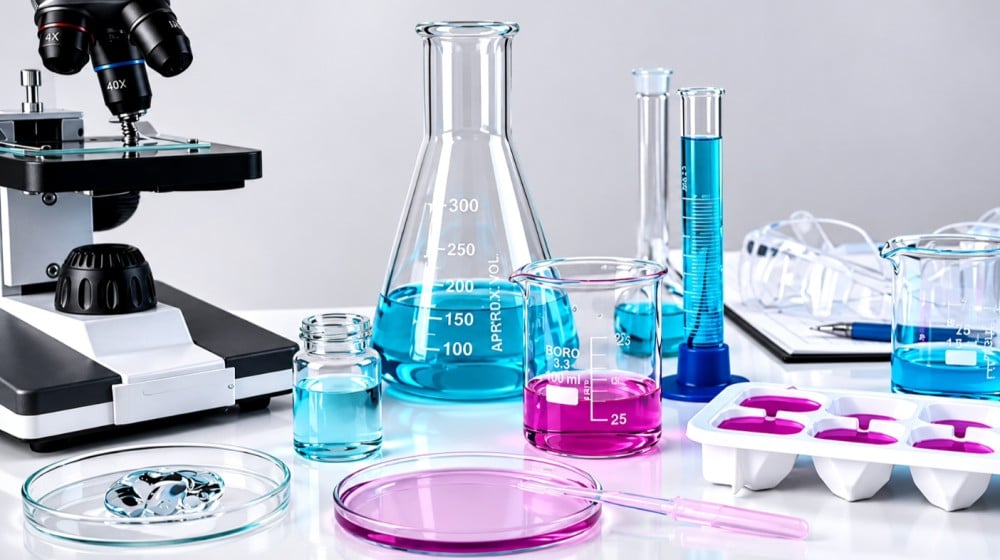
Imagine you're preparing for a water quality test. There are beakers, graduated cylinders, and plastic bottles sitting on the bench. Everything looks clean and easy to use, so you grab whatever container is closest without checking the details. But once you start working, you find the liquid volume isn't accurate, or the container deforms when exposed to heat—even though nothing seemed wrong at first. These situations show that lab equipment isn't designed to be completely interchangeable. Even if some items look similar, their material properties, accuracy, and operational limits can vary greatly.
For technicians, contractors, or DIY enthusiasts, choosing Laboratory equipment the wrong type doesn't just ruin the job—it also increases the risk of injury, contamination, and damage to other equipment. That's why it's essential to know the common mistakes and how to prevent them.
Why Can't Similar-Looking Lab Equipment Be Used Interchangeably?
Many people are familiar with basic lab equipment like beakers, test tubes, graduated cylinders, or sample bottles, leading them to believe that since they are all laboratory containers, they can be used interchangeably. In reality, manufacturers design each type with specific functions in mind, such as mixing, volume measurement, storage, or heating.
For example, beakers are suitable for mixing and pouring liquids, while graduated cylinders are designed for measuring volume, and volumetric flasks are ideal for accurately preparing solutions to a specified volume under the operating conditions of the instrument. If the wrong type is selected, the resulting consequences can be divided into 3 aspects:
- Safety: Broken containers, splashing chemicals, or unintended exposure to hazardous substances.
- Accuracy: Inaccurate measurements leading to flawed test or inspection results.
- Cost: Wasted samples, having to redo work, or needing premature equipment replacement.
Therefore, before picking up an item to use, it's crucial not only to consider what the tool can do, but also to verify the manufacturer's permitted use cases.
Using Beakers Instead of Graduated Cylinders Can Cause Volume Errors
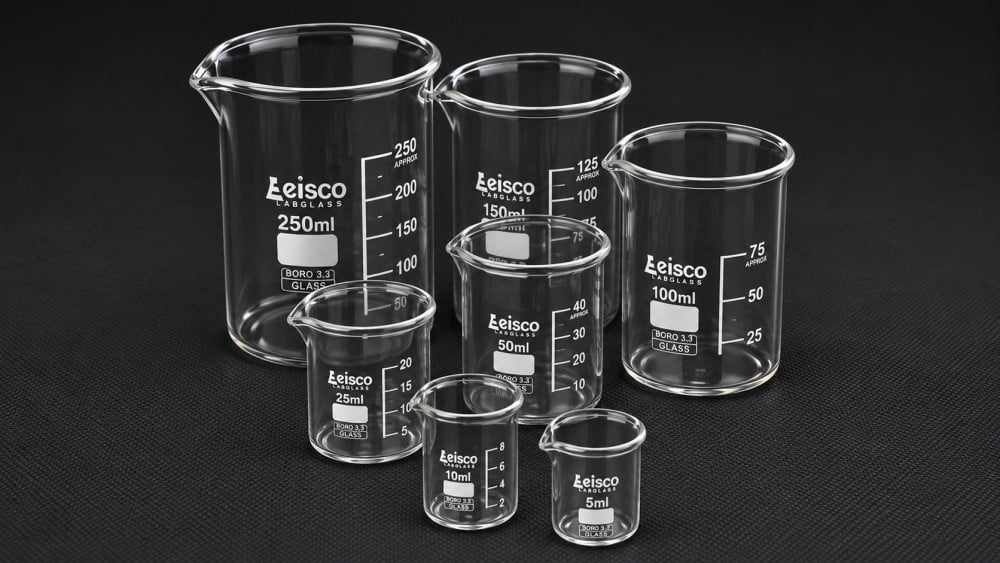
A common mistake is using a beaker to measure liquid volumes precisely, simply because there are graduation marks on the side. In reality, markings on standard beakers are meant for rough estimation only; they are not designed for high-accuracy measurements like specialized volumetric glassware. If you're mixing water for general purposes, a slight discrepancy might not matter much. But if you're preparing solutions for water quality testing or industrial sample analysis, inaccurate volumes can alter concentrations and skew analytical results.
How to Choose the Right Lab Equipment?
If you need to mix or hold liquids, use a beaker made of a material compatible with the substance. But if you need to measure volume, choose a graduated cylinder or volumetric instrument with a tolerance that matches your job requirements. For tasks demanding high precision, consider Class A glassware or equipment with clear tolerance and calibration data, and always read the meniscus at eye level.
Using Plastic Lab Equipment with Incompatible Substances Risks Leaks or Deformation
Plastic containers are popular equipment because they are lightweight, shatter-resistant, and available in various price ranges. However, plastic is not resistant to all chemicals. Certain plastics may degrade when exposed to specific solvents, leading to swelling, cracking, or loss of structural strength, while another type of plastic might be much more suitable for that application. Even if a container appears sturdy from the outside, it does not mean it is safe to use with all substances.
What should you check before using plastic containers?
Start by identifying the material the container is made of, such as PP, PE, or other materials. Then, check the manufacturer's chemical compatibility chart, considering the substance type, concentration, temperature, and exposure duration. For example, some Fisherbrand wash bottle models have the chemical name pre-printed on the container, helping reduce the chance of picking up the wrong bottle; however, users still need to verify the compatibility between the material and the chemical before actual use.
Do not judge solely by the shape or color of the bottle, and never reuse containers that previously held unknown substances.
Heating the wrong type of glassware may cause cracking
Another common misconception is assuming that all types of glassware have the same heat resistance. There are many types of laboratory glassware. Some are made of borosilicate glass, which is suitable for heating applications under specified conditions, while other types of glassware are not designed for direct heating. For example, placing a freshly heated glass container directly onto an extremely cold surface can cause thermal shock and breakage, even if there were no visible cracks beforehand.
How to prevent damage
Check the markings and manufacturer's manual to determine the temperatures and heating methods the glassware supports. Avoid rapid temperature changes, and do not use containers with chips or cracks. Importantly, do not heat tightly sealed containers that are not designed to withstand pressure, as internal pressure can build up and lead to hazards.
Using test tubes in a centrifuge without checking specifications risks tube breakage
Standard test tubes and centrifuge tubes may look similar, but they do not share the same properties. Centrifuges use centrifugal force to separate sample components. Therefore, the tubes used must withstand the specified centrifugal forces and have the correct size and shape to fit the rotor or adapter.
Selecting an inappropriate tube can cause deformation, cracking, or leakage during operation, which may result in sample splashing and contamination inside the machine.
Before use, check the maximum Relative Centrifugal Force (RCF) rating the tube can handle, as merely checking the Revolutions Per Minute (RPM) is not sufficient to evaluate the force exerted on the tube. In addition, properly balance sample loads according to the centrifuge's manual, and stop operation immediately if any abnormalities are detected.
Selecting the wrong pipette volume range can inadvertently cause inaccurate test results
Pipettes are laboratory instruments used to aspirate and dispense liquids at specified volumes, especially in procedures requiring small sample quantities. A common problem is users selecting a pipette with an unsuitable volume range for the task, or using incompatible tips, causing leakage, air aspiration, or incomplete liquid dispensing.
For example, if you need to dispense 100 microliters of liquid but the instrument has an error margin of up to 5 microliters, this discrepancy equals 5% of the intended volume, which may be unacceptably high for certain analytical applications. For beginners, choose a pipette that matches the required volume range, use manufacturer-approved tips, and change tips whenever there is a risk of contamination. Mouth pipetting is strictly prohibited.
Using chemical storage bottles without labels may be more dangerous than you think
In compact workspaces, some people may transfer liquids from original containers into new bottles for convenience. However, without descriptive labels, the risk increases immediately. This is especially true when handling multiple liquids that look identical, as other users might mistake them for clean water or a different chemical previously used.
Labeling is therefore not just a matter of tidiness, but a crucial component of the safety system. Labels should clearly state the substance name, concentration (where applicable), preparation date, and hazard information in accordance with workplace regulations. Chemicals must never be stored in beverage bottles or food containers. If an unidentified bottle is found, do not open it to smell, touch it, or attempt to mix it with other substances; instead, isolate the area and notify the safety officer for inspection.
Carelessly using electrical laboratory equipment near water risks electric shock.
Equipment such as stirrers, heating devices, and benchtop measuring instruments must be operated in suitable environments. Placing devices near splashing water or allowing liquids to enter ventilation grilles and control panels can cause equipment damage or electrical hazards.
Before turning on equipment, always inspect the power cord, plug, main unit, and workbench condition. If damaged wiring, a wet unit, or abnormal sounds and smells are detected, stop using it and safely disconnect the power source. Do not remove covers to repair electrical systems yourself without proper expertise and authorization.
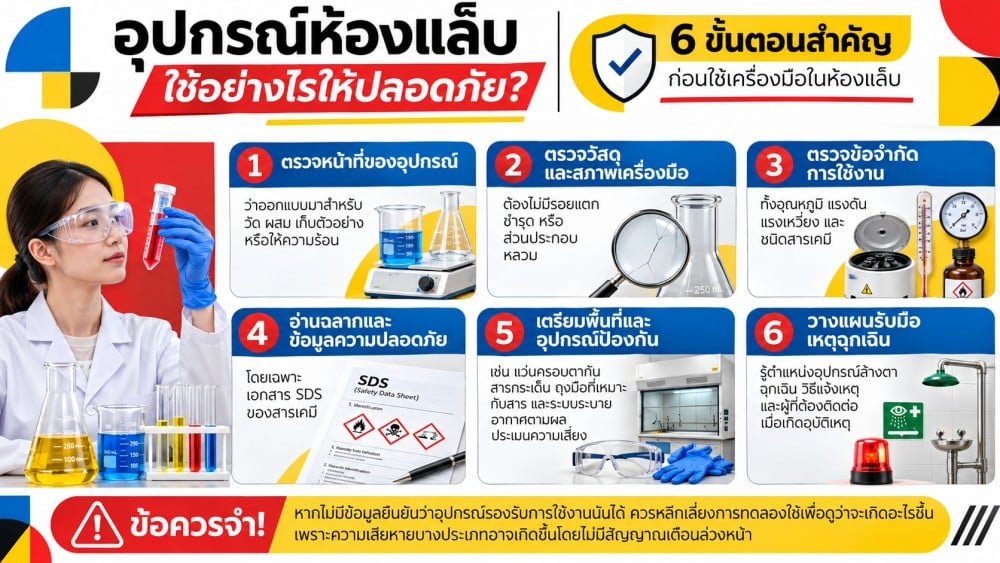
What should you do if you accidentally misuse laboratory equipment?
The first step is to stop operations safely. Do not attempt to fix the situation by increasing temperature, raising pressure, or forcing the equipment to keep running. If it is merely a volumetric measurement error, isolate the sample and determine if it needs to be prepared again. However, if hazardous chemicals, leaks, potentially pressurized containers, or damaged electrical equipment are involved, clear the area immediately and notify the person in charge.
Never use bare hands to pick up broken glass, and never clean up unidentified substances using methods that have not been evaluated for safety. In case of chemical exposure, follow the first aid instructions in the SDS and seek medical attention as needed.
Conclusion
Each type of laboratory equipment has specific functions and limitations. Even if some pieces look similar, it does not mean they are interchangeable. From choosing beakers for mixing solutions and using graduated cylinders to measure volume, to selecting appropriate containers for heating and chemicals, every step requires careful attention to equipment suitability.
We recommend always checking the material, manufacturer specifications, instrument condition, and potential risks before every use. A little preparation can prevent damage, save costs, and reduce the chance of accidents far more effectively than troubleshooting after the fact.
Select Laboratory equipment to suit the application