


 EN
 ไทย


Customers Also Purchased


Has this ever happened to you? You try to clean grease off a kitchen wall, but as soon as you spray the cleaner, it drips down to the floor before you even have a chance to scrub the stain away. Or maybe you just need to wipe a small smudge off a hand tool, but end up pouring out so much cleaner that the surrounding area gets soaked, even though you only meant to clean one spot.
These problems might not be because the Degreaser Cleaner Spray you chose is poor quality, but rather because its application format doesn't suit the nature of the task. Cleaners available on the market today come in foam, spray, and liquid forms, each having its own distinct advantages and limitations.
What is the difference between foam, spray, and liquid cleaners?
Before selecting a product, it is important to understand that the terms foam, spray, and liquid do not always indicate a classification based on chemical ingredients. Instead, they often refer to the product's physical form or the delivery method used to apply the solution to the surface. For example, some liquid formulas can turn into foam when used with a foaming nozzle, while some spray products can also dispense as foam. Therefore, you should not judge which cleaner has more cleaning power based solely on its appearance.
The ability to remove stains depends on several factors, including chemical formulation, concentration, dwell time on the stain, mechanical scrubbing, proper temperature, and compatibility with the material.
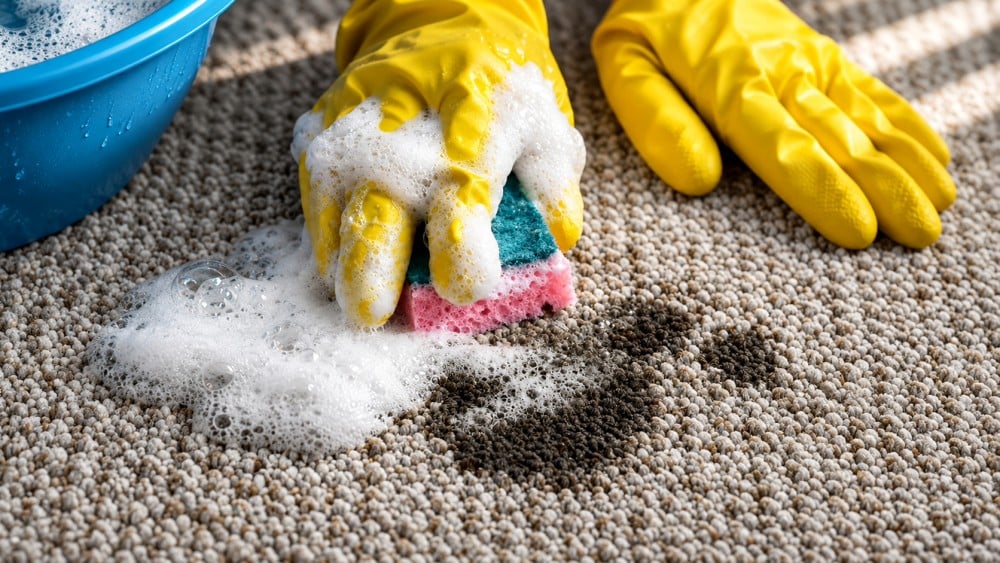
Foam cleaners are suitable for tasks that require the solution to cling to surfaces.
Foam helps distribute the cleaner and clings better to sloped or vertical surfaces compared to some liquid formulas. This allows the cleaner adequate dwell time on stains as specified by the manufacturer and makes it easy to see where it has been applied. It is ideal for car washing, certain types of tiled walls, or tasks requiring the cleaner to dwell on stains before scrubbing, provided you choose a formula specified by the manufacturer for that application.
Pros
- Distributes and clings well to target surfaces
- Clearly visible where the solution has been applied
- Reduces dripping compared to some liquid formulas
- Convenient to use with brushes or washing tools
Limitations
- Heavy stains still require a brush, sponge, or water pressure; foam does not remove stains on its own.
- Not suitable for water-absorbent materials, surfaces with many joints/seams, or areas where rinsing is difficult.
- Allowing foam to dry on the surface may cause residue or staining.
- Thick foam does not necessarily mean higher concentration or better cleaning power, as it depends on the formula and foaming equipment.
- For delicate surfaces, always test on a small, inconspicuous area first.
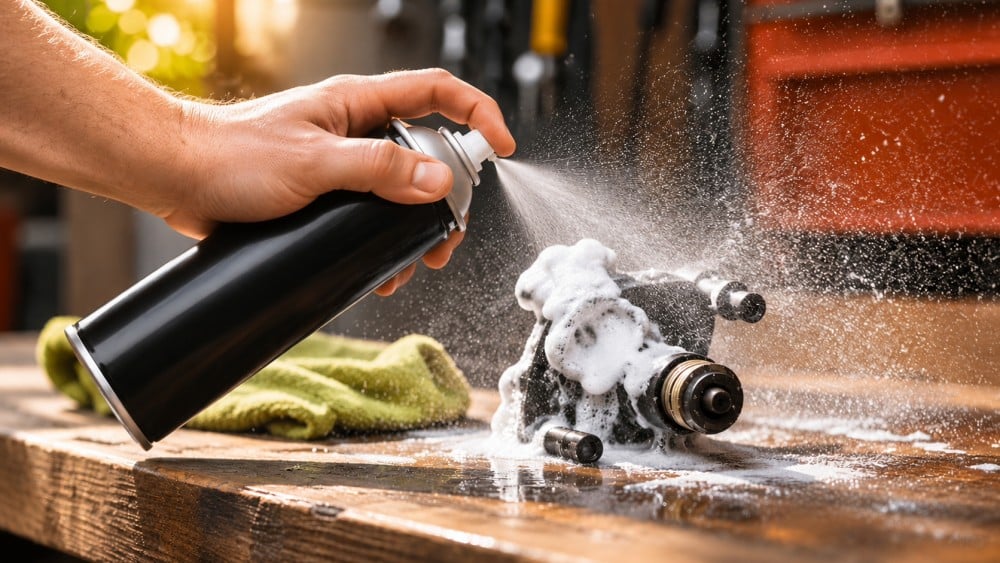
Spray cleaners are suitable for spot cleaning.
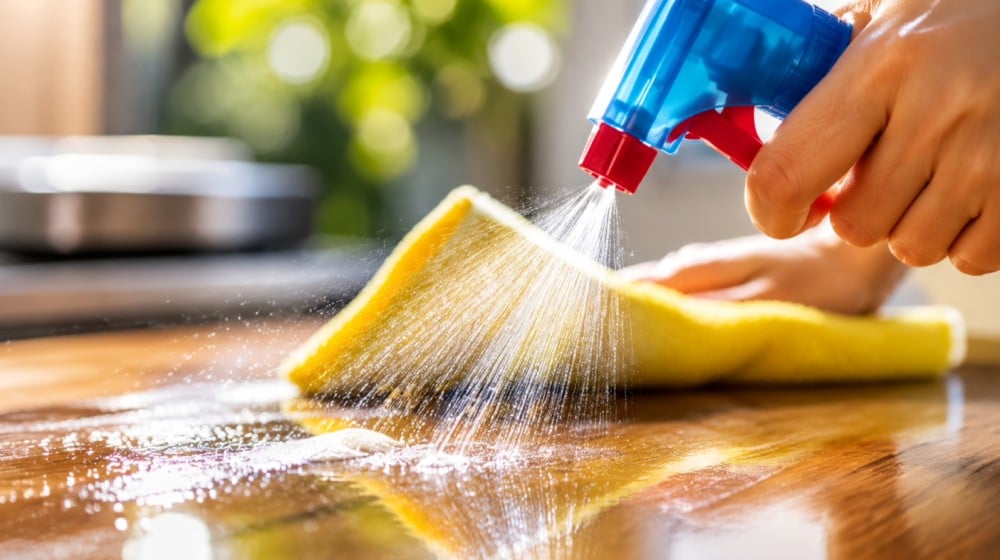
Spray cleaners are ready to use immediately without equipment setup, available in both trigger spray and aerosol can formats. They are ideal for fingerprints on glass, table stains, or spot cleaning tools. If product instructions permit, spraying onto a cloth before wiping helps control the amount used and minimizes overspray.
For technical tasks, specialized sprays exist, such as for degreasing machinery parts or electrical contacts. However, general cleaning sprays should never be used on electrical circuits, as solvents can damage plastics, insulation, or coatings, and some formulas are highly flammable.
Limitations
- Large areas require repeated spraying, which is wasteful and time-consuming.
- Mists disperse into the air, particularly from fine nozzles and aerosol cans. NIOSH therefore recommends minimizing the use of sprays when alternatives are available, such as applying liquid cleaners directly to a cloth.
- In households with children, the elderly, or chemically sensitive individuals, airborne dispersal should be minimized and proper ventilation maintained.
Liquid cleaners are suitable for large areas and continuous work.
This type of cleaner comes in both ready-to-use and concentrated formulas requiring dilution. Households typically use them with mops, cloths, or brushes, while industrial settings use them with floor scrubbers, wet vacuum extractors, or specialized systems.
Pros
- Can be prepared in exact quantities to match the area size, especially with concentrated formulas having clear dilution ratios.
- Suitable for factory floors with shoe marks and work-related stains, rather than spot spraying one area at a time.
- Choose formulas compatible with cleaning machines, which helps standardize the work process.
Precautions
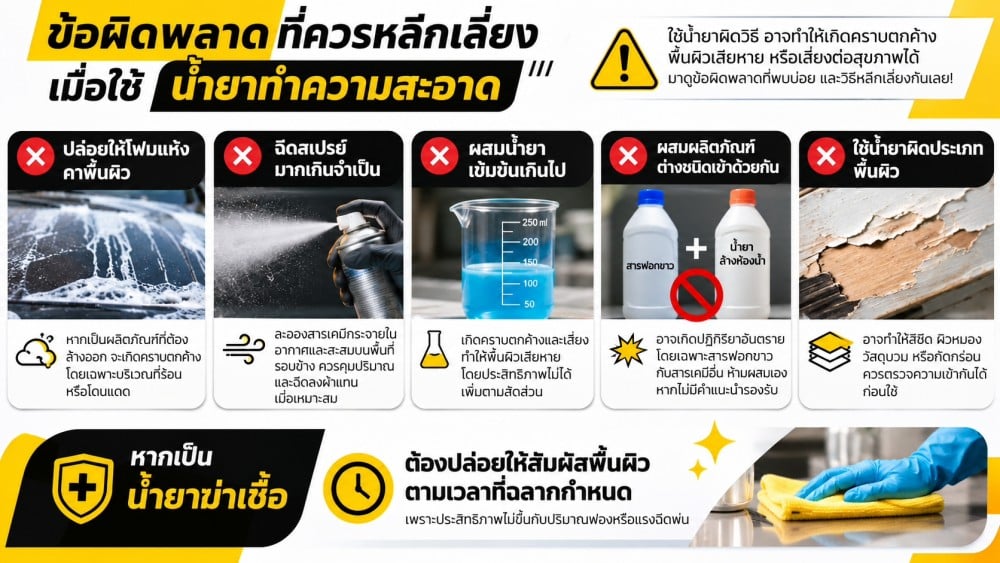
- Mixing without reading the label or making the solution overly concentrated beyond instructions does not make it cleaner; instead, it can leave residues, make rinsing difficult, and damage surfaces or equipment.
- Some floor scrubber models do not support high-foaming detergents because it can affect the water recovery suction system.
- Always read the machine manual alongside the product label.
How to Choose the Right Cleaning Chemical for Actual Work?
Identify the type of stain first
Different types of stains require different cleaning chemicals. A general dust cleaner may not remove oil stains or scale build-up.
- Dust stains: Use a damp cloth or mild products suitable for the surface.
- Oil and grease stains: Choose chemicals specifically labeled to remove these types of stains.
- Soap scum or mineral deposits: Choose formulas suitable for the stains and materials. Do not use acidic chemicals on acid-sensitive surfaces.
- Stains on machine parts: Use specialized products and check for compatibility with seals, rubber, and plastics.
- If you choose the wrong type, no matter how thick the foam is or how much spray you apply, it will not solve the problem.
Consider the orientation and size of the surface
- Vertical surfaces (washable walls, vehicle bodies): Certain foam formulas help control runoff effectively.
- Small horizontal areas (desks, mirrors): Spray, or apply the chemical directly to a cloth according to instructions.
- Large areas (room floors, factory floors): Liquid chemicals that can be used with cleaning equipment are more suitable.
Check the material and chemical resistance
Surfaces that look similar may have different chemical resistances, such as stainless steel, aluminum, painted steel, plastic, and rubber. A chemical suitable for certain metals may not be suitable for aluminum or painted parts, and some tile cleaners are not suitable for natural stone. If unsure, check the manufacturer's instructions for both the surface and the chemical, and test on an inconspicuous spot first.
Consider post-cleaning steps
Some cleaners need to be rinsed off, some must be wiped dry, and some are designed to leave a protective coating behind. Ask yourself whether the surface can be rinsed with water after use and what final result you need. If you are preparing a surface before painting or applying adhesive, choose a surface preparation product that leaves no residue affecting adhesion, and do not substitute it with a gloss/coating product.
Compare cost-effectiveness based on actual usage
The price per bottle does not reflect the total cost, especially when comparing ready-to-use formulas with concentrated formulas. You should consider the amount used per area, the cleaning frequency, and any necessary re-rinsing or re-wiping. A concentrated formula with a higher price per bottle may be more economical in some cases, but it must be calculated based on the actual dilution ratio according to the manual, not just by comparing the volume on the label alone.
Summary
Foam, spray, and liquid cleaners have distinct advantages depending on the application. Foam may be suitable for surfaces where the cleaner needs to cling to the target area, spray is ideal for spot cleaning, while liquid is suited for large surface areas or tasks involving cleaning equipment.
However, the form of the cleaner does not entirely determine its effectiveness; the most important factor is selecting the right chemical formula for the specific stain and material, as well as following the manufacturer's instructions. Whether it is household cleaning, automotive care, or cleaning tools, choosing the right cleaner for the job from the start helps reduce rework, cuts down on waste, and minimizes the risk of surface damage.
Select Degreaser Cleaner Spray to suit the application