


 EN
 ไทย


Customers Also Purchased


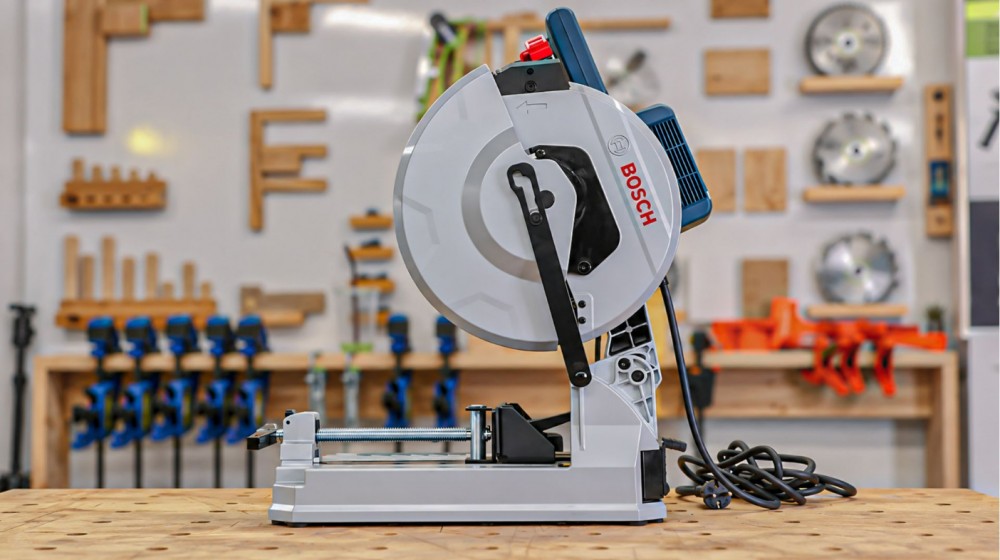
A small metal shop set up its Drycut MetalSaw against the wall next to the door because it was the only empty corner. Right beside it was a pile of cardboard boxes waiting to be thrown away, followed by a welding table with a gas cylinder, an extension cord running across the walkway, and every time a long steel bar was cut, someone had to hold the far end. Everything seemed normal until one day, sparks flew into the box pile and it started smoking!
Many people think that metal cutting machine safety depends only on the machine itself and the cutting disc, right? In reality, many accidents can stem from placement, how the tool is held, and the direction sparks fly if it is a spark-generating cut, all the way to how the workpiece is supported and the movement of people nearby—all of which can be managed before turning on the cut-off saw for the first time.
Let's explore how to set up, position, or use a metal cutting machine safely in a shop or small workshop, covering floor space, spark direction, long workpiece supports, electrical setup, bystander safety zones, and points where an electrician or safety officer should be consulted.
The safety of the metal cutting machine's location is just as important as the machine itself.
No matter what type of metal cutting machine During cutting, three things project from the machine simultaneously: sparks or hot metal chips, workpieces extending outward from both sides, and noise and dust spreading into the surrounding area. If the machine is positioned where these three elements overlap with flammable materials, walkways, or other people's workspaces, danger arises every time a cut is made—even if the operator uses the tool correctly.
To make a simple comparison, it is like parking a car. No matter how good the car is, if parked blocking an exit or left on an incline without engaging the handbrake, accidents can happen. The same applies to steel cut-off machines.
A safe setup location for a steel cut-off machine is one that takes into account sparks, workpieces, the operator, and bystanders so they do not collide or interfere with one another.
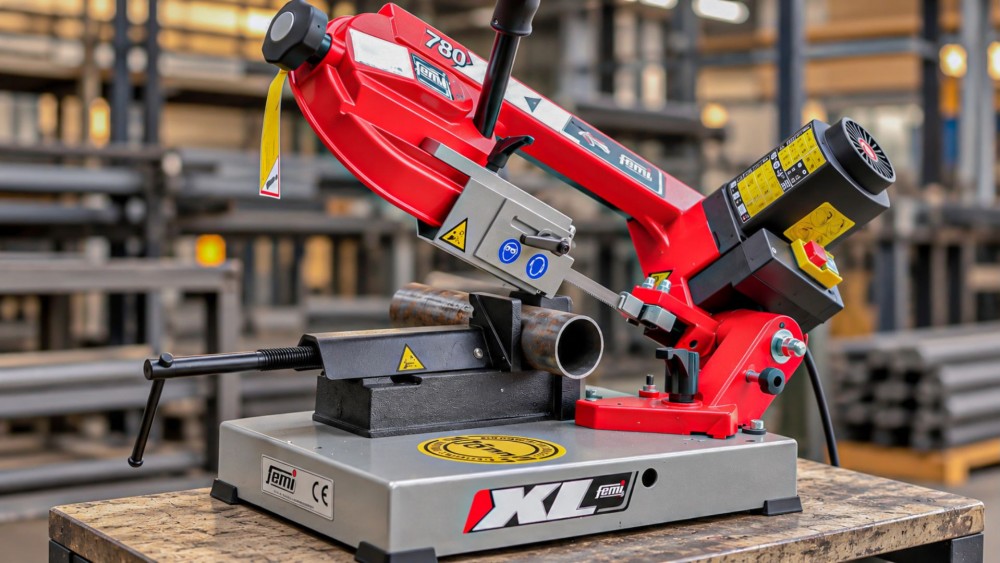
The floor and workbench for the steel cut-off machine must be sturdy, wobble-free, and non-slip.
Benchtop steel cut-off machines generate a sudden jolt when starting the cut and as the blade engages the steel. If placed on a wobbly table with uneven legs or on a slippery floor, the machine will shift during cutting. The result is an uneven cut, and the operator's hands may lose balance and slip closer to the blade.
The proper setup is to place the machine on a level floor or a sturdy steel workbench. If the machine base has mounting holes, secure it to the workbench according to the manual. The floor around the machine must be free of oil stains or accumulated metal chips that cause slipping, and chips should be swept away daily.
The cutting height allows for straight downward pressure without bending too close to the blade.
If the machine is set too low, the operator must hunch over, bringing their face closer to the path of sparks and preventing a straight downward push on the handle. If it is set too high, the arms must be raised too far, leading to uneven cutting pressure. The ideal height allows you to stand upright with arms slightly bent and press the handle all the way down without tiptoeing or hunching.
Orient the steel cut-off machine so sparks fly toward areas free of flammable objects.
Cut-off machines using abrasive discs discharge sparks in a stream along the direction of blade rotation. Before setting up, check which direction your machine model ejects sparks, then aim that trajectory toward an open area, concrete wall, or non-flammable barrier. Never aim toward doorways where people pass, parked vehicles, or other people's workbenches.
Use a spark shield
Sparks travel farther than most people think and can bounce off floors or walls into blind spots. Setting up a non-flammable shield behind the machine or using a welding spark curtain helps contain sparks within a controlled zone.
Clearance from flammable materials
Within the radius reached by sparks, there must be no cardboard boxes, rag scraps, sawdust, thinner, paint, oil, or gas cylinders. If your shop handles both woodworking and metalworking, clearly separate the metal cutting area from sawdust zones, and keep an appropriately rated fire extinguisher near the cutting station where it can be reached without crossing the spark path.
Supports for long workpieces prevent overloading the steel cut-off machine and stop blade binding.
When rebar or box tubing several meters long is rested on the machine without supporting the far end, its weight pulls down one side and tilts the workpiece in the vise. The blade gets pinched just before completing the cut, and the machine may tip toward the longer end. Having someone hold the end is not a viable solution, as that person will unintentionally pull or lift at their own rhythm.
The proper solution is to use support stands or worktables on both the infeed and outfeed sides, adjusted to the exact height of the cutting base and spaced appropriately to support the ends of the steel. The cut-off piece must be able to drop or slide away freely without being clamped or bound on both sides.
Organize storage for uncut steel and finished cut pieces
If uncut steel leans against the wall behind the operator, or cut pieces are piled on the floor around the machine, the operator will constantly have to twist around and walk over metal scraps. Organize a rack for uncut steel on the infeed side and a bin or shelf for cut parts on the outfeed side. Freshly cut pieces remain extremely hot and must be placed where no one will accidentally touch or step on them.
The electrical system for the steel cut-off machine must be ready before installation.
Metal cut-off machines draw high current during startup and cutting. Plug them into a grounded outlet connected to a circuit equipped with a residual current device (RCD/GFCI). Avoid daisy-chaining long extension cords or using thin wires, as this causes voltage drops, forcing the motor to work harder and overheat. If an extension cord is necessary, select the wire gauge recommended in the machine's manual.
Route power cords clear of spark trajectories and walkways. Never let cables cross areas where hot cut-offs may fall.
Cordless metal cut-off machines require a charging station located outside the spark trajectory
When using a cordless metal cut-off machine, the charger may be placed near the tool for convenience. However, chargers and batteries should never be located within the radius of sparks or metal dust.
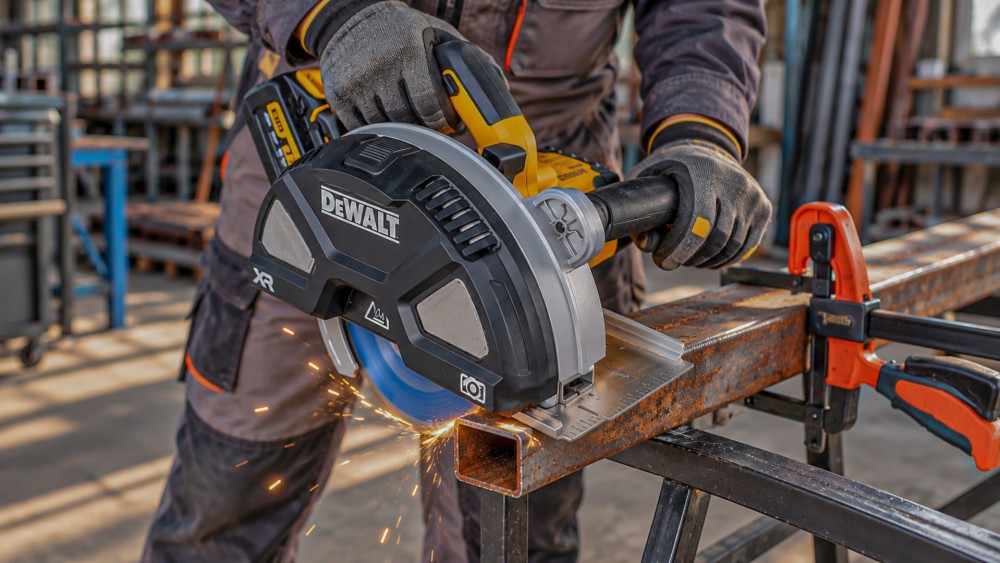
Set up the charging station on a dry, well-ventilated shelf away from flammable materials, and never immediately charge a battery that is still hot from heavy use.
Safety zone around the metal cut-off machine for bystanders
Those injured by metal cutting operations are often not the operators themselves, but bystanders walking past or watching nearby. Clearly define a safety perimeter around the machine—such as marking lines on the floor or setting up barriers—and establish a shop rule that others must not enter this zone while the machine is running, especially in line with the blade and spark path. The shop's main walkway should never cut across the front of the metal cut-off machine.
Keep PPE next to the machine for immediate access
Safety glasses or face shields, ear muffs, and leather gloves for handling hot workpieces should be hung right beside the machine, not stored in a cabinet on the other side of the shop. If people have to walk over to get them, most will assume "it's just one cut, it'll be fine." As for clothing, wear long sleeves that are not loose or baggy, and keep lanyards, straps, or rags away from the blade.
Dust and fumes from the metal cut-off machine must have proper ventilation
Cutting with abrasive discs generates a mixture of abrasive grit and metal dust. If cutting galvanized or painted steel, the dust and fumes will also contain coating chemicals. Set up the machine in a well-ventilated area, use an exhaust fan to help pull air away from the cutting zone, and wear a dust mask during prolonged cutting.
Metal dust accumulating around the machine should be cleaned up regularly, but always wait for the metal debris to cool down first. Never sweep hot debris into bins containing combustible trash.
Daily setup inspection for the metal cut-off machine before powering on
Takes less than a minute, but eliminates most potential hazards
- The spark trajectory is clear, with no flammable materials and no bystanders present.
- The blade guard is intact, springs back fully, and the blade has no cracks or chips. Check out Checkpoints for metal cutting discs before mounting on an angle grinder every time
- The vise clamps securely, and the workpiece support is level with the base.
- Power cords do not cross walkways and are not in the path of hot workpieces.
- Safety glasses, ear muffs, and the fire extinguisher are within immediate reach.
If any point fails, fix it before turning on the cut-off machine. And if the guard is damaged, the motor smells burnt, or the outlet gets hot, stop using it, correct the issue, or send it to a service center.
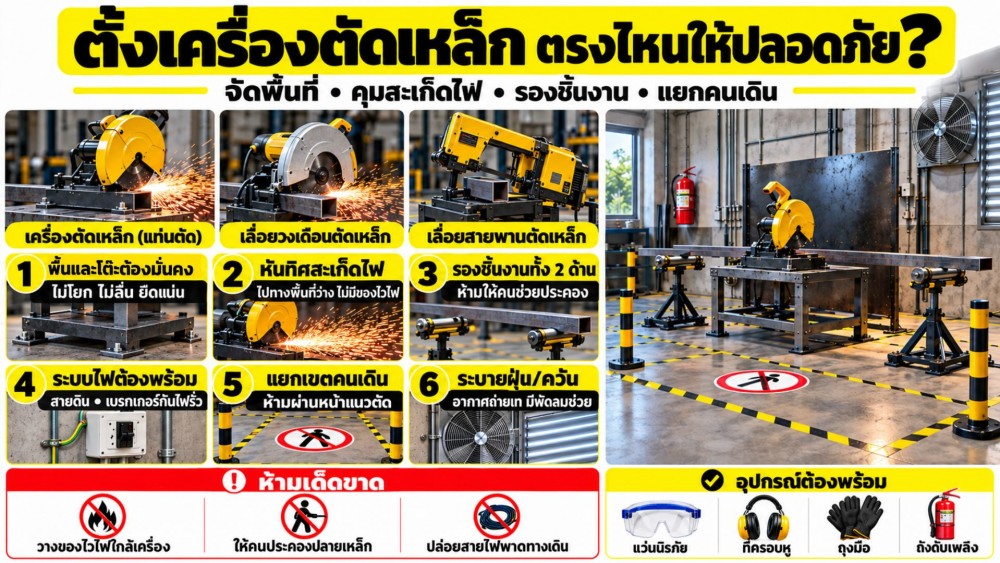
Summary: A cut-off machine is safe when you pay attention to sparks, workpieces, and people around.
No matter how good a cut-off machine is, it can be dangerous if set up or used in a hazardous location. Sparks flying into a pile of boxes, long steel lacking support causing blade binding, and people walking past the cutting line during operation are all accidents caused by space layout, not the machine itself—and can be prevented right from the day of setup.
What you need to do is: place the machine on a stable floor or table at a height where you don't have to bend down, direct the spark path toward an open area or a non-combustible partition, remove flammable materials from the radius, provide workpiece supports on both the infeed and outfeed sides level with the base, separate raw stock from cut pieces, plug into a grounded outlet with an RCD, establish a safety perimeter around the machine, and hang protective equipment beside it.
The most important precautions are: Never have someone support the end of the steel by hand instead of using a support stand, never direct sparks toward people or flammable items, and always keep a fire extinguisher close at hand. If the breaker trips frequently or the outlet gets hot, call an electrician. If the blade guard is damaged or the motor smells burnt, stop using it and send it for repair.
If you are setting up a new metal-cutting corner or it's time to replace your machine, explore tools in the category Drycut MetalSaw and related categories at iToolmart right away.


