EN
 ไทย


Customers Also Purchased


You grab a portable air inflator to top up a tire on the roadside. After running for a short while, the unit gets too hot to touch and abruptly shuts off—yet the display reading has not reached your preset value. Once allowed to cool and restarted, it runs just a bit longer before shutting down again. This behavior makes many people believe they purchased the wrong type of portable inflator. In reality, most of the time the machine is functioning exactly as designed in every way.
Is it because the unit has deteriorated, or is it too small? The simple answer: likely neither. Portable air inflators typically do not have a tank; every minute of operation is a minute the tiny piston continuously compresses air without stopping. Heat therefore accumulates far faster than in tank-equipped compressors. If run under the wrong duty cycle, with insufficient power input, or with air leaking along the line, the unit will overheat and shut itself off before the job is done.
Why do portable air inflators heat up faster than tank-equipped air compressors?
If you ask whether a portable air inflator and a tire inflator are the same thing? The answer is the terms are often used interchangeably. Inside a portable air inflator, a small motor drives a single piston, compressing air directly through the hose and immediately into the tire. With every stroke the piston compresses, the air heats up under pressure. This heat accumulates at the cylinder head and the motor, which are housed inside a compact plastic enclosure with minimal cooling fins.
Tank-equipped air compressors operate differently: they compress air until the tank is full and then stop. While you use air from the tank, the pump head rests. A portable inflator, however, must run continuously the entire time air flows into the tire—comparable to a non-stop sprint with no walking breaks to catch your breath. The body heats up and forces a stop much sooner than someone alternating between running and walking.
A portable air pump can inflate all the way to completion only when used within its duty cycle, with full power input, and when every stroke of air actually reaches the tire. Missing any of these, the machine may overheat before the job is done.
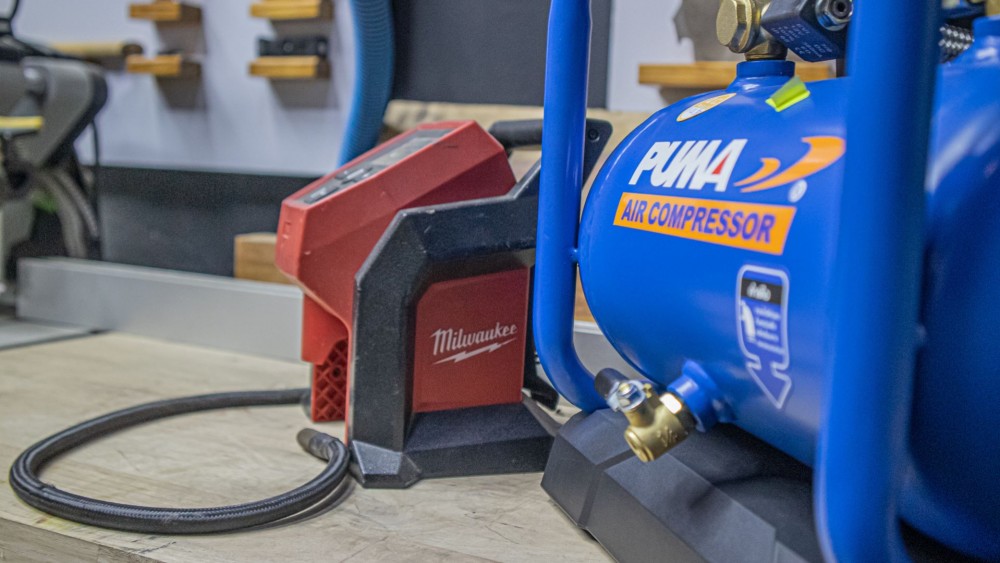
Symptoms of exceeding the duty cycle
When exceeding the duty cycle, a portable air pump may run progressively slower, and the unit and connectors may become extremely hot. If that model has a thermal shut-off system, it may stop automatically and won't turn on again until it cools down inside. If there is no shut-off system, the motor will continue to overheat, shortening its lifespan with every use.
You should inflate one tire at a time and rest the unit for the specified period before moving to the next tire. Place the unit on an open surface, not on car carpets or grass, and do not cover or block the ventilation vents. It may take longer overall, but the machine will be able to finish inflating without shutting down midway.
A completely flat tire or large tires cause the portable air pump to run longer than it can handle
The time required to inflate depends on the volume of air that needs to be compressed. A sedan tire that is only slightly underinflated may not take long, but a completely flat tire or the tires of much larger pickup trucks and SUVs require several times more air. A small portable air pump might therefore exceed its duty cycle before the tire is fully inflated.
Completely flat tires must be inspected before inflating
A tire that is so flat that the bead has unseated from the rim often cannot be inflated because air leaks out through the rim faster than the machine can pump it in. Moreover, a tire driven on while flat may suffer internal sidewall damage. Inspect the circumference of the sidewall: if you see bulges, tears, or a detached bead, switch to a spare tire or call roadside assistance instead of forcing inflation.
Divide inflating large tires into cycles
For larger vehicles, divide the inflation into multiple cycles with rests according to the duty cycle, or use the portable pump just enough to drive to a tire shop and finish inflating there.
Insufficient power causes the portable air pump to run slow, overheat quickly, and blow the power outlet fuse
A motor receiving low voltage will spin slower and draw more current to compensate, resulting in increased heat while outputting less air.
For portable air pump models that plug into a cigarette lighter socket, the vehicle's power socket has a fuse that limits current. If the unit draws more current than the circuit supports, the fuse will blow or the unit will run weakly. A loose plug can also cause the contact points to heat up and melt the plastic. Plug it in firmly, avoid using multi-socket splitters, and use the fuse rating specified in the vehicle's manual—never install a larger fuse or use wire instead.
As for cordless portable air pump models, a battery that is nearly depleted or overheated will deliver less current, making the machine run so slowly it may appear broken. Therefore, you should always start with a fully charged battery.
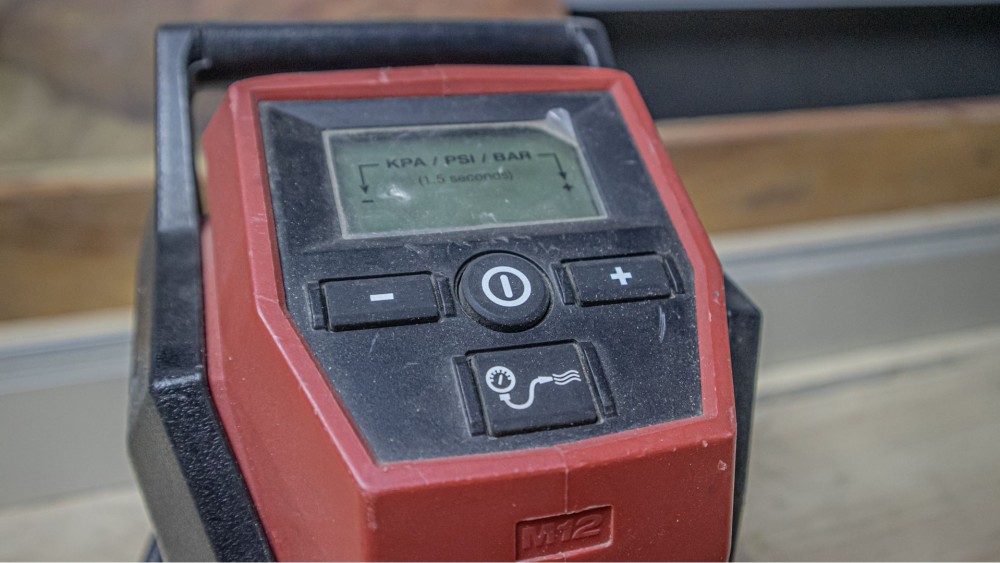
Gauges reading pressure while the motor runs cause the portable air pump to shut off before or beyond the preset value
Portable tire inflators with digital gauges and auto shut-off measure pressure at the end of the hose. While running, the pressure in the hose is slightly higher than in the tire due to airflow. Consequently, some machines stop before the tire reaches the actual target, causing the reading to drop once turned off. Other units deviate the other way, causing the tire to become overinflated.
Another issue is the unit of measurement on the display. Many models allow switching units; if you set the value in one unit but the display is in another, the tire will be severely under- or over-inflated. Always check the display unit. After the machine shuts off, disconnect the nozzle and double-check with a separate tire pressure gauge. Measure when the tire is cold, as tires that have just been driven on will read higher than actual.
An unlatched nozzle or a leaky hose causes the portable air pump to run long without air entering the tire
If the machine runs unusually long but the numbers barely move, suspect that air is leaking before reaching the tire. The most common leak point is a nozzle that isn't screwed or locked onto the valve stem completely—you'll hear a constant hissing sound at the valve stem while the unit is running. The next point is the hose section connected to the unit, which gets extremely hot during use and quickly becomes brittle. Finally, the tire's own valve core may be loose or deteriorated.
Tighten screw-on nozzles securely by hand until the hissing stops, or press clamp-on nozzles all the way down before flipping the lock lever. Apply soapy water to the valve stem and hose connections to check for bubbles. If the hose is cracked or fittings are loose, replace the hose assembly, and if the valve core leaks, have a tire shop replace it. Be careful around the hose connector at the machine head, as this part becomes hot enough to burn your hand immediately after the machine stops.
Steps to safely inflate tires with a portable air compressor, from before plugging in to storing it back in the car
This sequence ensures the tool completes inflation and prevents accidents commonly occurring on the roadside
- Park safely out of the traffic lane, turn on hazard lights, pull the handbrake, and inspect the tire sidewalls all around first
- Set the pressure value according to the door jamb placard and check the units on the display
- Firmly connect the nozzle to the tire valve first before plugging in the power or inserting the battery
- Operate within the duty cycle, rest between tires, and place the tool in an open area
- Turn off the tool, let the connector cool down before removing the nozzle, double-check with a separate gauge, replace the valve cap, and store the tool once cooled
Do not store a still-hot tool in an enclosed trunk, and do not leave it in a car parked in the sun all day, especially models with a built-in battery
If a portable air compressor overheats and shuts off, can it still be used?
It can still be used if the unit shut off due to the thermal protection system activating and operates normally again after cooling down, with no burning smell, no change in sound, and pressure readings rising as usual. This self-shutdown means the tool is protecting itself, not a sign that it is broken; just adjust your usage habits
However, you should not continue using it if, after shutting off, a lingering burning smell remains, the motor runs after resting but the reading does not rise at all, or the motor noise changes to a grinding or knocking sound. These symptoms may indicate that the piston ring or internal valve has been damaged by heat
Most portable air compressors are not designed to be opened for repair; send them to a service center or consider replacing the unit. Do not attempt to bypass the thermal cutoff system to keep the tool running
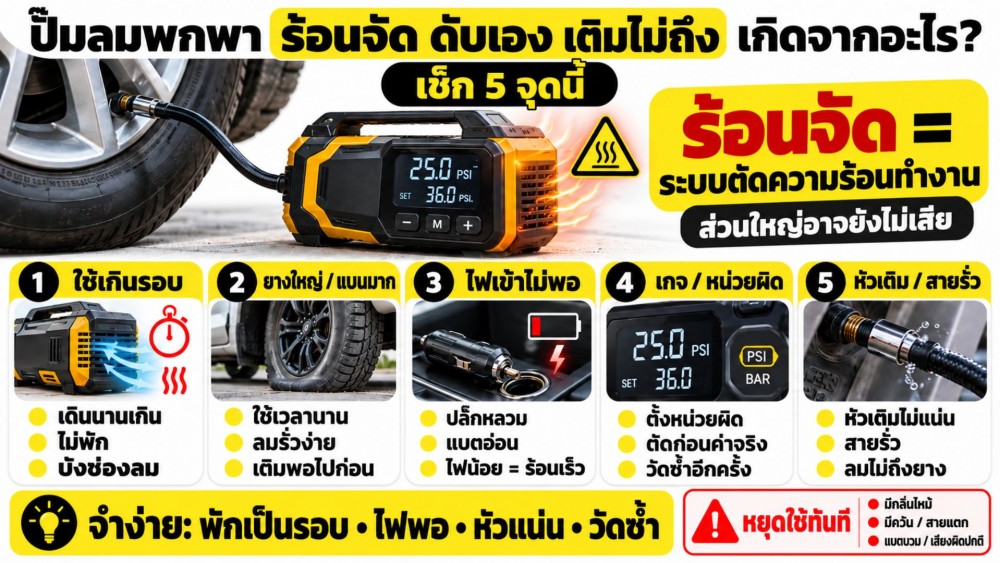
Summary: A portable air compressor will complete the job when used within its duty cycle, fully powered, and every stroke of air reaches the tire
Overheating, shutting off, and failing to reach the preset pressure on a portable air compressor usually do not stem from a broken tool, but from pushing a small, tankless machine beyond its limits—whether inflating all four pickup truck tires at once, inflating completely flat tires, or plugging into in-car extension sockets
Read the duty cycle and rest accordingly, check sidewalls before inflating completely flat tires, divide inflation sessions for large tires, plug in securely, use the fuse specified in the manual, idle the engine only in open areas, set pressure by the door jamb placard and verify units, double-check with a separate gauge, and tighten the nozzle until hissing stops
Do not bypass thermal protection, do not use an oversized fuse, and do not inflate tires with bulging sidewalls or unseated beads. If there is smoke, a burning smell, a swollen battery, or cracked cables, stop using it. Stiff, brittle air hoses and a running motor with no pressure increase may indicate it's time for a replacement
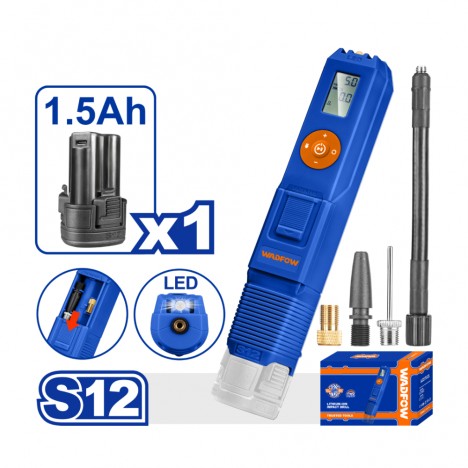
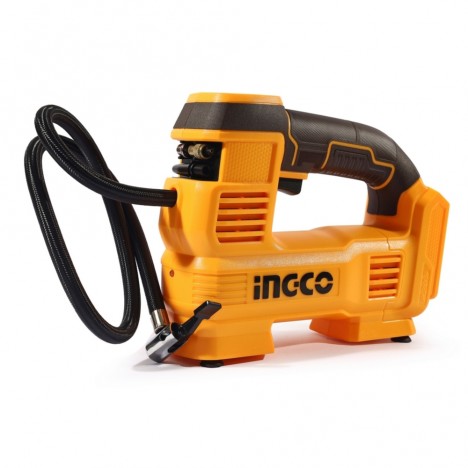
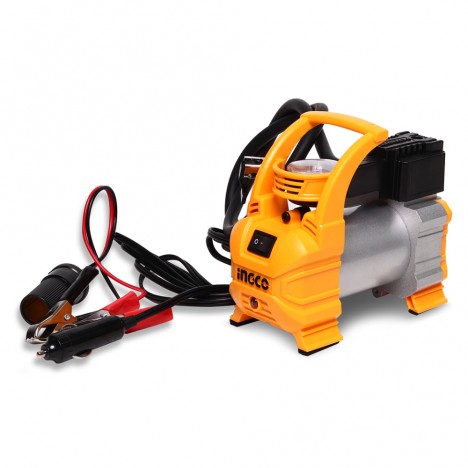
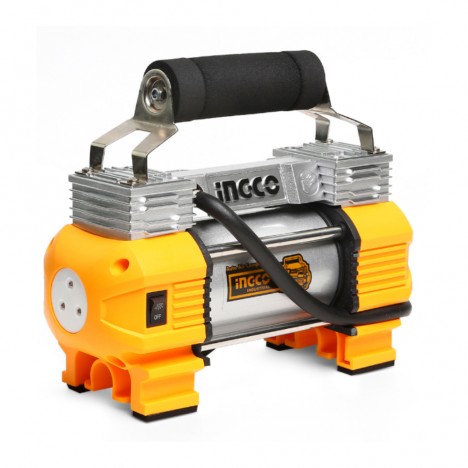
If you have a large vehicle or need frequent inflation that the current tool cannot handle, try comparing the specs and power sources of a portable air inflator each model before making a selection for actual use