


 EN
 ไทย


Customers Also Purchased


Rotary hammer When drilling into a concrete wall halfway through the bit, and the sound shifts from a deep pounding to a high-pitched metallic screech while the tool starts jerking in your hands, it is the clearest sign that the bit tip is striking rebar inside the concrete. This moment is where many tradespeople make a decision—habit tells them to push through it
The question is: should you push the rotary hammer a bit harder to punch through, or change to a new bit? Actually, neither. Masonry bits for rotary hammers are designed to crush stone, not cut through steel. Pushing further will only chip the carbide tip, jam the bit, and twist your wrist. More importantly than tool damage, that piece of rebar might be an essential load-bearing component of the building structure.
Why can a rotary hammer drill through concrete with ease, but stop dead in its tracks when hitting rebar?
Deep dive into rotary hammer mechanisms: How does the piston hammer system work? Inside a rotary hammer, a piston compresses air to drive a striker that repeatedly hammers the back of the drill bit while it rotates slowly. The hard carbide tip pulverizes rocks and sand in the concrete into dust, which is then evacuated by the flutes of the bit. This mechanism is highly effective on hard yet brittle materials that shatter under impact.
Rebar is the exact opposite because it is a ductile material. When struck, it deforms slightly and rebounds without crumbling into powder. Hammering it with a carbide tip only generates heat and kickback. It is comparable to striking a brick versus a rubber block with a hammer: the brick shatters, but the rubber bounces the hammer back without damage. Standard hammer drills face the same problem, but with lower impact energy, they usually stall on their own before causing severe damage.
A rotary hammer defeats concrete by pulverizing it, but is thwarted by rebar because it cannot be shattered. Once you hit rebar, you must stop hammering and decide whether to relocate the hole or switch methods.
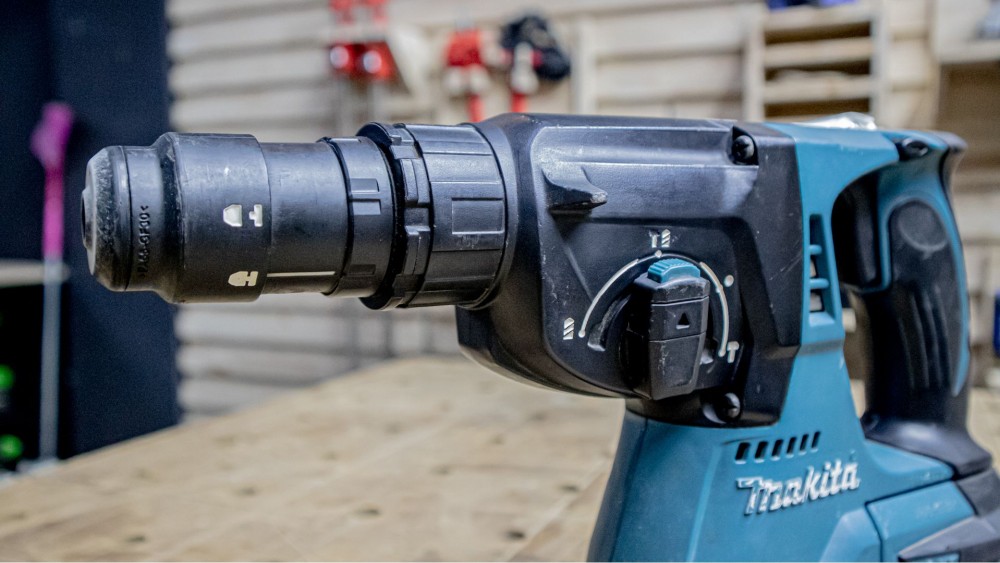
Recognize the signs: confirm that your rotary hammer is hitting rebar, not just a hard aggregate stone.
Concrete often contains hard aggregate stones that can momentarily slow down the bit as well. Knowing the difference prevents unnecessary stops while stopping you from forcing the drill when you've genuinely hit rebar.
- Sound and kickback Hard aggregate produces a dull, deep hammering sound, and the bit will continue to sink slowly. Steel, on the other hand, makes a high-pitched metallic clinking sound, causes stronger vibrations/kickback to your hands, and causes the bit to stall at the exact same depth.
- Debris coming out of the hole Concrete dust is matte gray. If you see shiny metallic flakes or tiny sparks at the entrance of the hole, it indicates that you are hitting steel.
- Drilling location Holes drilled near column corners, beam edges, or aligned with previous holes where rebar was struck are much more likely to hit rebar than those in the middle of a wall.
Stop hammering immediately; do not push the rotary hammer harder to break through.
Once you are sure it is steel, release the trigger, wait for the bit to stop, and pull it straight out of the hole. Forcing it will not break the steel; instead, it will chip the carbide tip or rip it off, cause the bit to overheat and seize in the hole, and if the tip catches on the edge of the steel, the bit will stop spinning while the motor continues to drive, causing the tool body to kick back violently against your wrist.
Many modern rotary hammers feature a safety clutch or anti-kickback system to reduce the torque transferred to your wrists, but it does not make the operation safe if you are still holding the tool with one hand. Always install the side handle and grip with both hands when drilling large or deep holes, maintain a stable stance, and if working on a ladder, position your body so you do not absorb torque while leaning over.
If the bit gets stuck in the hole, do not yank it with the drill. Remove the bit from the chuck and gently turn it counterclockwise using a wrench or locking pliers to back it out.
Shifting the hole slightly: The first solution when a rotary hammer hits rebar
Rebar in walls and slabs is laid out in a grid with consistent spacing. Moving the rotary hammer's drilling point slightly to the side may clear the rebar immediately without cutting anything. For mounting shelves, curtain rods, or hanging cabinets, this minor shift barely affects the final installation.
The method is to drill a pilot hole with a small bit at a new position first. Once the desired depth is reached, enlarge it to the actual size. For the original hole where rebar was encountered, blow out the dust and seal it with repair mortar or concrete patching material to prevent moisture from reaching the steel. If the job requires a fixed position, such as machine footings, adjust the baseplate or bracket to have slotted or alternate holes for flexible positioning.
Avoiding rebar before drilling is better than dodging it afterward. A wall scanner helps you locate rebar, pipes, and wiring before plunging the bit. Mark the rebar lines on the wall with a pencil, then choose hole positions between the lines.
If the rotary hammer really must drill through the rebar, you must change your approach first.
Some jobs don't allow moving the hole, such as pipe runs with fixed alignments or chemical anchor holes with predetermined locations. In this case, two considerations must be addressed: who provides authorization, and whether you need to switch machines or replace the standard rotary hammer drill bit with something else.
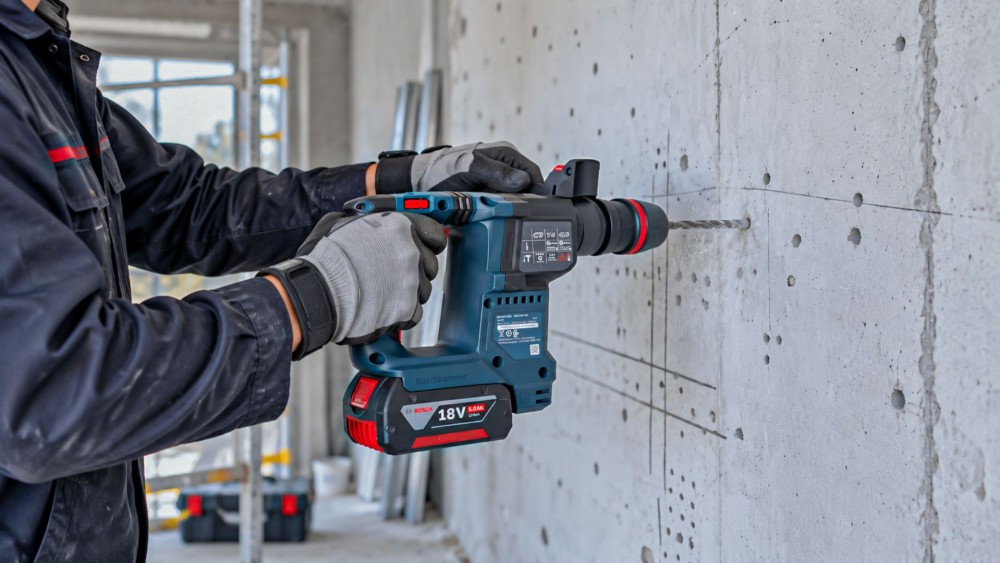
Permission must be obtained first
Rebar in columns, beams, and slabs constitutes the load-bearing components of a structure. Cutting a single bar might have no effect at all, or it could compromise structural integrity at a critical point. The only person who can answer this is a structural expert who knows and has reviewed the building plans. In condominiums or rented properties, permission may also need to be requested from the juristic office or property owner according to regulations.
Use tools designed to cut steel
Do not continue hammering with a masonry bit. Use a rebar cutter bit designed for rotary hammer chuck systems in rotary-only mode (no hammering), or Use a diamond core drill rig with a diamond core bit capable of cutting both concrete and rebar simultaneously. Never use standard metal drill bits in hammer mode, as the bit will snap immediately.
Condo floors and buildings using prestressed tendons: Never use a rotary hammer to drill on your own without prior inspection
Condominiums and modern buildings utilize post-tensioned concrete slabs, which contain high-tensile steel tendons running through the concrete under immense tension. These tendons are completely different from ordinary rebar. If a drill bit strikes one, the tendon can snap and whip back with fatal force, potentially compromising the load-bearing capacity of the entire slab.
From the outside, you cannot tell what type of floor is in front of you. Therefore, for every job involving drilling into floors or ceilings in condominiums, always verify beforehand what type of slab it is, whether tendon layout drawings are available, and what the drilling depth limits are. If there are no clear answers, use a structural scanner and obtain engineer approval; this is not something you should try on your own.
Can a rotary hammer drill bit that just hit rebar still be used?
It can still be used if the carbide tip is undamaged. Let the bit cool down, then inspect the tip under bright light. The cutting edges of the carbide insert should be sharp and distinct, with no chipping, no cracks, and firmly bonded to the bit body.
Do not continue using it if the tip is chipped or rounded on either side, if the carbide insert is loose or missing, or if the rotary hammer bit body is bent and wobbles when spun. A chipped bit drills slowly, overheats quickly, and produces oversized holes that prevent anchors from gripping tightly. A bent bit also vibrates the rotary hammer chuck and bearings, causing premature wear.
Do not attempt to resharpen a chipped bit yourself using a standard bench grinder. The grinding heat can crack the carbide and cause it to detach during the next drilling operation. Standard-sized masonry bits are inexpensive, so replacing them is a better value.
Never ignore warning signs to stop using the rotary hammer immediately, whether you hit steel or not—such as the bit striking pipes or wiring, water seepage, voltage drops, tripped circuit breakers, smoke or burning odors from the tool, grease leaking from the gear housing, or the bit jamming in the chuck so tightly it cannot be removed, along with an overheated chuck.
Conclusion
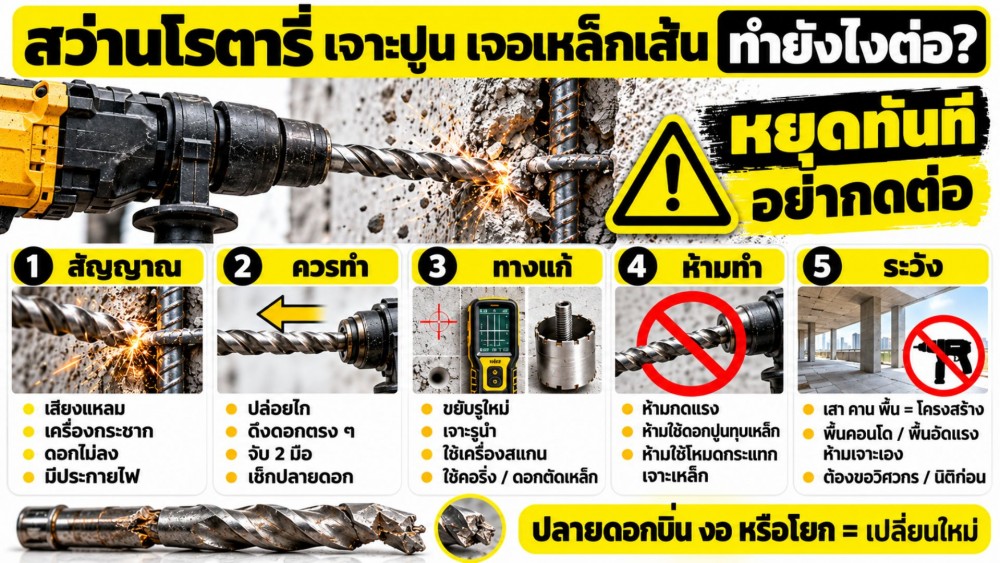
When a rotary hammer hits rebar, pushing harder is not the answer because masonry drill bits cannot break through steel. Whether mounting wall cabinets, anchoring machinery to the floor, or drilling through beams for piping, forcing it will only chip the bit, bind the tool, and twist your wrist.
What you should do is interpret the symptoms from the sound, rebound vibration, and dust produced. Release the trigger and pull the bit straight out. Always hold the rotary hammer with both hands using the side handle. Shift the hole slightly and drill a pilot hole. Patch the old hole. Use a wall scanner to locate rebar before drilling again, and if cutting through steel is truly unavoidable, use a rebar cutter bit or a core drilling machine only after ensuring safety approval.
The most important thing is Steel rebar in columns, beams, and slabs is part of the structural system. Cutting it requires approval from an engineer, and for condominium floors, always consult the juristic person before drilling. If the drill bit hits electrical wiring or pipes, cut off the power or turn off the water and call a technician. As for drill bits with chipped carbide tips, they should no longer be used and can be discarded immediately.
If you don't yet have anything to help detect rebar layouts before drilling, check out the wall scanner category and the Rotary hammer category to use together.