


 EN
 ไทย


Customers Also Purchased


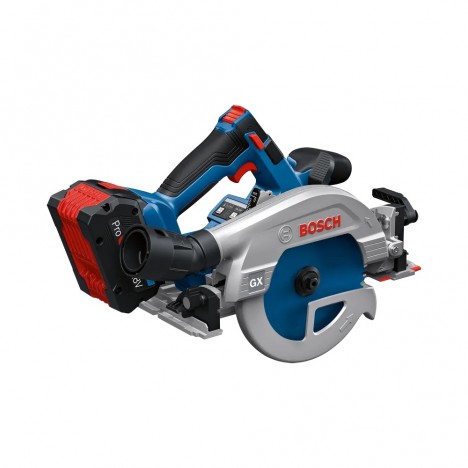
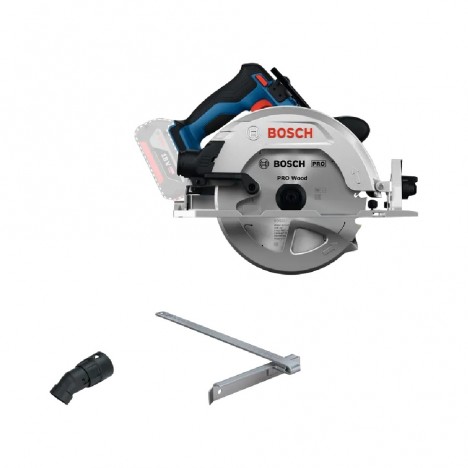


You're ripping a large sheet of plywood to make a bookshelf in front of your house, pencil line marked dead straight, gripping Circular Saws Following the line for a short while, the cut begins to wander sideways little by little.
The first thought for many might be, "Is my hand just not steady enough? Do I need more practice?" In truth, when using a circular saw, skill plays a part, but it's not everything—especially when the cut keeps drifting in the same direction despite trying to hold the tool straight. That's because the root cause may lie in the baseplate, the blade, or how the workpiece is supported, which—no matter how steadily you hold the circular saw—can still cause the cut line to deviate from your intended path.
Before blaming yourself for not knowing how to use a circular saw, let's go through the causes point by point—from blade-to-base alignment, tooth condition, sighting the line, and grip posture, all the way to using a straightedge guide. We'll also cover what to do when a cut starts to drift midway through and what you must never force.
Why is it sometimes hard to cut straight with a circular saw, even when you're used to it?
Many people see a circular saw blade as a flat, round disc spinning in a fixed position and assume it should be easy to cut straight. In reality, the rotation of the blade and the direction the tool travels must be in proper alignment.
When cutting wood, the front teeth of the blade open the kerf, while the rear of the blade passes through the freshly cut groove as long as the saw moves straight along the blade line. But when the saw twists sideways, parts of the blade can start rubbing against the kerf, causing increased friction, heat, and resistance.
Compare this to using a table saw with a rip fence, or Track saws that have guide rails to guide the tool to move along a designated line, whereas general handheld circular saws rely on user control along with the base plate edge. Without a guide, or if disturbed by lateral force during cutting, the tool is more prone to gradually drifting off the line.
The key principle is that cuts will be straight when the blade alignment is parallel to the travel direction of the circular saw and there is no lateral force twisting the blade during cutting.
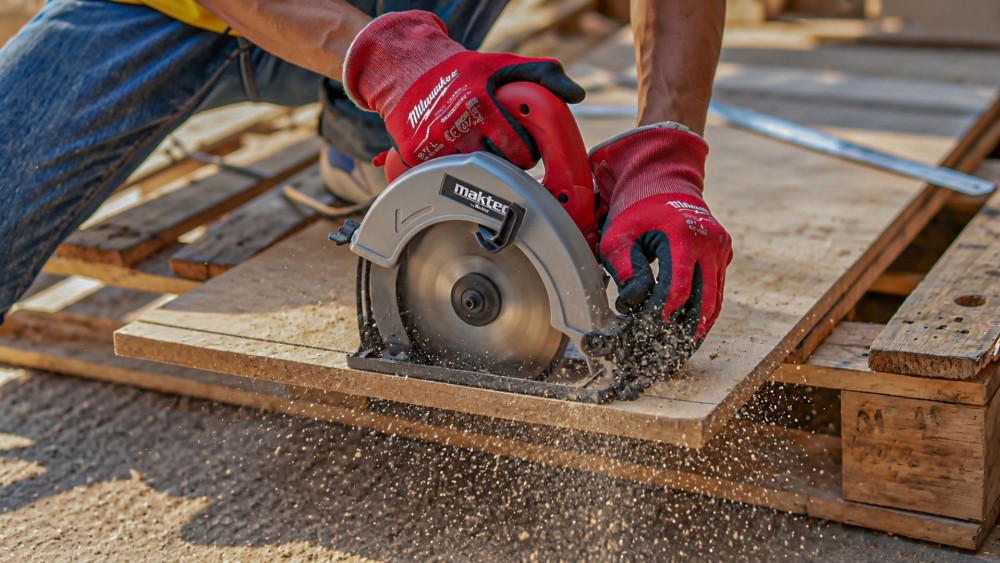
The blade is not parallel to the base plate edge, causing the circular saw to drift to the same side every time.
Have you ever noticed that even when trying your best to aim at the line, the tool keeps wandering off to the same side every cut, even when using a straight edge as a guide? For this type of issue, you should start by checking the relationship between the blade alignment and the tool's base plate edge.
The base plate is the part that rests against the workpiece, and its edge is often used as a reference point when guiding along a straight edge. If the blade is not parallel to the base plate edge, pushing the base plate straight can cause the blade to cut at an angle to the tool's travel direction, resulting in binding inside the kerf.
Some circular saw models feature base plate alignment adjustment points, but the locations and methods vary, so you should follow that specific model's manual. You should not loosen screws or bend the base plate based on guesswork.
Dull blade, chipped teeth, or residue buildup causes the circular saw to pull to the side.
Even if the base plate is properly aligned, blade condition also affects cut straightness—especially with blades used for a long time, where teeth start to dull, chip, or have heavy pitch/resin buildup.
A sharp blade suited for the material will cut wood smoothly and continuously. But when some teeth are unevenly worn or damaged, cutting forces can become unbalanced, creating vibration or increased lateral force that makes maintaining alignment harder than usual.
Another cause is pitch and adhesive buildup on the blade surface. This residue increases friction between the blade and the kerf walls. As the motor works harder, heat also rises, sometimes causing burn marks along the wood edges even without moving too slowly.
Unplug the cord or remove the battery first, then inspect the circular saw blade for chipped teeth, missing teeth, cracks, or sticky residue. If residue is present, remove the blade and clean it with an appropriate product according to the manufacturer's recommendations.
If teeth are worn or damaged enough to impact the cut, you should replace it with a new blade, choosing a tooth configuration suited for the material—since rip-cut blades and smooth plywood-cutting blades have different applications. You can read more in the article Circular Saw Blades: How Often Should They Be Replaced?
Looking at the wrong line alignment point causes the circular saw to cut parallel to the line, but off position.
The blade does not cut a hairline slit, but rather removes material equal to the kerf width. If you align the center of the blade with the measured line, the edge of the finished piece you intended to keep may be cut away.
Before making actual cuts, make test cuts on scrap wood to see how the tool's sight notches correspond to the blade edge. During cutting, keep sawdust from accumulating over the cut line. If the tool supports a blower or dust extraction system, use it to help keep the cut line clearly visible.
Pushing too hard or standing in the wrong posture, causing the circular saw to twist unintentionally
When cutting long sheets of wood, many people start off straight, but as the circular saw moves further away from the body, the wrist begins to tilt, the arms have to overreach, and the pushing force is no longer aligned with the blade's path. This problem can happen even to experienced users, especially when standing in the wrong position or setting up an improper workspace.
Pushing the tool too fast also has an impact, as the blade may not cut through the material quickly enough, causing the motor speed to drop, the tool to vibrate, and the user to apply extra force. When the pushing force is misaligned, the blade is even more likely to bind against the kerf.
The solution is to grip the tool using the handle positions specified by the manufacturer. Use two hands if the tool is designed for two-handed operation. Wait for the blade to reach full operating speed before starting the cut as usual, then slowly advance the tool at a speed suitable for the material without forcing it when you feel the motor is under abnormal load.
Stand stably and slightly offset from the kickback line, adjusting your posture so you can move along with the tool without overreaching your arms. If using a corded tool, route the power cord clear of the tool's path and workpiece edges before cutting. For long cuts, try doing a dry run of the movement without turning on the tool to check for any obstacles or points where you need to change your stance.
Improper workpiece support, causing the kerf to pinch the circular saw blade until it binds and veers off
Imagine a sheet of wood resting across two sawhorses. When the saw cuts through the center of the sheet, the weight of the wood causes the middle to sag. The kerf may close up and pinch the blade, causing the tool to bind abnormally or start wandering off course.
Conversely, if the offcut side overhangs too much without proper support, the weight of the scrap piece can cause the wood to tear or splinter before the cut is finished, or shift the workpiece and cause loss of tool control.
- Cross-cutting timber/lumber You should properly support and securely clamp the keeper piece. The cutoff end must have room to fall away safely without pinching the kerf against the blade or pulling on the main workpiece.
- Ripping large plywood sheets Use suitable support materials, such as rigid foam insulation board for cutting or multiple scrap wood supports, so that both sides of the sheet do not sag or shift during the cut.
Position the supports so the blade does not contact the floor or materials that should not be cut, and secure the workpiece firmly with appropriate clamping tools—never use hands or knees to hold the workpiece instead of clamps.
The key is not just supporting the wood so it does not fall, but supporting it in a way that prevents the kerf from closing and pinching the circular saw blade along the way.
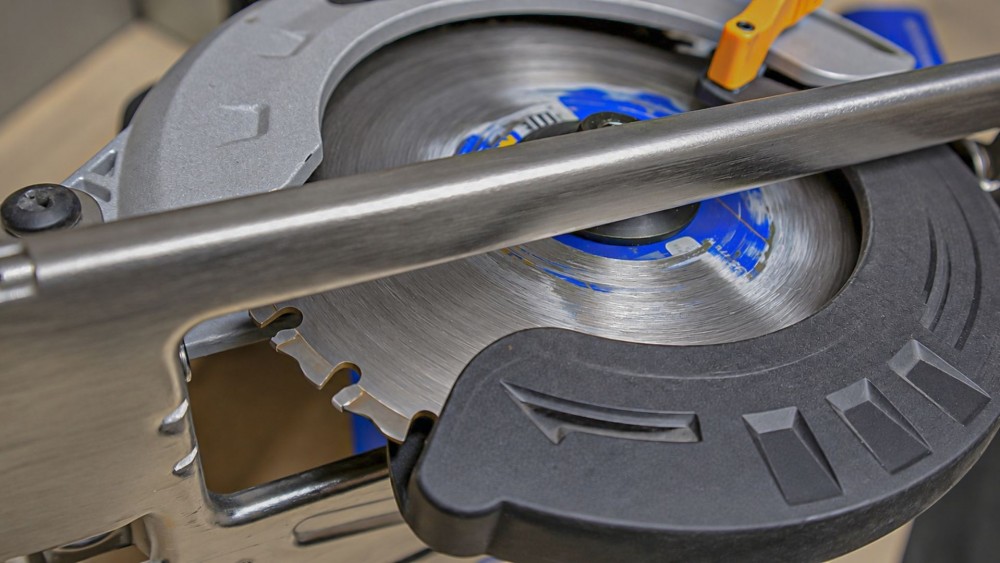
Use a straightedge guide or guide rail to help circular saws cut straight with higher precision
Once the tool and blade are in proper condition, if you need to cut long sheets with consistent straight edges, using a straightedge guide or guide rail will reduce the burden of constantly sighting and correcting direction by eye.
A straightedge guide can be made from wood or any material with a straight, rigid edge by measuring the distance between the base plate edge and the blade's cut line, then using that offset to position the guide on the workpiece and clamping it securely before cutting. If you regularly cut large sheets, you might consider using Guide Rails that is compatible with that specific model, making alignment and repetitive cuts much more convenient.
The principle is to keep the base edge gliding flush against the guide without applying excessive side pressure. For tools specifically designed to work with guide rails, the rail system will better help maintain movement along the designated path. However, compatibility between the tool and the rail should always be checked prior to use. You can read more about How to Safely Use Guide Rails with Circular Saws and Track Saws
However, using a straightedge guide does not always guarantee a straight cut. If the blade is not parallel to the base edge, pushing the tool along the guide can cause the blade to bind against the kerf, resulting in increased resistance.
Therefore, before using a straightedge guide or guide rail, make sure the tool is in good condition, the blade alignment is correct, and the workpiece is properly supported. Guide accessories cannot compensate for tool defects in every scenario.
If a circular saw drifts midway, can you steer it back onto the line?
When a spinning saw blade is pinched or binds in the wood, the tool can suddenly kick backward with great force—a phenomenon known as kickback, which is a major hazard when using this type of saw. Read more in the article Understand Kickback Before Choosing a Power Saw
If you feel the circular saw start to bind, wander off the line, or notice abnormal motor sounds, stop pushing immediately. Release the switch trigger, hold the tool firmly in place until the blade comes to a complete stop, and only then lift it out of the workpiece.
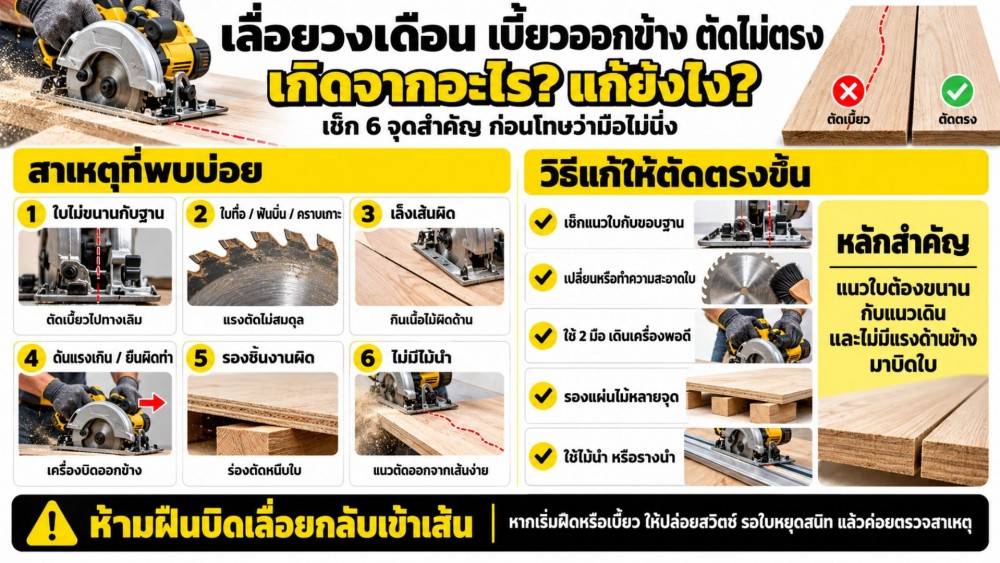
Summary: A circular saw cuts straight when the blade is parallel to the travel direction and free from lateral twisting forces.
A wandering cut is not caused by unsteady hands alone; it also involves blade alignment, the saw base, the condition of the saw teeth, line sighting, and workpiece support. If the blade is not parallel to the direction of travel or if lateral forces occur during the cut, the saw can drift off track despite your best efforts to hold it straight.
The solution should start with checking the parallelism of the blade to the base edge, inspecting the teeth for chips, dullness, or pitch buildup, clearly designating the off-cut side, maintaining a stable posture and feed rate, supporting the workpiece to prevent the kerf from closing, and using a straightedge or guide rail when high accuracy is needed—especially for long rip cuts.
Most importantly, when a cut starts to drift, never force the circular saw back onto the line, and never pull it backward while the blade is still spinning. Release the switch, wait until the blade comes to a complete stop, and inspect for the cause before restarting. If the base plate is warped or parts are abnormal, send it to a service center, and never modify the blade guard just to see the cut line more easily.
Explore Circular Saws Then compare applications and compatible guide accessories for each model to achieve cuts that are both straighter and safer.