


 EN
 ไทย


Customers Also Purchased
How Does a Manual Tile Cutter Work, and Why Does Scoring Require Snapping?
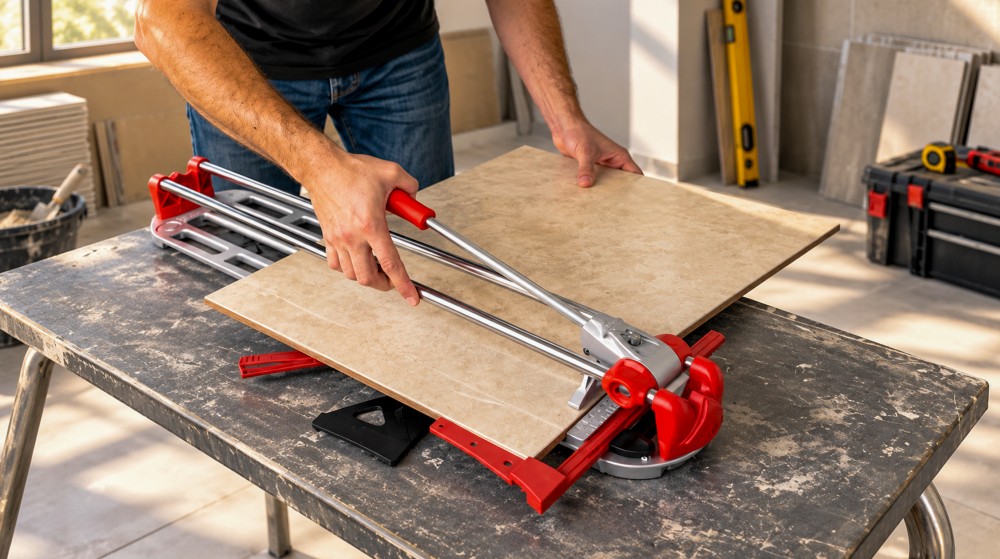
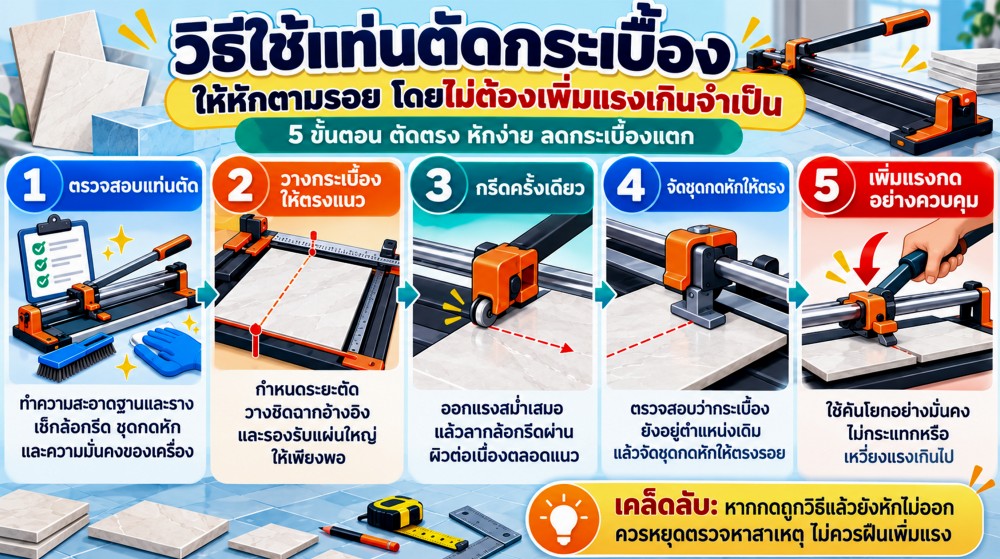
A common misconception about manual tile cutters is thinking the scoring wheel cuts deep into the tile like a saw blade. In reality, this tool uses the "Score and Snap" principle. The scoring wheel merely creates a groove on the tile's surface to guide where the crack initiates and propagates in the desired direction. Then, the breaker assembly applies force across the tile, causing the material to split cleanly along the scored line. Therefore, successful tile cutting relies on 3 essential elements:
- A continuous score line that clearly defines the fracture path from start to finish
- Appropriate snapping force that allows the crack to propagate cleanly along the score line
- A stable support base ensures that the tile receives force in the way the machine was designed to deliver.
If any single component does not work properly, the tile may fail to snap or could break off-line even if the score line is clearly visible.
Why does a tile cutter fail to snap the tile after scoring?
Scoring too lightly, resulting in an inconsistent score line
A common issue is that users, fearing they might break the tile, drag the scoring wheel with too little force, causing inconsistent contact with the tile surface—especially at the start and end of the piece. Although a faint line may appear on the surface, the groove might not be deep enough for the tile to crack cleanly along the line. When snapping, this requires more force than usual or leads to cracks running in unintended directions.
Solution: Practice on a scrap tile first. Apply the right amount of downward pressure for the material's surface, and glide the scoring wheel smoothly from one edge to the other without stopping midway. However, scoring too hard is not the answer either, as it can damage the glaze or cause uncontrolled cracking.
Scoring wheel is worn out but still forced into use
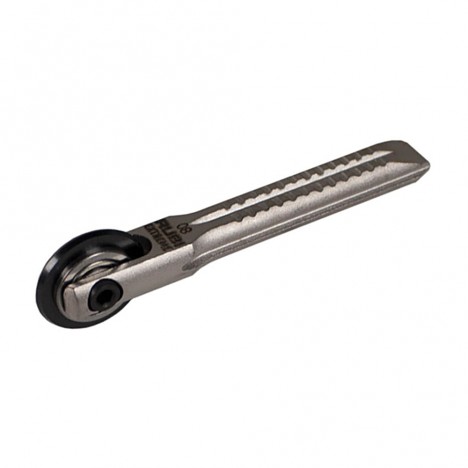
The scoring wheel is the part that makes direct contact with the tile. With continuous use, its edge can wear down or get damaged, preventing it from producing a proper score line. Noticeable signs include the wheel catching or stumbling as it rolls, needing extra force, or creating an intermittent, broken score line despite applying steady pressure.
If you notice these signs, check whether the wheel rotates freely, whether tile debris is jammed around the axle, and whether the wheel edge is chipped or abnormally worn. Replacing a worn scoring wheel with the exact matching model can restore smooth, consistent scoring without needing to replace the entire tile cutter.
Tile is too hard or too thick for the tile cutter's capacity
Not all tile types share the same properties. Some common ceramic tiles are easy to score and snap, whereas certain porcelain or granito tiles are denser and much more resistant to breaking—especially thick tiles. If you use a tile cutter with a low-power breaking mechanism, the tile may score normally, but pressing the lever won't provide enough breaking force to snap it apart.
However, you should not judge solely by the tile type name; you must consider the thickness, material properties, and the tile cutter's capacity together.
For example, some tile cutter models accommodate a maximum tile thickness of 10 mm, while heavy-duty models can handle over 20 mm under the manufacturer's specified material conditions. If the tile exceeds the machine's limits, forcing it by slamming the lever or using other tools to apply pressure is not the right solution.
Snapping in the wrong position, even with a proper score line
Sometimes the problem is not the scoring wheel, but rather the snapping step. A tile cutter has a breaker mechanism and support base designed to work together. If the breaker foot is misaligned or the tile shifts away from the score line, the applied force may not initiate the crack along the intended path.
For instance, after scoring a clean line down the center, shifting the tile before snapping so the score line no longer aligns with the machine's support ridge, or placing the breaker foot away from the manufacturer-specified position, means that applying more pressure will only increase the risk of the tile breaking off-line.
Solution: Check the tile position, score line alignment, and the contact points of the breaker foot before applying force. Follow the manual for your specific tile cutter model, as breaking positions can vary depending on the mechanism design.
Unstable base, causing pressure to disperse in the wrong direction
Observe whether any side lifts up when placing the tile on the base, or if the machine wobbles with your hand pressure during snapping. If the tile cutter rests on an uneven surface, the rubber pads are damaged, or a large tile overhangs without adequate support, the applied breaking force may not transfer through the workpiece as intended.
Particularly with long tiles, the weight of the overhang can cause the piece to shift or create unwanted bending stress. Before cutting, place the machine on a sturdy floor or workbench, check the base pads, and extend the side support arms as designed to keep the workpiece stable throughout scoring and snapping.
How to choose a tile cutter if you regularly deal with hard tiles?
For homeowners who occasionally cut general ceramic tiles, an appropriately sized manual tile cutter may be sufficient. However, for contractors who need to cut many porcelain tiles a day, rail quality, scoring wheel, base stability, and breaking mechanism power should be considered. Examples of brands available through iTOOLMART include:
- WADFOW, such as model WTR1506, with a maximum cutting length of 600 mm, supporting tile thickness up to 10 mm; suitable for general tasks where tile dimensions and types match the specifications.
- Wolfcraft, such as model TC 670 Expert, supporting a maximum cutting length of 670 mm and tile thickness of 4–14 mm; features a rail system and lever assembly for controlled cutting and snapping, suitable for jobs requiring consistent precision.
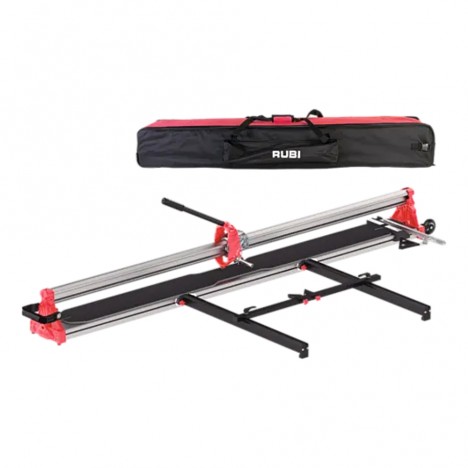
- RUBI, such as model TX-1250 MAX, supporting tile thickness of 3–21 mm according to specifications, with a manufacturer-rated breaking power of 1,200 kg; designed for heavy-duty work and hard-to-cut porcelain tiles.
The breaking power rating represents the mechanism's capability, not the manual force the user must apply directly, and it does not mean the tool will always snap every type of tile within the specified thickness range. Choosing a tile cutter should therefore start with the actual type of tile being used, rather than just picking a larger tool or one with higher breaking power. Even with high power, if the scoring wheel is unsuitable or the breaker is mispositioned, problems will still occur.
Conclusion
The issue of a tile cutter scoring a line but failing to snap does not simply come down to using too little force or the tile being too hard. Snapping cleanly along the score requires a quality score line, proper pressure, and correct workpiece support positioning. Before applying more pressure, check the scoring wheel, the resulting score line, the position of the breaking mechanism, and the cutter's capacity limits. If the tool is found to be unsuitable for the material, it is better to choose equipment that truly supports the job rather than forcing it.
Because good tile cutting is not measured by who can exert more force, but by controlling the tile to break along the desired line with minimal damage. So, what kind of tile cutter scoring and snapping issues have you encountered? Was it due to hard tiles, a worn scoring wheel, or did you ultimately have to switch tools to get the cut done?
Select Tile Cutters to suit the application