


 EN
 ไทย


Customers Also Purchased


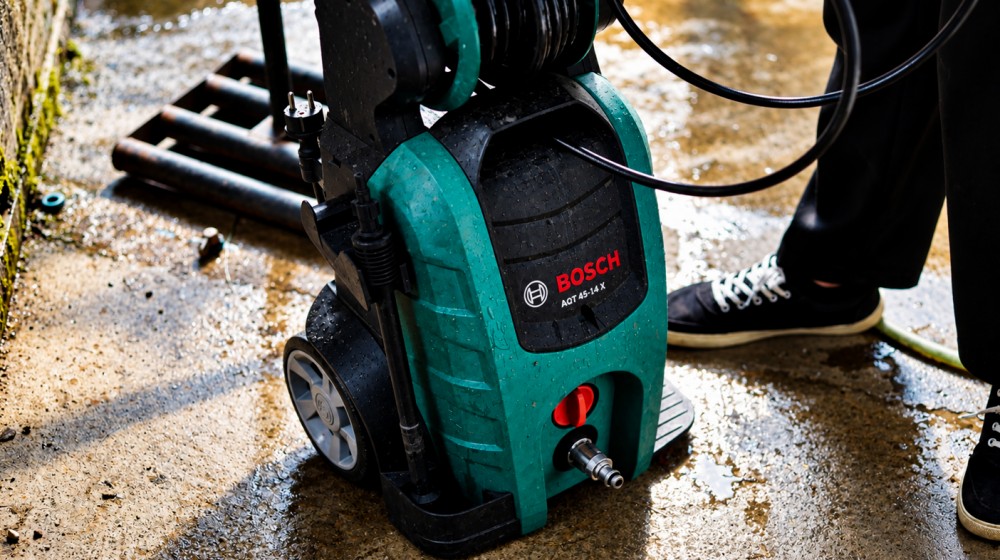
"Give me the most powerful one." If I had to guess, this is probably the sentence high-pressure washer sellers hear most often. It sounds reasonable enough—if you're going to buy one, you might as well get something powerful. But the truth is, a high-pressure washer that is too powerful for the task is not only more expensive, but can also strip car paint, dislodge floor tile grout, or damage door rubber seals. So how do you choose the right one? The answer lies in two or three numbers on the box and a simple question: what are you going to clean? Let's break it down step by step.
How is a high-pressure washer different from a regular garden hose?
A garden hose relies solely on tap water pressure, which is enough for washing away dust, but not enough to blast away stubborn stains. High-pressure washer It has an internal pump that forces water through a tiny nozzle orifice, propelling it out many times more powerfully. Mud, algae, or oil stains on the floor come off much easier. An advantage many people don't realize is that it often uses less water than running a hose for a long time, because water pressure does the work instead of water volume. Cleaning finishes faster, so less water is wasted.
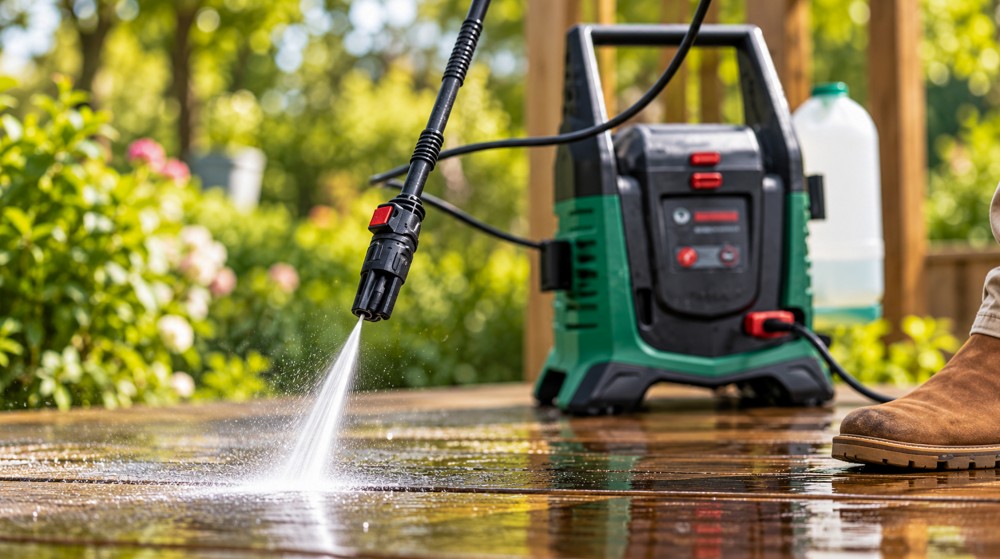
How to read the numbers on a high-pressure washer box?
Pressure (bar)
This number indicates how powerfully the water shoots out. The higher the bar, the harder the water impacts dirt. Some technicians refer to PSI, which is also a unit of pressure, just a different scale.
Flow rate (liters per hour or liters per minute)
This is what people often overlook. The flow rate indicates how much water the machine delivers. Pressure blasts the dirt loose, while water volume washes the dirt away. If the pressure is high but the water flow is low, the stains may come loose, but you'll spend a long time rinsing them away. With sufficient water flow, the job gets done much faster. When comparing two models, always look at both numbers together.
Motor Power (Watts)
Watts indicate how much power the motor consumes, but they do not directly mean the water pressure will always be stronger. Two models with similar wattage can deliver different pressures depending on the pump and overall design. Therefore, don't choose based on watts alone; look at pressure and flow rate as the main factors.
High-Pressure Washer: Is higher bar always better?
Not really, to be completely honest. The right pressure depends on what you are washing. Washing cars, bicycles, or outdoor furniture doesn't require very high pressure; if it's too strong and sprayed up close, it can strip paint, peel off stickers, or damage door weatherstripping. On the other hand, for washing parking lots, walkways with algae, or stubborn oil stains, high pressure really helps. If your home needs both, choose a model with adjustable pressure or multiple interchangeable nozzles. This is much more versatile than buying the strongest unit and having to back away every time you wash the car.
Universal (Carbon Brush) vs. Induction Motors: What's the difference?
Most domestic high-pressure washers use one of these two types of motors. Carbon brush motors (motors with small carbon blocks that contact and deliver current to make the motor spin) generally make the machine lighter and more affordable, but they are louder, and the carbon brushes wear down over time and need replacement eventually. They are suitable for occasional users who wash their car once or twice a month.
Induction motors (brushless motors) are usually heavier and more expensive, but they run quieter and handle continuous operation much better. They are suitable for frequent users or those who need to clean large areas for hours at a time. However, actual lifespan also depends on the model and maintenance; one type isn't necessarily better in every scenario. It's safer to consider the specifications along with the model's warranty period.
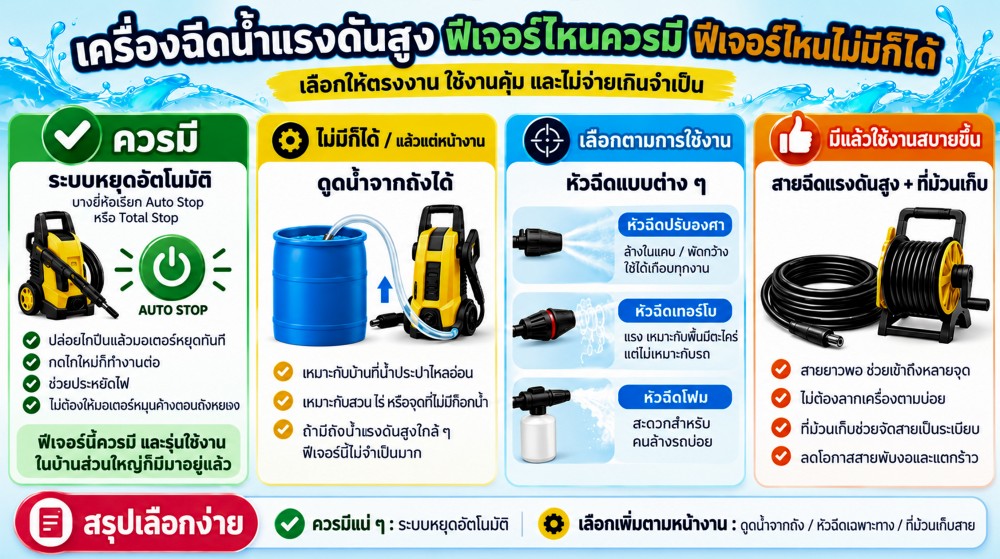
Which type of high-pressure washer should you use?
- If you use it to wash your car once or twice a month and clean outdoor tables and chairs occasionally, a compact machine with moderate pressure and a carbon brush motor is sufficient. No need to invest heavily.
- If you have a driveway or walkway that frequently grows moss or you need to clean large surfaces, step up to a model with higher pressure and flow rate. If you really use it frequently, consider an induction motor as well.
- If you run a car care shop or need to wash all day every day, home-grade machines are not suitable because they aren't designed for long continuous operation. You need to look at heavy-duty commercial pressure washers specifically.
- As for cordless battery-powered pressure washers, their advantage is portability anywhere, but many models offer much lower pressure than corded electric ones. They are suitable for light rinsing, such as washing bicycles, watering plants, or cleaning shoes, rather than scrubbing tough stains. Check the pressure specs before buying.
Summary
The best high-pressure washer isn't the most powerful one, but the one that truly fits your cleaning tasks. Consider both pressure and flow rate—don't look only at watts. Car washing doesn't need excessive power; save the high pressure for floor cleaning. Choose a carbon brush motor for occasional use, or consider induction for frequent use. And don't forget to check spare parts availability and your home's electrical setup before buying. If you're still unsure, browse the models in the high-pressure washer category on itoolmart or drop by to chat with our staff at any branch. Once you own a pressure washer, what do you wash most often? Your car, your patio, or something else people rarely think of?
Select High-pressure washer to suit the application