


 EN
 ไทย


Customers Also Purchased



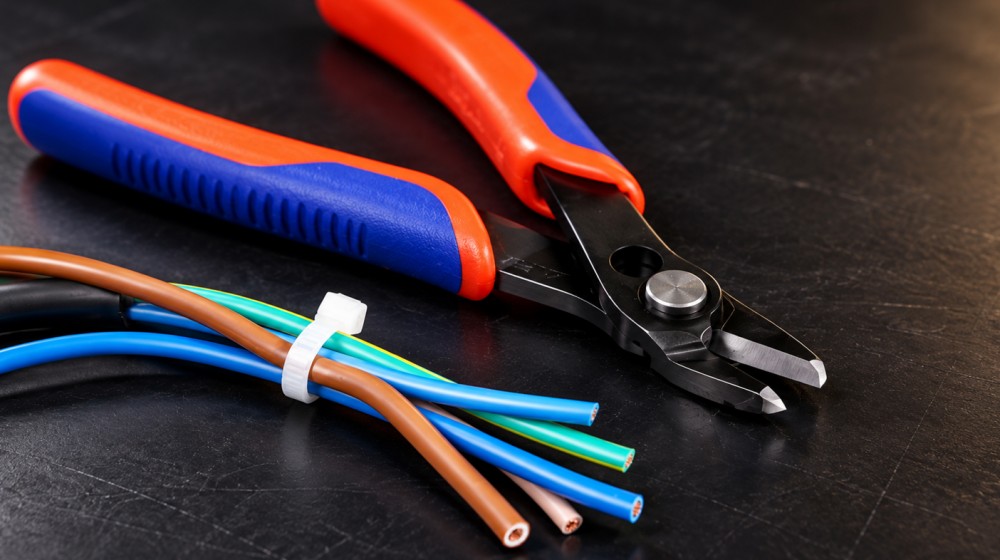
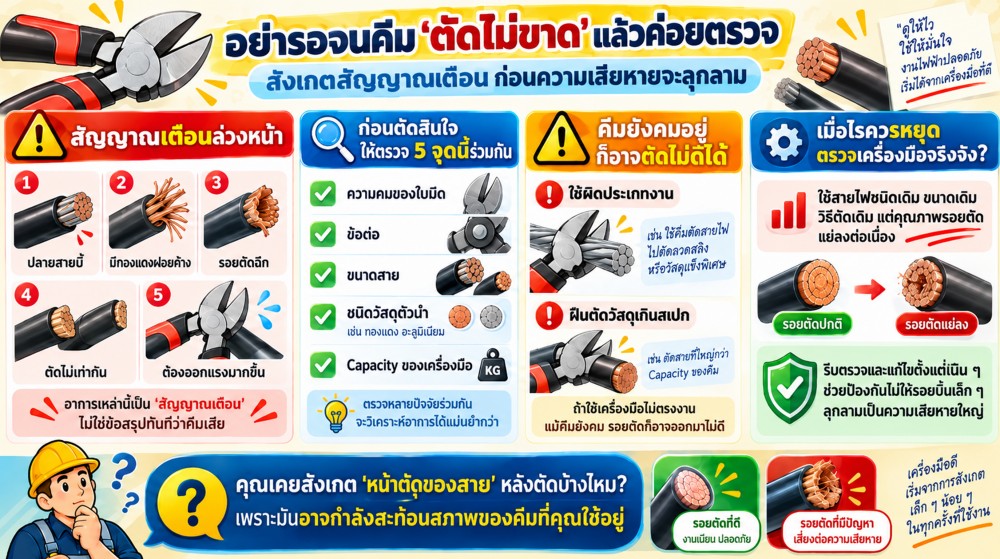
"Yesterday it cut through in one squeeze; why does it take two today?" This might be a question many have encountered while working. Even though we are using the same cable shears, the same wire size, and applying the same force, the cut is not smooth, the copper ends are crushed, or stray strands are left uncut, forcing a second squeeze. Many might immediately think, "The cable shears are definitely dull." In reality, dull cable shears are just one of the causes, as similar symptoms can result from cutting cables larger than specifications, using the wrong type of pliers, misaligned cutting jaws, or a loosening joint.
Therefore, before deciding to replace them, Cable Cutters take a close look at the cut surface, because a freshly cut wire can reveal much more about the condition of the cutting edges than you might think.
What Should a Good Cut Look Like?
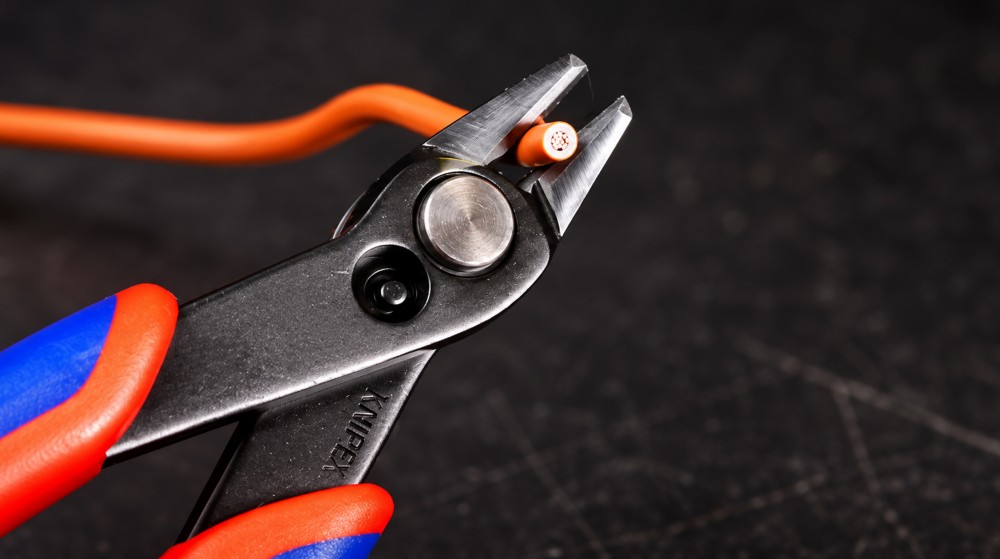
1. Crushed and flattened cut instead of a clean severance
The easiest first sign to spot is the cable end being crushed flat before severing. Instead of both edges cleanly shearing through the conductor swiftly, they press the cable together, causing the cross-section of the copper or aluminium to deform into an oval or abnormally flat shape. With stranded wire, you might also see the internal copper strands splaying apart after the cut. However, do not jump to the conclusion that the edges are dull right away, as crushed cables can also result from using small shears to cut wires that exceed their capacity. The simplest check is to test on a scrap piece of the same wire type and size that the shears previously cut well; if the cut is still noticeably crushed, then perform a thorough inspection of the cutting edges and joint.
2. Stray copper strands left behind, requiring a second squeeze
Have you ever cut stranded wire and the shears almost made it all the way through, but left one or two fine copper strands hanging? This symptom is one of the warning signs to watch out for. Cutting edges that are in good condition and properly aligned should shear completely through all conductor strands within the tool's capacity. If uncut strands start appearing more frequently—even though the same wire used to be cut in a single pass—it could be caused by:
- Dull or chipped cutting edges
- Incomplete closure along the jaw alignment
- A loose or worn pivot joint
- Metal debris or residue stuck on the cutting edge
- The wire being cut exceeds the pliers' capacity
What you should avoid is twisting your wrist back and forth to break the remaining strands, as lateral force can put excessive stress on the cutting edge and joint. It is safer to stop, check the cutting edge, clean it, and test again.
3. The cut end is torn or abnormally frayed
The cut on stranded wire may not be as smooth as glass, but the conductor strands should be cut in a relatively uniform line. If one day you notice that the copper ends appear torn, splayed, frayed, or some strands are stretched before breaking—even though your cutting technique has not changed—this is another reason to inspect the cutting edge. The reason is that when the edge can no longer shear through material as quickly as before, it may start pushing and pulling the conductors apart before severing them.
This principle aligns with the design of KNIPEX Cable Shears, which use a shearing action past each other rather than pressing directly against each other, ensuring a clean cut and minimizing cable deformation. If the cut starts shifting from "shearing off" to "pulling until broken," it should be taken as a sign to check your tool.
4. Deep cut on one side, but crushed on the other
This type of cut usually shows a clear pattern: one side of the cable is deeply penetrated by the blade, while the other side is flattened or torn. The problem might not lie with the sharpness alone; you should also check the alignment of the jaws and the joint. If the joint is loose, the jaws may shift out of alignment, causing uneven cutting force distribution. Before deciding to buy a new pair, try opening and closing the pliers slowly and observe whether the cutting edges pass each other smoothly, if there is abnormal lateral play, and whether any metal debris is stuck in the blade groove.
The KNIPEX 95 11 165 features an adjustable bolted joint designed to work in tandem with precision-ground cutting edges, reflecting that "sharpness" and "joint alignment" must work together to achieve a proper cut.
5. Requires more effort, yet the cut quality gets worse
This point requires evaluating both the "feel while cutting" and the "result after cutting" together. If you are cutting the same type of cable, the same size, and at the same position, but continually need to apply more force while the cuts become crushed or leave uncut strands, this is a sign not to overlook. KNIPEX states that thanks to the cutting geometry and scissor-action mechanism of model 95 11 165, users require about one-third the effort compared to conventional diagonal cutters when cutting suitable cables, demonstrating that blade geometry and condition significantly impact the effort required from the user.
However, be cautious about another issue: if you suddenly need more force, do not rush to increase leverage by slipping a pipe over the handles. The real cause may be that the cable exceeds the capacity or consists of material the pliers were not designed to cut. More force does not always mean a better cut.
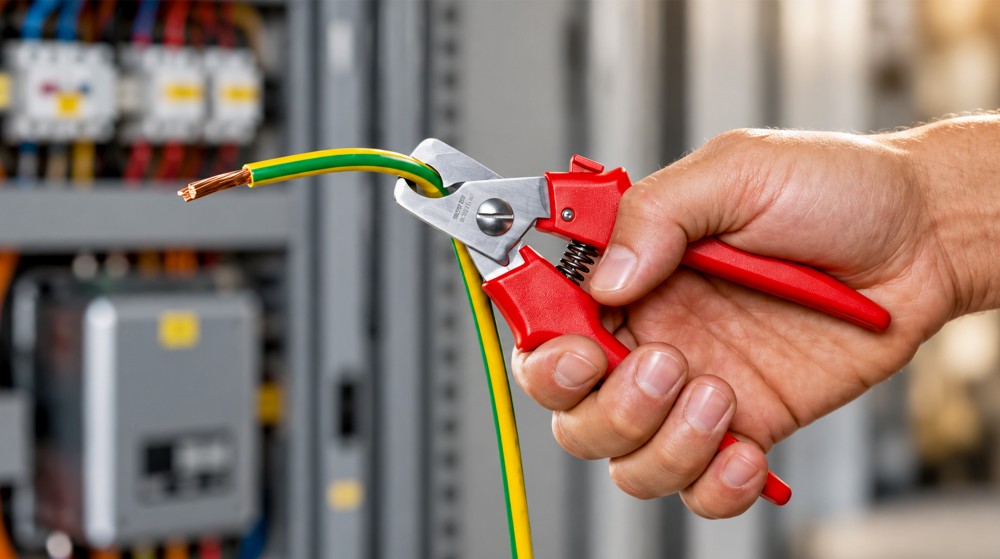
Encountering these 5 symptoms—do you need to replace the pliers immediately?
Not necessarily in every case. Start by stopping use and inspecting the tool: clean the cutting edges, look for chips, rust, or metal debris, check for joint play, and test cut a piece of wire that is well within the wire cutter's capacity. If after all this the cut remains abnormal, or the cutting edge is visibly chipped and deformed, consider repairing, replacing the blades on models that support it, or getting a new tool instead of forcing it to work. Importantly, do not immediately attempt to sharpen high-grade pliers yourself, as some cutting edges feature specialized profiles and angles—sharpening at the wrong angle may alter how the blades meet.
Are the wire cutters dull, or are we using them for the wrong job? Learn to tell the difference
This is the most critical point when analyzing cut marks. Suppose you use copper and aluminum cable shears to cut steel wire, and afterwards the cuts on copper wire start degrading—the issue might not be "wear and tear over time," but rather damage caused by misuse.
For instance, KNIPEX explicitly states that model 95 11 165 is designed for Cu and Al cables, but is not suitable for steel wire and hard-drawn copper conductors. Meanwhile, the Milwaukee 48-22-6104 is engineered for Cable Cutting, with the manufacturer specifying a maximum capacity of 2/0 copper and 4/0 aluminum, featuring blade angles tailored specifically for cable work.
Therefore, before claiming that "the wire cutters are no good," we must first ask whether we are asking the pliers to do what they were designed to do.
Select Cable Cutters to suit the application