


 EN
 ไทย


Customers Also Purchased
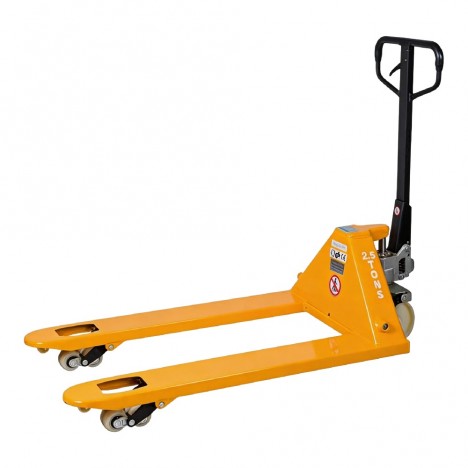
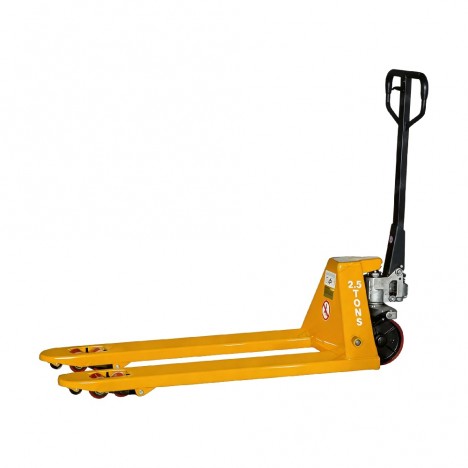
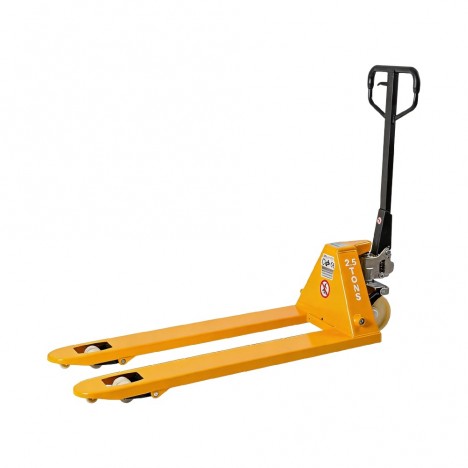
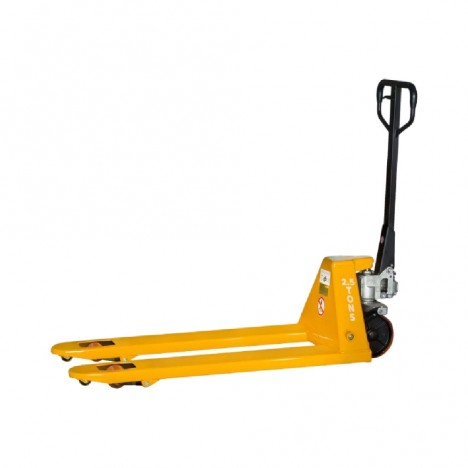
Hand pallet trucks are equipment so familiar to many that they barely require a second thought before use. You just walk up, grab the handle, pull it to the pallet, insert the forks, and start working right away. Especially with a unit used every day that worked fine yesterday, it is easy to assume today will be no different.
However, a hand pallet truck does not always fail outright by failing to lift or having wheels lock up completely. Some irregularities start from smaller issues, such as stretch wrap tangled around the wheels, damaged forks, oil weeping from the pump assembly, or a steering handle that feels stiffer than usual. Catching these before starting work gives you the chance to investigate the cause before placing an actual load on the truck.
This is why hand pallet truck care should not happen only during repairs or scheduled maintenance. Pre-use inspections are also part of proper maintenance, and it does not mean disassembling the pump, removing wheels, or having mechanical expertise. It simply means knowing where to look and recognizing irregularities that should not be overlooked.
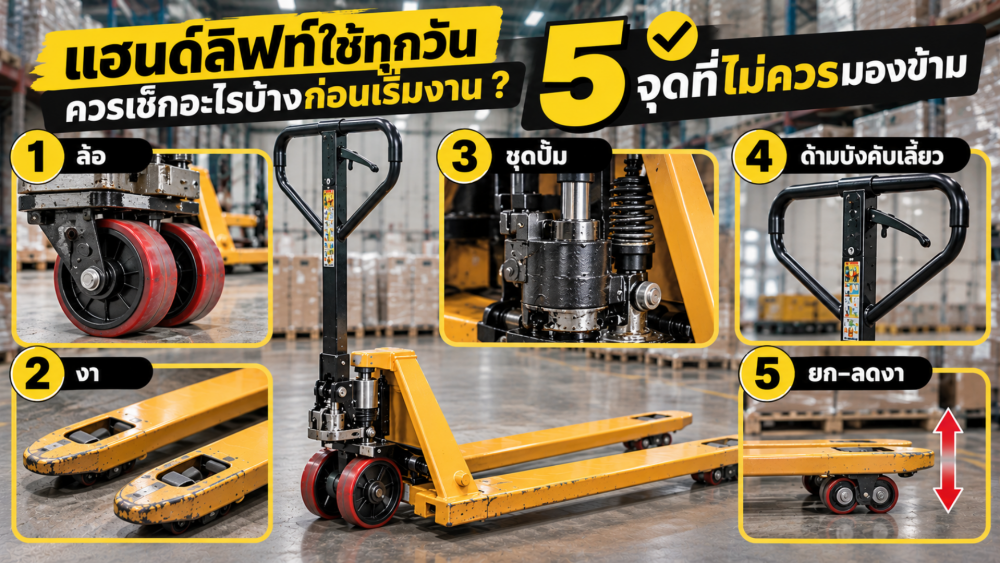
1. Bend down to check the wheels first: look for tangled debris or abnormal wear
Wheels are among the hardest-working parts of a hand pallet truck. Besides rotating continuously across pulling distances, they must support heavy loads and handle varying floor conditions across different work areas. Before starting work, you should inspect both the large steering wheels at the rear and the load rollers at the fork tips.
Do not just check if the wheels are still intact or unbroken. Observe the wheel surfaces for chips, cracks, uneven wear, or peeling material. Then inspect the wheel axles, as common workplace items like ropes, pallet strapping, plastic strips, or stretch film can wrap around and build up on the wheels. Pallet truck inspection manuals emphasize checking for wheel damage and wear as well as removing tangled debris around the wheels.
If visual inspection shows nothing unusual, try pushing the empty pallet truck for a short distance and notice how it feels. A truck that used to roll smoothly but suddenly feels stiff, has dragging wheels, or turns differently is a sign to investigate first. Do not immediately assume it is because the cargo is too heavy, as the truck is not even carrying any weight at that moment.
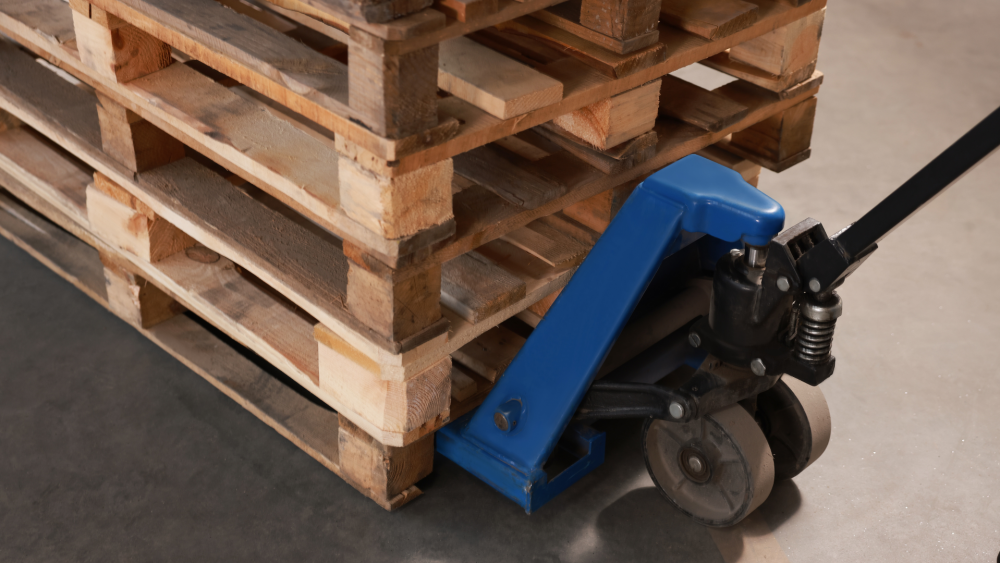
2. Inspect the fork alignment carefully, because "it still lifts" does not mean the forks are fine
Hand pallet truck forks are repeatedly inserted under pallets and subjected to heavy loads during use. They can also impact pallets, floor edges, or obstacles. Therefore, fork inspections should not wait until obvious bends or deformities appear.
Walk along the forks from base to tip, looking for cracks, twists, or structural distortions. If viewed from the front, the two forks appear misaligned, or one tip shows significantly more damage, stop and investigate before putting it to work. Pallet truck manuals also emphasize checking for cracks and deformation in the forks and frame before use.
What you should never do upon noticing fork irregularities is test it by loading heavy cargo to see if "it can still handle it." The ability to lift an object off the ground does not guarantee the structure remains in a safe condition. If cracks, bending, or suspected structural damage are found, take the pallet truck out of service and have it inspected by authorized personnel.
3. Look underneath the pump assembly: is there oil seepage or fresh dripping?
After checking the wheels and forks, another area you shouldn't walk past is the hydraulic pump unit, especially around the pump cylinder, connection points, and the floor beneath it. If there are fresh oil stains or oil droplets on the floor, make sure to verify whether they came from the hand pallet truck.
The reason to notice this early on is that hydraulic problems aren't just limited to "the forks won't lift when pumped." Symptoms users might notice also include having to pump more times than usual, the forks not lifting to their full height, lifting that isn't smooth, or the forks lowering abnormally after being raised. Hand pallet truck operation and maintenance manuals therefore include inspecting the hydraulic system and checking for leaks as part of the condition check.
However, finding oil stains doesn't mean users should immediately open the pump unit and add oil, because each hand pallet truck model may have different maintenance details and oil specifications. The duty of a pre-use inspection is to identify abnormalities; finding the root cause and carrying out repairs should follow that model's manual or be handled by designated repair personnel.
4. Grab the handle and try turning: some abnormalities can be felt by hand
A hand pallet truck may look normal when stationary, but once you start moving it, you might notice something is different. Before sliding it under a pallet, try grasping the handle and steering it around a bit, observing whether the handle moves normally or feels stiff, jammed, loose, or makes abnormal noises.
The advantage is that people who regularly use the same hand pallet truck are usually familiar with its hand feel, giving them a chance to quickly detect changes—such as it requiring more effort to turn when it used to be easy, or having free play that was never there before. Lift-Rite's daily inspection covers steering, handle condition, chassis, and control operation, and is not limited strictly to the lifting system.
If you encounter stiffness, don't immediately try to fix it by spraying lubricant into every visible spot, because the root cause isn't always at the handle's pivot point. Wheels entangled with debris, worn parts, or faulty internal mechanisms can also alter the steering feel. Finding the actual source of the problem first is therefore more important than random lubrication.
5. Before picking up a pallet, try lifting and lowering the forks unloaded first
When the external condition shows nothing suspicious, the next step is to test the basic operation of the lifting system before taking on an actual load. Try pumping the handle to raise the forks, then use the control lever to lower them back down, observing both the movement rhythm and any sounds produced.
Under normal conditions, the forks should respond to controls according to the specifications of that hand pallet truck model. If pumping doesn't raise the forks, requires unusually more pumps than usual, snags when lowering, or produces unprecedented noises and symptoms, you should stop to identify the cause before picking up a pallet. Inspecting lifting and lowering is also one of the start-of-shift checklist items found in hand pallet truck manuals.
Especially in cases where the forks can be raised but lower on their own abnormally, don't assume you can just keep pumping periodically to continue working, as this symptom needs to have its cause investigated first. The unloaded test is useful precisely because it helps detect certain issues before goods and pallets add load to the system.
Don't forget to look at the floor and the route you will be pulling through
Even if you have thoroughly inspected the hand pallet truck, if the operating area is littered with wood scraps, pallet strapping, plastic wrap, or obstacles, problems can still occur once you start pulling—especially with debris that can get stuck in or wrap around the wheels.
Therefore, before starting transport, look at the intended path to see if the floor has obstacles or debris that should be cleared away. Toyota Material Handling points out that debris, such as stretch film and strapping that gets wrapped around hand pallet truck wheels, is a factor affecting movement and wheel wear.
Caring for a hand pallet truck doesn't end with the equipment itself; the floor conditions it must travel over every day also play a role in its operation and component lifespan.
Check before use—better than having abnormalities surface while hauling loads
Checking a hand pallet truck before starting work doesn't need to turn into a mini repair job every morning. What users should do is observe the external condition and test basic functions to ensure the hand pallet truck is still operating normally.
Start by bending down to look at the wheels and anything that might be tangled in them, inspect the fork alignment and chassis structure, check for oil stains around the pump unit, try gripping the handle to steer, and finish by testing lifting and lowering without a load. If everything works normally, you can then proceed to use it according to that hand pallet truck model's rated capacity and specifications.
However, if you find cracks, deformed forks, oil leaks, faulty lift/lower systems, or wheel and steering issues that could compromise safety, the right choice is not to force it to finish the job first, but to halt use and notify the person in charge for an inspection. Good maintenance doesn't start when the hand pallet truck breaks down; it can begin with noticing small abnormalities before pulling the first pallet of the day.