


 EN
 ไทย


Customers Also Purchased


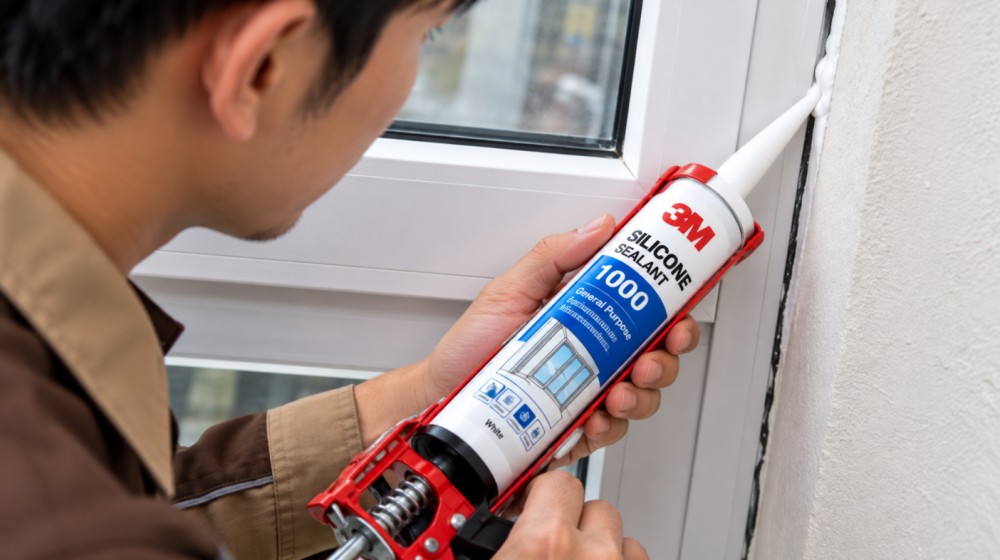
Anyone who has ever appliedConstruction SiliconeWhen sealing glass joints, sink edges, or various gaps around the house, you have probably encountered silicone that emits a sharp, pungent odor like vinegar as soon as it is squeezed from the tube. In relatively enclosed spaces, the smell is especially noticeable. Yet, when switching to another brand or model, there is hardly any of that sour smell—even though the appearance, paste texture, and application method look very similar.
The difference in odor does not indicate which tube is fresher, more expensive, or of higher quality. The key cause lies in the silicone's curing system, which directly relates to what we commonly refer to as "acid silicone" (acetoxy cure) and "neutral silicone" (neutral cure).
This may seem like a minor detail, but it affects much more than just the smell during application. The curing system also determines the compatibility between the silicone and certain types of materials. Knowing what kind of silicone you have helps you better understand why some tubes are ideal for glass, whereas applications involving metals or mixed materials require careful verification before selection.
Where does the vinegar-like smell of silicone come from?
Many common cartridge silicone sealants begin curing when the silicone is dispensed from the container and exposed to moisture in the air. The paste, initially soft, pliable, and easy to tool, gradually transforms into a rubbery, flexible material as the curing process progresses.
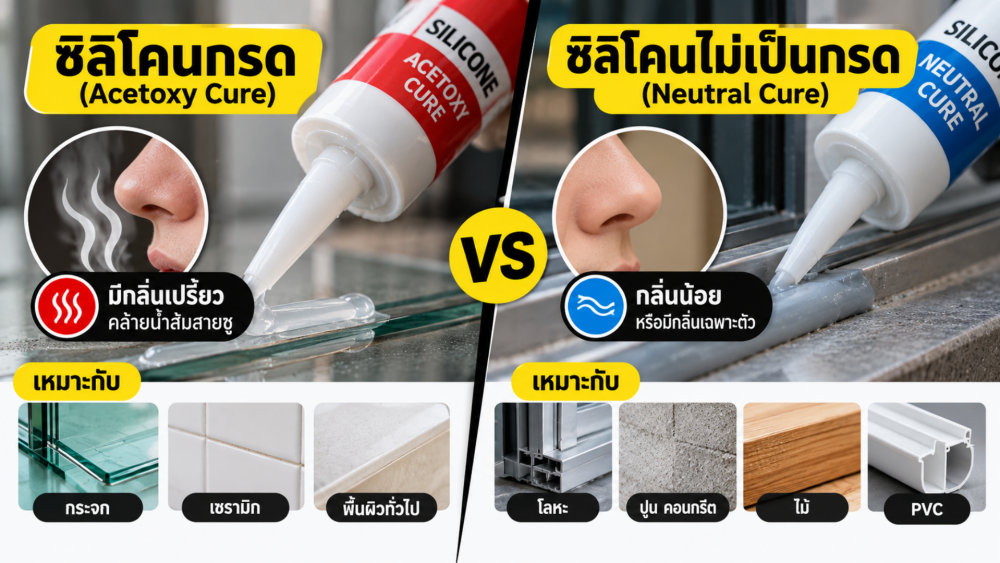
For acetoxy-cure silicone, commonly referred to simply as "acid silicone," acetic acid is released as a byproduct during curing. It is this acetic acid that gives off the distinct, pungent vinegar smell, especially right after the silicone has been applied.
Therefore, smelling a sour odor upon opening a tube does not necessarily mean the silicone has expired or been stored for too long. If the product uses an acetoxy system, this type of odor is entirely normal during curing. What you should actually use to determine the type of silicone is the product label or technical data sheet—never rely on smell alone.
Why is the smell strong when freshly applied, but gradually fades away?
With acetoxy silicone, the sour odor is most noticeable right after application because the curing process is actively underway. Over time, as curing progresses and the byproducts generated during the process dissipate, the smell gradually diminishes rather than remaining as strong as it was initially.
There is no single cure time that applies to all products, as it depends on the formulation, joint depth, temperature, humidity, and other environmental factors. Users should not assume that the interior is fully cured just because the surface appears dry to the touch. If an application requires full curing before service, always follow the timeframe specified by the manufacturer for that particular product.
For practical use, work areas should be properly ventilated. There is no need to lean in close to sniff the silicone to determine if it is acidic, as the curing system can be verified more accurately and safely from the label or Technical Data Sheet.
So, how is neutral silicone different?
Another common system is neutral cure, commonly known as "neutral silicone." These silicones utilize a different curing mechanism than acetoxy silicones and do not release acetic acid. Many neutral-cure products are therefore labeled as low-odor and non-corrosive.
However, do not assume that "neutral" means completely odorless upon opening the tube. Neutral-cure formulations vary depending on the product and chemical system used, so some models may still have their own characteristic odor during curing—just not the sharp acetic acid scent typical of acetoxy silicone.
For this reason, if you have two tubes of silicone in front of you, the proper way to distinguish them is not by opening and smelling them. Instead, look for terms like Acetoxy, Acid Cure, or Neutral Cure on the label and product documentation to be certain which system you are using.
"Acidity" matters more than odor because it affects the substrates used
If the only difference between acetoxy and neutral silicones were the smell, choosing one would be simple. What demands greater attention, however, is the impact of the curing system on certain substrates.
According to Dow's silicone technical guides, acetoxy silicone releases acetic acid as a byproduct during curing, which can corrode certain metals such as copper and brass. For projects involving metal substrates, you should not simply pick any silicone off the shelf just because the packaging says "Silicone Sealant."
Consider sealing joints around window frames, component assemblies, or areas where glass, metal, masonry, and other materials sit side by side. Even if they all look like typical gap-sealing tasks on the surface, the substrates the silicone must contact and adhere to can vary widely. Knowing what materials are present is crucial before choosing the right type of silicone.
Acid-cure silicone is not inherently bad
The word "acid" might sound like something you should avoid in favor of Neutral Cure right away, but that thinking isn't entirely correct. Acetoxy and Neutral Cure are not grade ratings where one is good and the other is bad; rather, they are different curing systems with distinct properties and limitations.
There are Acetoxy silicone products specifically designed for glass, ceramic, and certain types of surfaces, which is why they are widely found in glass glazing and similar applications. If the materials and application conditions match what the manufacturer specifies, being an acid-curing silicone does not automatically make the product an inferior choice.
Looking at it another way, a more helpful question to make choosing easier is: "What are we applying the silicone onto?" rather than starting with "Acidic or neutral—which one is better?" Once you know the material and the nature of the job, you can then determine which silicone system and specific product model support that application.
So why do jobs involving metal often require looking into Neutral Cure?
Because Neutral Cure does not release acetic acid like Acetoxy does, many products in this category are designed for use with metals and various types of construction materials. For example, some Sika Neutral Cure silicone models state they can be used on surfaces such as glass, metal, painted surfaces, aluminum, wood, ceramic tiles, PVC, and concrete, while also highlighting Low Odor and Non-corrosive properties. This is what makes the term Neutral Cure mean more than just "a silicone without a pungent smell," because the curing system can be one of the factors relevant to suitability for specific surfaces and job requirements.
Even so, you shouldn't assume that Neutral Cure works on everything, because each product formula still has its own limitations—especially with specific materials like natural stone, certain plastics, or coated surfaces. If you are unsure, checking the list of supported materials and limitations from the manufacturer before use remains the safer choice.
Clear, white, or black colors do not determine whether silicone is acidic or neutral
When shopping for silicone, we often see clear, white, black, gray, and other colors, which might inadvertently lead us to associate the color of the sealant with its type. In reality, color does not dictate the curing system.
Both Acetoxy and Neutral Cure silicones can be produced in various colors depending on the formula and application requirements. Clear silicone doesn't necessarily have to be acidic, just as white or black silicone doesn't automatically mean it is Neutral Cure.
Color should be chosen based on aesthetics and the nature of the job, while the curing system should be verified separately from the product specifications. Keeping these two considerations separate will reduce the chance of making the wrong choice simply because you are familiar with the appearance of certain silicones.
Even if it says "multipurpose," you still need to check what it can actually be used on
The term "Multipurpose" is another point that makes many people feel that a tube of silicone can be applied anywhere. In practice, however, "multipurpose" is still bounded by the scope of use of each specific product.
Some models may support glass, aluminum, tiles, and various building materials, but that doesn't mean they are suitable for natural stone, all types of plastics, structural glazing, food-contact areas, or applications with specialized requirements.
Instead of only reading the large labels on the front of the cartridge, try flipping it over to check the details on the back to see what materials are listed and whether there are warnings against using it on certain types of surfaces. Doing just this gives you much more information for your choice than simply looking at the word "multipurpose."
If you have two cartridges of silicone in front of you, what should you look for?
Suppose you are choosing between two silicone cartridges: the first says Acetoxy and the other says Neutral Cure. There is no need to rush and grab the Neutral just because "non-acidic" sounds better. Start by examining your job: what material will it be applied to, is it indoors or outdoors, and what conditions will that area be exposed to?
If it's for glass or ceramic, an Acetoxy product specified by the manufacturer for those materials may already fit the bill. But if the job involves metal or a combination of various materials, looking for a Neutral Cure specified for those surfaces is another option to consider.
Next, check other details such as whether it can be used outdoors, whether it resists weather and UV radiation, what joint movement capability it supports according to the product data, what surface restrictions exist, and how the surface needs to be prepared. If it is a specialized job or if you are unsure about the materials, checking the model's Technical Data Sheet once will be very helpful. Because in the end, the terms Acetoxy or Neutral Cure are just the starting point for choosing silicone—not the entire answer.
Related Articles
- Acid-cure vs. Neutral-cure Silicone: What's the difference? Which one best suits your job?
The vinegar smell is a clue, but the label gives the answer
Next time you openConstruction Siliconeand notice a sour vinegar-like smell, there's no need to assume the tube has gone bad. If it's an acetoxy silicone, that odor comes from the acetic acid released during the curing process and is typically most noticeable when freshly applied.
Neutral cure silicone, on the other hand, uses a different curing system and does not release acetic acid in the same way. Many models are formulated to be low-odor and non-corrosive, making them suitable for different applications compared to acetoxy silicone.
Scent is simply an easy way to notice the difference between the two silicone systems. However, when making your actual choice, don't just stop at "acid" or "neutral." Look further into what material you are sealing, whether the product supports that application, and what limitations the manufacturer specifies. The most suitable silicone doesn't have to be more expensive, less smelly, or labeled "Neutral"—it must be the silicone whose properties match your specific surface and actual working conditions.