


 EN
 ไทย


Customers Also Purchased
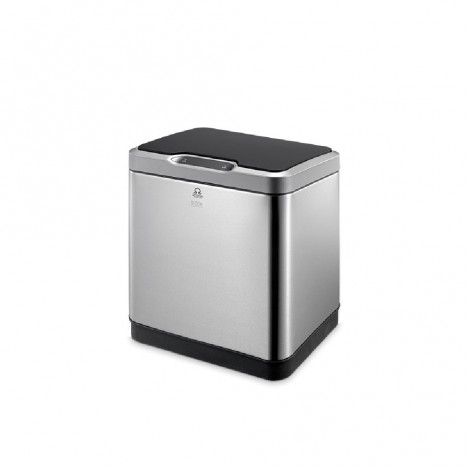
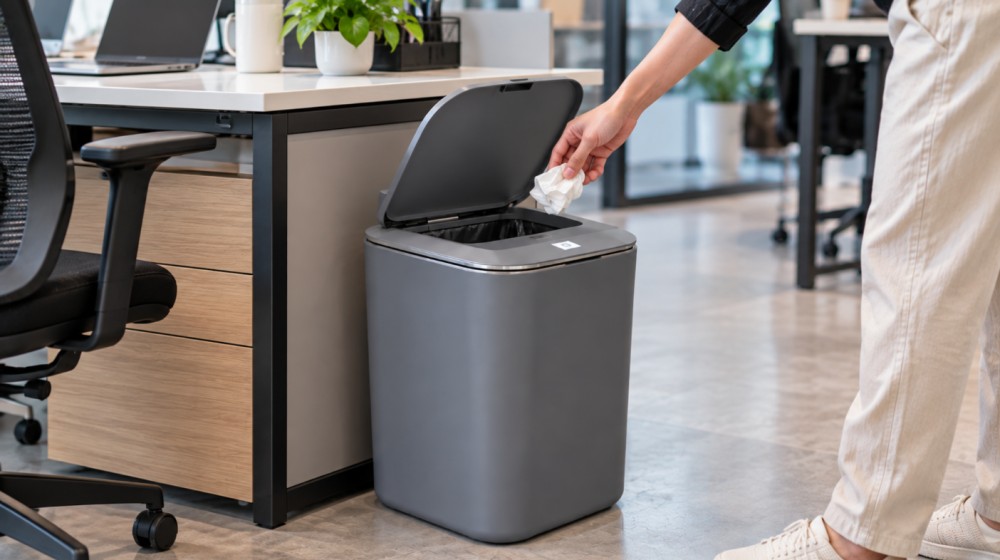
Just replaced the batteries in your Automatic Trash Cans trash can not long ago, but why is the lid already opening slowly? Or maybe your household has to change batteries so frequently that you begin to wonder if the trash can consumes more power than you thought. If you're wondering how many months a set of batteries should last, the answer is that there's no fixed duration. Each trash can model uses different batteries, motors, and sensor systems—and most importantly, the number of lid opening and closing cycles per day varies greatly.
For instance, on simplehuman's 45-liter Semi-Round sensor can, the manufacturer specifies that it runs on 4 AA alkaline batteries with a battery life of approximately 7 months. However, this figure applies specifically to that model and is not a universal battery life standard for all automatic trash cans. If your trash can used to last long on a set of batteries but has recently started draining them faster, it's worth checking not just the batteries, but also how the can behaves—such as whether the lid has been opening and closing more frequently lately.
The trash can doesn't just use power when you wave your hand
The lid assembly of an automatic trash can includes sensors, control circuitry, and a motor to open and close the lid. When you move your hand within detection range, the sensor signals the system to engage the motor, lifting the lid without any physical contact. When no one is discarding trash, the system still needs to stay ready to detect the next use. However, each model manages power differently; some feature standby modes to reduce battery consumption. For example, NINESTARS notes that some models utilize Sleep and Wake modes to help conserve energy.
The easiest part to visualize is the motor, because every time the lid opens and closes, it draws power from the batteries. A trash can placed in an office that opens only a few times a day has a very different power consumption pattern from a kitchen trash can used from morning till night. But there is one easily overlooked factor: not every lid opening is triggered intentionally by someone throwing away trash. Sometimes, the sensor may detect ambient movement around it and trigger the lid to open on its own.
Opening when someone walks by also drains battery power
Consider a trash can placed along a hallway. Every time someone walks by and the lid pops open, even if no trash is discarded, the motor has still run through a complete cycle. To the user, it might just seem like the lid opened fruitlessly for a few seconds before closing again, but if this happens multiple times a day, those extra open-close cycles steadily add up.
The number of operational cycles has a significant enough impact that some manufacturers use it in their battery life estimates. For example, iTouchless provides internal test results for model ITOS13B based on both the total number of open-close cycles and daily usage frequency. While test numbers from one model cannot represent all others, they illustrate that when considering battery life, you shouldn't just look at how many months the batteries have been installed—you also need to factor in how many times the lid has actually operated during that time.
If your batteries have been draining faster lately, try observing the trash can for a day to see if the lid opens on its own, especially if it's placed in a walkway, near a workspace, or in an area with continuous movement. In cases where the lid opens even when nothing seems to be near the sensor, environmental factors may be at play. iTouchless notes in its troubleshooting guidelines that dirty or obstructed infrared sensor windows, reflections, and surrounding objects in the detection zone can interfere with sensor operation, recommending that users avoid pointing the sensor directly at mirrors, glossy tiles, or intense light sources.
Sometimes, fixing fast battery drain can simply start with repositioning the can so the sensor isn't exposed to constant movement or interference throughout the day.
Dirty sensors, stuck lids, and misaligned trash bags: small details worth checking
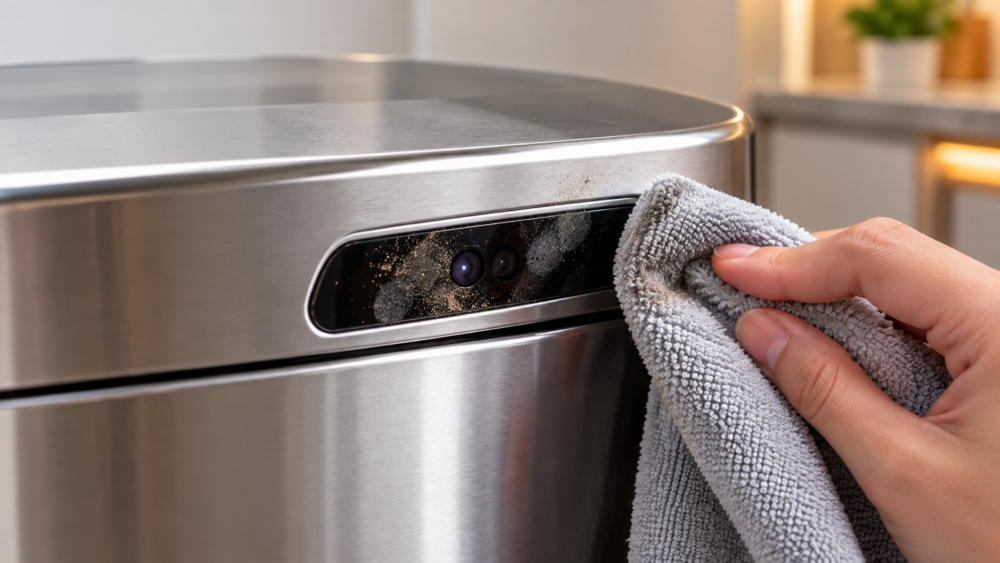
A kitchen trash can is constantly exposed to dust, stains, and airborne residues from daily use, so the sensor area requires regular maintenance just like any other part of the can. simplehuman states in its troubleshooting guide that if the sensor isn't working, you should verify that the sensor area is clean and unobstructed. However, the lid assembly should not be cleaned the same way as the can body, as it houses internal circuits, a battery compartment, and electrical components. iTouchless advises against pouring water directly over the lid assembly, battery compartment, control panel, and electronic parts. The safer approach is to follow the cleaning instructions provided by the manufacturer of your specific model.
Another commonly overlooked issue is the trash bag. Sometimes the bag's rim is pulled too high over the edge, or debris gets caught in the hinge, preventing the lid from moving smoothly as intended. Both simplehuman and iTouchless recommend checking for obstructions around the lid and hinges whenever the lid operates abnormally.
This doesn't mean that a stuck lid will cause faster battery drain on every single model, as motor control systems vary. However, if you start hearing unusual motor noises, notice the lid isn't opening fully, or see erratic opening and closing, you shouldn't simply resolve it by swapping out batteries. Try removing any bag edges or debris causing an obstruction, and see if the lid returns to normal operation.
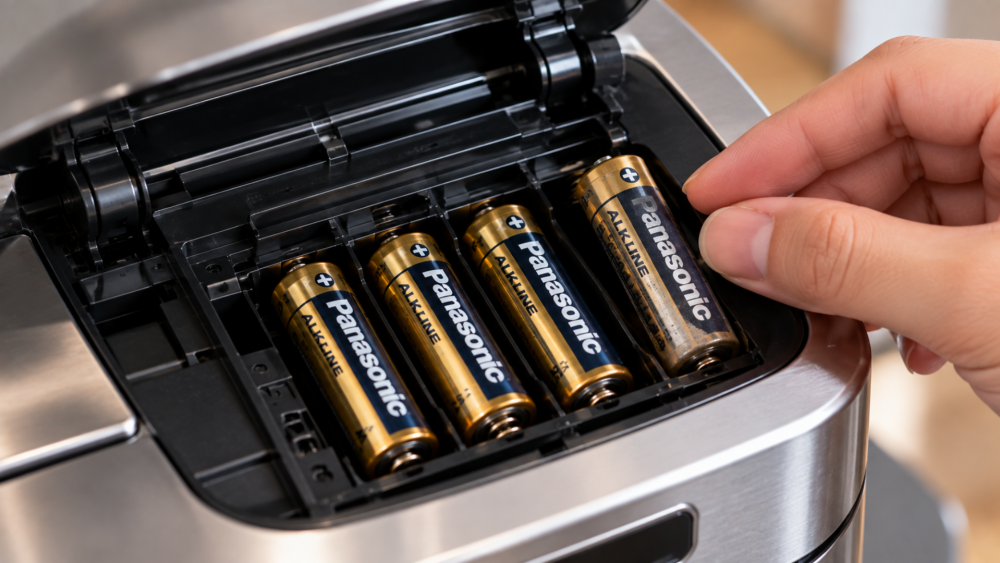
The batteries still have power, so why is the lid opening slower?
This symptom can easily be misleading. Because the lid still opens and the sensor still functions, it might seem like the batteries aren't the problem. However, batteries don't have to be completely dead before a device begins showing symptoms. As battery power drops, power-demanding components like the motor may no longer perform as they did with fresh batteries. iTouchless notes that symptoms such as sluggish lid movement, inconsistent opening, or reduced sensor responsiveness can be signs of low battery power. In short: "it still opens" does not mean "the batteries are still in optimal operating condition."
If the lid used to open quickly as normal but has recently started to lag, open intermittently, and you have checked that no trash bags or debris are caught, trying a new set of batteries specified by the manufacturer is an easy preliminary check. If that model uses multiple batteries and the manual recommends replacing them at the same time, you should replace the entire set rather than mixing new batteries with old ones. Therefore, a low battery symptom doesn't always show up as "working yesterday, completely dead today." Sometimes, what we notice first is that the lid slows down, operates inconsistently, or seems to glitch occasionally. These symptoms should be considered alongside the condition of the batteries and mechanical operation; do not immediately conclude that the sensor or motor is broken.
So how do you know if the batteries are running out "too quickly"?
Instead of applying arbitrary average figures like 3 months, 6 months, or 1 year as a standard for every bin, a better approach is to refer to the specifications of the model you are using. Different manufacturers choose different batteries, sensor systems, motors, and power management methods. If the manufacturer specifies an estimated battery life, check what usage conditions that figure is based on.
Another method that is easier than comparing your bin with someone else's is comparing the bin to itself. If a battery replacement previously lasted several months but now drains noticeably faster—even though the number of users and usage habits haven't changed much—this difference is much more telling than trying to figure out how many months an automatic trash bin's batteries should typically last.
Consider what might have changed during the time the batteries began draining faster: for instance, moving the bin closer to a walkway, the lid opening on its own more frequently, debris accumulating on the sensor, or the lid mechanism starting to stick. If checking these points reveals nothing unusual, then proceed to check the battery type, contact terminals, and troubleshooting guidelines provided by the manufacturer for that model.
For bins that are not in use for an extended period, consult the manual's instructions regarding battery removal. iTouchless recommends removing the batteries when the bin is not used for a long time, and you should not leave old or depleted batteries inside, as battery leakage can damage the contact terminals and internal electronics.
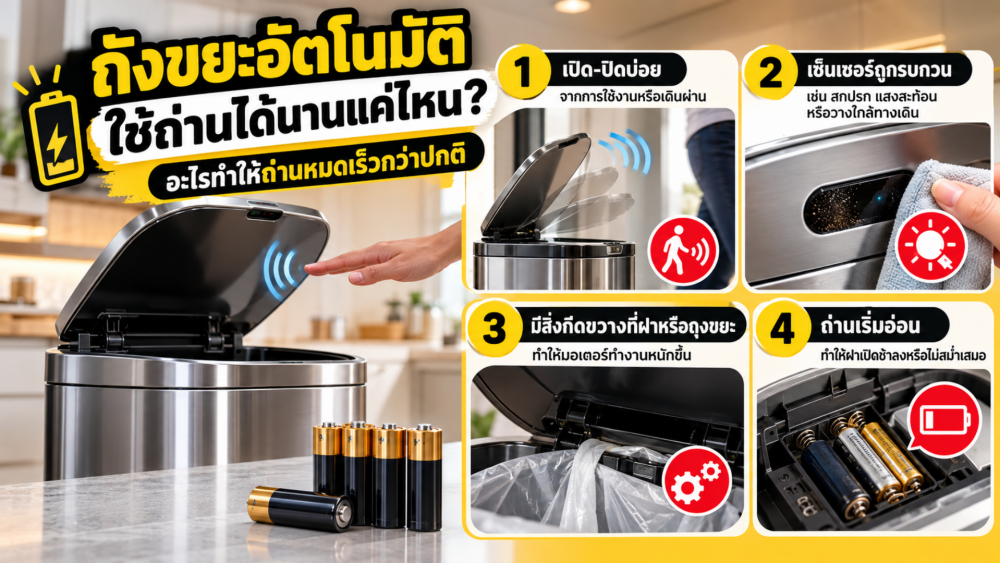
How long batteries last: looking only at the number of months is not enough
Automatic Trash Cans One bin might run on batteries for several months while another behaves differently, even if they are the same type of bin. There is no need to worry immediately just because the battery life doesn't match the numbers you saw from other models. What you should pay more attention to is whether the batteries in your current bin are draining faster than they used to. Ultimately, battery life depends not only on "how many months they've been installed," but also on how many times the lid was triggered to open and close during that period. If the batteries drain faster than usual, observing whether the bin is operating more frequently might lead to the root cause faster than just inserting a fresh set of batteries and waiting to see how long they last this time.