


 EN
 ไทย


Customers Also Purchased


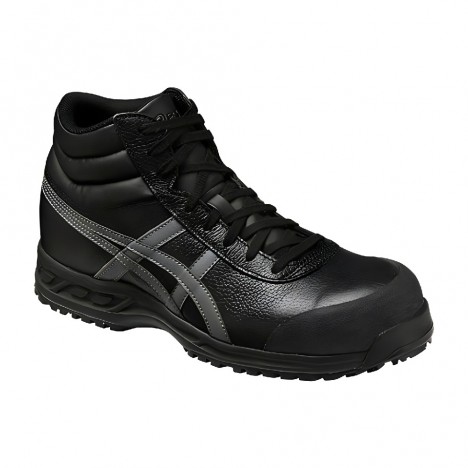
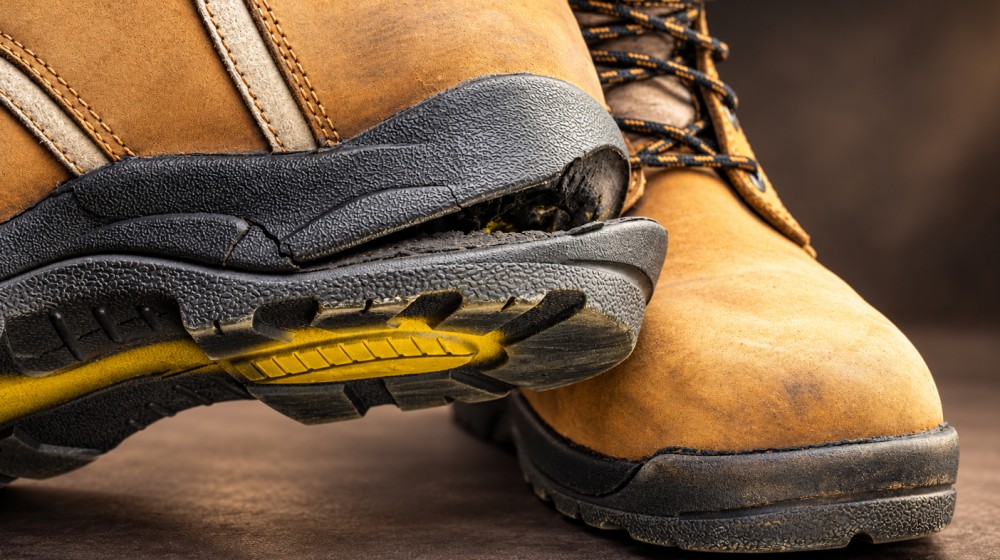
You buy an extra pair of safety shoes, intending to keep them as a backup so you can immediately put them on whenever your current pair wears out. That pair stays safely in its box—never wading through water, never stepping in cement, and practically never touching the job site. Yet after several years, when you finally take them out of the box, something strange happens: just bending the shoes or taking a few steps causes the soles to crack, crumble into pieces, or worse, completely delaminate from the uppers.
The question is: if the shoes were never used, why did they break down? The answer lies in something many safety shoe buyers overlook: shoe materials still have a "lifespan" and constantly react with their environment, even while sitting quietly in a box. This is especially true for shoes with soles made of polyurethane (PU).
Safety shoes do not stop deteriorating just because you do not wear them.
Many people believe that lifespan Safety Shoe only starts counting from the day they are put to actual use. In terms of materials, however, the degradation process can begin right after manufacturing. Humidity, temperature, air, light, and storage conditions all affect the materials. Therefore, soles with polymer structures can change over time, even if the tread is still brand new.
In particular, PU soles, which are popular in safety shoes due to their lightweight design, flexibility, and good shock absorption, have one key weakness: the material can undergo a degradation process known as hydrolysis.
Safety Jogger explains that hydrolysis is the chemical breakdown of the PU polymer resulting from a reaction with water, which is often in the form of airborne moisture. This can occur even when the shoes are stored unused. As the reaction progresses, the sole loses its structural integrity and can crack or crumble.
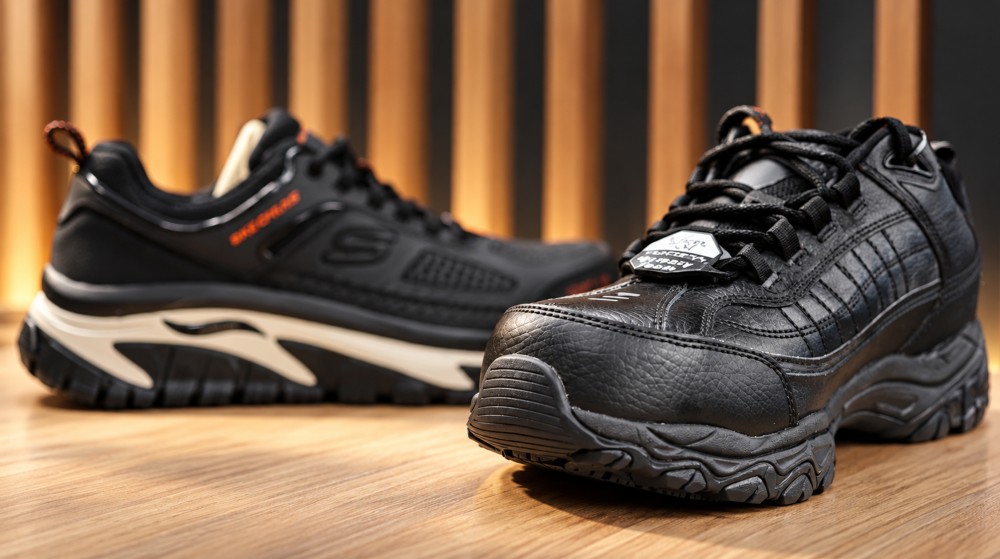
Hydrolysis: The Culprit Causing PU Soles to Crumble Even When Safety Shoes Are Still New
Imagine the PU structure as numerous interconnected molecular chains. When moisture enters into the hydrolysis reaction, some of these bonds are gradually broken. Initially, no abnormalities may be visible externally; the shoes may look new, with vibrant colors and full tread depth, but the material's internal strength may have already diminished.
Once you put on the safety shoes, your body weight and the flexing of the sole with each step act as a trigger that causes the already degraded material to shatter. This leads to the all-too-common scenario: "stored for years without issue, but the sole crumbled on the very first day of wear."
This is not merely an observation made by users. SATRA's testing for PU sole materials also utilizes a warm and humid environment to accelerate hydrolysis before subjecting test specimens to various strength evaluations, such as flex cracking, tensile strength, and tear resistance. This clearly demonstrates that heat and moisture play a direct role in the degradation of this material.
Why Does Hot and Humid Weather Accelerate Safety Shoe Degradation?
Thailand experiences both high temperatures and high humidity during many times of the year, creating conditions that require special attention when storing safety shoes for long periods.
Safety Jogger notes that the hydrolysis process accelerates in warm and humid climates, as well as when damp footwear is kept in enclosed spaces like lockers.
Meanwhile, uvex recommends storing its brand footwear in a dry place within suitable packaging, stating that it should not be stored at temperatures above 25°C or humidity exceeding 70%, as hot and humid conditions increase the risk of hydrolysis in shoes containing PU components. These figures should be regarded as that manufacturer's guidelines rather than a universal standard for all brands.
Therefore, storing footwear in an extremely hot storage room, a car trunk, an outdoor metal locker, or a damp warehouse may not actually "keep the shoes new" as many people assume.
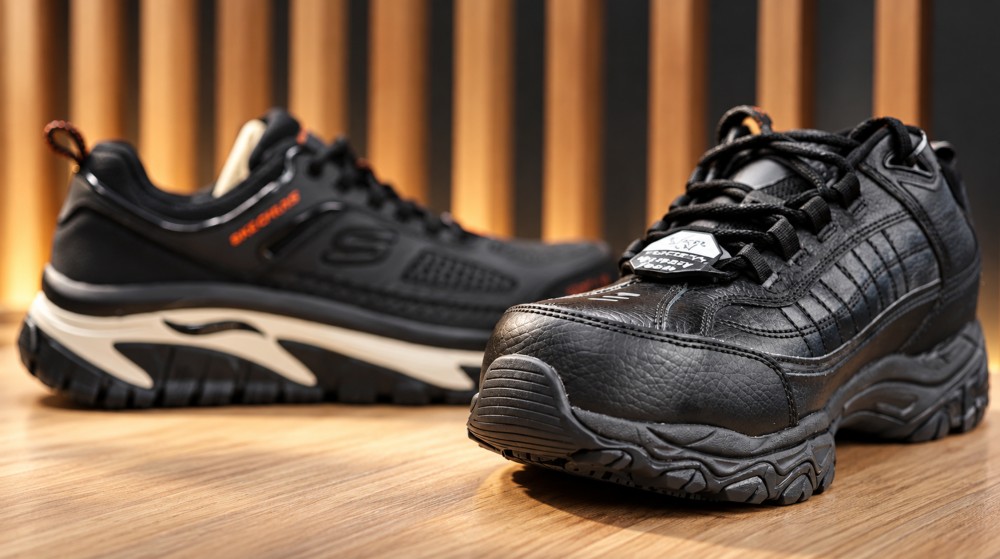
Sole Separation vs. Sole Crumbling: Not Always the Same Issue
A clear distinction should be made between the sole material cracking or crumbling versus the sole detaching from the upper. If squeezing or flexing the sole causes the PU to break into fragments, shed powder, lose pieces, and lose its elasticity, these symptoms are more characteristic of material degradation like hydrolysis.
However, if the sole material remains flexible and robust, but a gap develops along the seam between the sole and the upper, the issue is more likely related to the adhesive or bonding system instead.
Honeywell points out that high temperatures can affect the adhesives used to bond shoe components, altering the glue's properties and increasing the likelihood of cracking or degradation. Additionally, cardboard boxes are recommended for long-term storage over sealing shoes in non-breathable plastic, as cardboard adapts better to ambient temperature and humidity.
Consequently, the term "sole peeling" should not automatically be attributed to hydrolysis in every case. It is essential to determine whether the failed part is the material itself or the adhesive bond.
Storage Life vs. Service Life: Two Entirely Different Things
The phrase "never worn" does not mean "in the same condition as the day of manufacture." Safety Jogger notes that the standard PU soles used as a benchmark by the brand may last approximately 1.5 years in tropical climates and about 3 years in general conditions. In contrast, the company states that Safety Jogger's PU formula with improved hydrolysis resistance can extend this period to about 4 years in tropical climates and 8 years in general conditions. These figures represent manufacturer data and should not be taken as a guaranteed lifespan for every pair, as storage conditions and product models have a significant impact.
Similarly, uvex states that it is not possible to determine a fixed expiration date for all safety footwear, as service life depends on usage, heat, cold, humidity, UV radiation, chemicals, and mechanical stress. Therefore, instead of merely asking "when were these shoes purchased?", one should also ask: When were they manufactured? Where were they stored? And how were they kept?
How to Store Safety Shoes to Slow Down Sole Degradation
The key principle is to control heat and humidity while avoiding creating a stagnant, damp microclimate around the footwear. After use, if the shoes are wet or damp, allow them to air-dry naturally in a well-ventilated area before storing. Do not immediately seal them in plastic bags or shut them in cabinets. Avoid using heaters or placing them near heat sources to speed up drying, as many safety footwear manufacturers advise against direct heat exposure.
For company or contractor backup shoes, the First In, First Out principle should be used: distribute shoes manufactured or received into stock earliest first. Avoid buying in large bulk only to leave old batches sitting at the back of shelves for years.
The same applies to regular users: buying multiple pairs of backup safety shoes for long periods might not always be economical if the shoes degrade before they are actually put to use.
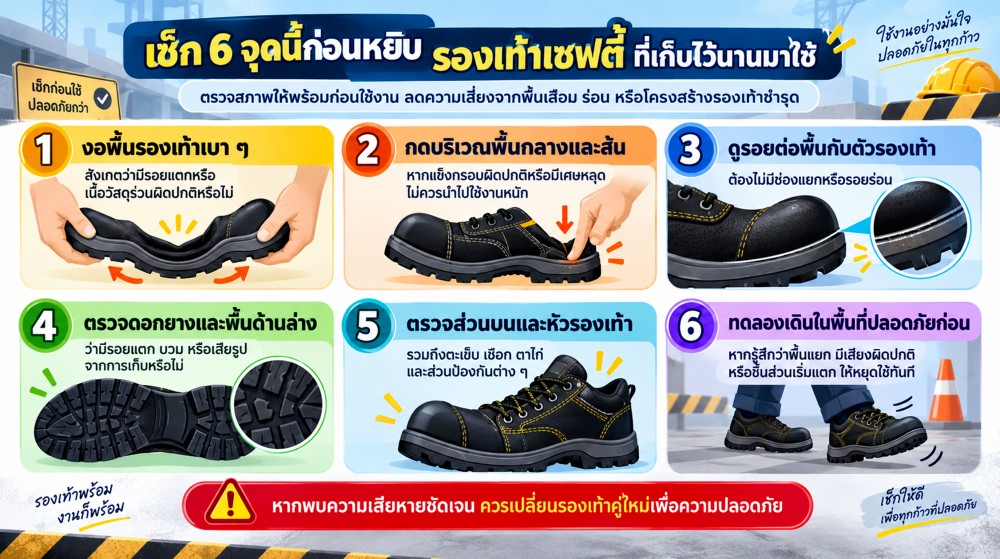
Choosing safety shoes requires looking beyond just the steel toe cap
When buying safety shoes, most people start with steel toe caps, composite toe caps, slip resistance, or puncture resistance. However, for those who do not wear their shoes daily and may store them for extended periods, the type of sole and manufacturer care guidelines should also be part of the decision.
Currently, iToolmart carries various Safety Jogger shoe models ranging from steel toe caps to composite and nano carbon caps. Directly related to this issue, Safety Jogger provides technical information regarding hydrolysis, noting that its brand's PU soles are formulated to increase resistance to this type of degradation. This is a detail buyers can use for comparison, especially if the shoes are likely to be kept as backups or used in hot, humid conditions.
Regardless of the brand, no material should be considered capable of indefinite storage. Proper storage and inspecting condition before use remain the most crucial factors.
New shoes do not always mean the materials are still fresh
Safety shoe soles cracking or peeling after prolonged storage isn't just caused by improper use. Materials can degrade over time even if the shoes have barely seen any field use—especially PU soles, which are prone to hydrolysis (a chemical reaction where water molecules break chemical bonds in compounds) when exposed to moisture over long periods, a process that accelerates in hot, humid conditions.
Ways to reduce the risk include purchasing safety shoes in reasonable quantities, not holding stock longer than necessary, storing them in dry and well-ventilated areas, letting shoes dry thoroughly before storing, avoiding extreme heat, and checking the condition of the soles and joints every time you take long-stored shoes out for use. Because with safety gear, the vital question isn't just "how new do these safety shoes look?" but "can they still protect us as well as before?"
incl. VAT Safety Shoe For the pairs you've currently stored away: when was the last time you actually pulled them out to inspect the soles?