


 EN
 ไทย


Customers Also Purchased


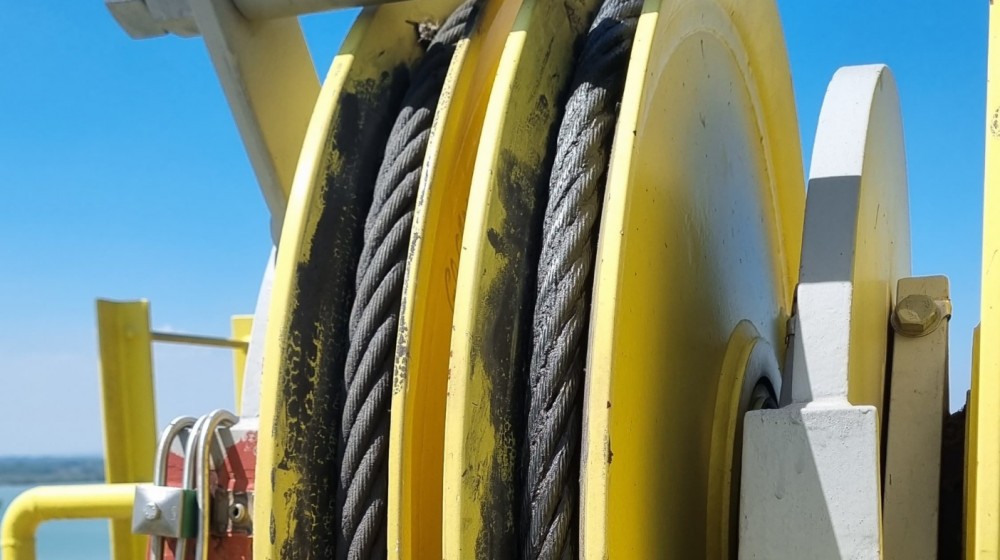
When wire rope starts to wear or degrade faster than expected, many people might first examine the rope itself—wondering if they chose the wrong size, lifted loads that were too heavy, or how long it has been in service. However, another crucial point that should not be overlooked is the groove of the Wire Winch that contacts and supports the rope every time it passes through.
Although a pulley groove looks like just a concave cutout on a wheel, its dimensions and profile directly correlate with wire rope operation. If the groove is too narrow, the rope may be pinched, generating high pressure at contact points. Yet, a groove that is too wide isn't necessarily better, as it may not support the rope adequately and can allow the rope's cross-section to deform. Simply put, the pulley groove should neither pinch nor be too wide; it must match the dimensions and characteristics of the wire rope in use.
Why do pulley grooves affect wire ropes more than you might think?
A wire rope does not have a solid steel bar construction; it is composed of numerous wires twisted into strands, which are then assembled into a wire rope. This structure provides flexibility and allows the rope to bend around sheaves and pulleys. However, during operation, the rope must simultaneously endure tension, pressure, and repeated bending.
As the rope passes through a pulley, it remains in continuous contact with the groove surface along the wrap angle. The groove therefore serves not only to keep the rope from slipping off the wheel, but also as a support surface for the rope while the system is under load. If the groove profile and size are suitable, it provides proper support for the rope. But if the groove does not match the rope's size, contact patterns and contact stress shift, which can adversely affect wear and rope service life.
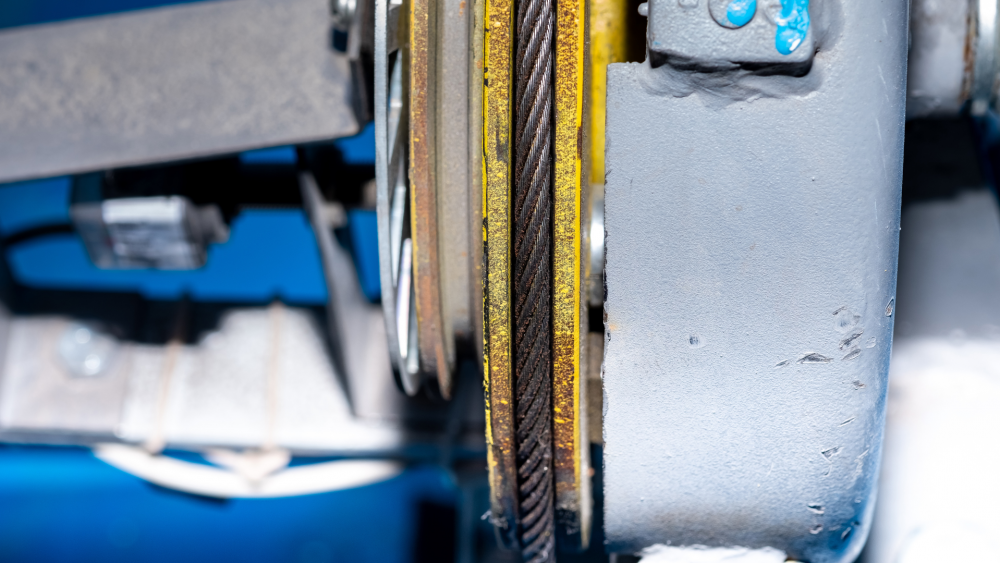
A groove that is too narrow: the rope may be pinched throughout operation
Picture inserting an oversized cord into an undersized groove: even if you can press it in, the sides will be pinched. A similar issue occurs with wire rope when a pulley groove is too tight. As Wire Rope Works explains, an overly tight groove can pinch the wire rope and generate extreme pressure along the contact area—a condition detrimental to rope life.
This issue does not mean the wire rope will fail immediately upon starting use, but when it repeatedly runs through the same groove, pinching and improper contact can accelerate wear and accumulate damage. Importantly, tight sheave grooves are not caused solely by choosing the wrong sheave size from the start, because sheaves that have been used for a long time can also wear down until the groove shape changes from its original condition.
Grooves that are too wide also cause problems, because the wire rope receives less support
Knowing that narrow grooves can pinch the wire rope, many people might think that choosing a wider groove beforehand should be safer; at least the rope won't be pinched. But for wire rope sheaves, wider does not always mean better, because when the groove is too large, the groove surface provides less support to the wire rope.
Wire Rope Works states that an oversized groove may provide inadequate support for the rope and allow it to flatten, which can lead to internal stress, fatigue, and premature wire breakage. Thus, it can be seen that the problems of the two groove types are different: an overly narrow groove causes pinching of the rope, while an overly wide groove causes inadequate support for the rope. Therefore, determining whether a sheave is suitable for a wire rope should not be judged merely by whether "the rope fits into the groove," because fitting in does not mean that groove will adequately support the rope throughout its service life.
A proper sheave groove fit does not mean it must fit tightly against the rope
The word "fit" might give the impression that the sheave groove should be exactly the same size as the wire rope diameter, but technically it does not mean making the groove tightly pinch the rope. On the contrary, the groove must have adequate space to support the rope without overly squeezing it.
For example, Wire Rope Works' Technical Bulletin provides guidelines for new or reconditioned grooves stating that the groove diameter should be larger than the nominal diameter or rated size of the rope, specifying a range of approximately 2.5–5% and mentioning rope support of approximately 150 degrees. These figures help illustrate that an appropriate groove does not mean a groove that matches the rope size exactly.
However, these numbers should be viewed as technical guidelines within the context of the referenced document, not a one-size-fits-all formula for specifying sheave grooves across all types of machinery. In actual use, it is still necessary to check the specifications of the wire rope, sheave, and machine manufacturers used together, because the type and construction of the rope, as well as the nature of the system, may have different requirements. The key thing to remember is not just the numbers alone, but that the sheave groove must have a size and shape corresponding to the wire rope being used.
Why must the old sheave groove be inspected when replacing with a new wire rope?
When replacing a wire rope with a new one, we often focus on checking the size and specifications of the new rope, but the existing sheave groove should also be inspected at the same time. This is because the sheave groove is a part subject to wear from use. As the original rope repeatedly travels through the groove over a long period, the groove shape may gradually change, while the diameter of the old rope itself can also decrease during operation.
It is therefore possible that a groove that has worked with an old rope for a long time will have a shape unsuitable for the new rope, even if the new rope has the same nominal size according to specifications. This is because a new rope has a fuller diameter than an old, used rope. If the original groove is worn tight or deformed, the new rope may be pinched when operating in that groove.
This is why wire rope replacement is the ideal time to inspect the condition of the sheave groove simultaneously, rather than installing a new rope and assuming the existing sheave is still suitable simply because it was previously used with a rope of the same size.
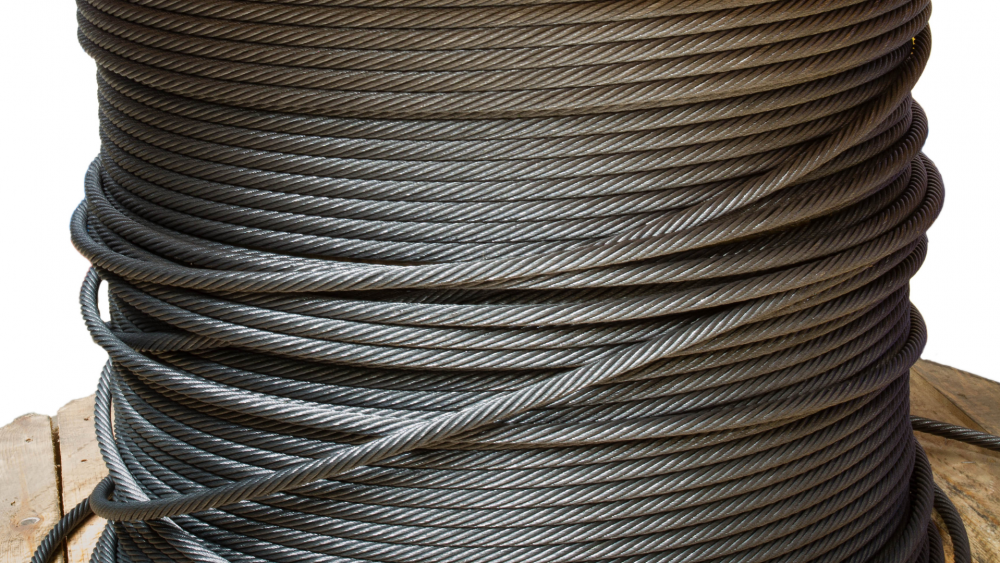
A sheave groove looking normal to the naked eye does not mean its size is still appropriate
Severe groove damage—such as cracks, damaged edges, or obvious abnormal wear—can be spotted with the naked eye. However, certain changes in size and shape may not be that obvious. Inspection practices therefore use a sheave groove gauge to help check the size and shape of the groove, rather than relying on visual assessment alone.
In addition to inspecting the groove, the condition of the rope can also provide clues. If the rope is found to have abnormal wear, a flattened or deformed cross-section, reduced diameter, or broken wires, one should not jump to the conclusion that the problem stems from rope quality alone, as the condition of the sheave, alignment, and other components in the system may also be involved. Union Rope technical documents therefore recommend inspecting the size, shape, and smoothness of the groove, as well as checking that the sheave rotates freely, is properly aligned, and its parts are free from damage.
If the wire rope wears out quickly, don't just inspect the rope and call it a day
What makes sheave groove problems easy to overlook is that the damage may not manifest immediately, but rather accumulates gradually on the rope after repeated use. When finding that a rope is wearing faster than expected, many people might opt to replace the rope without checking whether the parts in contact with it are still in proper condition.
If a wire rope exhibits abnormal wear, deformation, or if a new rope begins showing signs of damage sooner than it should, inspecting only the rope and replacing it once more may not be sufficient. You should also inspect the sheave grooves and components working in conjunction with the rope to determine if other factors are accelerating rope damage.
For safety-critical lifting systems, if sheave grooves are found to be worn, deformed, or suspected to be improperly sized for the rope, a qualified technician should assess them according to manufacturer specifications and relevant standards. You should not grind or modify sheave grooves yourself based on guesswork regarding sizing, because the sheave and wire rope are integral parts of a system that share mechanical loads together.
In the end, the grooveWire Winchmay seem like just a small part of the system, but it is the part that repeatedly makes contact with the wire rope. A groove that is too narrow can pinch the rope, while one that is too wide may not provide adequate support. Matching the pulley to the wire rope, as well as inspecting the groove condition after extended use or when replacing the rope, is therefore not a minor detail, but an essential part of maintaining the wire rope's service life and overall system safety.