


 EN
 ไทย


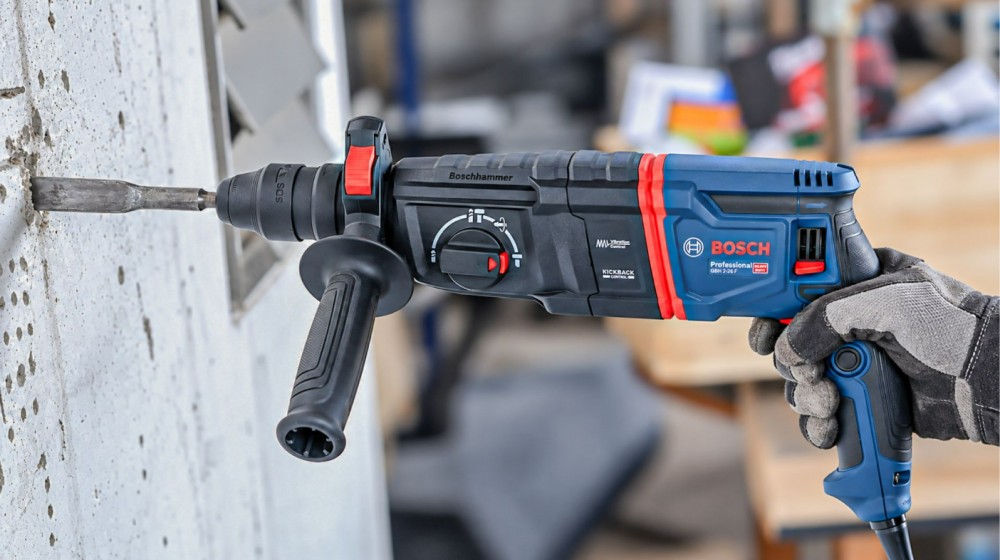
Customers Also Purchased


Anyone who has used Rotary hammer to drill concrete continuously for a long time has likely experienced this feeling: at first, the tool is easy to hold, well under control, and drilling progresses quickly. But after working with a rotary hammer for a while, hands may start to go numb, arms feel fatigued, wrists tense up, and the force required to steady the tool seems to steadily increase—even though the drilling task remains the same. This sensation isn't just about the weight of the tool; part of it comes from vibration from the rotary hammer that is constantly transmitted through the handle into our hands and arms.
For this reason, many models of rotary hammers have begun to include an Anti-Vibration System as part of their design, especially for heavy-duty rotary hammers meant for continuous concrete drilling or chiseling tasks.
Many people may view a rotary hammer's anti-vibration system merely as a feature that helps make it "more comfortable to hold" and unrelated to working efficiently. In reality, grip comfort has a direct relationship with tool control, work continuity, precision, and overall work efficiency far more than you might think.
Why do rotary hammers vibrate more than standard drills?
Before understanding how an anti-vibration system helps, it is important to first understand that rotary hammers generate quite a lot of vibration compared to standard drills.
Deep dive into rotary hammer mechanisms: How does the piston hammer system work? The mechanism of a rotary hammer doesn't just rotate the drill bit; it also has an impact system to help the bit break through concrete, brick, or hard construction materials more easily. During operation, a piston assembly inside the tool moves rapidly to deliver impact force to the bit. The bit doesn't merely spin in the hole; it repeatedly impacts the material at high frequency.
This impact force helps drill into concrete much faster than relying on rotational force alone, but at the same time, it generates a reaction force transmitted back into the tool body, and part of it travels further into the user's handle.
The larger the tool or the higher the impact energy, the more noticeable these forces become—especially when the tool operates with continuous hammering without breaks.
If a rotary hammer is not designed to reduce vibration, the user must directly absorb these forces through their hands, wrists, arms, and shoulders throughout the entire time they work.
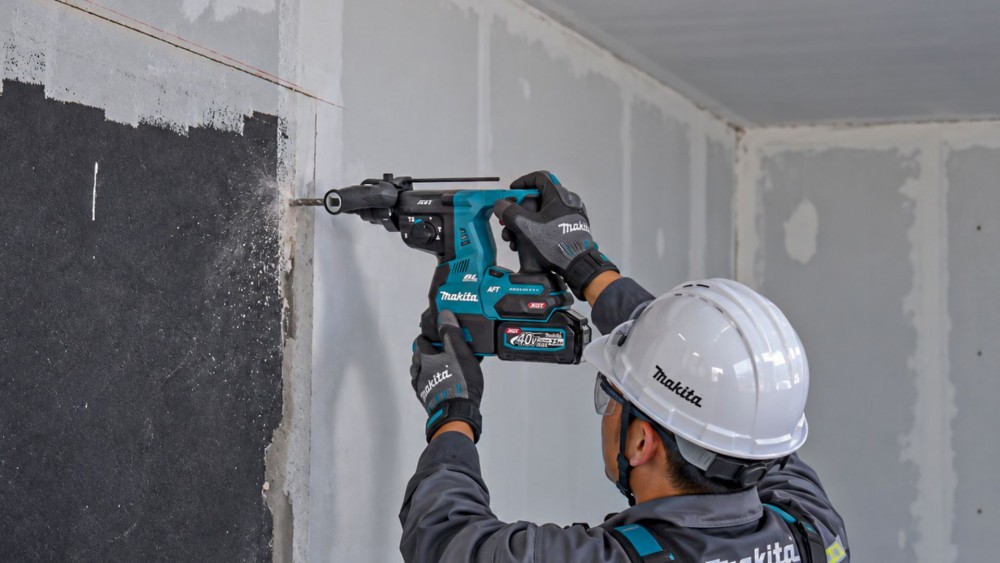
What is a rotary hammer's anti-vibration system?
The Anti-Vibration system of a rotary hammer is the design of internal components or the handle assembly to minimize the amount of vibration transmitted from the tool's impact mechanism to the user's hands. The systems do not all work the same across different models.
- Some tools use a handle structure that allows for slight movement;
- some use springs or materials that have vibration-absorbing properties;
- some heavy-duty models may feature internal counterbalance mechanisms that move in the opposite direction of the impact force to help cancel out part of the vibration.
The core concept behind all these systems is the same: to prevent excessive force generated inside the tool from reaching the user's hands. If a rotary hammer generates a certain level of vibration, a machine without an anti-vibration system may transfer a lot of that sensation to the handle. In contrast, a machine with a well-designed anti-vibration system will attempt to isolate or absorb some of that force beforehand, reducing the force felt by the hand while the impact mechanism continues to operate.
Crucially, a vibration reduction system does not mean "no vibration at all." A rotary hammer still needs to generate impact energy to do its job. What the system does is: Reduce the vibration transmitted to the user, Without reducing the impact performance delivered to the drill bit.
Does Reducing Vibration Make a Rotary Hammer Drill Harder?
A vibration reduction system does not increase motor power and does not directly increase the impact energy of a rotary hammer. If two rotary hammers have similar power ratings and internal mechanisms, having an anti-vibration system does not mean one will deliver more impact force than the other.
What changes is: Our ability to maintain the tool's performance during operation.
When a tool vibrates heavily, our hands automatically start gripping the handle tighter because the body is trying to control the tool's movement. Gripping harder puts more strain on the muscles in the hands, wrists, arms, and shoulders, leading to fatigue. Once fatigue sets in, maintaining drilling alignment becomes more difficult, and there is a tendency to push harder on the rotary hammer than necessary.
Conversely, if the vibration transmitted to the handle is reduced, we can grip the tool with an appropriate amount of force, maintain bit alignment steadily, and sustain our working posture for longer. Even though the tool's power doesn't increase, The combined efficiency of user and machine can improve noticeably.
Grip Comfort Isn't Just for "Ease of Use"
"Ergonomics"—designing for comfortable operation—is often seen by many as secondary to wattage, speed, or impact energy. But for a tool that must be handheld while withstanding continuous vibration, comfort directly forms part of its working performance.
Drilling just a single hole might not reveal a noticeable difference in vibration because it takes only a few seconds. But when drilling dozens of anchor holes into concrete walls or using a rotary hammer to chip away tiles and mortar over long periods, vibration begins to have an increasingly obvious impact.
Therefore, handle design and vibration reduction systems aren't just meant to make a tool look premium; they directly affect real-world work quality, especially on long-duration tasks.
How Does a Vibration Reduction System Help Reduce Fatigue?
When holding a continuously vibrating tool, your muscles aren't just supporting the tool's weight; they are constantly adjusting to keep the tool in position. The higher the vibration, the more your body must continuously respond to those movements.
At first, you might not feel much, but with continuous work, fatigue gradually accumulates—especially in the fingers, hands, wrists, forearms, and shoulders. As fatigue sets in, you tend to change your grip, shrug your shoulders, or tense your wrists to steady the tool, altering your working posture in the process.
Reducing the vibration transmitted to the hands relieves some of this strain on the body. While it doesn't eliminate the rotary hammer's weight, it means users don't have to exert as much effort fighting the vibration. As a result, you can maintain a natural posture and work longer without interruption.
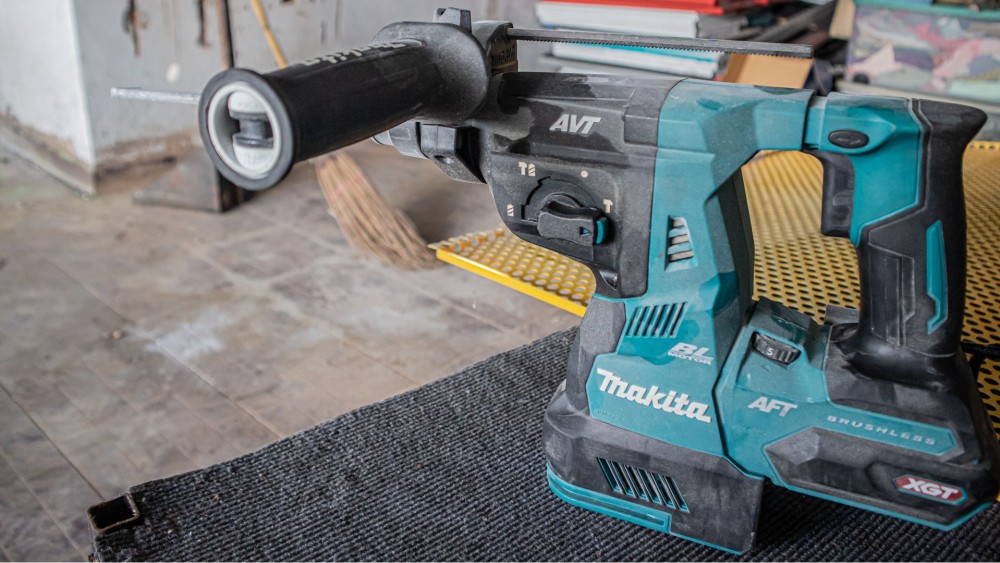
Less Vibration Helps Control Drilling Alignment Better
Drilling concrete to the desired position and alignment does not depend solely on the drill bit. Tool control is also crucial, especially during the initial drilling stage when the bit has not penetrated deeply into the material. If the tool vibrates or wanders excessively, the tip of the bit can easily slip off the marked point.
When the anti-vibration system reduces the vibration transmitted to the handle, your hands do not have to struggle as much against the tool's movement. This makes it easier to maintain the drill's alignment in the desired position, especially when drilling horizontally, overhead, or in awkward postures.
A rotary hammer with an anti-vibration system does not mean it will drill straight automatically, as that still depends on skill, bit selection, and technique. However, an easy-to-control tool certainly provides a better chance of maintaining alignment than one that requires a lot of effort just to hold it steady.
Which tasks benefit most from an anti-vibration system?
If you only use a rotary hammer a few times a month to drill just a few holes each time, the difference between a model with and without an anti-vibration system might not be the primary factor to consider. However, for continuous-use applications, this system becomes much more critical.
Clear Examples
- Electricians and plumbers who need to drill anchors or run conduit and piping across numerous points on concrete walls.
- HVAC installers who regularly drill through walls.
- Construction and renovation workers who need to run rotary hammers in chiseling mode for extended periods.
These tasks are not measured merely by how fast the tool can drill a single hole, but also by whether you can still control the tool well after drilling 10, 20, or 50 holes.
Large rotary hammers and SDS-Max drills These are often used with large bits or for chiseling work, where the anti-vibration system plays an even bigger role because the impact energy levels and runtimes are greater than those of smaller models.
Anti-vibration systems are not only beneficial during drilling
Using a rotary hammer for chiseling: How much can it handle? How is it different from a demolition hammer? The benefits of an anti-vibration system become even clearer when switching the rotary hammer to chiseling mode. During chiseling, the tool delivers continuous, repetitive impacts, requiring the user to control the chisel tip in place for extended periods.
Whether chipping away old tiles, scoring mortar surfaces, clearing mortar around pipes, or chiseling partial concrete, excessive vibration makes it harder to maintain chisel position over time. Reducing handle vibration provides a more natural grip and allows for easier visual tracking and bit movement across the chipping area.
Many heavy-duty rotary hammers place greater emphasis on anti-vibration systems corresponding to the tool's impact energy. The higher the impact force the machine produces, the more important it is to control the feedback energy.
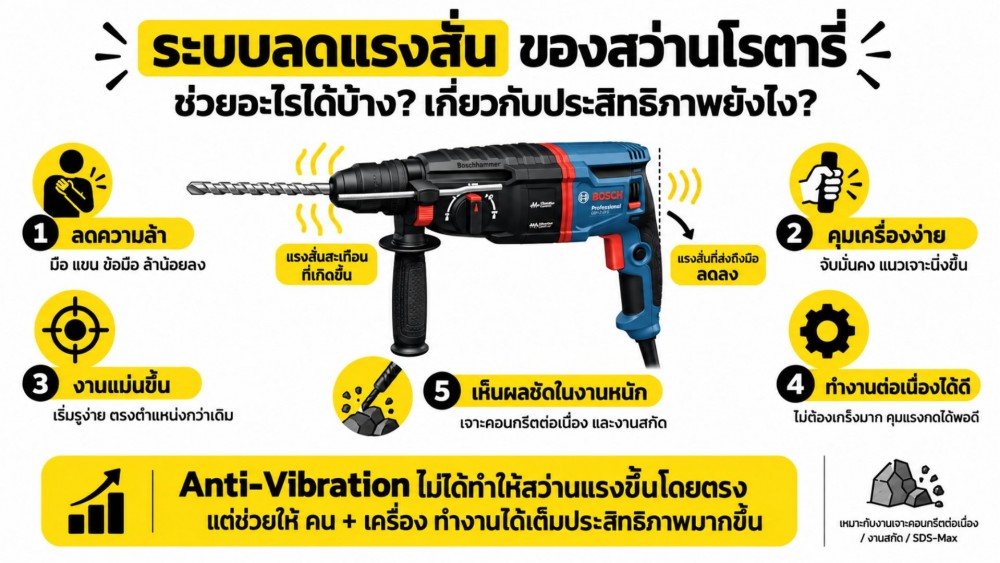
Summary: How important is a rotary hammer's anti-vibration system?
A rotary hammer's anti-vibration system does not directly make the tool more powerful, nor does it eliminate vibration entirely. Instead, it is a technology designed to manage the vibrations transmitted from the internal mechanism to the user's hands, making the tool more comfortable to control, especially during long periods of continuous drilling or chiseling.
The benefits go beyond merely "comfortable grip"—they extend to reducing fatigue, maintaining drilling alignment, controlling feed pressure, and enabling sustained productivity. When the operator has good control over the tool, overall work efficiency is bound to improve as well.
When choosing Rotary hammer Don't just look at which model has higher power or greater impact energy, because if you need to hold the tool for long periods, drill extensively, or regularly use chisel mode, the vibration reduction system, weight, balance, and handle ergonomics should also be on your list of considerations.