


 EN
 ไทย


Customers Also Purchased
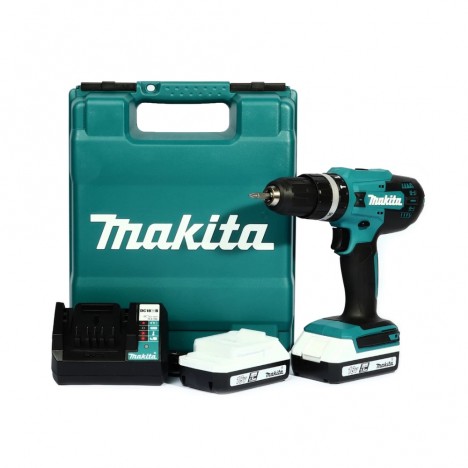
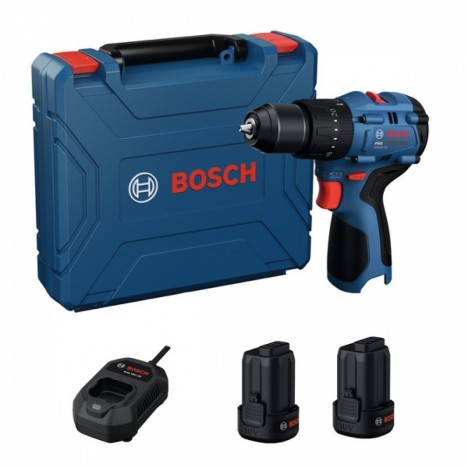


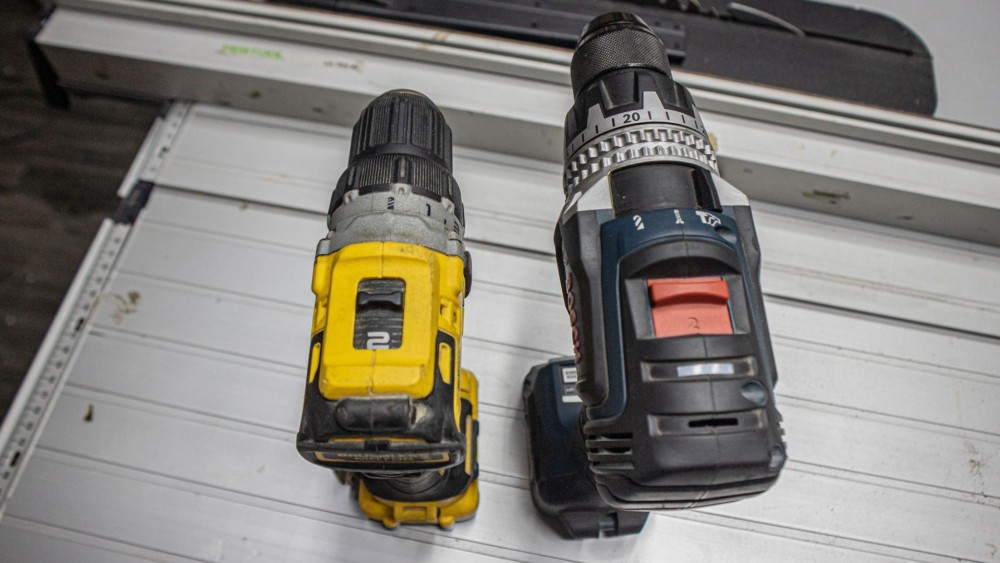
Anyone who is interested Cordless drill or looking for newer power tools may have noticed that on the top or body of a drill, there is often a selector for Gears 1–2, and some models even feature 3 to 4 speed settings, such as top-of-the-line Festool drills.
Gear systems have actually been paired with drills for a long time. However, modern cordless drills feature significantly advanced technology—including brushless motors, power management systems, and variable speed triggers that offer finer control over RPM. This raises a curious question: If pulling the trigger can already increase or decrease the speed, is a cordless drill's gear system still necessary?
In reality, the gear system in a cordless drill is not designed to replace the trigger, nor is it merely for raising or lowering RPM. Its primary function is to change the gear ratio between the motor and the drill chuck, allowing you to select whether the cordless drill operates with a focus on "speed" or "torque"—a distinction where relying solely on trigger modulation has its limitations.
Understanding the difference between adjusting speed with the trigger and selecting a gear setting helps you get the most out of your cordless drill, reduces strain on the motor, saves battery power, and extends the tool's lifespan.
What is the gear system in a cordless drill, and how does it work?
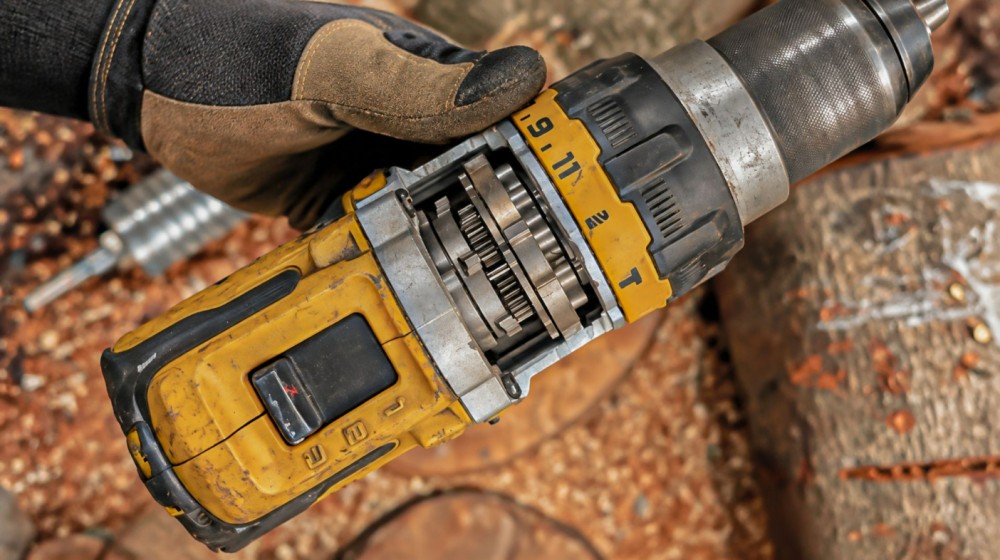
The gear system in a cordless drill is a gear mechanism installed between the electric motor and the drill chuck. This system controls the transmission of power from the motor to the front end of the drill by changing the internal gear reduction ratio.
A cordless drill's motor may spin at very high speeds, but the rotational output power might not be suitable for every task. Therefore, the gearbox steps in to adjust the power transmission format to suit the situation.
When selecting Low Gear The system reduces the chuck's rotational speed but increases the torque. This allows the drill to exert more turning force, making it ideal for high-power applications such as driving large screws, drilling with large bits, or working on hard materials.
When selecting High Gear The system increases the chuck's rotational speed to suit tasks that prioritize speed, such as drilling small holes, driving multiple screws, or general work that does not require high torque.
A cordless drill gearbox is similar to a car's transmission system. When starting off, going uphill, or needing power, you use a low gear. When moving at high speeds, you shift to a high gear so the engine runs efficiently.
What is the difference between feathering the trigger and changing gears?
Pressing the cordless drill trigger directly controls the motor's rotational speed directly. When you pull the trigger more, the system supplies more power to the motor, making it spin faster, and releasing pressure reduces the speed. However, adjusting via the trigger does not change the gear ratio. When encountering heavy tasks that require high torque, the motor still has to generate the turning force all by itself.
For example, driving a long wood screw into hardwood: if you use high gear and try to control it by gently pressing the trigger, resistance will increase as the threads bite into the wood. The motor has to work harder to maintain rotation. As a result, speed drops, the tool overheats, the battery drains quickly, or the tool's protection system triggers to prevent damage.
Switching to low gear allows different gear ratios to increase torque, helping the cordless drill continue driving the screw more easily. Even though the speed is slower, the tool operates much more appropriately.
Why can't feathering the cordless drill trigger replace Gear 1?
Because reducing speed with the trigger only controls motor operation based on your squeeze, whereas changing gears changes the gear ratio of the gear set, allowing the motor and chuck to work in a relation that is better suited for the task. Just like a car—even though it has an accelerator pedal, it still requires gears because stepping lightly on the gas can never completely replace shifting gear ratios.
Why do drills offer both "High Speed" and "High Torque" options?
Drills, especially cordless drills, are highly versatile tools. Manufacturers have designed a single tool to handle multiple applications—featuring clutches for delicate work, impact modes for hard materials, and various other technologies such as: Bosch Drills: What Are the Key Highlights? More importantly, speed and torque must be chosen appropriately; higher speed is not always better.
High Speed: Suitable for Tasks Requiring Speed
Many types of tasks require speed, such as drilling wood with small bits, drilling thin sheet metal, or driving numerous screws. In these applications, resistance is not very high. Using a high gear allows the drill bit to cut through material rapidly, reducing work time and boosting efficiency. However, the limitation of high speed is that when encountering heavy resistance, the tool loses power more easily due to a gear ratio that does not multiply torque.
High Torque: Suitable for Heavy-Duty Work
How is Torque Important in Choosing and Using a Cordless Drill? For tasks requiring torque—such as drilling large holes with hole saws, drilling thick wood, driving large screws, or drilling thick metal—rotational force is needed more than speed. If the speed is too high, the bit may bind, materials may overheat, and the motor will bear a greater load.
Selecting a low gear allows power from the motor to be transmitted through the gears properly, maintaining power better and reducing the chance of motor overload.
Gearboxes Also Help Save Cordless Drill Battery Life
Many people might think that using a low gear slows the tool down and therefore consumes more battery, but in reality, selecting the right gear for the job can help reduce energy consumption. When an unsuitable gear is used—such as using a high gear for heavy-duty tasks—the motor must draw more current to generate torque, leading to rapid battery drain and heat buildup.
Conversely, when using a low gear for tasks requiring force, the cordless drill can operate without straining the motor, utilizing energy much more efficiently.
The gearbox is therefore not just a feature that expands the capability of a cordless drill, but it also helps manage system power to suit the nature of each task.
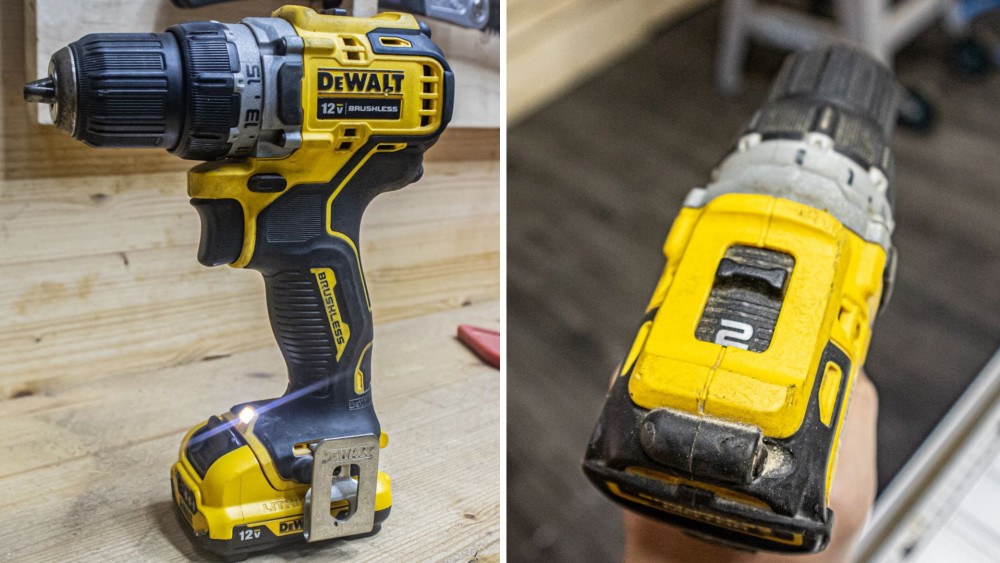
A Gearbox Makes Cordless Drills Easier to Operate
Another important point is that selecting the right gear for the job saves users from having to control the tool using only the trigger, because the trigger is designed to fine-tune speed during operation, not to replace the entire gear ratio system.
If a job naturally requires low speed, selecting Gear 1 from the start makes control easier. When you begin pulling the trigger, you can gradually increase the speed as needed while the drivetrain remains in the optimal range for that task.
If you need to drill holes and the material does not offer much resistance, using Gear 2 and modulating the speed with the trigger will help get the work done faster. Think of it as: The gear sets the operating range, while the trigger provides fine control within that range.
Why Do Modern Brushless Cordless Drills Still Have Gearboxes?
Today, brushless motor technology gives cordless drills higher efficiency, enabling them to control speed, detect resistance, and adjust power automatically. Many might think a gear system is no longer necessary, but in reality, brushless motors and gearboxes serve completely different functions.
The brushless motor is responsible for controlling power generation and energy consumption, while the gearbox converts and transmits power from the motor to the chuck. Even though electronics can increase or decrease RPM, they cannot replace the mechanical principle of multiplying torque through gear ratios.
This is why professional-grade cordless drills from leading brands like Makita, Bosch, Milwaukee, or DeWALT still feature multi-speed gearboxes in their high-performance models, because real-world users face diverse applications that demand both speed and torque.
Choosing the Right Cordless Drill Gear for the Job
Selecting the right gear isn't just about the desired speed; it also depends on the material type, bit size, and the force required. For general tasks such as driving small screws, drilling wood, or drilling thin metal, using a high gear will help get the job done faster.
However, for heavy-duty tasks such as using large bits, drilling hard materials, or driving large screws, you should select a low gear to increase torque and reduce strain on the tool.
Using gears correctly also reduces gear wear, minimizes heat buildup, and extends the lifespan of your cordless drill.
Gears Do Not Operate Independently from Clutches and Operating Modes
In a cordless drill, various systems work together, including the gearbox, clutch, variable speed trigger, motor, and operating modes.
For example, when driving a screw, we might select Gear 1 for optimal torque, use the clutch to set the cutoff threshold, and use the trigger to control speed as we start driving. This means these systems don't compete with each other—they are designed to complement one another in distinct ways.
Newer cordless drill models offer more precise control. Even if they look like conventional drills on the outside, inside they feature advanced drivetrains and control systems that give you more ways to use the tool.
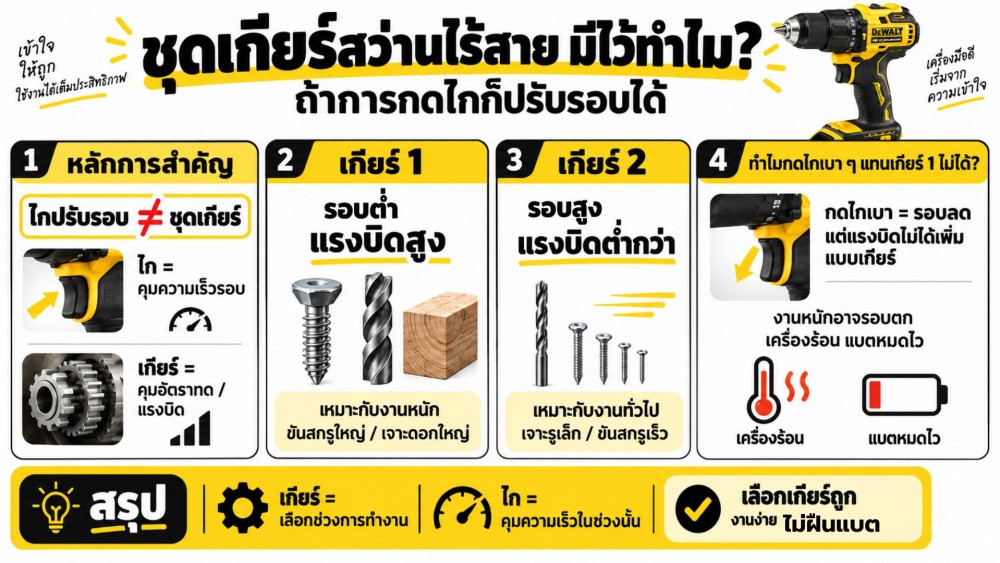
Summary: The Gearbox Isn't Just for RPM, It's for Power Control
Although a cordless drill can adjust its speed via the trigger, that mechanism only controls the motor's rotational speed. The gearbox, on the other hand, changes the gear ratio, controlling the relationship between RPM and torque.
Therefore, the gearbox remains an essential component of a cordless drill despite advances in motor technology. In practical work, a great tool isn't necessarily the one that spins fastest, but one that delivers the right power for each specific job.
Understanding the gear system of a Cordless drill will help you operate the tool as intended by the manufacturer, maximize battery life, work faster, and ensure your trusted tool delivers peak performance over the long haul.