


 EN
 ไทย


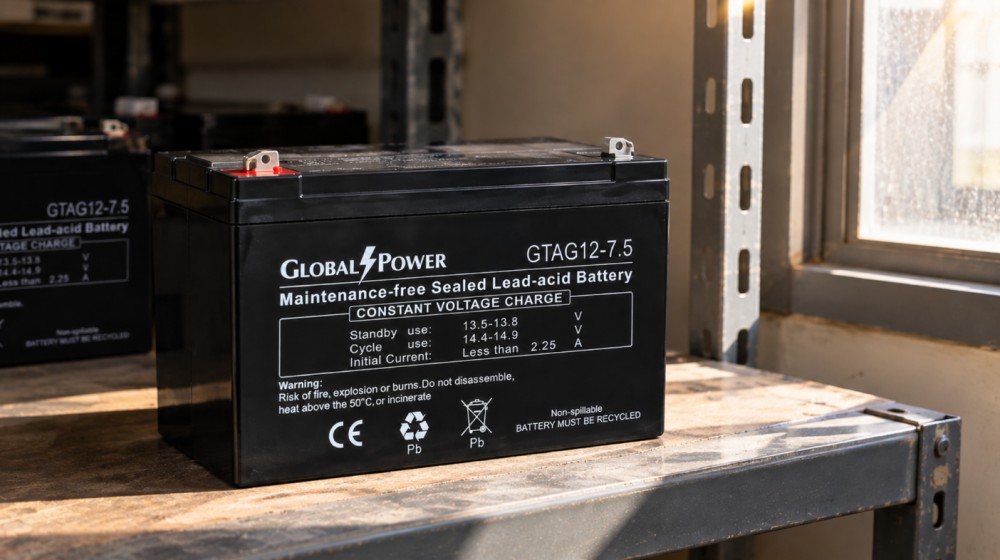
Customers Also Purchased


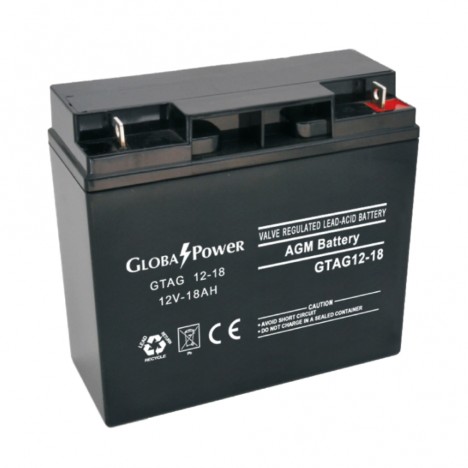


Have you ever bought a Dry Cell Batteries to keep as a spare, only to find months later that it holds much less charge than expected? Even though it was never connected to a tool, never powered any device, and might never have been used at all.
This doesn't necessarily mean the battery is defective, because batteries can lose charge just sitting idle. This phenomenon is known as self-discharge, caused by internal chemical reactions within the battery. That is why spare batteries shouldn't just be left on the shelf and forgotten.
This article primarily uses the term “dry battery” to refer to rechargeable sealed lead-acid batteries, or VRLA batteries, which are commonly found in UPS units, backup power systems, alarm systems, and various other equipment. It does not refer to standard dry cells (flashlight batteries) or single-use batteries.
Nothing is connected, so where did the battery's charge go?
If we think of a battery like a storage tank for electricity, we might assume that when no device is connected, the energy stored inside should remain unchanged. However, that is not how batteries actually work. Energy is stored in the form of chemical energy and relies on internal chemical reactions to convert into electrical energy when used. Even when no load is connected, certain processes inside the battery continue to occur slowly, causing the available charge to gradually decrease over time. This phenomenon is known as self-discharge.
Therefore, a battery that is fully charged and left on a shelf for several months may have less charge remaining than on the day it was stored, without requiring any wire or device to draw energy from it. Discovering that a battery has a weak charge does not necessarily mean it is defective right away, as self-discharge is a natural occurrence; it simply happens faster or slower depending on the type, age, and condition of the battery, as well as the storage environment.
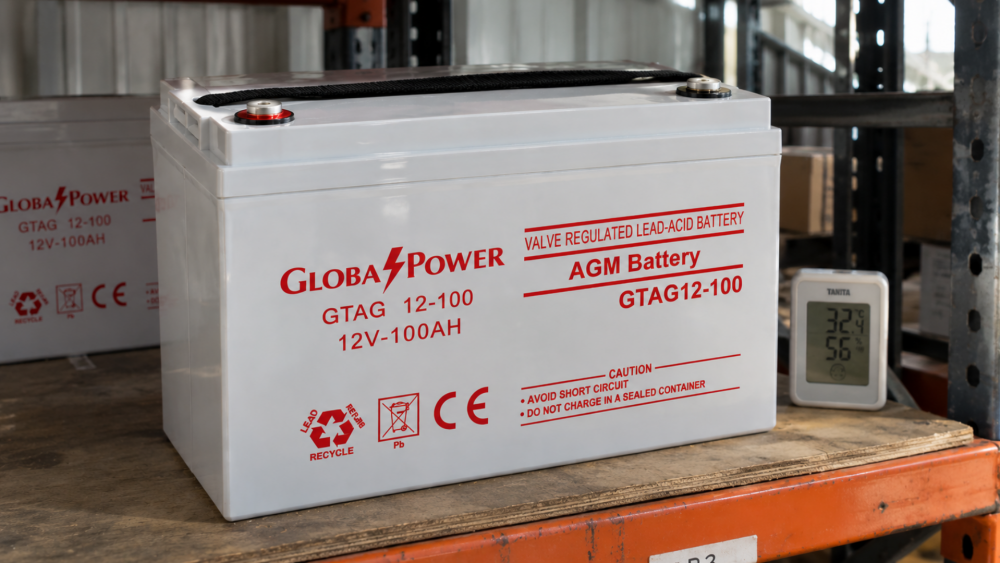
The hotter the storage environment, the faster the charge depletes
One key factor is temperature. For VRLA lead-acid batteries, higher temperatures accelerate internal chemical reactions and increase the rate of self-discharge. Battery manufacturers therefore typically specify both the ideal storage conditions and the recommended intervals for inspection or freshening charges in the manual for each model.
Consider two identical batteries: the first is stored in a suitable temperature environment, while the other is kept in a consistently hot area. Even though neither is used and both are stored for the same length of time, their conditions will not necessarily be the same over time. The often-overlooked factor is not just “how many months it has been stored,” but also “where it was stored during those months.”
Batteries that are still in their boxes and have never been opened are still affected by the surrounding temperature. Storing them in direct sunlight, near heat sources, or in areas with prolonged heat buildup is not the same as keeping them in the conditions recommended by the manufacturer. If a spare battery you purchased loses its charge faster than expected, you should check the storage location and environment before concluding that the battery itself is defective.
“Unused” and “disconnected and stored” are not the same thing
Another distinction to keep in mind is that a battery removed from a system and stored away is not in the same situation as a battery that remains installed in equipment that is turned off. If the battery is disconnected and stored separately, the gradual loss of charge over time is due to the battery's own self-discharge. However, if the battery is still connected to a UPS, vehicle, control system, or other equipment, certain circuits may still be drawing power even when the device appears to be “off.”
Clocks, memory modules, monitoring systems, security systems, or standby circuits are examples of components that may continuously draw power in certain types of equipment. The current draw of each system may be small, but left over time, it can significantly drain the charge. This scenario differs from self-discharge because an external load is actively drawing energy from the battery. Therefore, if a battery drains quickly despite being “unused,” you should first check whether it was truly disconnected and stored, or left connected to the system.
If you already know the charge will gradually decrease, can you just wait until you need it to recharge?
For lead-acid batteries, leaving them in a low state of charge for extended periods should not be overlooked. During discharge, lead sulfate forms on the plates, which is part of the battery's normal reaction and can generally be reversed during the charging process. The presence of lead sulfate does not immediately mean the battery is ruined.
What must be avoided is leaving the battery in a discharged state for a prolonged period, as some of the lead sulfate can crystallize into a form that is difficult to reverse. This phenomenon, known as sulfation, can degrade battery performance. Storing a lead-acid battery is therefore not just about finding a suitable spot to keep it; it also requires monitoring the charge level and applying periodic refresh charges during storage as recommended by the manufacturer.
For this reason, the idea of “leaving it alone and charging it when needed” may not be advisable when storing a battery for long periods, especially if no one is checking how deeply it has discharged along the way.
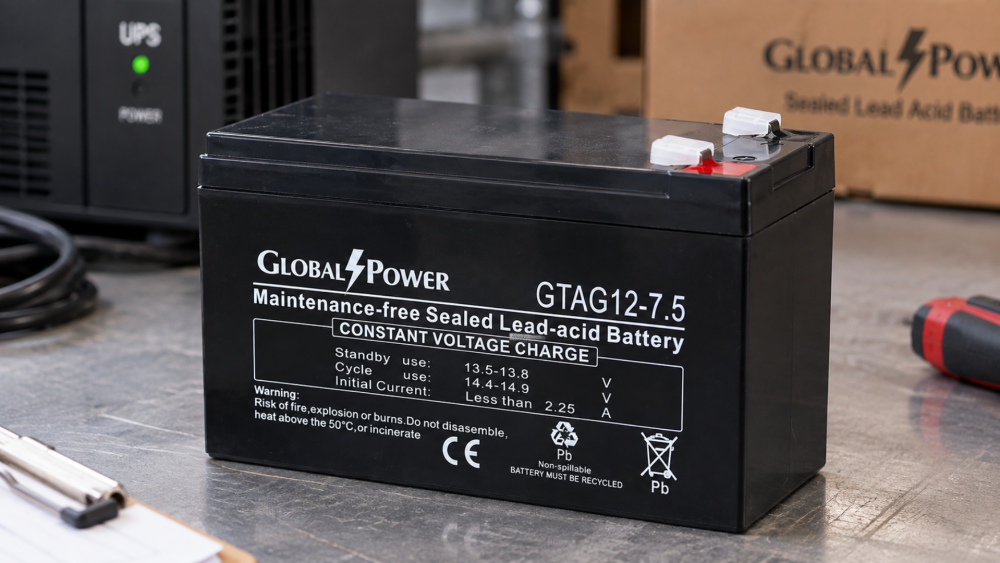
A brand new, unused battery doesn't stop the clock either
The phrase “new battery” may give the impression that as long as it has never been put into service, its condition remains unchanged. However, a single battery may have aged through manufacturing, transit, warehouse storage, shelf display, and months of further storage after purchase—even if it has never powered a device during that entire period.
Therefore, “never used” does not mean “freshly manufactured.” When purchasing batteries for backup stock, checking the manufacturing date and storage guidelines provided by the manufacturer is highly beneficial. Especially in workplaces or warehouses that maintain multiple batteries, it is best practice to log receiving dates and rotate stock so older batteries are deployed first, minimizing the risk of units being forgotten on the shelf for longer than necessary.
How should you care for a dry battery if it needs to be stored long-term?
If you know in advance that a battery will not be used for several months, the first step is to review the specifications for that specific model before storing it. Do not rely on rule-of-thumb figures like needing to charge a dry battery every 3 or 6 months, as the proper interval varies by brand and model, and storage temperature plays a major role. Always consult the datasheet or manual to see the manufacturer's specified storage temperature, check/top-up charge intervals, and charging requirements.
The storage area should be clean, dry, and avoid excessively hot areas or direct sunlight. Also, position the batteries so the terminals do not risk contacting metal or conductive materials that could cause a short circuit. If you have multiple spare batteries, labeling the date received, date stored, and the latest inspection or charge date directly on the battery or storage shelf will help you immediately identify which one has been stored the longest without relying on memory or just checking if the box still looks new.
Before putting a battery that has been stored for a long time back into use, inspect its physical condition as well. If you find swelling, cracking, leaks, damaged terminals, or any other abnormalities, do not rush to install or recharge it immediately; check the manufacturer's safety recommendations for that specific model first.
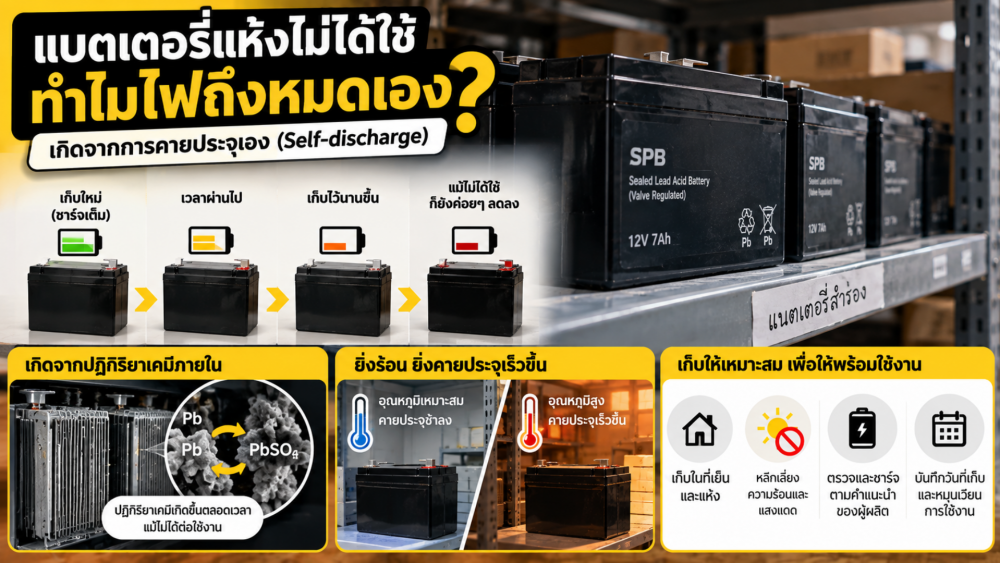
Keeping it as a spare battery still requires maintenance while not in use.
The answer to the question "If I didn't use the battery at all, where did the charge go?" is that a portion of the charge gradually decreases through self-discharge, which occurs internally within the battery itself. Furthermore, the rate of self-discharge depends on the battery's condition, storage duration, and ambient temperature.
If buying Dry Cell Batteries a VRLA battery as a spare, there is no need to follow a rigid formula of charging every few months. Instead, understand how your specific battery model needs to be stored and maintained, store it in an appropriate environment, inspect it periodically, and perform boost charges according to the manufacturer's specifications. The goal of having a spare battery is not just having a battery sitting on a shelf, but ensuring that when the day comes to use it, that battery is still in ready-to-use condition.