


 EN
 ไทย


Customers Also Purchased
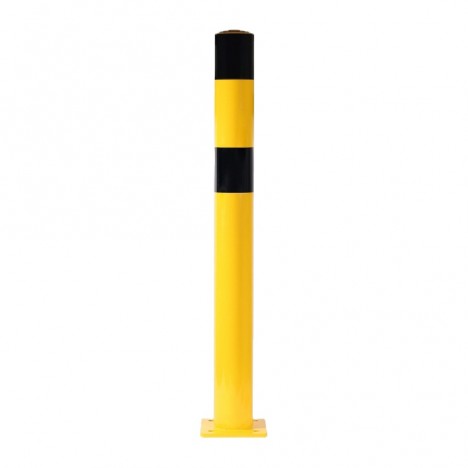
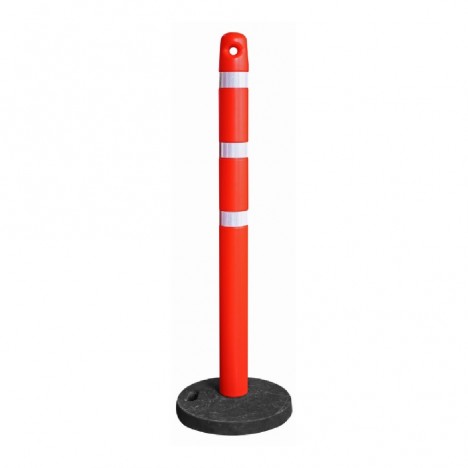
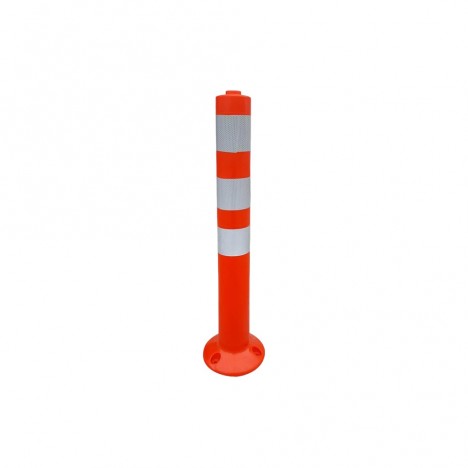
Delineator PostsFlexible bollards on the market may look very similar—orange, with reflective stripes, and capable of bending. But looking closer at the details, some specify PU, some TPU, and some EVA, raising the question: if you actually have to choose, which material suits your application better?
The answer isn’t about which material is “best,” but what the bollard will encounter. If installed where vehicles frequently sideswipe or run over it, flexibility and rebound recovery are critical. But if exposed to sun and rain for long periods, weather resistance must also be taken into account.
Before getting to the selection, let's understand PU, TPU, and EVA first, because these three terms do not refer to three types of plastics that can be directly ranked by quality, as many might assume.
What is the difference between PU, TPU, and EVA?
PU or Polyurethane is a broad family name for polyurethane materials, which can be formulated for a wide variety of properties, ranging from relatively rigid to flexible, and are used in many types of products, including flexible traffic bollards.
Meanwhile, TPU or Thermoplastic Polyurethane is actually also in the polyurethane family, but it is a thermoplastic polyurethane that can be formed using thermoplastic manufacturing processes. Therefore, viewing PU and TPU as entirely unrelated materials is not quite accurate.
TPU offers several notable advantages for this type of application. Material data for BASF's Elastollan highlights properties such as elasticity, rebound resilience, and abrasion or wear resistance. However, TPU comes in various grades and can be engineered with different properties based on the application, meaning not every bollard labeled TPU will perform identically.
whereas EVA or Ethylene Vinyl Acetate is a material from a different family than polyurethane, produced by copolymerizing ethylene and vinyl acetate. It can be made flexible and tough, which is why it is also used in manufacturing traffic bollards.
EVA also comes in various formulations. Technical data from Celanese indicates that vinyl acetate content affects material properties: as the vinyl acetate proportion increases, EVA's flexibility and rebound recovery can increase, while its softening point decreases. Thus, even if two bollards are both labeled EVA, it doesn't mean they will feel or perform identically in every way.
To remember it most simply: PU is a broad material family name, TPU is a thermoplastic polyurethane, and EVA is a completely different material family. However, when made into traffic bollards, actual product performance also depends on the material formulation and manufacturer's design.
Why must traffic bollard materials "yield and bend" when hit?
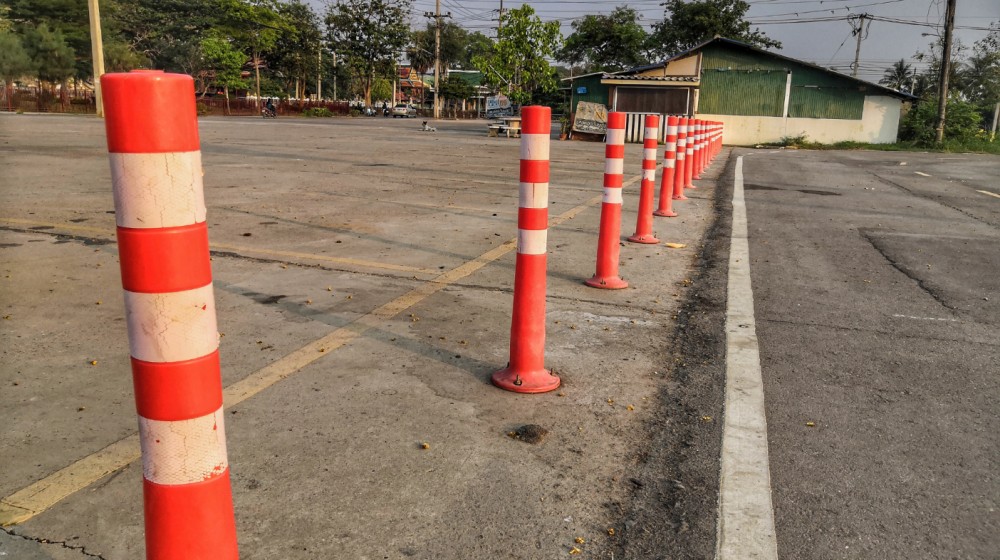
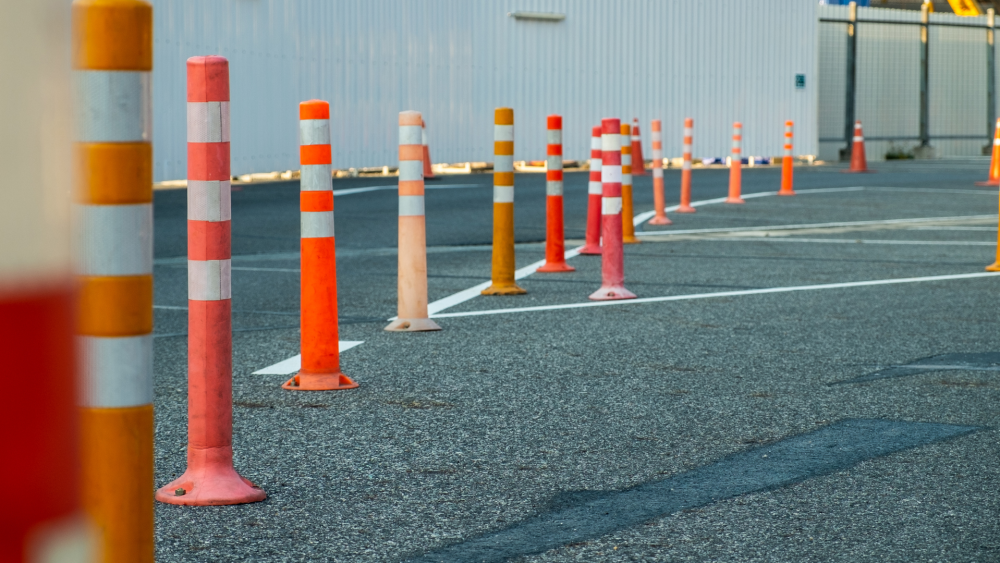
Imagine traffic posts installed at parking lot entrances and exits, lane dividers, or restricted zones. Being in constant proximity to vehicles, they face risks of being grazed by bumpers, run over by tires, or receiving accidental impacts.
If such posts were made of rigid, immovable materials, impact forces could damage the post, its base, or its anchor points. Flexible traffic posts therefore rely on their elasticity to bend with the applied force, and in products designed for recovery, the post springs back close to its original position once the force is removed.
This is why PU, TPU, and EVA are commonly used in this type of traffic post, as these materials can be engineered to deliver flexibility.
However, the term "flexible" or "reboundable" does not mean you can drive over it in any manner without ever causing damage. Vehicle speed, angle and direction of impact, ambient temperature, ground condition, installation method, and repeated impacts all affect lifespan. If a seller specifies the number of impacts or run-overs it can withstand, it is worth checking what kind of test that number comes from and under what conditions.
When it comes to TPU, the highlights are rebound resilience and wear resistance.
For areas where posts frequently contact vehicles, TPU is a compelling material choice because it blends flexibility with mechanical strength.
BASF notes that TPU in the Elastollan family offers elasticity, rebound properties, as well as abrasion and wear resistance. These traits are directly relevant to traffic posts that must endure bending, tire friction, and repetitive long-term use.
However, another critical detail for Thailand is outdoor installation. Just because a post is made of TPU does not mean every grade offers the same resistance to UV light and weathering. Raw material manufacturers produce various TPU formulations, and some are specifically engineered for enhanced UV or weather resistance.
Therefore, if a TPU post will be exposed to prolonged sunlight, the next question to ask after "made of TPU" is: Is this model designed for outdoor use, and are there specifications regarding its UV or weather resistance? Asking this is far more useful than simply seeing "TPU" and assuming the post will automatically withstand the sun.
What about PU traffic posts?
Many flexible traffic posts on the market are labeled by manufacturers as PU or Polyurethane serving a similar primary purpose: providing flexibility upon impact and recovering back upright.
The challenge is that "PU" is a broad term. If a product page simply states "PU" without further details, there is not enough material formulation information to compare it with another TPU post and determine which is more durable. Therefore, if you come across a PU post that interests you, try skipping the question of "Is PU better than TPU?" and look directly at that specific model's specifications—such as how it bends and recovers, whether it is designed for impacts and scrapes, whether it can be used outdoors, and what test data the manufacturer provides.
If all of this information is available, a post labeled PU can be a perfectly suitable choice without needing to switch to TPU simply because the material name sounds more specific.
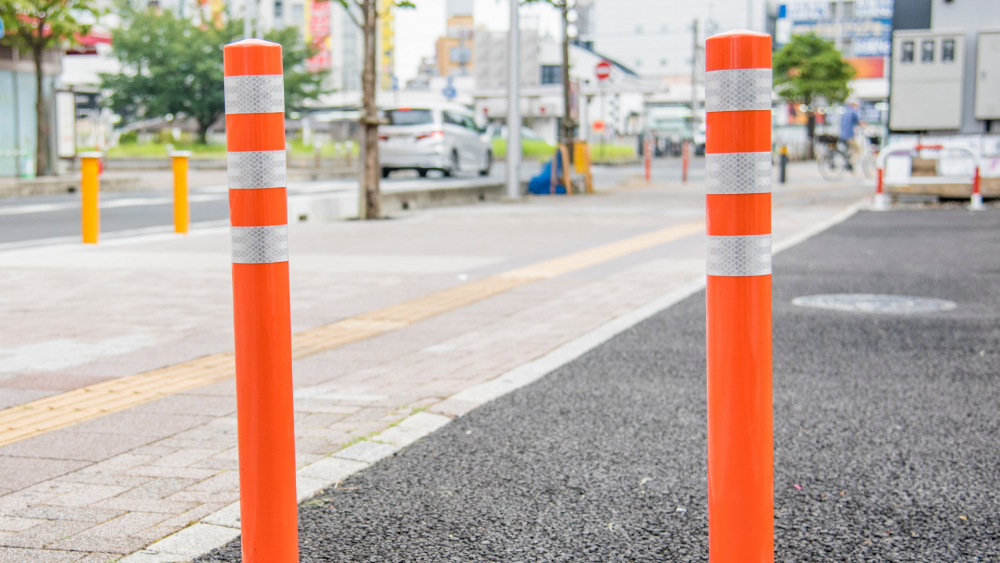
EVA does not always mean a secondary option
When talking about EVA, many people may recognize the name from foam or soft products, but EVA does not come in only one form, and its material properties can be tailored based on the formulation used.
Data from Celanese highlights EVA's properties in terms of flexibility, toughness, and impact resistance. Meanwhile, manufacturers in the market actively use EVA for flexible traffic posts, with some offering both PU and EVA options within the same product line.
Therefore, one should not generalize that EVA is always the economy model while PU or TPU is always the higher-quality option without actual product data to back it up, because an EVA post with the right formulation and design for the application may suit that area better than another post made of a different material not designed for the same conditions.
If you are considering an EVA traffic post, the key factors to focus on remain the same: flexibility, recovery after impact, suitability for outdoor installation, and the application data or test results provided by the manufacturer.
Choosing between PU, TPU, or EVA: Start by asking, "What will this post encounter?"
Instead of starting the selection process based on the material name, try starting with the location where the post will be installed—it will make narrowing down your options much easier.
If installed in parking lots or areas where vehicles pass closely alongside the post constantly The likelihood of sideswipes or drive-overs is naturally high. Priority should be given to recovery after impact, resistance to bending and repeated use, as well as the strength of the base and mounting points. If considering TPU, properties regarding flexibility and wear resistance are also factors worth comparing between models.
If installed outdoors all day Whether it is PU, TPU, or EVA, you should inquire further about UV and weather resistance, because the material name alone does not confirm that the post model is designed for long-term exposure to sun and rain.
If used to delineate lanes or cordon off areas where vehicles rarely make contact with the post The ability to withstand repeated impacts may not be the primary factor. In this case, more weight can be given to suitable dimensions, height, visibility, reflective sheeting, installation methods, and budget, without the need to over-specify impact resistance beyond the application requirements.
Meanwhile, Areas with a very high chance of frequent impacts Such as tight turning corners or areas where vehicles regularly cut across the post line, even if you select a highly flexible material, you should also reassess the installation position. Solving the problem solely by replacing it with a more durable post may not be the answer if the post's placement inherently causes vehicles to collide with it constantly.
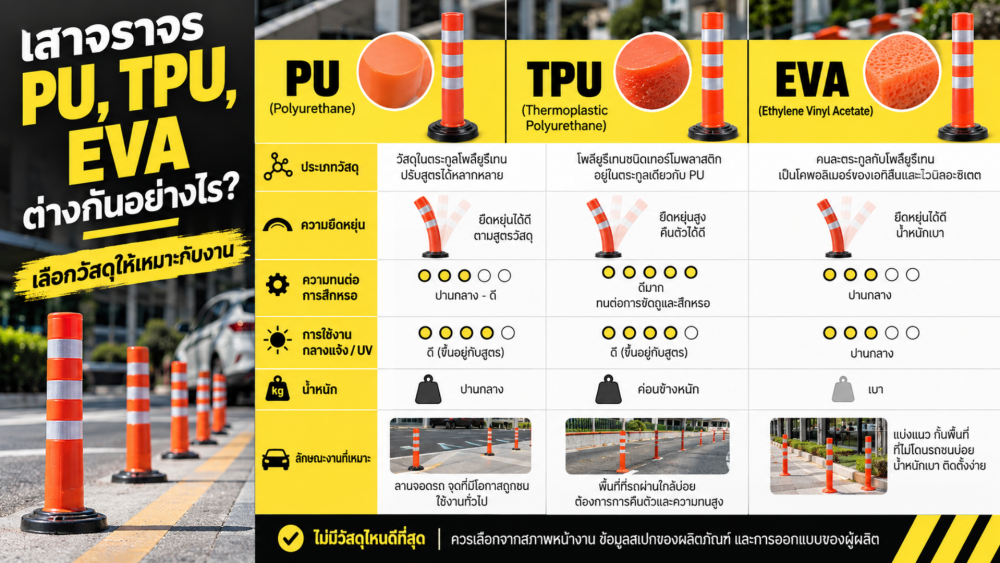
If you had 3 posts placed in front of you, how would you choose?
Suppose you have three models of traffic delineator posts: one labeled PU, one TPU, and another EVA. Knowing only this information, you shouldn't rush to choose TPU thinking it's better, or pick EVA assuming it must be cheaper. The first thing you should do is open up the specifications of all three models and compare them under identical conditions.
See if each model is designed to rebound after impact, whether it can be used outdoors, if there is UV resistance data, what type of base mounting it uses, whether its size and height fit the installation point, and if the manufacturer claims it can withstand repeated impacts or being run over, how much test data supports that claim.
Comparing them this way, we might find that a TPU post is suitable for one area, while a PU or EVA post is a better fit for another. This is a much more sensible approach than rigidly ranking the three materials.
Ultimately, which material is best for traffic posts?
If we must give the shortest answer: There is no single answer based solely on the names PU, TPU, or EVA.
TPU has many compelling fundamental properties forDelineator Postsflexible rebound posts, especially elasticity, recovery, and wear resistance. PU is a broad family of materials that can be engineered with widely varying properties, while EVA also offers flexibility and toughness and is indeed used to manufacture real-world traffic posts.
Therefore, when choosing a traffic post, do not stop at "what is it made of?" Ask further: "what is this post designed to endure?" A post suitable for a parking lot where it might get run over daily doesn't necessarily need to be the same as one used to partition an area where vehicles hardly ever make contact.
Starting from the job-site conditions and then working backward to examine material, recovery, weather resistance, mounting base, and test data makes choosing among PU, TPU, and EVA much easier and far more rational than judging by a three-letter material name alone.