


 EN
 ไทย


Customers Also Purchased


The same trolley, carrying a similar load, but why does it feel like it requires more effort lately? Or sometimes, a newly assembled trolley meets its load capacity specifications, yet in actual use it starts off sluggish, is hard to steer, and doesn't roll as smoothly as expected. Such problems make many people think of the payload weight first, even though the root cause might lie in Casters and Wheels and the environment in which the wheels are operating.
Technically, how easy or difficult a cart is to push relates to rolling resistance, which is influenced by multiple factors including weight, wheel size and material, floor conditions, as well as the condition of the caster assembly and bearings. Hamilton Caster points out that wheel diameter is a major factor in rollability, and generally, larger diameter wheels make it easier to move under load.
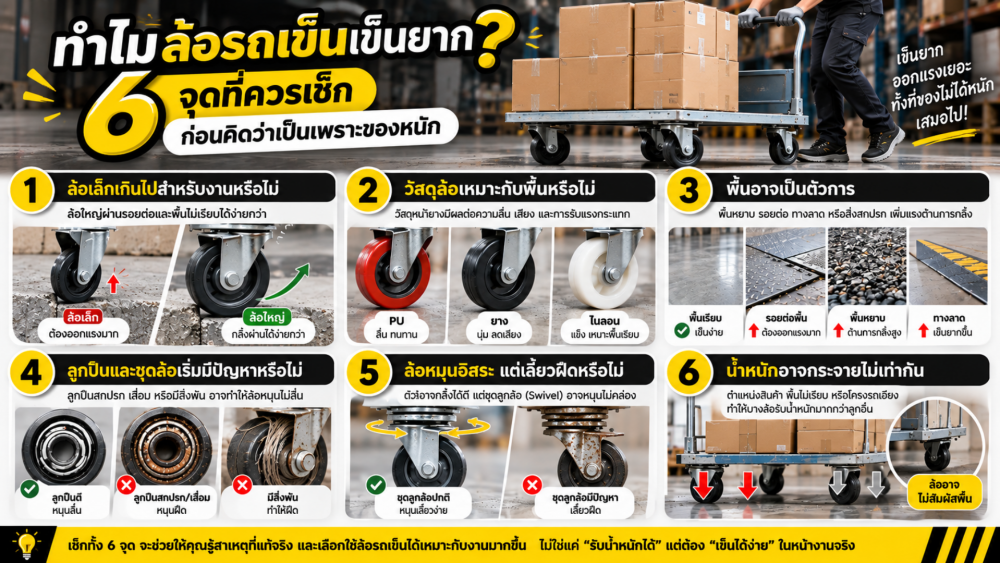
Therefore, before concluding that the trolley is heavy simply because it is overloaded, try going through the following 6 checkpoints first. Sometimes the solution isn't reducing the cargo on the cart, but choosing casters or maintaining the wheel assembly to better suit the job.
1. Are the wheels too small for the load weight and operating surface?
Think about pushing a cart across floor expansion joints or cracks. Small wheels have to "climb" over edges or obstacles that are proportionally large compared to their own size, whereas larger wheels can roll over the same irregularities much more easily. This is one reason why wheel diameter significantly affects how it feels while pushing.
Hamilton Caster explains that, all other factors being equal, larger diameter wheels reduce the effort required to overcome rolling resistance. They also recommend choosing the largest practical wheel size for manually propelled carts, especially when operating on floors with seams, debris, or uneven surfaces.
However, this does not mean you should always switch to the largest possible wheels, as wheel size affects the overall height of the trolley, mounting space, and the operation of other equipment. A better guideline is: if the trolley handles heavy loads and moves frequently, do not just look at "how many kilograms can this wheel support", but also consider whether the diameter is appropriate for the pushing force and floor conditions.
2. The wheel material might not be suitable for the floor
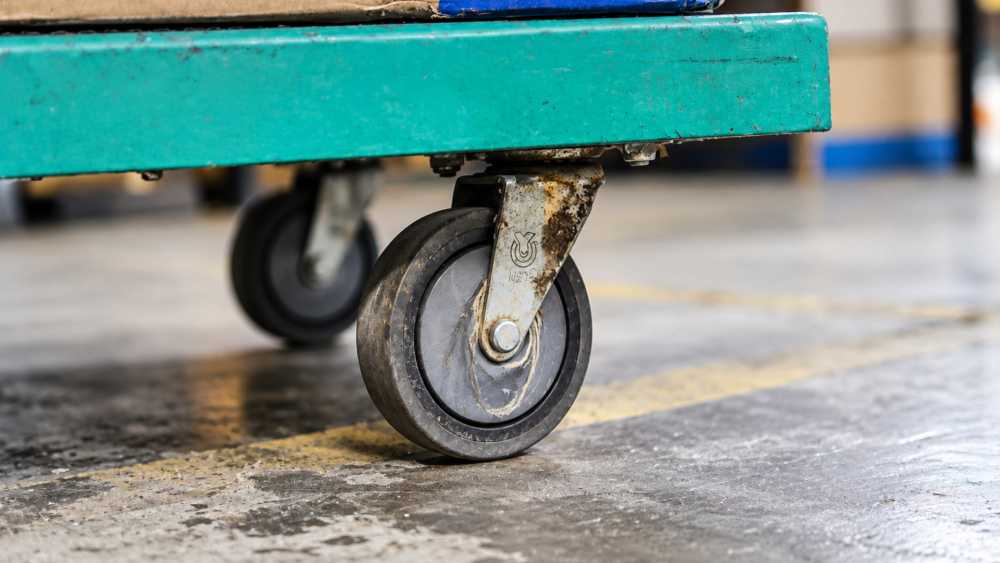
Caster wheels of the same size do not necessarily roll the same way, because the tread material affects rolling resistance, noise, shock absorption, and floor impact.
Generally, on smooth floors, wheels with harder treads tend to roll more easily than soft wheels because they deform less under load. On the other hand, soft wheels have the advantage of shock absorption, noise reduction, and handling certain floor types better, but may require more effort to push under heavy loads. Hamilton notes that wheel selection involves trade-offs between properties such as rollability, floor protection, durability, and noise—no single material is best for all conditions.
When a cart feels sluggish, you should consider both the "wheels" and the "floor" together. A wheel suitable for smooth concrete might not deliver the same performance when moved to a rough floor, one with seams, or one where debris is regularly scattered.
3. The floor might be the culprit rather than the wheels
Before removing the wheels to replace them, try pushing the same cart on a smoother, cleaner surface. If the pushing effort changes noticeably, part of the problem may stem from the floor itself, not just the cart.
Floor conditions directly affect rolling resistance, including surface roughness, cleanliness, slope, and expansion joints. When a cart must cross grooves, cracks, metal shavings, or debris, the wheels require extra force to overcome these obstacles—especially smaller wheels.
Therefore, the area to inspect is not just where the cart is parked, but the actual route it travels from start to finish. A cart might roll smoothly for most of the trip, only to become extremely hard to push at door thresholds, floor joints, or a few specific ramps. Pinpointing where the issue occurs allows for better decisions than simply replacing the wheels without knowing the root cause.
4. Are the bearings and wheel assemblies starting to fail?
If the cart used to roll smoothly but has gradually become harder to push—even though the load weight and route haven't changed—inspect the wheels and bearings. Rotating components can wear out, get dirty, or degrade over time.
Try safely lifting the cart following the manufacturer's guidelines, then check whether each wheel rotates normally, makes abnormal noises, wobbles, or has string, plastic strapping, or debris wrapped around the axle. Also check the tread or tire surface for visible damage. If any abnormalities are found, repair or replace them according to the manufacturer's recommendations; do not force the cart to continue operating, especially under heavy loads.
The type of bearing also impacts wheel performance, as industrial wheel manufacturers select different bearings based on load capacity, speed, and movement characteristics. Hamilton notes that precision ball bearings are ideal for many manual pushing applications because they help reduce starting thrust, while bearing selection must also account for load, side thrust, speed, and maintenance requirements.
5. Do the wheels spin freely while the caster rigs are stiff to swivel?
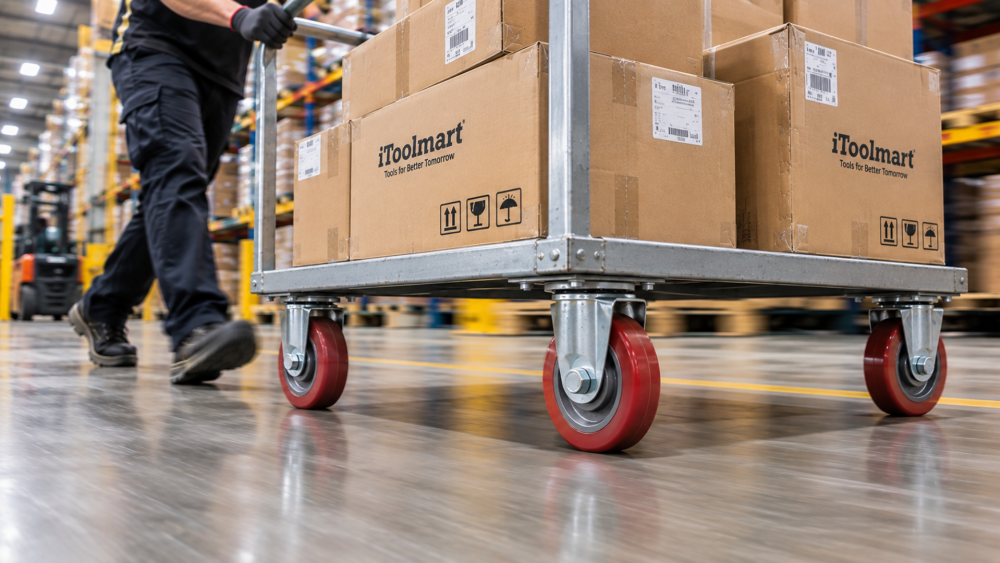
The term "wheel rotation" has two meanings that are often conflated. The first is the wheel rotating around its axle to move the cart forward and backward. The second is the swivel caster assembly turning to change directions as the cart steers.
As a result, a cart may have wheels that roll fine, yet still feel heavy to turn if the swivel assembly does not rotate smoothly, is damaged, or the caster layout is poorly suited for the intended movement. This issue is typically most noticeable when starting from a stop, changing directions, or trying to maneuver in tight spaces, rather than when pushing straight at a steady speed.
If a cart "rolls fine straight, but feels heavy when turning," inspect the swivel assembly separately from the wheel itself. Don't rush to conclude that you need to change wheel materials or increase wheel diameter, as the root cause may lie in the swivel mechanism of the caster rig.
6. The load might not be too heavy, but distributed unevenly across the wheels
Ultimately, load weight remains a crucial factor, but total weight shouldn't be the only consideration. For example, a four-wheel cart does not necessarily distribute the load equally at 25% per wheel at all times. Cargo placement, uneven floors, or rolling over floor joints can cause certain wheels to bear much more of the load at any given moment.
Hamilton highlights this point in its caster selection guide, stating that off-center loads and uneven floors can cause unequal weight distribution among wheels, and in some conditions, shock loading can occur when wheels pass over joints, potholes, or floor transitions.
Therefore, when inspecting a hard-to-push cart, check where the cargo is placed, whether the frame is tilted, whether all wheels maintain normal contact with the floor, and whether the wheel load ratings suit actual operating conditions. Simply dividing the total weight by the number of wheels may not be sufficient for every scenario.
How the cart feels while pushing tells you where to start checking
Instead of immediately replacing the wheels, observe when the symptoms occur. If the cart is heavy to start and still heavy when pushed straight, start by checking load weight, wheel diameter, wheel material, floor conditions, and bearings. If it rolls well straight but is difficult to turn, examine the swivel assemblies and caster layout. For carts that roll well on some surfaces but suddenly become heavy over joints or rough floors, pay special attention to wheel diameter and route conditions.
Making these observations eliminates guesswork. The same "hard to push" symptom can stem from entirely different causes, and replacing wheels with the exact same size or material might leave the problem unresolved.
When replacing cart wheels, don't just look at weight capacity in kilograms
Load rating is essential, but it shouldn't be the only criteria for selecting wheels. For manually pushed carts, simultaneously consider wheel diameter, tread material, bearing type, caster configuration, and operating floor conditions. Also check for floor joints, ramps, debris, water, oil, chemicals, or temperatures that could affect the wheel material.
Especially regarding wheel size, you shouldn't choose small wheels just because they meet the rated load capacity on paper. "Load capacity" and "ease of pushing" are two entirely different qualities. A wheel might have a sufficient weight rating, yet still create high rolling resistance, requiring the user to exert considerable effort.
Cart wheels hard to push? Don't just blame the weight right away
If a cart starts feeling heavier than usual, look at the entire system: wheel size, wheel material, floor condition, bearings and caster condition, swivel rotation, and weight distribution. Each factor can alter the force required by the user to start and maintain the cart's movement.
Notably, a cart can "hold the weight" and "push poorly" at the same time. The load rating only tells part of the story. If you need to choose new cart wheels for manually pushed operations, base your selection on the actual load combined with the floor surface, route, frequency of use, and required maneuverability. This approach ensures you get wheels that not only support the load but are also truly suitable for moving the cart in actual working conditions.