


 EN
 ไทย


Customers Also Purchased



Cable reelSwitched power strips are devices that many households use as a matter of routine, especially around computer desks, TV corners, or spots where several appliances need to be plugged in at once. When finished using them, simply flipping the switch on the power strip to OFF instead of unplugging each device one by one is both convenient and makes managing multiple devices easier. But when the appliance plugs remain inserted, many people cannot help wondering whether the devices still "draw power" this way, particularly electronic equipment like TVs, computer monitors, audio systems, or printers that, even after pressing the power button to turn off, still have some circuits running in the background on certain models.
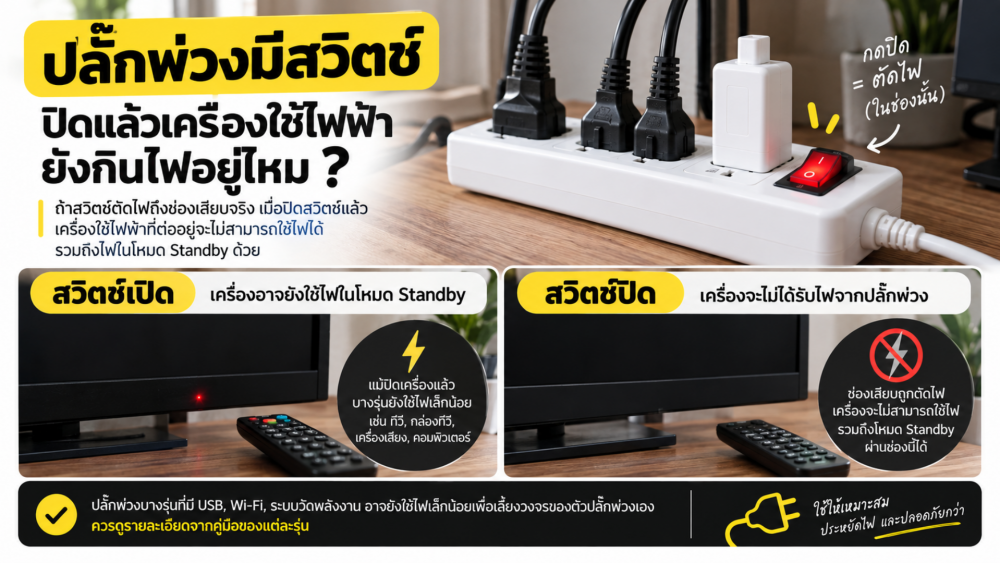
The answer is: if the power strip's switch truly cuts off power delivery to that socket, once the switch is turned off, the appliance connected to that socket will not receive electrical power from the strip, making it impossible to draw power in standby mode through that outlet. The crucial point is therefore not whether the plug is still plugged in, but whether the socket is currently receiving power. This is why turning off an appliance using the button on the unit itself versus turning off the switch on the power strip yields different results when it comes to cutting power.
Turning off a device does not always mean it consumes no power.
Many types of electrical appliances do not completely disconnect themselves from the power source immediately when we press the power button, because some types of devices are designed to have a portion of their circuitry continue operating at low power levels to await commands or maintain certain functions. For example, a TV may need to wait for a signal from the remote control, some audio systems keep their control circuits active, a computer monitor might be in sleep mode, while other devices still need to maintain clocks, memory, or certain connections, even though they appear to be turned off externally.
The energy consumed in this manner is often called Standby Power, or the electrical power that a device still uses during periods when it is not operating fully. The amount of power consumed is not identical across all devices: some use very little, while others have circuits or functions that must operate more continuously. Therefore, one should not generalize that all appliances draw the same standby power. What should be understood is that as long as the device remains connected to a power supply, there is still a possibility that some circuits are consuming energy, even if the screen is off or the machine appears completely shut down.
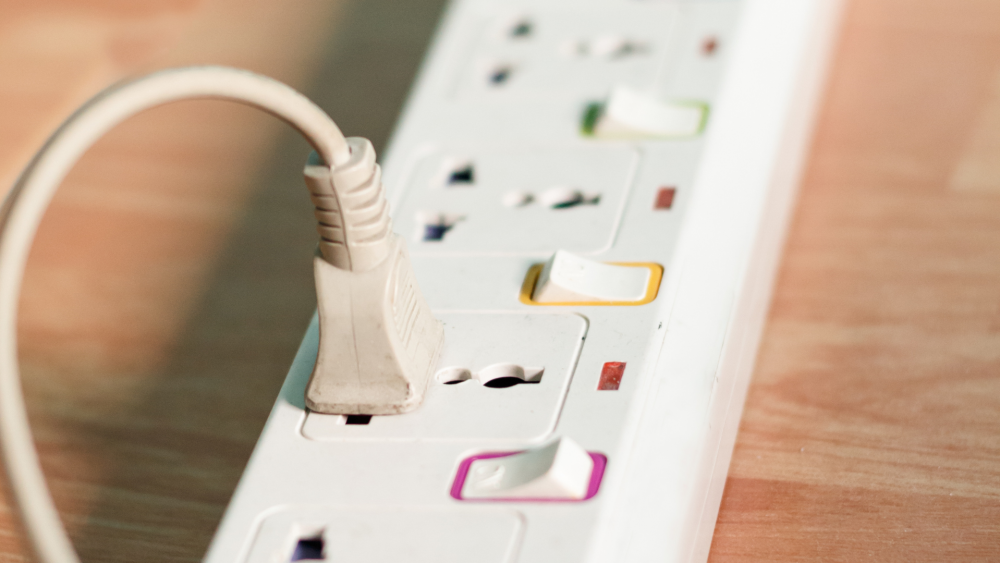
What is the function of the switch on a power strip?
On a typical power strip, the switch is designed to control the power supply to the sockets under its circuit. When the switch is turned on, the circuit is ready to deliver power, allowing connected electrical appliances to operate normally; if a device has a standby mode, it may still consume electricity even when turned off. However, when the switch is turned off and cuts power to the socket, the connected device will no longer have a power source for its standby circuitry.
Imagine a television plugged into a power strip. If you turn off the TV using the remote control while the power strip switch remains on, some of the TV's internal circuits may remain active, waiting for the next turn-on command. But if you turn off the power strip switch that feeds the TV, that socket stops supplying power, and the device can no longer draw standby power through it. Therefore, if the goal is to cut power to multiple unused devices, using the switch on the power strip is much more convenient than unplugging each device individually.
Why does it sometimes seem like there is still power even after turning off the switch?
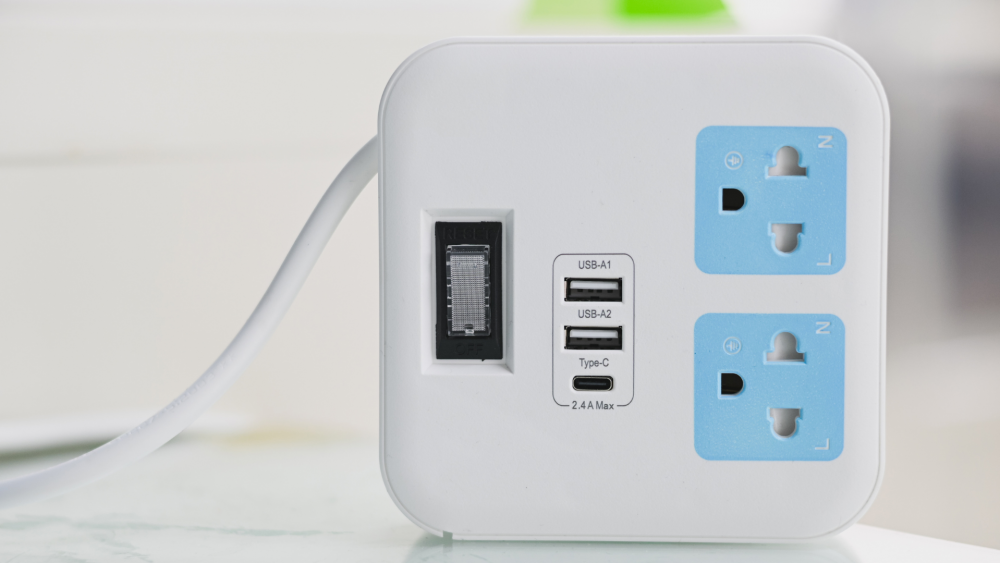
Here, it is important to distinguish whether we are referring to the "connected electrical appliance" or the "power strip itself," because not all power strips share the same internal design. A standard power strip with only sockets, a cord, and a control switch has a simpler structure than one with additional electronic circuits—such as USB ports, load detection, energy metering, Wi-Fi, or app-based control. Devices in the latter category may require certain internal circuits to stay active at all times to receive commands or maintain network connectivity.
Therefore, even if some individual outlets are switched off, a smart power strip may still consume a small amount of energy to power its control circuits. It should not be assumed that turning off the switch means "the entire power strip consumes absolutely zero power," as the answer depends on each model's specific design. However, for any appliance plugged into an outlet where the power has been cut, that appliance cannot draw standby power through that socket.
What does the indicator light on the power strip switch signify?
Many power strips feature an indicator light on or near the switch to display operational status. On some models, the light turns on when the switch is turned on to show that power is being supplied to the sockets. Other products may use different indicator light circuits depending on their design. Therefore, whether the switch light is illuminated or extinguished should not be relied upon as the sole proof that every part inside the power strip is definitely "live" or "de-energized."
In terms of general usage, what matters more is whether the socket powering your appliance actually stops supplying electricity when the switch is turned off, as this determines whether the connected appliance can still draw standby power. To find out which sockets a switch controls or which circuits remain active after turning off the switch, refer primarily to the manual or product specifications for that specific power strip model, especially for units with advanced electronic features.
What is the difference between a master switch and individual switches?
A power strip with a master switch typically uses a single switch to control all sockets simultaneously. The advantage is that when you finish using an entire set of equipment, you can cut power in one go—such as a workstation where a computer, monitor, speakers, and peripherals are plugged in together. When you are done, you can turn off everything with a single switch, making it ideal for setups where devices are usually powered on and off around the same time.
On the other hand, a power strip with individual switches provides greater flexibility, allowing you to cut power only to unused devices—such as turning off the computer monitor and speakers while keeping another outlet powered. However, control configurations vary across products: some feature a master switch controlling all outlets, some have individual switches for each socket, and others have dedicated always-on outlets. It is always best to check the manufacturer's symbols and specifications.
Does turning off the switch really help save electricity?
If an electrical appliance consumes standby power, cutting off its power supply definitely helps reduce the energy consumed while it waits in standby mode. However, there is no fixed answer to "how much" it saves, as it depends on the specific appliance and how long it remains in standby. Many newer devices are designed with significantly lower standby power consumption than older models. At the same time, some appliances feature network interfaces, sensors, or receivers that must remain active continuously, leading to noticeable differences in energy consumption.
Therefore, seeing an indicator light on does not necessarily mean the appliance is consuming a large amount of power, and having no visible indicator light does not mean zero power consumption either. If you want to know exactly how much power a device consumes, the most straightforward method is to use a suitable power meter under actual operating conditions. This will clearly show the differences in power draw when the device is active, turned off, and left plugged in on standby.
Is turning off the power strip switch the same as unplugging it?
If you are strictly looking at stopping power delivery to connected appliances, turning off a power strip switch that cuts power to that socket successfully halts standby power consumption, making it convenient for daily use—especially where multiple devices are connected together. However, turning off a switch and physically unplugging from the wall outlet are not identical in all circumstances: unplugging physically disconnects the plug from the wall receptacle, whereas switching off leaves the power strip itself connected to the building's electrical system.
If you need to clean, repair, remove covers, or work in areas where you might touch electrical components, relying solely on switching the power strip to OFF is not sufficient. You should physically unplug the device from the power source first to ensure complete, visible isolation from the electrical supply. Similarly, if equipment will be left unused for an extended period, unplugging it eliminates unnecessary connections to the electrical grid and provides absolute certainty that no power reaches the device.
If a power strip is hot, smells burnt, or has a faulty switch, do not just turn it off and keep using it
Another issue that must be separated from standby power concerns is the physical condition of the power strip itself. If you notice that the switch is abnormally hot, the sockets are loose, there are burn marks, the plastic is deformed, there is a burning odor, or connected devices flicker on and off intermittently, you should never simply turn off the switch and continue using it as before. These symptoms may point to degraded contact surfaces, loose connections, heat accumulation, or overloading beyond the device's rated capacity.
In cases like this, you should stop using it, unplug it from the outlet, and replace it or have a qualified technician inspect it rather than forcing continued use. A power strip switch is designed to control power distribution, not to resolve issues with degrading components or abnormal heat buildup. Therefore, if signs of damage appear, discontinuing use immediately is far more appropriate than attempting to keep using it by relying merely on the on/off switch.
Certain Electrical Appliances Should Not Be Turned Off Directly at the Power Strip
Although turning off the power strip switch cuts off the power, it does not mean you should immediately cut off power to all types of appliances while they are operating. Some devices should be turned off from the unit itself first so that the system can complete its normal shutdown process, such as computers that need to save data and shut down the operating system, or appliances with operating cycles and internal control systems. Cutting power abruptly may cause operations to stop without completing the shutdown steps designed by the manufacturer.
A better practice is to turn off the device using its own power button or command first, wait for it to shut down normally, and then turn off the power strip switch if you wish to eliminate standby power as an extra step. This method clearly separates the function of "shutting down the device" from "cutting the power," reducing the chance that the equipment will be powered off in the middle of an operation.
Should You Turn Off the Power Strip Switch Every Single Time?
It is not necessary to set a strict rule that every piece of equipment must be disconnected from power after each use, because certain types of devices are designed to run continuously, such as network equipment or devices that must maintain specific functions around the clock. The key consideration is how you use that device. If it is a group of appliances that do not need to be constantly connected to power, switching off the power strip after use makes power management easier. However, if it is a machine that needs to keep running or for which the manufacturer specifies a dedicated shutdown procedure, you should prioritize following the manufacturer's recommendations for that specific device.
Therefore, if the question is: Cable reelDoes a switched power strip still consume electricity when turned off? The answer is: if the switch genuinely cuts the power supply to the outlet where the device is plugged in, the connected appliance cannot draw standby power through that outlet. Switching off is thus a convenient way to cut power to multiple devices after use. However, you should not assume that all types of power strips consume zero electricity, as models with electronic circuits or smart systems may still require power for themselves. Furthermore, for maintenance or safety-critical tasks, physically unplugging from the power source remains a much more definitive measure than simply pressing the switch to OFF.