


 EN
 ไทย


Customers Also Purchased




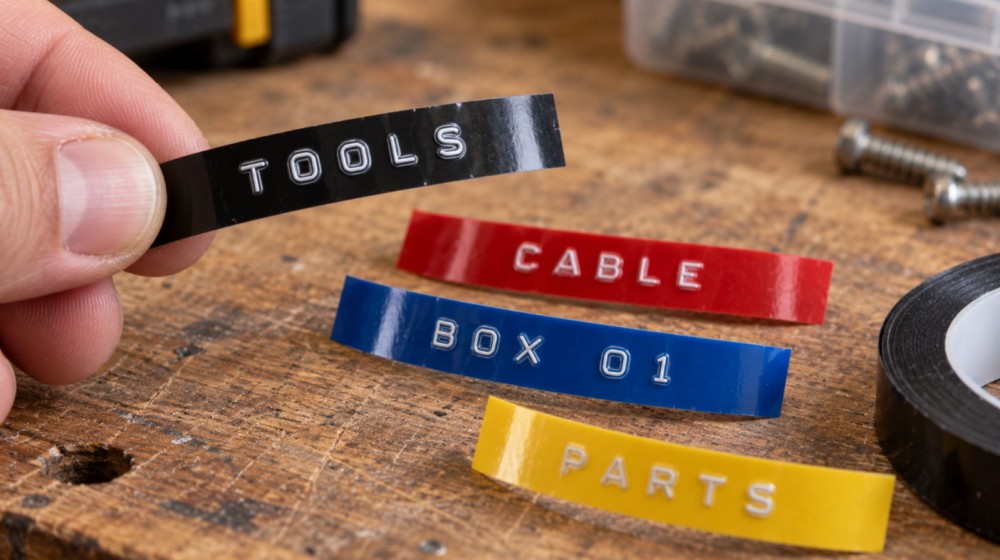
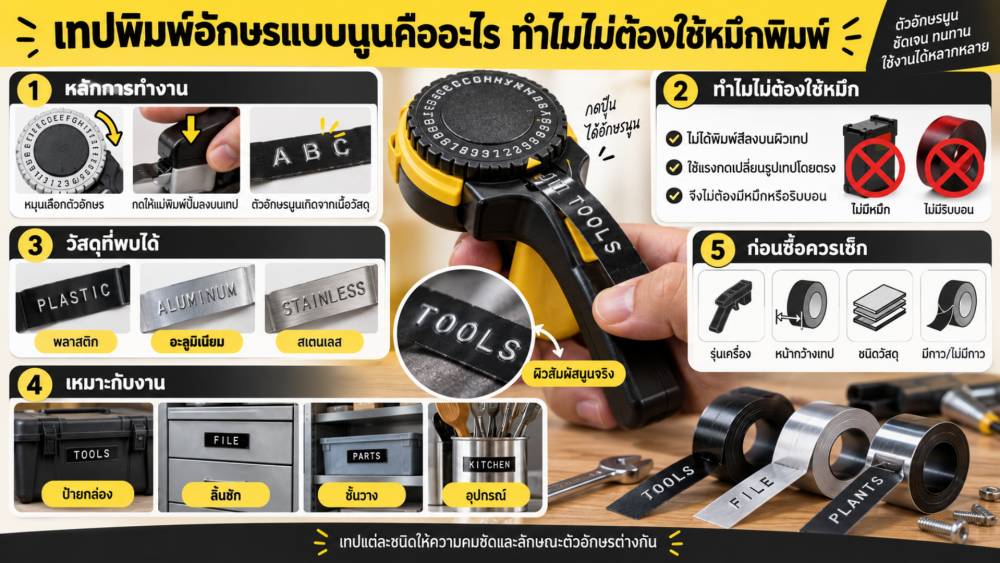
Label TapeEmbossed labels have a unique characteristic where the text is not printed with ink onto the tape surface; instead, the letters are physically raised from the material itself. When viewed, the text stands out from the tape background, and if you run a finger across it, you can feel the shape of the letters. This differs from labels printed with thermal or ribbon systems, where the text mostly sits on the surface of the material.
This principle means embossing tape does not require ink cartridges or ribbons to create text, as the machine does not print color onto it, but rather uses pressure to deform the tape directly into letters. This method is called embossing, which is why the product is often named Embossing Tape or Embossing Label Tape. Even though it is a simple system, it is still suitable for many types of labeling tasks—especially those requiring short, easy-to-read text without complex formatting.
How does embossing tape work?
Familiar embossing label makers typically feature a wheel for selecting letters, numbers, and symbols. The user rotates it to the desired character and presses the handle. An internal die exerts pressure onto the tape, deforming the material in that area into the shape of the character. The tape then advances to the next position so the next character can be pressed sequentially until the desired text is formed.
What happens is therefore quite different from conventional printing, because the text is not created by transferring ink from a ribbon or printhead, but rather by directly altering the shape of the tape material. Once pressed, the raised character area has a distinctly different surface level from the rest of the tape, and this shape is precisely why we call it embossed lettering.
Why is the text clearly visible without ink?
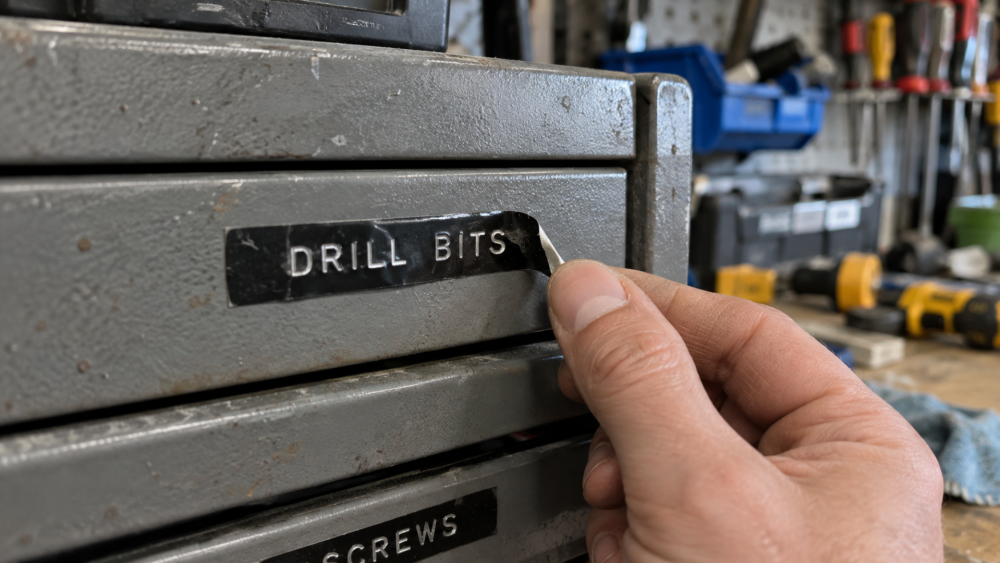
A point that puzzles many people is how the characters visible on the tape are created if the machine does not use ink—especially on dark plastic tapes, where the letters often appear in a light color that contrasts with the background.
For certain plastic embossing tapes, when the material is pressed and deformed, the character area turns a lighter color or contrasts with the tape background due to the structure and design of that material. This makes the text clearly visible without requiring any additional ink printing step.
However, not every type of embossing tape produces the same text appearance. Plastic tape, aluminum tape, and stainless steel tape have different surfaces and post-embossing characteristics. Therefore, one should not assume that all tapes will yield white text or the same level of clarity. Selection should consider the material type, tape color, and specifications compatible with that specific machine model.
Advantages of forming characters directly from the tape material
The most obvious advantage is not having to change ink or ribbons, because characters are created purely by mechanical pressure from inside the machine. Tape is therefore the primary consumable that needs replacing once used up.
Another advantage is that the resulting text has real dimension on the tape surface, rather than being just a surface ink layer. This feature gives embossing tape a distinctive character and keeps it well-suited for simple nameplates or numbering tasks, even though modern electronic label printers offer far greater precision and flexibility.
However, "no ink" does not mean embossing tape can withstand all operating conditions. The tape itself can still wear, deform, peel off surfaces, or degrade from environmental exposure, depending on the material, adhesive layer, and specific model properties. If intended for use in areas with high humidity, sunlight, chemicals, or heavy abrasion, you should review the tape's additional specifications before selecting.
Embossing tape is not limited to plastic
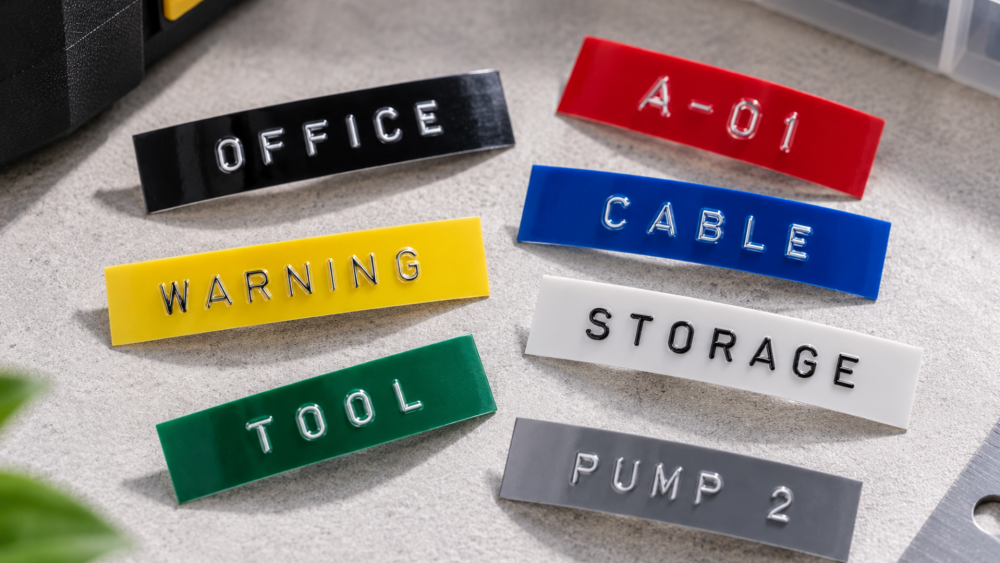
Commonly seen embossing tapes are usually plastic tapes in various colors—such as black, red, blue, yellow, or green—which are suitable for general labeling on boxes, drawers, storage shelves, or various equipment. Many models feature an adhesive backing, allowing you to peel off the liner and apply them immediately to a surface.
Besides plastic, aluminum and stainless steel tapes are also available for embossing. These metallic materials give labels a different appearance from plastic and are suitable for applications requiring more durable materials. However, you must verify whether your machine actually supports that type of tape, as pressing force, internal mechanisms, and tape feeding formats vary between models.
This point is crucial because having the same tape width does not mean they are always interchangeable, especially for metal tapes, which may require a machine specifically designed for that material. Choosing based solely on size risks damaging both the tape and the machine.
How Does It Differ from Standard Label Tape?
Standard label tape used with modern label printers can produce much more detailed text, allowing you to change font sizes, choose font styles, add symbols, or print more complex data, depending on the system and capabilities of each machine.
Embossing tape is much simpler because character styles are determined by the dies inside the machine. Users therefore have fewer choices for fonts, sizes, or text layouts, and if you need to create a large number of labels, embossing character by character takes noticeably more time than printing via an electronic machine.
However, this simplicity is an advantage in itself. If you only need to create equipment labels, compartment numbers, box labels, or short text that isn't changed frequently, an embossing label maker works straightforwardly without file preparation, printing setup, or extra consumables like ribbons.
What Kind of Work Is Embossing Tape Suitable For?
This type of tape is suitable for organizing and labeling tasks where the information is uncomplicated, such as labeling toolboxes, drawers, shelves, storage bin numbers, equipment nameplates, or category markers for household and workspace items.
In these types of applications, barcode or QR code resolution is unnecessary; having short, clearly legible text is sufficient. The embossed characters also give labels a distinct appearance compared to standard printed labels.
For tasks requiring large amounts of data, sequential numbering, barcodes, QR codes, or multi-line text, other types of label printers are more suitable, as they process data and layouts faster and eliminate the time spent pressing characters one by one.
Check Compatibility with Your Machine Before Buying Embossing Tape
The first thing to check is your machine's model, the tape widths it supports, and the materials it accommodates. Plastic embossing tape, aluminum tape, and stainless steel tape cannot be used interchangeably across all machines, even if the tapes have similar dimensions.
You should also check whether the tape is self-adhesive, as some versions can be applied to surfaces immediately, while non-adhesive tapes require alternative mounting methods. Additionally, if the tape will be exposed to heat, moisture, sunlight, or chemicals, check the manufacturer's specifications for that specific tape model rather than judging solely by terms like "plastic" or "stainless steel."
Label TapeEmbossing tape does not print characters the way standard labels do; instead, it uses mechanical pressure to reshape the material directly into text. This is why no ink or ribbon is needed. Although the system is not as detailed or flexible as modern label printers, for short labels, organizing tasks, and applications requiring a distinctive embossed look, it remains a practical and intuitive choice right from the first use.