


 EN
 ไทย


Customers Also Purchased

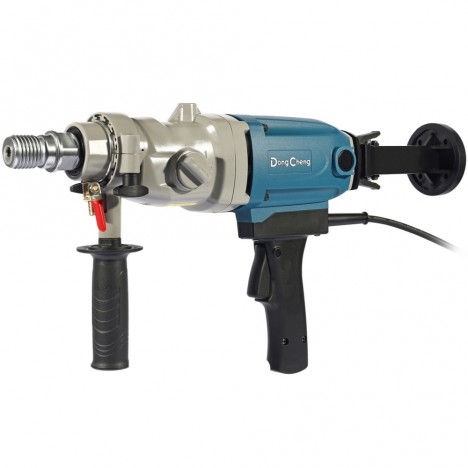
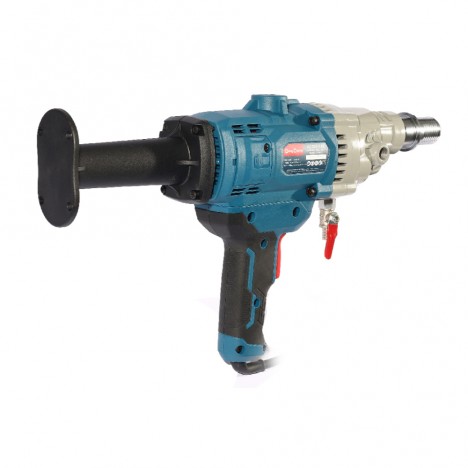
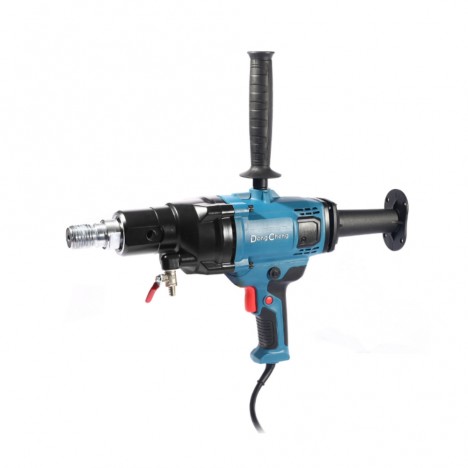
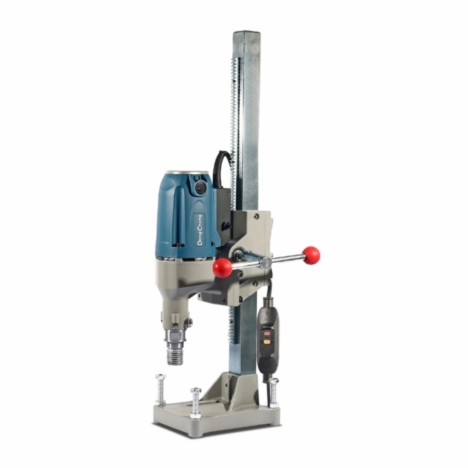
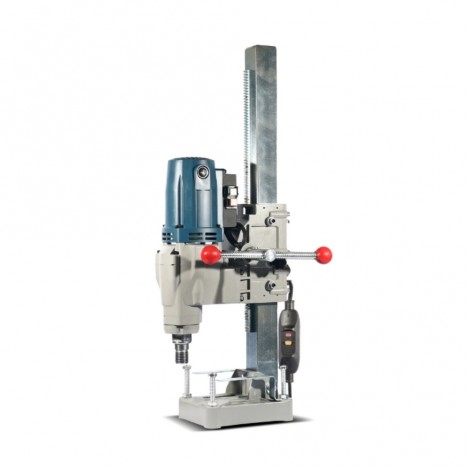
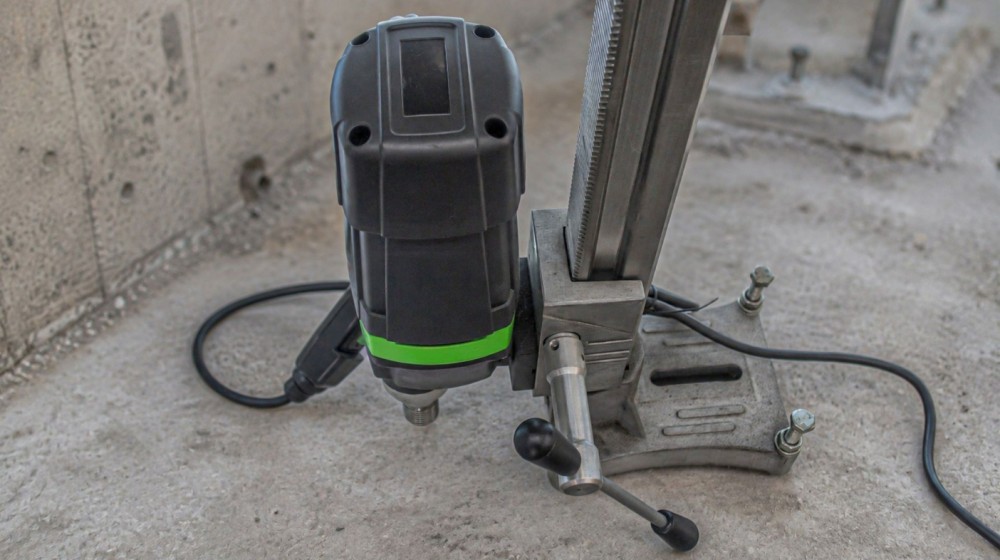
When using Core Drill When drilling into concrete floors or walls, it may initially feel like the machine works fast, with depth increasing steadily as you feed the core bit. But as you drill deeper and deeper, you might notice the core drill slowing down, requiring you to back the bit out occasionally before continuing—even though the motor power remains the same, the bit is the same, and the material appears to be uniform concrete throughout.
This symptom does not necessarily mean the core drill is losing power or that the core bit is immediately worn out. As the core drill cuts deeper, the environment at the cutting face changes. While concrete debris could easily escape the cutting zone at the beginning, it turns into drilling inside a narrow, deep hole filled with accumulated concrete dust, debris, cooling water, and drilling slurry. Along the same path, the outer surface of the bit inside the hole also experiences increased friction.
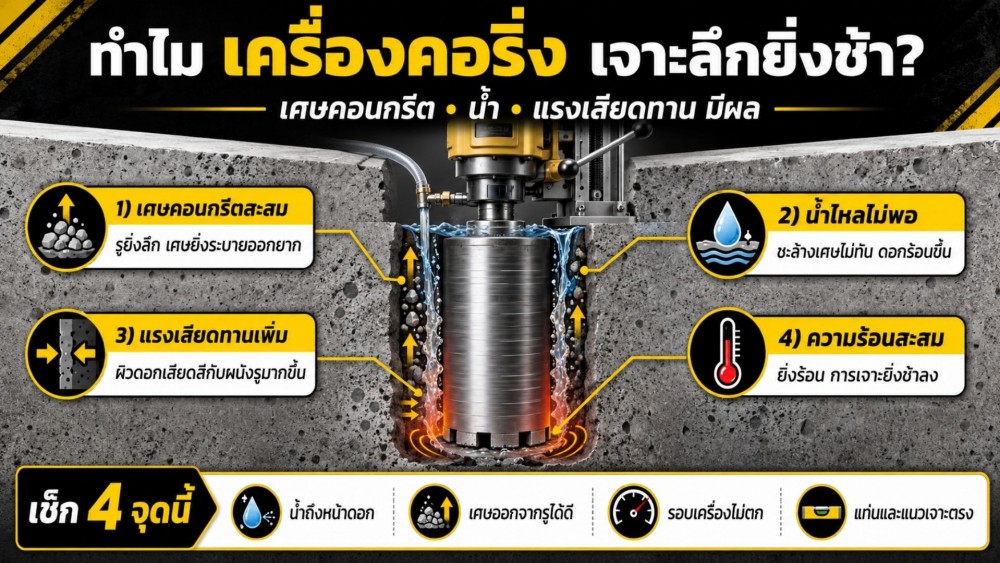
The question of "Why does a core drill slow down the deeper it goes?" is not answered by motor wattage alone, but involves debris evacuation, water flow, heat buildup, and increasing resistance along the depth of the hole.
The operating principle of a core drill is not like using a standard drill bit.
Get to Know Each Type of Core Drill: How to Choose the Right One for Your Job? A core drill, or concrete hole drilling machine, works quite differently from standard concrete rotary hammers.
- A core drill uses a core bit that does not pulverize the material across the entire hole diameter into powder.
- It uses the rim of the bit, embedded with diamond segments, to rotate and cut the concrete in a circle.
- Once drilled through, a concrete core is left in the center.
As the cutting rim rotates, the diamond segments continuously make contact with the concrete. Using a core drill thus generates fine debris, heat, and friction at the contact surface of the bit.
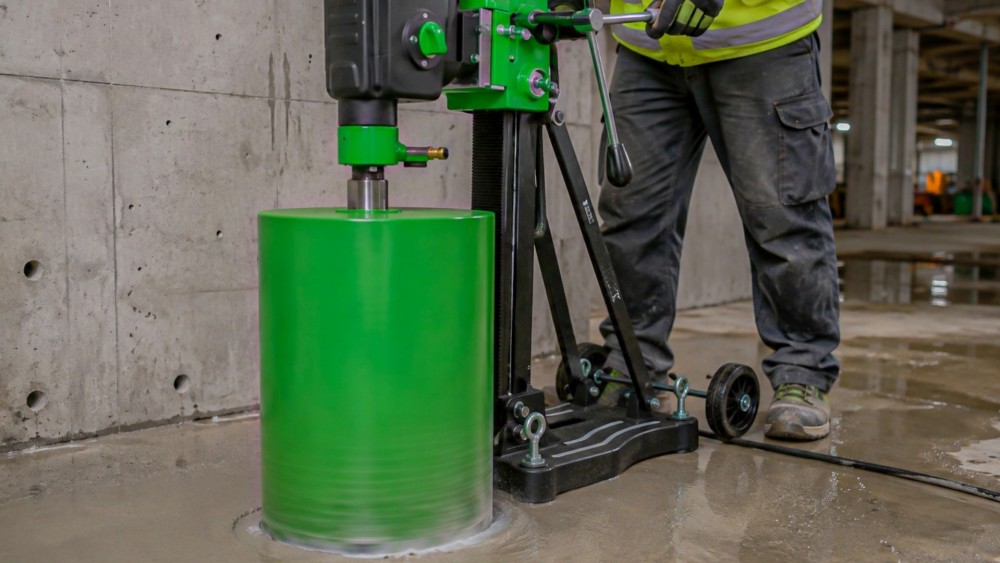
If using a wet core drill, water helps lower the temperature of the bit while flushing out cutting debris from the bit face. However, as the hole gets deeper, the water and debris have to travel further to reach the opening of the hole. This is the starting point of the difference between the initial drilling stage and deep drilling.
Core Drill: The Deeper the Hole, the Harder It Is to Flush Out Concrete Debris
One of the top critical factors is concrete drilling debris. A core drill is similar to a drill that needs to evacuate chips and debris.
- While the core bit is rotating, the diamond rim grinds cement paste, rock, and aggregates into small debris, and
- if this debris is cleared from the bit face quickly, the diamond segments can continuously make contact with fresh concrete. Drilling then progresses smoothly.
- When the bit penetrates deep, the concrete debris no longer has an exit nearby like it did when starting out. All debris must be flushed upward by water through the gap between the bit barrel and the hole wall.
- The increased distance makes flushing out more difficult, especially if there is insufficient water or if so much concrete debris accumulates that thick slurry forms inside the hole.
When concrete debris cannot be cleared in time, the diamond segments are forced to repeatedly grind through existing debris, as if trying to cut the material while simultaneously pulverizing powder trapped under the cutting edge. Part of the core drill motor's power is wasted overcoming this resistance instead of penetrating deeper.
Trapped concrete debris increases resistance on the core drill more than you might think.
Coring debris isn't just fine dust; it can also contain sand grains, cement fragments, and small aggregates. When these materials get trapped between the bit barrel and the concrete wall, they can generate added friction—especially in very deep holes or when the drilling angle is misaligned, causing the bit barrel to rub against one side of the hole wall more than usual.
Users might feel that the core drill runs effortlessly in the initial stage, but as it gets deeper, more feed pressure is required. In reality, simply applying more pressure might not help if the root cause of the issue is accumulated concrete debris inside the hole.
Water is not just meant to cool the core bit.
When using a wet core drill, Many may view water's primary role as merely preventing the core drill bit from overheating, but in reality, water does much more than that. Water is a crucial part of the process for flushing concrete slurry and debris away from the cutting face.
As the diamond segments grind into the concrete, water mixes with the concrete dust to form slurry, which carries these particles out through the clearance around the bit. When the water volume is appropriate, you will see a steady flow of grey or cement-colored runoff, which is a key indicator that the slurry flushing process is working normally.
The problem arises when core drilling deeper but an inadequate volume of water reaches the cutting area. Concrete debris begins to pack more densely, the slurry thickens and struggles to exit the hole, friction increases, temperature at the bit tip rises, and the drilling rate drops.
Too much water does not always make a core drill cut faster
Although water is essential, the mindset of "opening the water valve to the maximum" may not work in every situation. The water volume should be just right—enough for cooling and flushing debris off the bit face, without excessively interfering with the cutting process.
If there is barely any water or slurry coming out while the machine is actively drilling, it may indicate that insufficient water is reaching the cutting face or that debris is clogging the discharge path.
Friction increases with bit depth
Another reason that makes core drilling slower at greater depths is that the bit's surface area inside the hole continuously increases. Initially, the core bit barrel contacts the hole along only a short distance. But after drilling tens of centimeters deep, more of the bit body sits inside the hole according to depth. Although the outer barrel surface technically should not heavily rub against the hole wall, in real-world conditions, holes may not be perfectly straight throughout, or the core drill stand may shift slightly during operation, causing the sides of the bit to contact the concrete at various points.
If concrete dust or debris is trapped in the clearance between the bit and the hole wall, friction increases even further. All of this adds to the mechanical load that the core drill motor must bear.
Symptoms of increased friction may include the core drill dropping RPM when downward pressure is applied, or taking significantly longer to drill each centimeter even though the material at that depth is no harder than before.
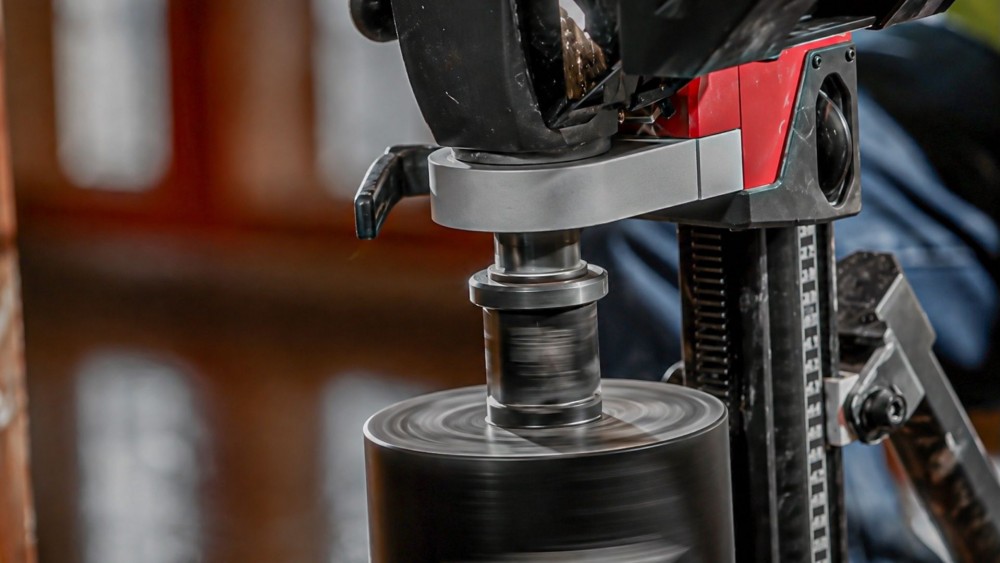
The deeper a core drill goes, the more heat tends to accumulate
Friction and heat usually go hand in hand. When concrete debris is not evacuated properly and the bit repeatedly rotates against accumulated material, heat at the segments inevitably rises. If water fails to reach the cutting face adequately, the problem becomes even more pronounced.
Excessive heat can reduce the core drill's penetration rate and shorten the core bit's lifespan, as diamond segments must endure both high pressure and elevated temperatures for prolonged periods. Pressing down harder merely adds load to the motor and can cause even more heat to build up at the bit face.
Therefore, when a core drill starts slowing down, the first question shouldn't be "Should I push harder?" Instead, check whether debris is flushing out properly, whether water reaches the cutting face, and whether the machine is burdened by excessive friction.
Extremely slow deep drilling may not be caused by depth alone
Although the penetration rate naturally decreases somewhat as depth increases, if the core drill slows down abnormally or barely advances at all, other factors should also be checked. Along the way, the bit might have encountered different materials than at the start—such as rebar, extremely hard gravel or coarse aggregates, or structural sections with much higher density than surrounding areas.
The core bit may encounter reinforcing steel
In reinforced concrete drilling, encountering rebar inside is quite normal. When the diamond segments transition from cutting concrete to hitting metal, the drilling behavior naturally changes, such as a noticeable drop in speed. Therefore, if drilling starts fast but suddenly slows down at a specific point, it might not be due to depth alone.
The diamond segments might not be as sharp as before
Core bits are consumable items. Over prolonged use, their cutting efficiency can change. If the face of the bit becomes glazed or can no longer expose fresh diamond grit effectively, you might feel that the motor is still spinning, but the rate of penetration into the concrete decreases.
In this case, applying excessive downforce is not the solution. You should inspect the condition of the segments and ensure the bit is suitable for the material being drilled.
The drill stand and alignment matter more as the hole gets deeper
Another commonly overlooked factor is the stability of the core drill stand. Shallow holes might not show much effect from minor misalignment, but as drilling goes deeper, a slight tilt can cause the barrel of the bit to rub more against the hole wall.
- Imagine the bit penetrating several tens of centimeters into the hole.
- If the stand shifts or wobbles even slightly, the tip and the top of the bit may no longer be perfectly aligned on the same axis.
- As a result, the sides of the core barrel rub against the concrete wall, causing a noticeable increase in friction.
Before starting, ensure that the stand is mounted securely, fasteners are tight, and the carriage guide operates smoothly—especially for deep drilling jobs or when using large-diameter core bits.
Drilling deep effectively with a core drill takes more than just motor power
The reason why The reason a core drill slows down the deeper it goes is that the working conditions at the bit face become increasingly complex. As depth increases, concrete slurry and debris have to travel further to exit the hole, water must reach a deeper cutting area, drilling slurry is more likely to accumulate, and more of the core bit barrel is inside the hole, which drives up friction.
Therefore, drilling fast and continuously with a core drill doesn't just depend on choosing a high-powered drill or pressing down as hard as possible. You must also consider water flow, slurry flushing, bit condition, stand stability, and the machine's operating speed all together.
If you notice the bit starting to slow down when drilling deep,
- First observe whether the concrete slurry/debris is still being flushed out of the hole properly.
- Is water still reaching the tip of the bit?
- Is the motor RPM dropping due to excessive downforce pressure?
- Is the core bit body rubbing against the wall of the hole?
Addressing these root causes usually helps get the job progressing much better than merely increasing downforce.
Drilling speed does not depend solely on Core Drill how much downforce you can apply, but rather on how well you can keep the cutting face cool, clean, and clear of debris so the diamond segments can continuously cut fresh concrete.