


 EN
 ไทย


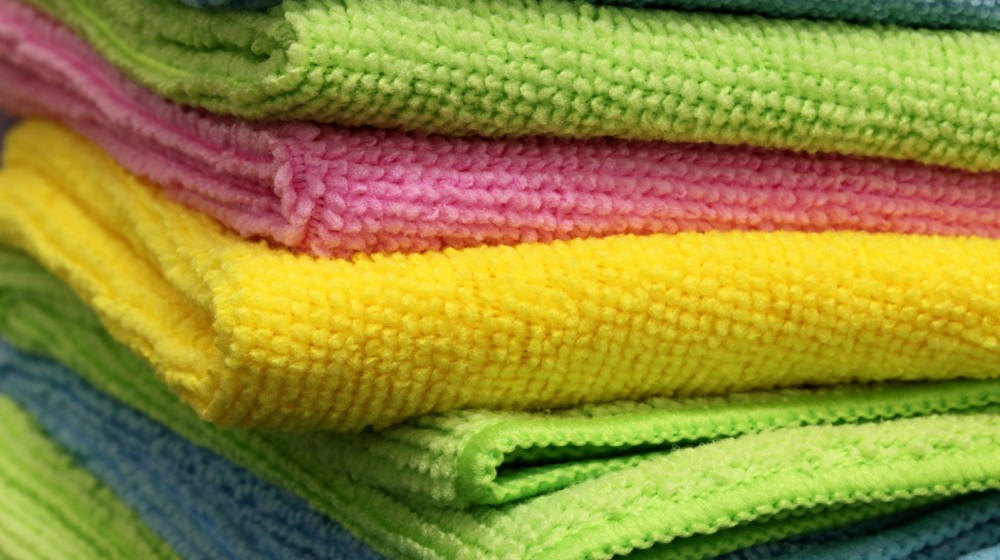
Customers Also Purchased
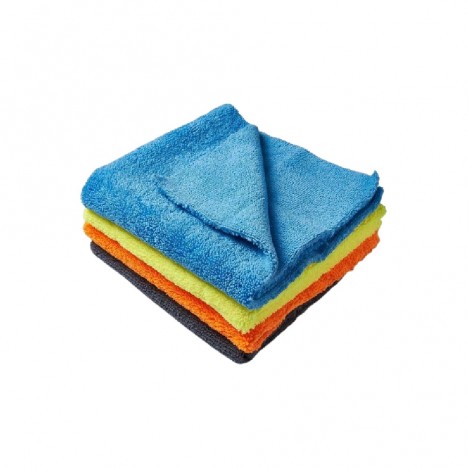
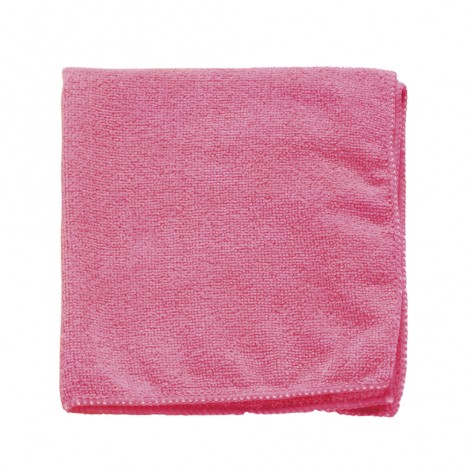
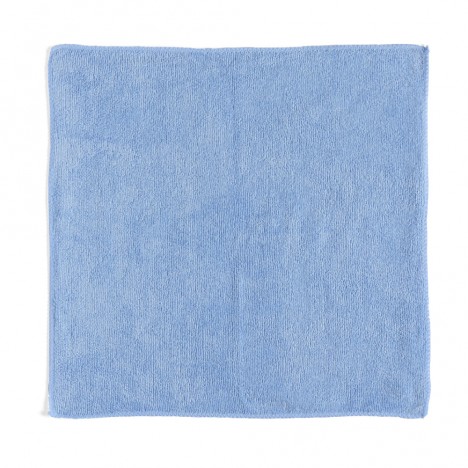
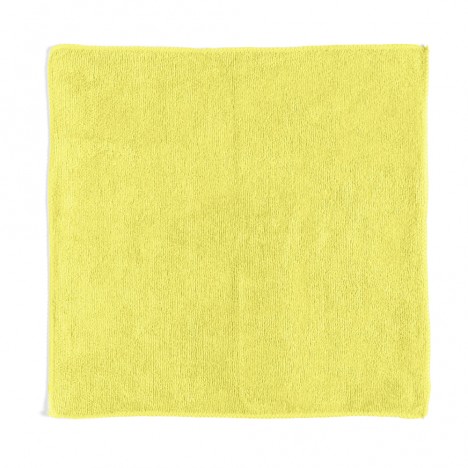
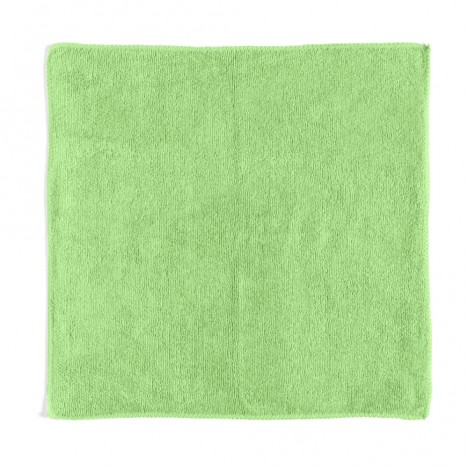
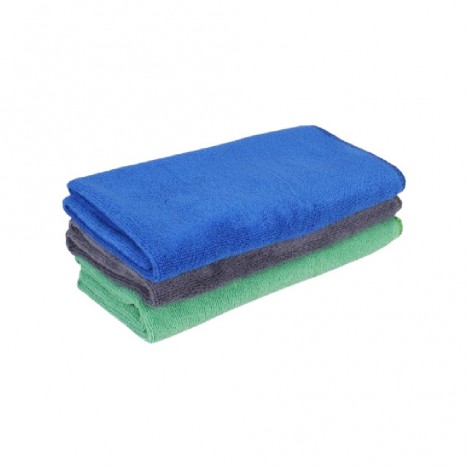
Microfiber Cloth Microfiber cloths are versatile for all kinds of tasks, from wiping tables, mirrors, and cars to absorbing water spills. Their key advantage lies in their ultra-fine fibers and fabric structure that provide excellent surface contact, allowing them to absorb water, trap dust, and lift tiny particles from surfaces much more effectively than standard cloths. However, when it comes to washing, people often make the mistake of adding fabric softener just like with regular laundry, assuming that softer and more fragrant cloth is always better.
For microfiber cloths, the reality is quite different. Fabric softeners make fabrics feel softer by coating fiber surfaces with certain agents to reduce friction between fibers, making the fabric feel smoother. While this mechanism works well for many types of clothing, microfiber relies on the bare surface of its fibers to contact water, dust, and grime; any residue left on the fibers can interfere with the very properties we need from this type of cloth.
How Fabric Softener Makes Fabrics Soft
Many conventional fabric softeners use active ingredients in the cationic surfactant group, which naturally adhere to fiber surfaces. After washing, these agents reduce friction between fibers, making the fabric feel smooth, soft, and fluffy to the touch.
While this effect is desirable for clothing or fabrics that require a soft hand feel, microfiber cloths used for cleaning serve a different purpose. The key priority is not mere softness, but the ability of the fiber surfaces to make full contact with water and dirt. When coating agents from fabric softeners stick to the fibers, the wetting and water-absorbing characteristics of the cloth can change, reducing performance even though the cloth still feels soft and looks clean.
This is why care instructions from many microfiber cloth manufacturers often explicitly state to avoid fabric softeners, especially for cloths used on glass, car paint, or for drying, as these tasks demand clean fibers without excessive residue interfering with their performance.
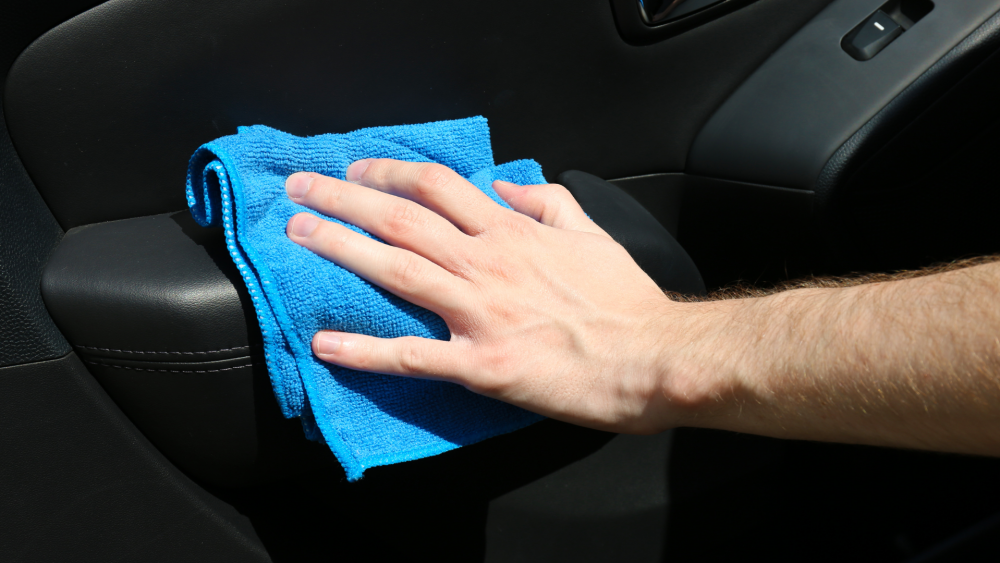
Why Microfiber Is Significantly Affected by Residue
Microfiber does not perform well simply because it is soft, but because the fibers are extremely fine and possess a high surface area. Many microfiber cleaning cloths are made of synthetic fibers such as polyester combined with polyamide, and they may undergo a fiber-splitting process to create an even finer structure. This increases the contact area with surfaces and enables the cloth to absorb water and trap dirt effectively within its weave.
When agents from fabric softeners coat the fiber surfaces, the water-contact properties can alter. The cloth may still feel just as soft—or sometimes even softer—to the touch, but in actual use, it may absorb water more slowly, smear water around, or require multiple passes to achieve the same clean result.
This easily misleads many users: because the cloth still feels soft, they assume it remains in good condition. However, softness to the touch does not directly reflect whether its ability to absorb water or trap grime is preserved. For microfiber cloths, the focus should not only be on softness, but also on whether it continues to absorb water, trap dust, and wipe away grime as effectively as before.
It Does Not Mean a Single Use of Softener Will Ruin the Cloth Instantly
The phrase “should not be used” does not mean that accidentally using fabric softener once will permanently ruin the microfiber cloth immediately. The outcome depends on several factors, including the type of softener, the amount used, the number of wash cycles, and the characteristics of the specific cloth.
The issue is more about residue buildup on the fibers over repeated uses. If a cloth is washed with fabric softener regularly, the chances increase that its water absorption or surface-wiping properties will degrade, particularly for high-performance cloths such as glass towels, car detailing cloths, or drying towels. Therefore, if you accidentally used it once, there is no need to discard the cloth. Moving forward, simply avoid it and return to washing methods that do not leave coating agents on the fibers.
Different Microfiber Types May Show Different Symptoms
Even though they are all called "microfiber cloths," towels designed for specific tasks may differ in thickness, weave type, pile length, and surface structure. Therefore, the effects of residues do not necessarily show up in the same way across all of them.
Glass cleaning cloths usually have a relatively smooth surface or a short pile to minimize streaks and lint on glass. If residue from fabric softeners, car detailing products, or oily grime remains in the fabric, streak marks or a faint haze are more likely to appear when wiping compared to general-purpose cloths.
As for drying towels or plush car detailing cloths, issues can be spotted by how quickly they absorb water. If laying the cloth on a wet surface used to draw water in rapidly, but now requires pressing down or multiple passes, this may be a sign of buildup on the fibers or deterioration from improper care.
Meanwhile, microfiber cloths used for wiping tables or general surfaces might still perform without noticeable differences, as these tasks do not require the high water absorption or streak-free finish needed for glass and auto detailing. This is why some people who use fabric softener feel there is no problem, while others find their cloths' performance noticeably degraded.
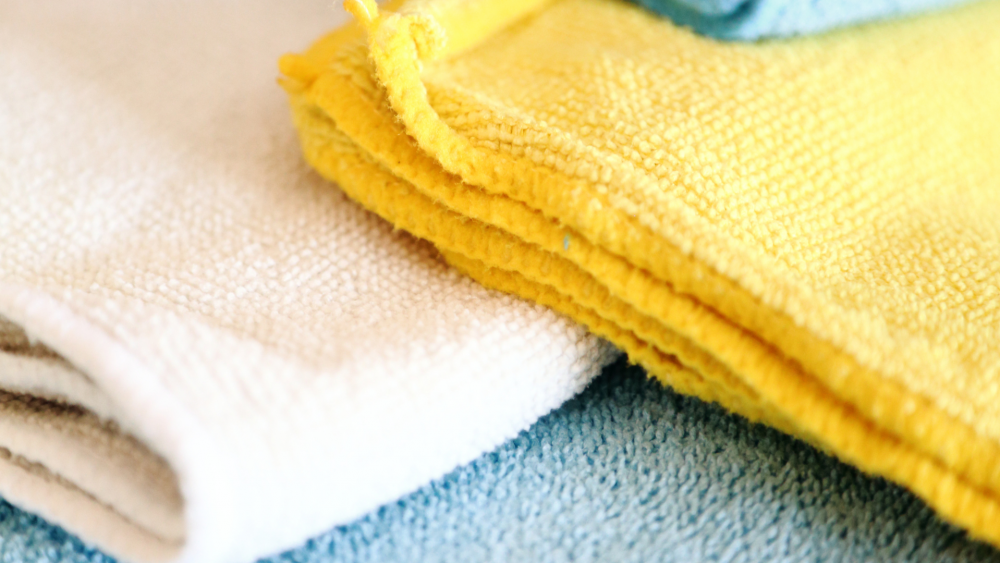
What signs indicate that a cloth has too much residue buildup?
The easiest symptom to spot is that the cloth stops absorbing water as effectively as when it was new—such as water not soaking in quickly when placed on a wet surface, or feeling like you are pushing water around on glass and table surfaces rather than absorbing it into the fabric.
Another sign is seeing more streaks or thin smudges when wiping glossy surfaces, especially glass, mirrors, or dark surfaces. However, these symptoms do not always mean fabric softener is to blame; oil stains, wax, cleaning chemicals, inadequately rinsed detergent, or accumulated dirt can cause similar issues.
A simple way to check is to consider its usage history. If the cloth used to absorb water well but changed behavior after switching washing methods or regularly using fabric softener, chemical residue is a prime suspect.
Some people test this by placing a few drops of water on the cloth to see whether it absorbs quickly or beads up on the surface. While helpful as a preliminary check, it is not a standardized test and should not be used as the sole measure of quality, as different microfiber cloths have different surface structures.
How should microfiber cloths be washed instead?
The easiest care method is to wash them without fabric softener and use an appropriate amount of laundry detergent—not so much that it cannot be rinsed out thoroughly. For car detailing or delicate surface cloths, you may choose a dedicated microfiber wash detergent. The crucial rule is to avoid products that leave a coating on the fibers.
Before washing, shake off dust, grit, or hard particles, especially from cloths used on cars or very dusty surfaces, as these particles can become trapped in the fibers and scratch surfaces in future use. Whenever possible, separate microfiber cloths from cotton or high-lint fabrics, as lint from other fabrics can easily cling to fine microfiber strands.
Cloths used for heavily soiled tasks—such as wheels, oil, or grease—should be washed separately from cloths for glass, paintwork, or tables. Dirt can transfer between cloths during the wash cycle, even inside a washing machine. Separating them by task prevents cross-contamination far better than washing all microfiber towels together just because they are the same material.
Water temperature and drying settings should also not follow a one-size-fits-all rule for all microfiber cloths, as manufacturer recommendations vary. The safest approach is to check the care label or instructions for your specific cloth. If no information is available, avoid excessive heat, since most microfibers are synthetic and can deform or degrade under very high temperatures.
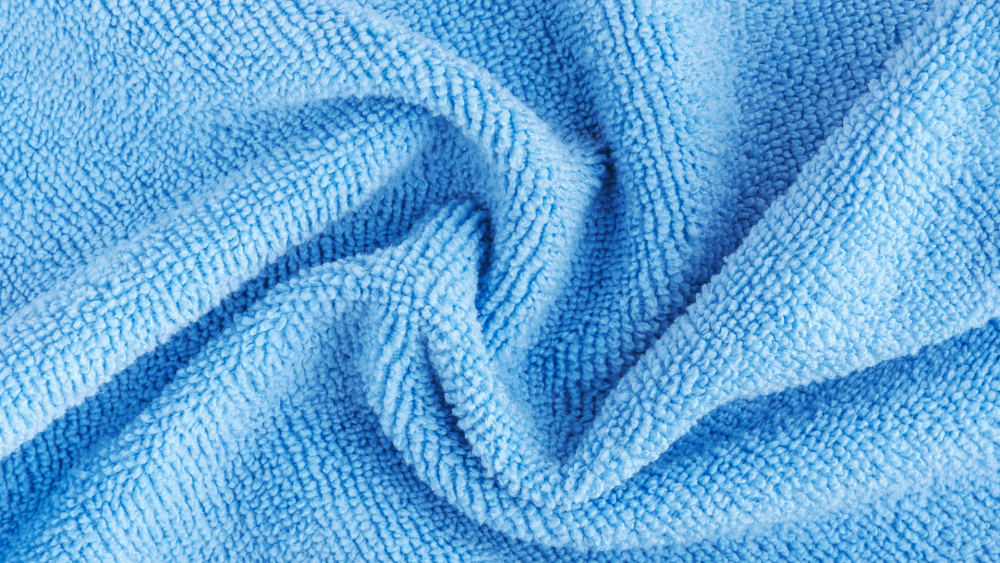
Not just fabric softener: certain washing habits can also ruin cleaning performance
If your microfiber cloth's absorbency declines, do not blame fabric softener alone; other washing practices can also leave residue or alter the fabric's condition.
First is using too much detergent. Many assume dirtier cloths require more detergent, but if the washing machine does not rinse it all away, detergent residue can remain in the fibers and alter their water-wicking properties. Using the proper amount is better than overpouring; if residue is suspected, add an extra rinse cycle rather than adding more detergent.
Another issue is washing them with high-lint fabrics. Microfiber's fine structure easily traps lint from other fabrics, which may then leave fine fibers behind on glass or make it feel less clean. Excessive heat is another concern; many microfiber cloths are synthetic, and washing or drying them hotter than the manufacturer recommends can permanently deform the fibers.
Accidentally used fabric softener—do I have to throw the cloth away?
There is no need to throw it away immediately. If you accidentally washed your microfiber cloth with fabric softener, try rewashing it without softener, using a moderate amount of detergent, and rinsing thoroughly. Rewashing can help strip away some of the residue. Then, test it on its usual task—such as absorbing water or cleaning glass—to see if normal performance is restored.
If the towel absorbs water well again and leaves no streaks, you can continue using it as usual. However, if it still leaves streaks when wiping water or cleaning glass, or has residues that are hard to wash out, you may downgrade it to general-purpose tasks that don't require high precision—such as wiping tables, cleaning tools, or wiping dirty areas—instead of using it on glass or high-cleanliness painted surfaces.
What you shouldn't do is try to fix it by continually adding more laundry detergent, because using too much detergent can also fail to rinse out completely and become a new type of residue itself. If your towel has issues, focus on rinsing out existing residues rather than adding more chemicals.
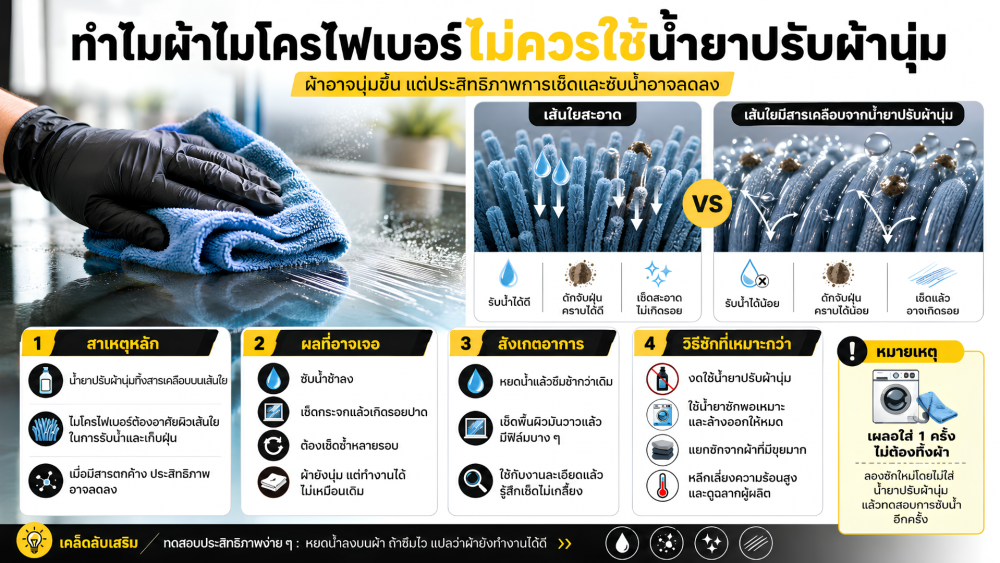
Microfiber towels don't need to smell fragrant and feel soft after every wash.
When washing clothes, we usually prioritize fragrance and softness. However, the goal of washing microfiber cleaning towels is different: what matters is removing as much dust, grease, chemicals, and dirt from the fibers as possible, while preserving the fiber surface so it's ready for the next use.
Fabric softener may seem like it helps care for fabrics, but for many types of microfiber, it is unnecessary and can reduce water absorbency or wiping performance as residues accumulate on the fibers. A better care routine is to wash them clean, use only as much detergent as necessary, rinse thoroughly, separate them from linty fabrics, and avoid heat exceeding the manufacturer's recommendations.
Microfiber Cloth A well-cared-for towel does not need to smell fragrant or feel softer after every wash. What matters more is that when you pick it up, it absorbs water as intended, wipes dust and stains effectively, and leaves no residue back on surfaces. These are the qualities that keep microfiber towels performing well in the long run.