


 EN
 ไทย



Customers Also Purchased
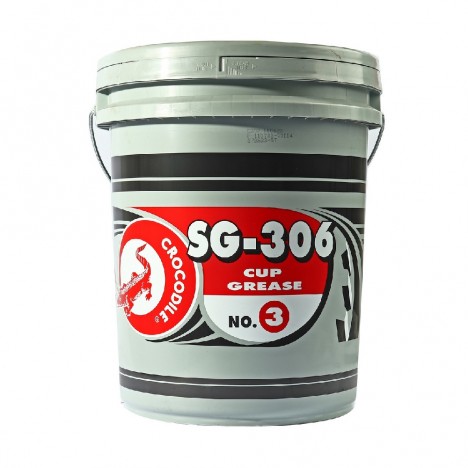
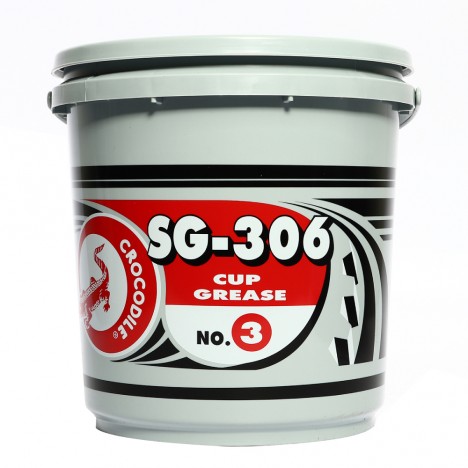
When machinery reaches its regreasing cycleGreases Many people simply top up with new grease directly over the old grease. Especially when the color and consistency appear similar, it feels like they should be interchangeable. However, greases that look identical can have vastly different compositions, including the type of base oil, thickener, and additives. When two incompatible greases are mixed, the mixture's properties may alter, rendering it unsuitable for the original lubrication requirements.
Therefore, it is impossible to give a blanket answer on whether old grease and new grease can be mixed or not. This is because some pairs can be used together, while mixing others may alter consistency—such as becoming abnormally soft or hard—and can also affect the grease's oil-bleeding or oil-retention characteristics. This issue is so critical that the ASTM D6185 standard was established specifically to evaluate the compatibility of binary grease mixtures.
A tub of grease is more than just thickness and tackiness
Before understanding why certain types of grease should not be mixed, it is essential to know that grease is not merely thickened oil. Generally, grease consists of base oil, a thickener, and additives that serve different functions, such as reducing wear, increasing load-carrying capacity, preventing rust, or enhancing water resistance.
These components work together as a system, especially the thickener, which is responsible for building the structure and trapping the oil within the grease matrix. When another grease formulation is mixed in, the original structure can be altered. If the two greases are incompatible, the consistency of the mixture may change significantly, affecting flow, adhesion to components, or the ability to deliver lubricant to the required areas.
The problem, therefore, is not whether the new grease is of good quality, but whether it is compatible with the existing grease and suitable for that specific machine.

What does grease compatibility mean?
The term Grease Compatibility It refers to the ability of two greases to be mixed while maintaining the critical properties of the mixture within a functional range—not simply that they appear homogeneous or do not immediately form clumps upon mixing.
A systematic evaluation checks whether, after mixing, the consistency and key properties of the grease remain within acceptable limits. This may involve mixing in various ratios to observe the behavior of the blend, rather than judging based on either grease alone. Therefore, just because new grease and old grease appear normal initially when mixed does not always mean they will work well together in the long run.
What happens if greases are incompatible?
The results are not the same for every pair. In some cases, the mixture may soften, making it more prone to flowing or leaking out of the intended area. In contrast, other pairs may harden or develop abnormal consistency, preventing the grease from circulating properly to lubrication points.
In certain cases, mixing may also affect the retention or release of oil from the grease structure, resulting in a lubricating film that does not perform as expected. Adverse effects may not appear immediately after replenishment, but can gradually manifest as increased operating temperatures, abnormal noise, grease leakage, or accelerated wear.
The thickener is one key factor to examine
The thickener plays a crucial role in the structure of the grease; hence, it is essential information to check whenever switching grease types.
Greases using the same type of thickener may have a higher chance of compatibility in some cases, but it is still not a guarantee. Real grease is not composed solely of a thickener; it also contains base oils, specific viscosities, and other additives. For this reason, compatibility charts categorized by thickener type are useful for preliminary screening, but they should not be treated as a definitive answer—especially for machinery operating under heavy loads, high temperatures, or in critical production processes.
Identical thickeners still do not guarantee compatibility
Two greases may share the same thickener category but use base oils with different viscosities or entirely different additive packages. One may be designed for high-speed bearings, while the other is formulated for heavy shock loads and high pressure.
When mixed together, the properties of the blend may no longer match either original grease and may no longer be suitable for the machine's operating conditions. Therefore, when changing grease, one should not merely ask, "Do they use the same thickener?" but must review the overall specifications of both products.
Grease color cannot be used to judge compatibility
Choosing by color is a common misconception, such as picking a red grease to top up because the existing grease is red, or assuming they share the same formulation simply because both are blue. However, grease color is not an international standard used to indicate the thickener type, base oil, or compatibility. Manufacturers may use color merely to help distinguish products or make the grease more visible.
Greases of the same color can therefore have vastly different components and properties, while greases of different colors might share a very similar thickener system. If you need to know whether they can be topped up together, product technical data is clearly far more important than looking at color.
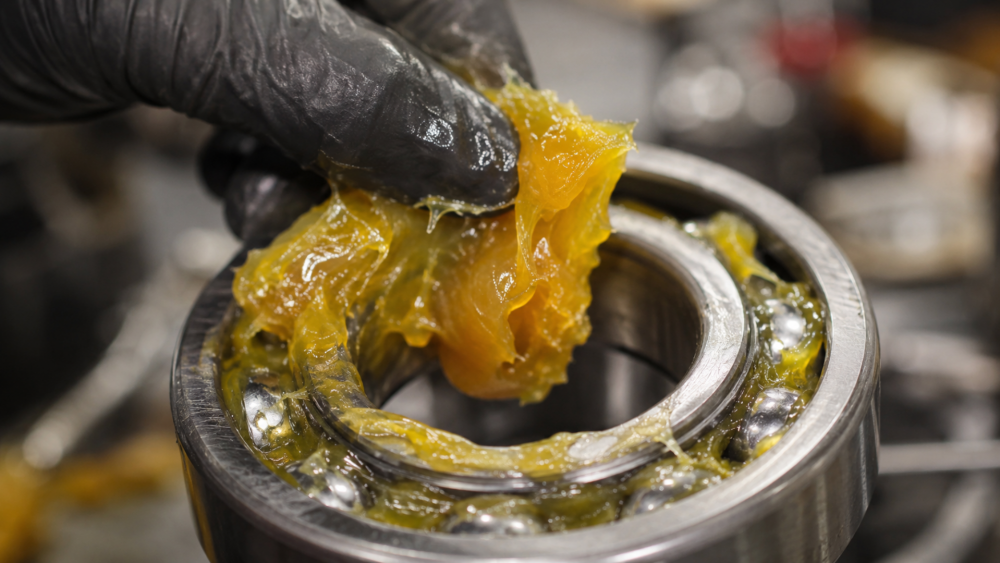
Same NLGI Grade Still Does Not Mean They Are Compatible
Another value often used for comparison is the NLGI Grade—for example, if the existing grease is NLGI 2, immediately selecting a new NLGI 2 grease to top it up. This method is not enough.
The NLGI Grade only indicates the consistency or thickness level of the grease; it does not indicate the thickener type, base oil, or additive package. Therefore, two NLGI 2 greases can have very different formulations and intended applications. The NLGI number is thus merely one piece of information to consider, not proof that two greases can be mixed together.
When Switching to a New Grease, Should You Top Up Directly Over the Old One?
If the new grease is the exact same type and formulation as the existing one, and the machine specifies periodic relubrication, replenishing it according to the specified amount and method is standard maintenance. However, if you are switching to a different type or formulation of grease, or do not know what the existing grease is, you should not rush to top it up under the assumption that all greases can be mixed.
The appropriate approach is to start by checking the specifications of both the old and new greases, as well as the machine's requirements. If a switch is truly necessary, the method for handling the old grease should be chosen based on the system's design. Some assemblies may have a path to purge the old grease out, while other systems may require removing the old grease or cleaning through other methods. You should not assume that continuously pumping new grease in until the old grease flows out works for every type of machinery, as the grease pathways, housings, seals, and relief ports differ for each system.
What Should You Do If You Don't Know What the Old Grease Is?
Older machinery without maintenance history, or where the internal grease is unknown, requires extra caution because there is insufficient data to confirm compatibility with a new grease.
The first step is to consult the machine manual or documentation to see what lubricant type is specified, then check maintenance records or consult the previous operator. If it still cannot be confirmed, never select a grease based on color or tackiness and apply it immediately.
For critical machinery, the grease changeover procedure should follow the manufacturer's recommendations and the assembly design. Some systems can be properly transitioned via a purge process, while others may require disassembly or cleaning first. The choice of method depends on the machine; there is no one-size-fits-all solution.
How Reliable Are Compatibility Charts?
Grease compatibility charts that classify combinations as "Compatible," "Borderline/Partially Compatible," or "Incompatible" can serve as preliminary references, especially during the initial product selection stage. However, most of these charts are categorized broadly by thickener group, so they cannot fully predict the actual behavior of every specific product pair, as greases also contain base oils, additives, and specific formulation details that affect mixing.
For critical machinery, referring to actual product compatibility data or test results is more reliable than relying solely on generic charts.
What to Check Before Adding New Grease Over the Existing Grease
If you are switching to a new grease, you should at least verify these key details first:
- Are the existing grease and the new grease the same formulation?
- What type of thickener is used?
- Are the base oil type and viscosity suitable for the application?
- Does the NLGI Grade match the machine's specifications?
- Do the load, speed, temperature, and water resistance properties match the application?
- Is there verified compatibility data between the two greases?
- If a type change is required, what method should be used to purge the old grease from the system?
This information reduces risks far more than choosing based on color or the feeling that the grease textures seem similar, especially for machinery that must run continuously where downtime costs are high.

New grease is not always better if it is incompatible with the existing one.
Switching to a higher-spec grease does not automatically benefit the machine if it mixes with an incompatible existing grease. When two formulations blend, the mixture's properties may alter so significantly that it no longer performs like either the new or the original grease.
The question to ask before switching is not just "Is the new grease better?", but rather "Does it meet the machine's specifications, and is it compatible with the grease remaining in the system?"
If it is the same formulation and topped up on schedule, you can replenish it as usual. However, when changing types, changing formulas, or when the history of the existing grease is unknown, verifying beforehand is safer. While some grease pairs can coexist, others may suffer compromised stability and altered lubrication behavior upon mixing, leading to component damage.
Choosing Greases Doing it correctly goes beyond selecting the right product for the job; you must also consider the grease remaining inside the machine. If a change is necessary, it should be done based on verified data and using an appropriate method for the system, rather than topping up based merely on color, consistency, or the assumption that both greases "seem the same."