


 EN
 ไทย


Customers Also Purchased
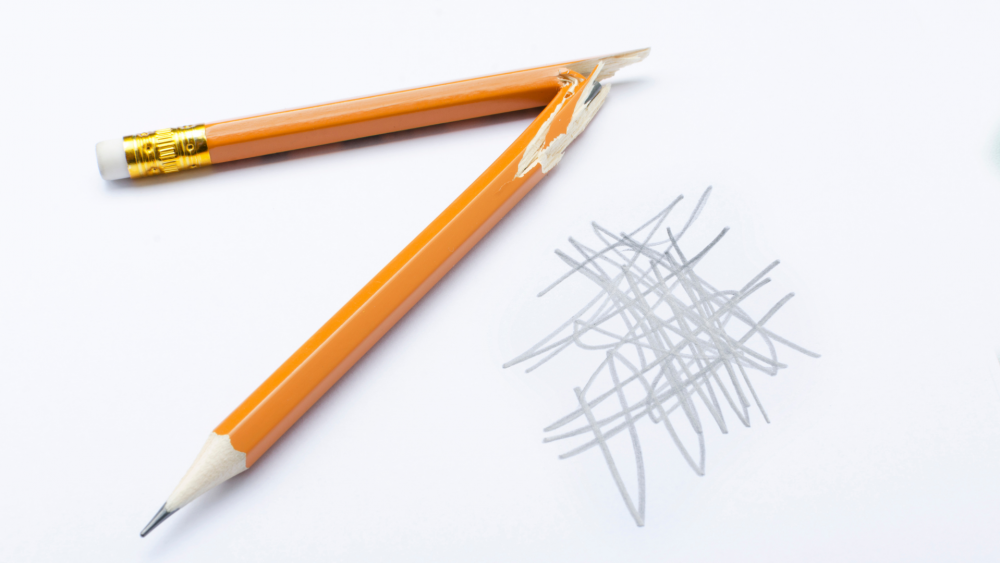
SharpeningPencilsand having the lead break repeatedly is a more common problem than you might think. Sometimes, when only halfway sharpened, the tip comes loose, and when resharpened, it breaks again, causing the pencil to become shorter and shorter even though it has barely been used. This symptom makes many wonder whether the pencil is of poor quality, or if the pencil sharpener being used is actually starting to have problems.
The answer is that it can stem from both, including the sharpening technique. Because pencil lead is a more brittle material than the outer wood, if the lead is already cracked, the blade is dull, or too much pressure is applied, the freshly sharpened tip can break off immediately. Therefore, before switching pencils or buying a new sharpener, you should clearly observe the symptoms to see if the problem happens with just a single pencil, or virtually every time you use that same sharpener.
The pencil may have cracked lead inside before sharpening
A pencil that looks intact on the outside does not always mean the inner lead is in good condition. If it has fallen from a desk, hit the floor, been crushed under weight, or undergone impacts during transit, the inner lead may have developed fractures without any visible signs on the outer wood casing.
When sharpening such a pencil, the blade gradually pares away the wood until it reaches the fractured lead area. Once that section is exposed and bears the force during sharpening, it can detach immediately. If the lead is fractured across multiple sections, the issue may recur repeatedly, making it feel as if the sharpener is constantly chewing up the lead.
An easy way to observe is to test the same sharpener on other pencils. If other pencils sharpen normally but only that particular one keeps breaking—even after trying a different sharpener—you should first suspect the condition of the internal lead of that pencil.
Off-center lead results in asymmetric sharpening
When the pencil tip is sharpened, observe whether the lead sits near the center of the wood. If the lead is heavily off-center, you will notice uneven wood thickness around it—one side is shaved away significantly while the other still has thick wood remaining.
This characteristic makes the sharpened tip asymmetrical and can cause one side of the lead to be exposed earlier than usual. Therefore, do not jump to the conclusion that the sharpener is broken when you see a crooked pencil tip, as the root cause may lie in the alignment of the lead within the pencil itself.
If the same sharpener produces even tips on other pencils, but certain pencils clearly have off-center lead, the issue is usually related to the pencil rather than the sharpener.
A dull sharpener blade causes rough sharpening and increases the chance of lead breakage
Pencil sharpeners that have been used for a long time will gradually lose their sharpness. When the blade starts to dull, cutting through the wood will not be as smooth as when it was new. Users often unknowingly turn harder or press the pencil more forcefully against the blade. Instead of slicing wood off in thin shavings, it may tear or rip the wood fibers more.
The increased force during sharpening is also transferred to the lead tip, especially when the lead begins to emerge from the wood. If the tip is relatively thin or already has micro-fractures, it becomes even more prone to breaking.
Signs of a sharpener needing inspection often occur together: sharpening feels stiff, more force is required, wood shavings are splintered, the shaved surface is rough, or shavings are not cut cleanly. If multiple pencils start exhibiting similar symptoms after using the same sharpener for a long time, the sharpener should be one of the first things to inspect.
A loose blade or trapped wood chips also cause uneven sharpening
Single-blade sharpeners usually secure the blade with a small screw. If the screw loosens and the blade shifts, cutting into the wood becomes uneven and may catch or stutter during rotation. Furthermore, trapped wood chips or broken lead along the cutting edge can interfere with the blade's operation as well.
If the sharpener begins to hitch or catch while the blade still appears sharp, check for trapped wood shavings and ensure the screw is holding the blade firmly. Do not overtighten it unnecessarily, but the blade should not wobble or shift during use.
If the blade is chipped, rusted, or significantly worn down, replacing the sharpener is usually easier and delivers more consistent results than forcing further use, especially for compact sharpeners not designed for easy blade replacement.
The pencil size must match the sharpener opening
Pencils do not all have the same diameter. Children's pencils, colored pencils, drawing pencils, or certain specialty pencils may have a thicker barrel than standard writing pencils. If forced into a sharpener with a hole that is too small, the pencil may not rotate in alignment or may be forced to tilt while sharpening.
When the pencil's alignment does not match the blade, cutting becomes uneven and requires more force. Sometimes, even if it can be forced in, that does not mean the size is suitable for the sharpener. If a pencil has a larger diameter than usual, you should choose a sharpener with a hole designed directly for that size.
Some sharpener models are therefore made with two holes or multiple sizes to accommodate both standard and jumbo pencils. Choosing a properly fitting hole helps keep the pencil in better alignment with the blade.
Pressing too hard and turning too fast can also break the lead
Even if the pencil and sharpener are in good condition, sharpening technique still matters. If you insert the pencil, push it hard against the blade, and turn it rapidly, the blade will bite deeper into the wood than necessary, and that force will be transferred to the lead inside as well.
Sharpening does not require a lot of force. Simply insert the pencil until it contacts the blade and rotate with steady pressure. Once the tip starts to sharpen and you feel the resistance decrease, stop and check periodically. There is no need to keep turning until you get the longest, thinnest point every time.
The longer the lead extends from the wood casing, the less wood support the tip has. For writing or general use, sharpening to a point that is just sharp enough for the task is usually more practical than making it unnecessarily needle-sharp.
Be careful not to sharpen soft-core pencils too long
Graphite pencils come in various grades, with the B series being softer and producing darker marks than the H series, making them common in drawing and work requiring deep lines. When using soft-core pencils and sharpening them to a very long point, the exposed section must bear more pressure, so be careful not to make the tip unnecessarily thin.
However, you should not assume that every 2B or 4B pencil will always break easily. The lead's durability also depends on material formulation, manufacturing process, bonding between lead and wood, and individual pencil design. Many quality pencils are engineered to resist lead breakage well, even in relatively soft grades.
When using drawing pencils with very soft lead, the key lies in using a sharp blade, sharpening gently, and choosing a sharpness level suited to the technique you are using, rather than trying to achieve the sharpest possible point every time.
If lead breaks on every pencil, check the sharpener first
The easiest way to isolate the cause is to test changing one variable at a time. If one pencil has issues, try using it with another sharpener. If it continues to break repeatedly while other pencils do not, the problem is more likely with that pencil.
Conversely, if you sharpen several pencils of different grades or brands with the same sharpener and they all start breaking similarly, check the sharpener first—especially for a dull, loose, or debris-clogged blade—and verify whether the hole size fits the pencil.
If changing both the pencil and sharpener still results in problems, try reducing pressure and turning more slowly. If things improve, sharpening technique may be part of the cause. Testing this way makes finding the root cause much easier than changing everything at once and not knowing where the real issue lies.
Can a crank sharpener help reduce the problem?
Hand-crank sharpeners or rotary blade sharpeners can help make pencil feeding and cutting much more consistent on many models, because the pencil is held in a relatively stable alignment. Users do not have to manually control the angle of the pencil as much as with compact manual blade sharpeners.
However, that does not mean a hand-crank sharpener will make lead completely unbreakable. If the pencil core is already fractured inside, it can still break once sharpened to that point. Also, if the cutting mechanism has become dull from long use, is loose, or has accumulated debris inside, sharpening performance will drop as well.
Another factor to consider is the tip profile that particular sharpener creates. Some models produce a fairly long point suitable for certain styles of drawing or writing, but with very soft leads, an overly long point may not hold up to heavy use. It is best to choose based on the pencil type and task rather than just the sharpener style alone.
If the lead is already broken inside, can the pencil still be used?
If the crack is only localized, sharpening past the damaged section might allow the pencil to be used normally again. However, if the lead is broken in multiple places from a severe drop or impact, you might experience the lead repeatedly breaking all the way down the length of the pencil.
If you still want to keep using it, try sharpening the tip shorter than usual and not too sharp to reduce the amount of lead protruding from the wood casing. But if you have switched sharpeners and it still repeatedly breaks, replacing it with a new pencil is usually more practical than continuing to sharpen away until only half the pencil is left.

If the lead breaks frequently, where should you start checking?
The easiest way to start is by seeing how many Pencils pencils this issue occurs with. If it happens to only one pencil, try another sharpener first. If it still breaks, you should suspect the pencil itself, especially if it was dropped or the lead is noticeably off-center.
If multiple pencils have issues with the same sharpener, inspect the blade, blade tightness, trapped wood shavings, and the opening size. If everything appears normal, then evaluate your technique: reduce pressure, rotate at a steady rhythm, and avoid sharpening the tip to an unnecessarily long and slender point.
A pencil lead breaking during sharpening doesn't point solely to either the pencil or the sharpener. The lead might be fractured from an impact, the sharpener may be dulling, the hole size might not fit, or too much force may be applied while sharpening. Trying different pencils and sharpeners one at a time will help you pinpoint the cause fairly quickly, saving you from needlessly whittling away your pencil with repeated sharpening.