EN
 ไทย


Customers Also Purchased


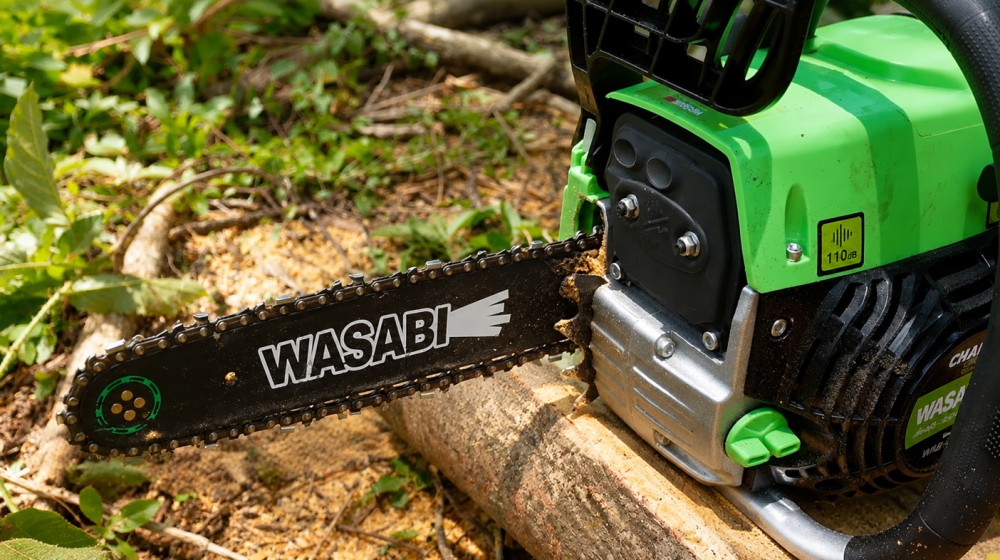
When choosing a chainsaw, many people often look at engine displacement, power, or price first, right? But... there is another aspect that directly impacts usage: the chainsaw guide bar length, commonly seen as 12, 16, 18, or 20 inches. Many people might think "longer bar = cuts larger wood," and if they want a versatile machine, buying a 20-inch bar would be more worthwhile because it can still cut smaller logs anyway.
In reality, however, a longer bar does not always mean it is more suitable. Bar length is tied to multiple factors simultaneously: engine size, tool weight, maneuverability, cutting speed, number of chain teeth, the load placed on the engine, and the type of wood being cut. Choosing Chainsaws a 12, 16, 18, or 20-inch bar should therefore not be based solely on "how large the wood to be cut is," but also on what tasks it will be used for, how frequently it will be used, and whether the engine power is suitable for that bar size.
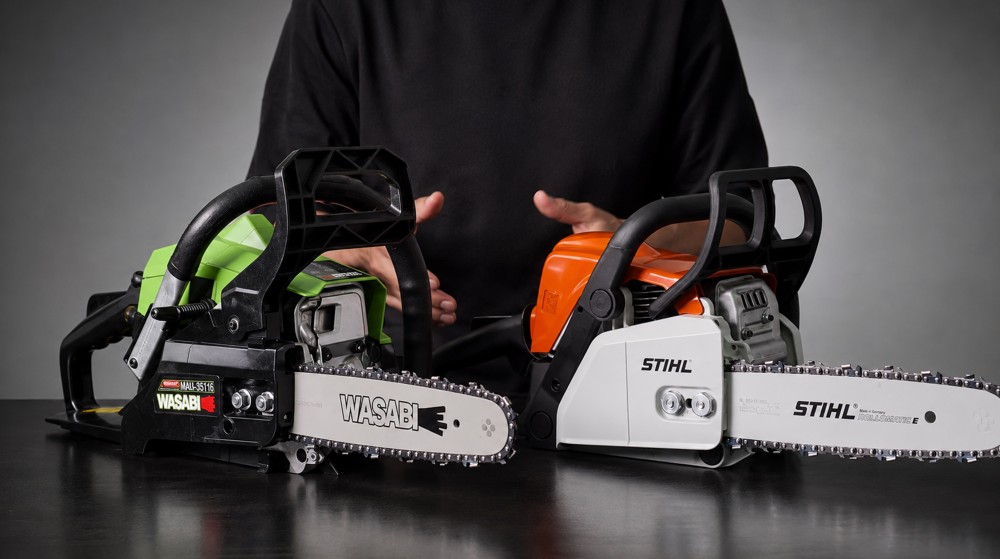
In this article, we'll take a look at each size: How does each bar length differ? What tasks is it best suited for? And which size should you choose to match your application?
First off, which part is the chainsaw bar?
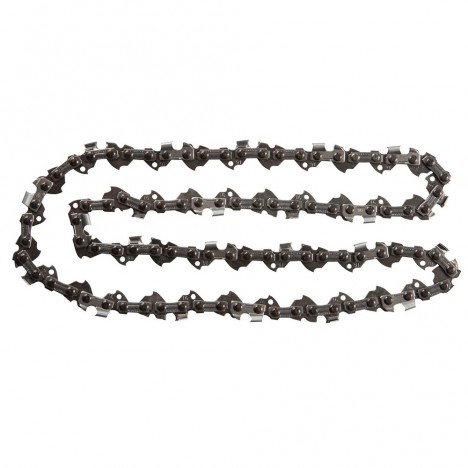
The guide bar is a long metal plate extending from the chainsaw body. It serves as a track for the saw chain to rotate around. When the engine delivers power to the drive sprocket, the chain moves at high speed, and the cutter teeth bite into the wood.
Simply put, the bar does not cut the wood itself; rather, it provides a stable path for the chain to run and determines the reach of the saw. When you see numbers like 12, 16, 18, or 20 inches, that is the bar length specified by the manufacturer's measurement method. However, the actual usable cutting length is often not the exact number because part of the bar must remain concealed within the clutch cover and machine body. Thus, a 16-inch bar chainsaw does not mean you have a full 16-inch cutting reach exposed from the front of the unit.
Is it true that a chainsaw with a longer bar cuts larger wood?
Looking purely at reach, the answer is yes. A longer bar accesses large-diameter wood more easily than a short bar. For example, cutting 3–4 inch branches leaves plenty of reach with a 12-inch bar, but for cutting logs or tree bases of 12–15 inches, an 18–20 inch bar is more convenient.
However, cutting large wood does not depend on bar length alone; engine power is just as crucial. As the bar gets longer, the chain gets longer too, meaning the engine has to exert more effort to drive it, and more cutter teeth engage with the wood simultaneously during a full-bar cut. If you fit an overly long bar on a low-powered engine, you may experience RPM drops, slow cutting, quick overheating, and poor chain speed control.
In summary, a long bar + small engine ≠ efficient large-wood cutting. Sometimes, a smaller machine using a shorter bar with a sharp chain cuts medium-sized wood faster than the exact same machine struggling with an excessively long bar.
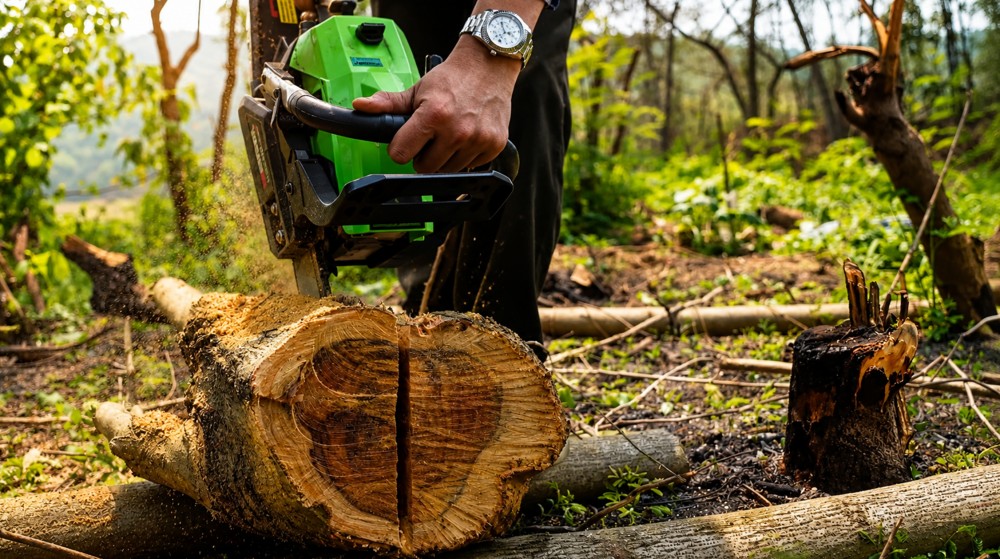
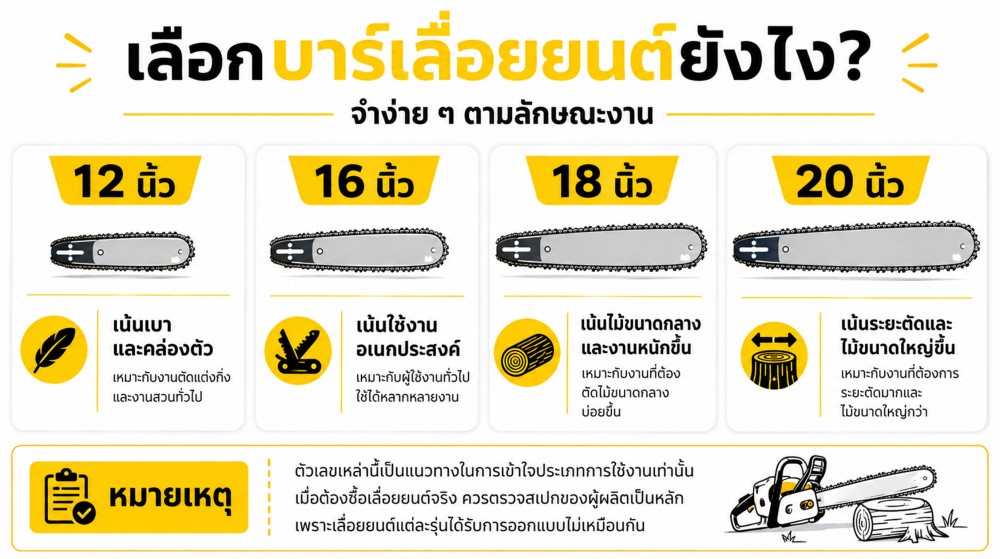
Easy-to-Understand Comparison: 12, 16, 18, and 20-inch Chainsaw Bars
Who is a 12-inch chainsaw bar suitable for?
Short bar, lightweight front end, easy to control. Suitable for trimming branches, small trees, small firewood pieces, and garden work requiring frequent machine movement. Limitations: Short cutting capacity; cutting larger wood requires cutting from multiple sides. If most of your work involves medium to large wood, this bar may be too small.
16-Inch Chainsaw Bar: The Most Balanced Choice
Not too short, not bulky or overly long. Commonly found in general-purpose to semi-professional chainsaws. Suitable for cutting medium branches, small-to-medium trees, firewood, garden work, agricultural tasks, and jobs alternating between small branches and medium trunks. If asked, "What bar size should I choose for my first chainsaw?" 16 inches is often the top answer because of its great maneuverability and sufficient cutting reach for general tasks.
Who is an 18-inch chainsaw bar suitable for?
Although it differs from a 16-inch bar by only 2 inches, you can noticeably feel both the increased cutting reach and weight. Suitable for those who frequently cut medium-sized wood or regularly encounter larger tree trunks, such as preparing large quantities of firewood or large-scale garden/agricultural work. Caution: A longer bar = a longer chain, increasing weight and friction. If the engine power is insufficient, the machine may work harder without cutting any faster.
20-Inch Bar: Is Bigger Always Better?
Clearly suited for medium to large woodworking jobs. Conveniently cuts through large logs without having to switch sides frequently. However, the machine is heavier and requires more effort to support. If used to cut small branches for long periods, it might not be as convenient as you think. Is it good to just buy a 20-inch bar to cut everything? The answer is: not necessarily. If 90% of your work involves 2–6 inch branches, carrying a 20-inch bar all day means excess weight you rarely use.Choose for the tasks you do most often, not for the biggest task you only encounter once in a while.