


 EN
 ไทย


Customers Also Purchased
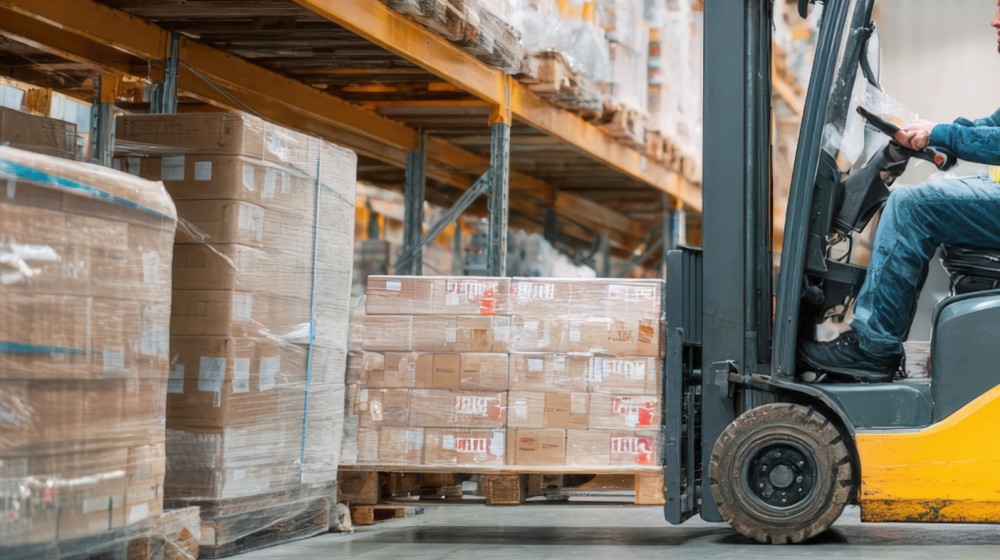
When determining whether a forklift Forklift can lift a load, many people usually start with the weight of the goods. For example, with a 2.5-ton rated forklift, if the pallet weighs 2 tons, it should be able to lift it. But in real-world applications, weight alone does not tell the whole story, because loads of the same weight can exert different stresses on the forklift if the load's center of gravity is positioned at different distances from the truck.
The key factor is the "Load Center," which is one of the values that must be considered alongside the forklift's Rated Capacity. The further forward the load's center of gravity is, the greater the leverage and strain exerted on the forklift, potentially preventing the truck from supporting its full rated capacity specified under standard conditions. Therefore, "2.5-ton forklift" does not mean it can lift 2.5-ton goods of every size, shape, and placement position.
Which Distance is a Forklift's Load Center?
The Load Center is the horizontal distance from the vertical face of the forks to the line passing through the load's center of gravity. For symmetrical goods with evenly distributed weight placed flush against the fork carriage, the center of gravity is usually near the center of the load. Therefore, the Load Center can be estimated as half of the load's depth in the direction the forks are inserted. For example, if a pallet has a depth along the fork length of 1,000 mm and the goods have an evenly distributed weight, placing the load flush against the fork face means the horizontal center of gravity is approximately 500 mm from that face. Thus, the load center can be considered to be around 500 mm.
However, this divide-by-two method only works for loads with a fairly even weight distribution. If it is machinery, a long work piece, or cargo that is heavier on one side than the other, the actual center of gravity may not be in the middle—even if the external dimensions of the product appear symmetrical.
This is why looking solely at the width or length of a pallet may not be enough, especially for jobs involving oddly shaped loads or goods where weight is concentrated in specific areas.
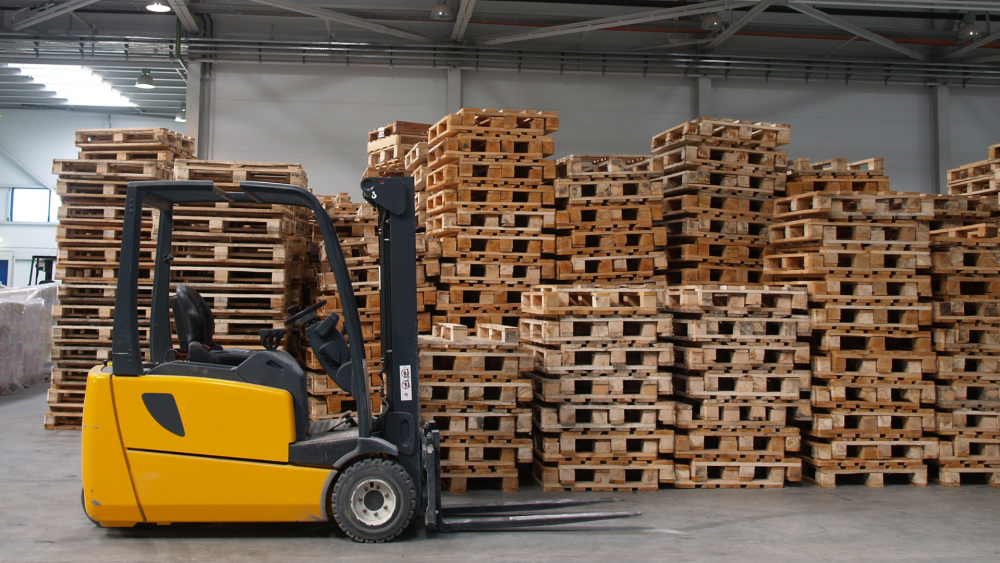
Why the Same Weight Puts Different Loads on a Forklift
This principle is easier to understand if you look at it in terms of leverage and moment. The load's weight does not affect the truck solely based on the number of kilograms; the distance of that weight from the truck also plays a critical role.
In a basic counterbalance forklift model, the front axle is typically used as the reference point to explain the moment created by the cargo's weight. The farther forward the load's center of gravity is, the greater the moment trying to tip the front of the forklift downward, while the truck body and the rear counterweight work to maintain system equilibrium.
Think of using a wrench: with the same hand force, gripping the end of the handle far from the bolt creates more torque than gripping it near the wrench head. The load center principle is similar: even if the cargo weight remains unchanged, shifting the center of gravity farther out increases the effect of that weight on the forklift's balance.
Therefore, a 1,500 kg load with its center of gravity close to the truck is not the same as a 1,500 kg load with its center of gravity extending further forward, even if the reading on the scale is exactly identical.
Different Pallet Sizes Can Result in Different Load Centers
Suppose there are two sets of pallets of equal weight. The first set has a shallow depth along the forks, while the second is a long pallet that extends farther forward. If both are loaded uniformly, the center of gravity of the longer pallet will sit further away from the truck.
As a result, the latter pallet generates a greater moment even though the total weight is the same. The truck is subjected to a heavier load profile and may not be able to lift up to the rated capacity specified for a shorter load center.
A common issue encountered on-site is operators seeing that the cargo does not exceed the truck's capacity rating and assuming it can be lifted, without checking where the load's center of gravity lies. If the actual load center is greater than the specified value, the forklift's lifting capacity can decrease significantly.
Load Center Is Not a Fixed Value for Every Forklift
Figures like 500 mm or 600 mm found in forklift documentation are values determined by manufacturers for specific models and configurations, not a universal standard applied to all forklifts.
Some models may specify a rated capacity at a 500 mm load center, while others may use 600 mm or 24 inches (approx. 610 mm). This variation depends on the truck's design, mast model, installed attachments, and manufacturer specifications.
Therefore, you should not simply memorize that "standard forklifts use this specific load center" and apply it to every truck. The proper approach is to check the information directly from the capacity plate or data plate mounted on that specific forklift.
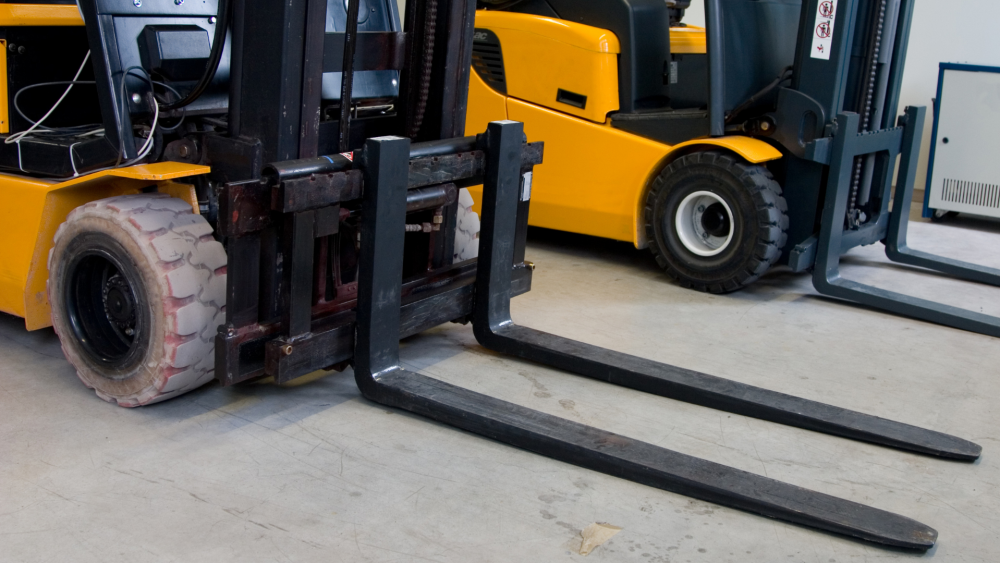
A "2.5-Ton Forklift" Does Not Mean It Can Lift 2.5 Tons Under Any Condition
A forklift's rated capacity is a figure defined by the manufacturer under specific conditions, such as the load center distance, lifting height, mast type, and attachments fitted to the truck.
If a truck indicates a capacity of 2,500 kg at a certain load center, it means that capacity applies strictly under those stated conditions. It does not mean the truck can still lift 2,500 kg if the load's center of gravity shifts further forward.
The deeper or longer the load is, or if it must be placed away from the fork face, the more caution is required. An increased load center places a greater burden on the forklift, even if the actual weight of the load has not yet reached the rated capacity figure.
This is a key point that should be separated from the mindset of "as long as the load does not exceed the truck's capacity, it can be lifted," because in forklift operations, the position of the weight is just as important as the weight itself.
The center of gravity of the load may not always be in the center.
Using half of the pallet depth to estimate the load center is suitable for loads with relatively uniform shapes and weight distributions, but not all real goods in a factory are like that.
A machine might have a heavy motor at the front, a large wooden crate might contain heavy parts on one side, or the same pallet might have heavy items placed in front and lighter ones at the back. The center of gravity of the load therefore shifts toward the heavier side.
Even if the pallet size remains the same, the actual load center can differ significantly from what is estimated from the pallet's midpoint. When lifting such loads, you should clearly know the position of the center of gravity or the load distribution data of the goods, especially for large workpieces and machinery.
The position of the load on the forks also makes a difference.
In addition to the shape of the load, how it is placed on the forks can also change the load center. If the load is placed near the tips of the forks instead of close to the inner face, the center of gravity of the load will move further away from the truck.
Conversely, if the nature of the load and pallet permits, inserting the forks sufficiently under the load and positioning it securely close to the fork backrest will help prevent the center of gravity from extending out farther than necessary.
However, this point should not be interpreted as always trying to push the load all the way toward the truck in every case, because you must also consider the pallet structure, load characteristics, fork length, and the truck's operating specifications. What is important is that the load is securely positioned and complies with the data on the truck's capacity plate.
Lifting higher: load capacity may not remain the same.
The load center is not the only factor affecting lifting capacity. The height to which the load must be lifted is another matter to consider, especially for trucks equipped with high masts or those working with multi-level racking systems.
Some truck models can carry their rated capacity up to a certain height, but as the load is lifted higher, the allowable capacity may decrease. Manufacturers therefore usually specify the relationship between weight, load center distance, and lifting height on the capacity plate. Therefore, just because a truck can lift a pallet from the floor does not necessarily mean it can place that same pallet onto the highest shelf level. You must also check the rated capacity at the actual operating height.
Installing attachments may change the truck's capacity.
Forklifts equipped with attachments such as side shifters, fork positioners, or clamps may have a different lifting capacity from standard trucks. This is because attachments add their own weight and have a thickness that can push the load-bearing position further away from the truck.
When there is an added attachment at the front, the overall center of gravity of the system can shift, and the remaining capacity available to carry the load may decrease accordingly.
For this reason, looking at ratings from a brochure of the same model without attachments and applying them to a truck with added equipment is inappropriate. You should rely on the capacity plate that matches the actual condition and configuration of the truck being used.
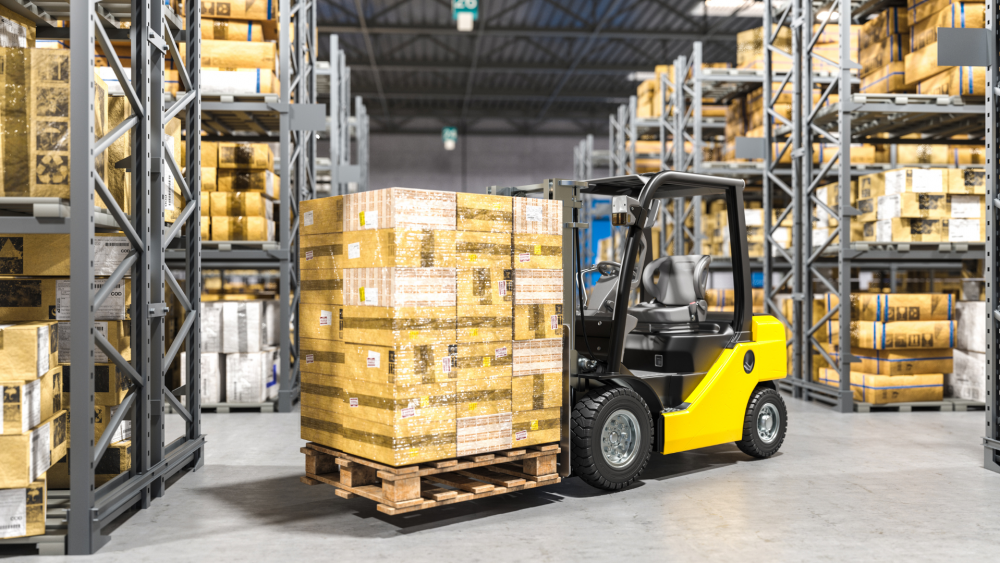
The capacity plate is more important than simply remembering how many tons the truck is rated for.
Before lifting a load, what you should check is not just the weight figure of the goods, but also the information on the truck's capacity plate or data plate. This plate indicates how much weight the truck is specified to carry under specific load center distances, lifting heights, and installed attachments.
Information that should be considered together includes:
- Actual weight of the load
- Depth of the load along the fork direction
- Position of the load's center of gravity
- Weight distribution of the load
- Rated Load Center on the forklift
- Required lifting height
- Installed attachments
- Capacity rating specified on the Capacity Plate
If the information on the plate is illegible, missing, or the forklift has been modified from its original condition so the data no longer matches the installed equipment, do not guess the truck's capacity based on the remembered model or size, as the actual capacity may differ from standard condition specifications.
Understanding the Load Center clearly demonstrates that choosing a forklift is not just about "how many tons." Two objects may have the same weight, but if their centers of gravity are at different distances from the truck, require different lifting heights, or involve different attachments, the forklift may not be able to handle both tasks equally.
Before lifting a load, you should consider the actual weight, center of gravity, load center, lifting height, and the specific truck's capacity plate altogether. This is especially crucial for elongated items, machinery, and loads with uneven weight distribution, as these applications are the clearest examples showing that equal weight does not always mean a forklift can lift them equally.