


 EN
 ไทย


Customers Also Purchased
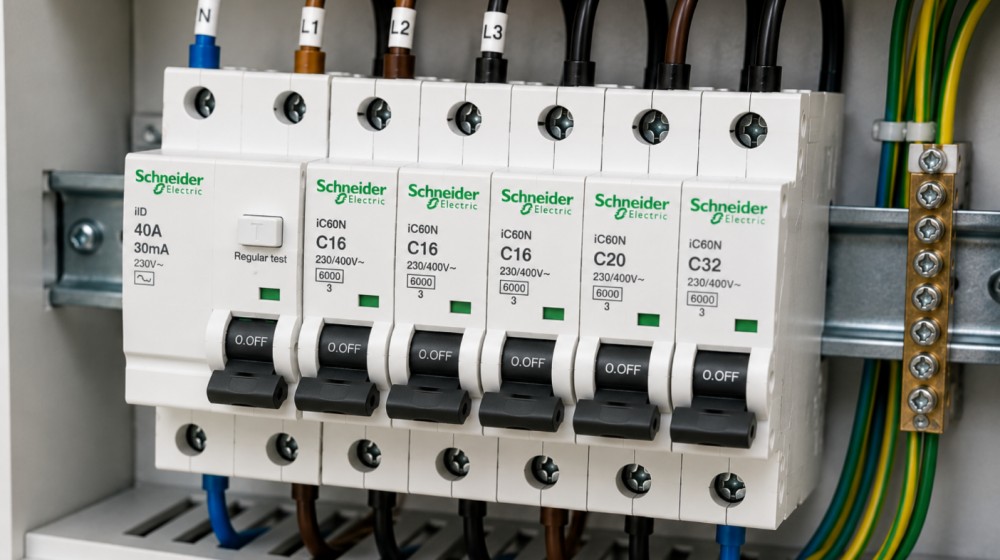
The issue of turning on an electrical appliance and the breaker Circuit Breakers tripping immediately is something that should not be overlooked, especially if it recurs every time with the same appliance. A circuit breaker tripping means the protection system is responding to a certain condition in the circuit—whether it is abnormally high current, a short circuit, an overload, or, in systems equipped with residual current protection devices, current leaking from its normal path.
What makes this issue confusing is that the external symptoms look very similar. In some homes, turning on a water heater trips the breaker; in others, turning on an air conditioner, water pump, or high-power appliance causes it immediately, while in some cases it runs for a while before tripping. The cause in each scenario does not have to be the same. Observing when the breaker trips, which appliance triggers it, and whether it happens every time or only when multiple appliances run simultaneously helps isolate the root cause far better than rushing to conclude that the breaker is undersized.
Tripping immediately vs. tripping after running for a while: what does it tell you?
Standard MCB circuit breakers generally function to protect against overcurrent from both overloads and short circuits. Their internal mechanism is designed to respond based on the magnitude of the current and the duration it flows. Therefore, the time interval from turning on the appliance until the breaker trips provides a useful clue for analysis, even though the cause cannot be definitively concluded from symptoms alone.
If the breaker trips almost immediately upon turning on the appliance, one of the causes to inspect is a short circuit or a massive, brief current spike. However, you still should not immediately conclude that the appliance is short-circuited, because certain types of appliances—especially those with motors, compressors, transformers, or specific power supply circuits—can draw starting currents much higher than their normal operating currents. Meanwhile, cases where it runs for several minutes before tripping typically point more toward an overload condition or sustained high current, although certain appliance faults that develop as the unit heats up can produce similar symptoms.
The appliance may have an internal short circuit
If an appliance used to work normally but suddenly trips the breaker immediately upon being turned on, a cause that should be thoroughly investigated is an internal fault within the appliance. A short circuit occurs when parts of the circuit that should not be connected form a conductive path, causing current to rise rapidly. The cause could stem from degraded insulation, damaged internal wiring, failed electrical components, or damage caused by heat, moisture, or physical impact.
Sometimes, plugging the appliance in shows no abnormality because the problematic part of the circuit is not yet active. Once the switch is turned on, the appliance connects that part of the circuit to the power supply, causing the breaker to trip. If other appliances on the same circuit operate normally but that specific appliance trips the breaker repeatedly, you should stop using it immediately. Do not repeatedly reset the breaker and turn the appliance back on just to see if the issue goes away on its own.
Power cords and plugs are also points that must be inspected
The root cause is not always inside the appliance itself. The power cord, plug head, or the cord entry point into the appliance can also suffer damage, especially cords that are repeatedly folded, crushed under heavy objects, pulled forcefully, or located near heat sources. Some types of damage are virtually invisible from the outside because the outer insulation may still look intact, but the conductors or internal connections have begun to fail, causing symptoms only when the cord moves or when the appliance starts running.
If you find burn marks, melted plastic, discolored plugs, cracked cords, exposed internal conductors, or unusual smells, you should immediately unplug and discontinue use. Avoid temporary repairs like wrapping with electrical tape and continuing to use it, as visible damage may only be part of the issue and cannot indicate how severely damaged the internal connections or wires actually are.
If an RCBO trips, it could also involve a ground fault or electrical leakage
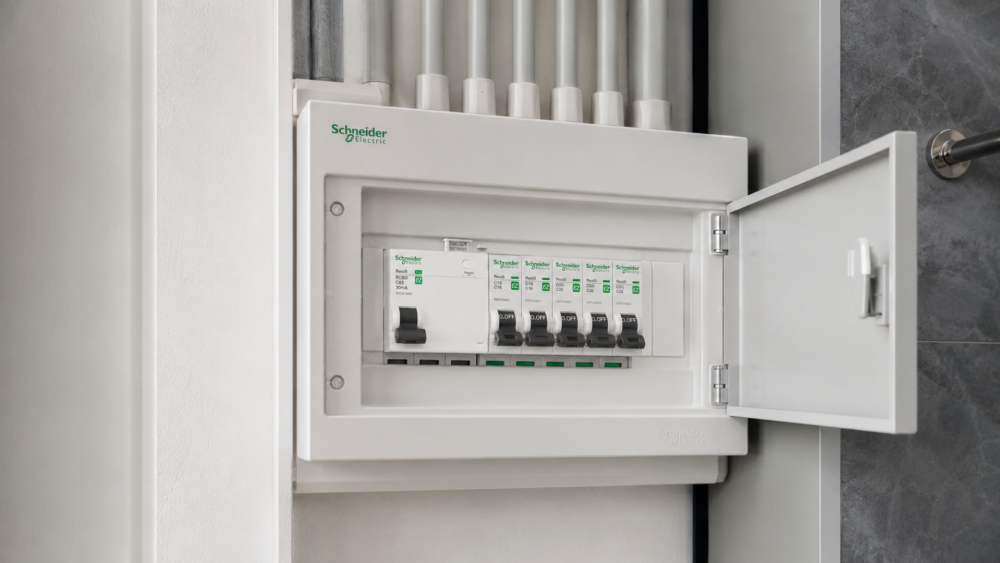
At this point, you must first distinguish what type of breaker has tripped, because MCBs and RCBOs do not detect the exact same set of faults. MCBs protect against overcurrent caused by overloads and short circuits. An RCBO, in addition to performing these two functions, also includes a feature to detect ground fault leakage current or Residual Current.
Therefore, if the circuit uses an RCBO and turning on an appliance trips it immediately, the cause may not solely be high current draw; it could be an internal insulation fault allowing some current to leak from its normal path. Appliances involving water, moisture, heating elements, or motors are more prone to insulation issues when damaged, but you should not judge based solely on the appliance type. If the RCBO repeatedly trips with the same appliance, stop using it and inspect to determine the clear cause first.
Turning on a high-power device causing total load to exceed capacity
Sometimes the appliance is not broken, but the problem arises because the circuit is already heavily loaded. When adding another high-power device, the total current exceeds the level that the circuit and protection devices are designed for. For example, a circuit may already have multiple appliances operating simultaneously; once another high-power device is turned on, the breaker trips to protect against overcurrent in the circuit.
If you notice that each device works fine individually, but the breaker trips only when multiple devices run at the same time, you should check the circuit's total load and circuit division rather than rushing to assume that a specific appliance is broken. However, if turning on just a single device trips the breaker almost every time right at startup, you should not jump to the conclusion that it is an overload, as other potential causes must also be inspected.
Startup inrush current may be higher than normal
Certain types of electrical appliances do not draw a steady current from the very first second of operation, especially devices with motors, compressors, or transformers, which may have a high inrush current for a brief period before dropping to normal levels. This characteristic is one reason why selecting a breaker requires not only looking at the rated current on the device, but also considering the tripping curve to match the load characteristics.
However, if the same appliance used to work on the same circuit for a long time without any issues and only recently started tripping immediately upon power-on, it should not be attributed solely to startup current, because inrush current has always been present even when the appliance was functioning normally. This change in behavior is a reason to inspect for other anomalies, such as motor condition, internal components, wiring connections, or the circuit's power supply system.
The outlet or electrical circuit could also be faulty
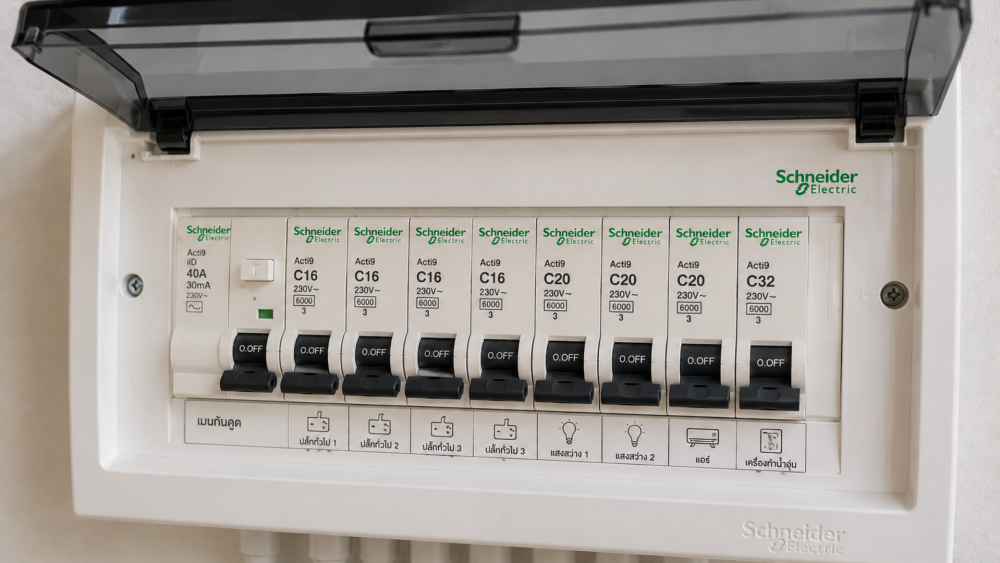
A breaker tripping when turning on an appliance does not always mean the appliance itself is the root cause; the problem could also stem from the outlet, wiring connections, or the circuit supplying power to that point. If multiple appliances exhibit abnormalities when plugged into the same outlet or circuit, greater priority should be given to inspecting the electrical system side.
Conversely, if only one specific appliance repeatedly trips the breaker while other equipment on the same circuit operates normally, the appliance itself, its cord, and its plug are the primary areas to inspect. However, you should not test a suspected faulty appliance across multiple outlets to find the answer, because if there is an actual short circuit or ground fault, repeated testing does not make troubleshooting any safer.
Can the breaker itself be faulty?
A circuit breaker can degrade or malfunction just like any other electrical device, but one should not immediately start by concluding that the breaker is broken—especially when the issue only occurs when turning on specific appliances. After all, the function of a breaker is to trip when it detects conditions that warrant protection.
To determine whether the breaker is the root cause, multiple factors must be examined together: the device's physical condition, rated current, tripping characteristics, suitability for the circuit, wiring terminations, and load characteristics. Replacing the breaker with a new one without investigating the cause of the trip might not help if the actual problem still lies in the appliance or the original circuit.
What symptoms can help point you in the right direction?
If turning on a specific appliance trips the breaker every time while other appliances on the same circuit operate normally, more focus should be placed on inspecting the appliance itself, its cord, and its plug. In cases where each appliance works fine individually but trips when running simultaneously, attention should shift toward the circuit's total load and whether the load distribution is appropriate.
If the appliance runs for a while before the breaker trips, it may be related to continuous overcurrent, heat buildup, or a fault occurring after the equipment has been operating for a period. However, if sparks, burning smells, smoke, unusual noises, or melting marks are found on the plug and outlet, there is no need to test further; stop using it immediately and have a qualified professional inspect it.
Should you reset the breaker immediately after it trips?
If you do not know why the breaker tripped, you should not flip it back up and repeatedly turn on the same appliance, especially if it trips almost immediately every time. What general users can safely do without opening the electrical panel or disassembling equipment is to turn off and unplug the suspected appliance, then inspect the cord, plug, and unit for burn marks, melting, unusual odors, or external damage.
If the cause cannot be determined and the issue reoccurs as soon as the appliance is put back into use, stop using it and have an electrician or qualified professional inspect it further. Resetting the breaker repeatedly does not solve the root cause that triggered the trip, and in some cases, it repeatedly exposes the circuit to the same underlying fault.
Frequent breaker trips do not mean you should simply increase the amperage
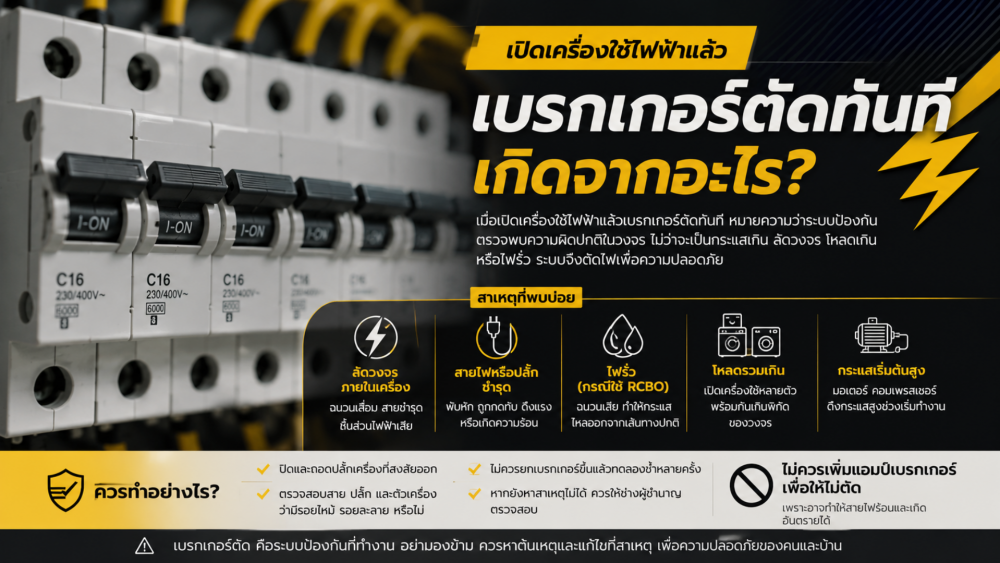
A DIY fix that should never be done is seeing a breaker trip frequently and upgrading it from 16A to 20A, or from 20A to 32A, simply to stop it from tripping. A breaker's rated current must correspond to the wire size, wire type, installation method, ambient conditions, load characteristics, and overall circuit design—it is not selected based on the appliance's power rating alone.
Some circuits may genuinely be able to switch to a breaker with a different rating, but this must be properly inspected and designed—not arbitrarily upsized just to stop the tripping. If the wiring or other parts of the circuit cannot handle that level of current, the protection may no longer be suitable for the existing system.
When turning on an electrical appliance and it Circuit Breakers trips, what you should look for is not how to stop the breaker from tripping, but rather what is causing the protection system to trigger in the first place. The cause could be the appliance itself, the wiring, the outlet, the total load, inrush current, or electrical leakage. Once the root cause is isolated, fixing the exact issue will be much safer and more effective than guessing and replacing protective devices.