


 EN
 ไทย


Customers Also Purchased


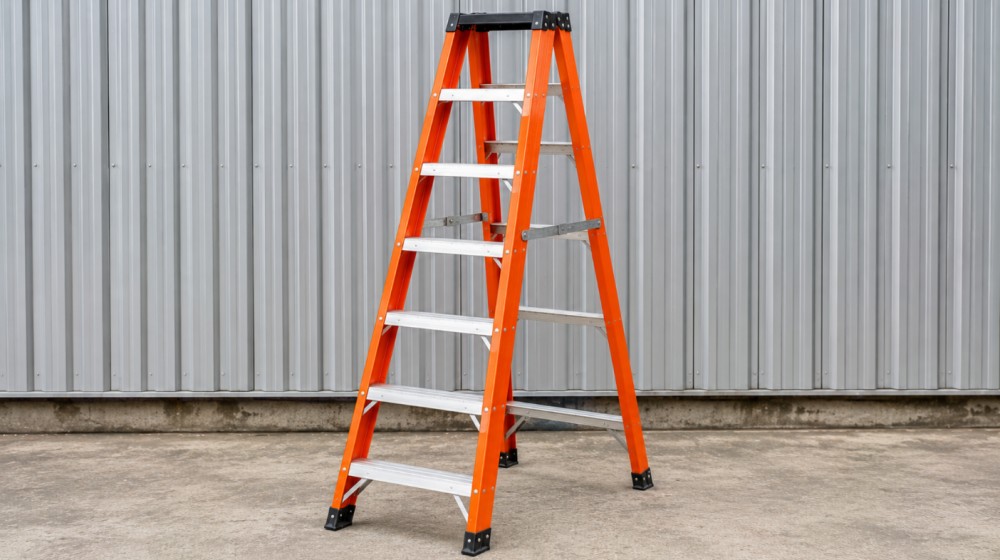
If you have ever handled Fiberglass Ladders compared to an aluminum ladder of similar height, the weight difference is noticeable almost immediately. Aluminum ladders are generally easier to lift and more convenient to move around, while fiberglass ladders feel heavier and bulkier, especially for taller models or multi-section extension ladders. However, this extra weight does not necessarily mean a fiberglass ladder is stronger or can support a higher load capacity. A ladder's physical weight and the manufacturer-rated load capacity are two entirely different things.
Why Are Fiberglass Ladders Heavier?
The side rails of a fiberglass ladder are made from a composite material of glass fibers embedded in resin, rather than pure fiberglass alone, and an assembled ladder also includes steps, hinges, spreaders, feet, and various fasteners.
When assembled into a finished ladder, the structure of many fiberglass ladder models is therefore heavier than aluminum ladders of similar style and height. Aluminum, on the other hand, has the advantage of being lightweight and can be formed into sturdy rails using less material, making it ideal for tasks that require frequent lifting or moving.
However, it should not be assumed that every fiberglass ladder is heavier than every aluminum ladder, as the actual weight also depends on height, rail size, ladder style, and the design of each specific model.
Same Height Does Not Mean Same Weight
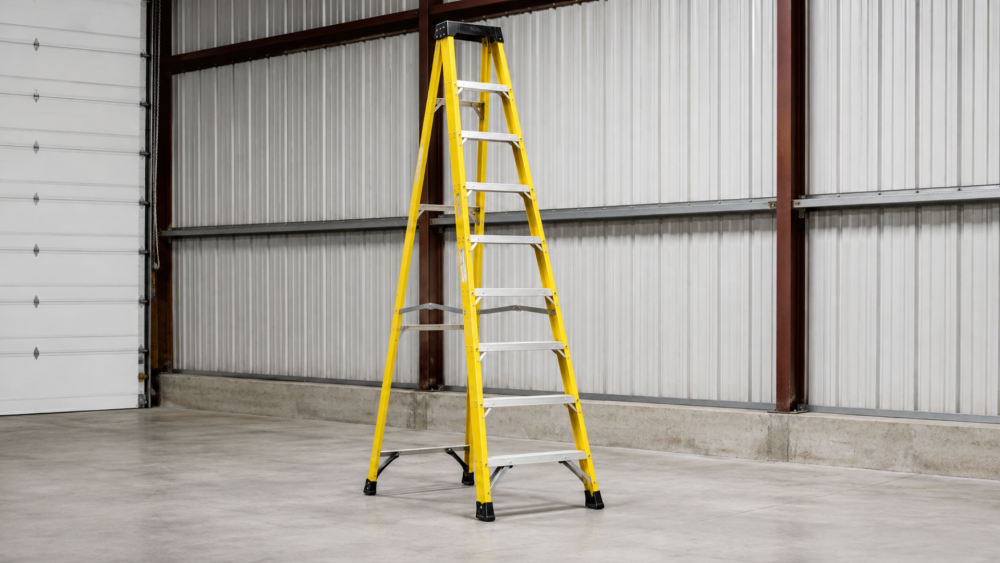
Two ladders with the same number of steps or similar heights can differ significantly in weight, because what is not visible from the outside includes the cross-sectional size of the rails, component thickness, bracing structure, and the load capacity engineered by the manufacturer.
Large A-frame ladders, extension ladders, or multi-position ladders often show a more noticeable weight difference than shorter models, because as the rails get longer, the overall structural weight increases accordingly.
Therefore, when comparing two models, do not look only at the number of steps or height; check the ladder's weight stated in the specifications as well, especially for those who need to load it into a vehicle, carry it between multiple spots, or regularly work alone.
A Heavier Ladder Does Not Mean a Higher Load Capacity
This is a point where people often get confused, as a larger and heavier ladder often appears sturdier, but the actual load capacity must be checked directly from the model's label or technical specifications.
Fiberglass ladders and aluminum ladders can have the exact same load capacity even if their ladder weights differ greatly, because load capacity comes from the design and rating classification of the ladder, not from how heavy the ladder itself is.
When calculating the load on a ladder, you must include the user, tools, tool bags, and any items carried up—never consider only the person's body weight alone.
Does the Weight of a Fiberglass Ladder Have Any Advantages?
Speaking strictly of weight, heaviness is not considered a direct advantage, and you should not choose a ladder simply thinking that heavier means safer.
Whether a ladder is stable depends more on its geometry, base width, condition of the feet, setup method, working area, and the user's posture. Even with a heavy ladder, placing it on a slippery surface, setting it at the wrong angle, or overreaching sideways can still cause a loss of balance.
The main reason people choose fiberglass ladders is not their weight, but the fact that their rails are non-conductive to electricity—unlike aluminum—when in proper condition, making them far better suited for work with potential exposure to electrical systems.
Disadvantages Become Obvious with Frequent Relocation
A heavier ladder is not much of an issue if it stays in one spot, but you will immediately feel the difference when having to move it multiple times in a single day. In maintenance, installation work, or spaces requiring continuous repositioning, an extra few kilograms can make a noticeable difference in fatigue. With taller ladders, their length also makes maneuvering harder—whether lifting off the ground, pivoting through doorways, or navigating narrow hallways.
If a ladder is too large to lift or control comfortably, it is better to have a helper rather than forcing a one-person lift, especially in areas with obstacles or overhead power lines.
Why Fiberglass is Still Preferred for Electrical Work
Despite being heavier, fiberglass ladders offer a clear advantage in electrical-related work because fiberglass rails do not conduct electricity like metal. This makes them more suitable than aluminum ladders in areas where there is a risk of proximity to electrical equipment or live wires. This is why fiberglass ladders are commonly found in electrical work, systems engineering, and factory maintenance, even though users must accept the additional weight.
However, "non-conductive" does not mean you can rest the ladder directly against or touch live electrical wires. Moisture, dirt buildup, or surface damage to the ladder can compromise safety, and electrical work must always follow energy-control procedures and maintain proper clearance distances.

If You're Not Working Near Electricity, Aluminum Might Be Easier to Use
For general tasks without electrical hazards, aluminum ladders usually have the edge in mobility because they are lighter, easier to carry, and ideal for jobs that require frequent repositioning. Fiberglass ladders, on the other hand, stand out in applications where electrical safety is critical, such as electrical work, utility systems, or maintenance in industrial environments. Therefore, when choosing between the two materials, don't just look at which model is heavier or lighter. Consider how often the ladder needs to be moved on the job site, whether electrical hazards exist, the required height, and whether the load capacity is sufficient for your application. This approach ensures you choose the right ladder for the job rather than deciding based on material alone.