


 EN
 ไทย


Customers Also Purchased
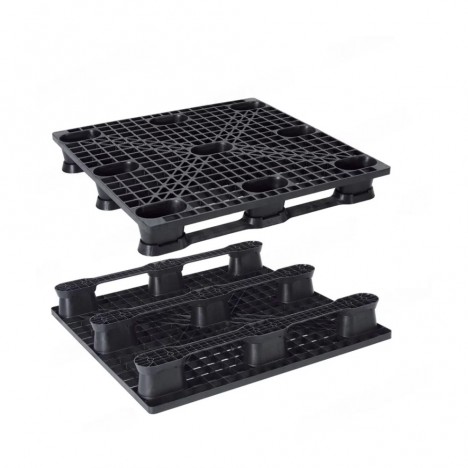
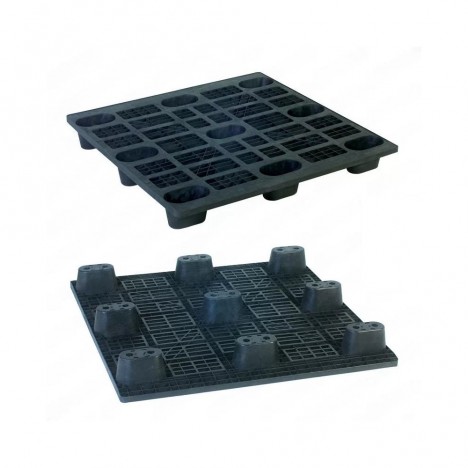
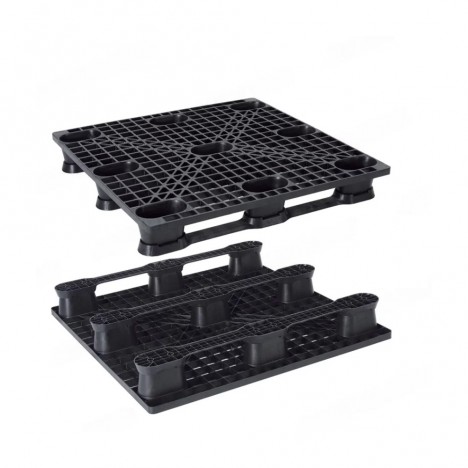
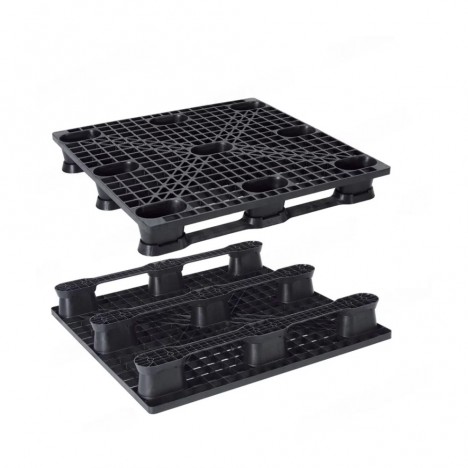
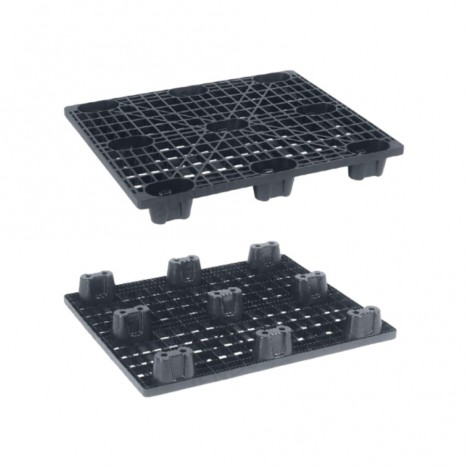
Palletsused in factories, warehouses, or distribution centers share a similar primary function: serving as a load-bearing base to make lifting, moving, and storing goods more convenient. However, looking at the structural details reveals that pallets are not all the same. Some models have a deck for placing goods on only one side, with feet, stringers, or base blocks on the bottom, while others have decks on both the top and bottom. These structural differences affect practical use far more than meets the eye.
Categorized by structure, single-surface pallets are often called Single-deck Pallets, while those with surfaces on both sides are known as Double-deck Pallets. However, the term "double-faced pallet" may lead many to believe that every model can be flipped over to place goods on the other side. That is not always the case, as some double-deck pallets only have the bottom deck to help support and reinforce the structure, while others are truly designed to be reversible. Therefore, before choosing, it is essential to clearly understand which type of pallet you need and how it will be used.
What Is a Single-Deck Pallet?
A single-deck pallet has only one primary surface on top for supporting goods, while the bottom acts as a base to bear weight and leave room for lifting equipment. The bottom structure may consist of multiple legs, longitudinal stringers, or other patterns depending on the manufacturer's design. These pallets come in both wood and plastic, and are commonly found in general material handling applications where there is no need to flip the pallet over for use.
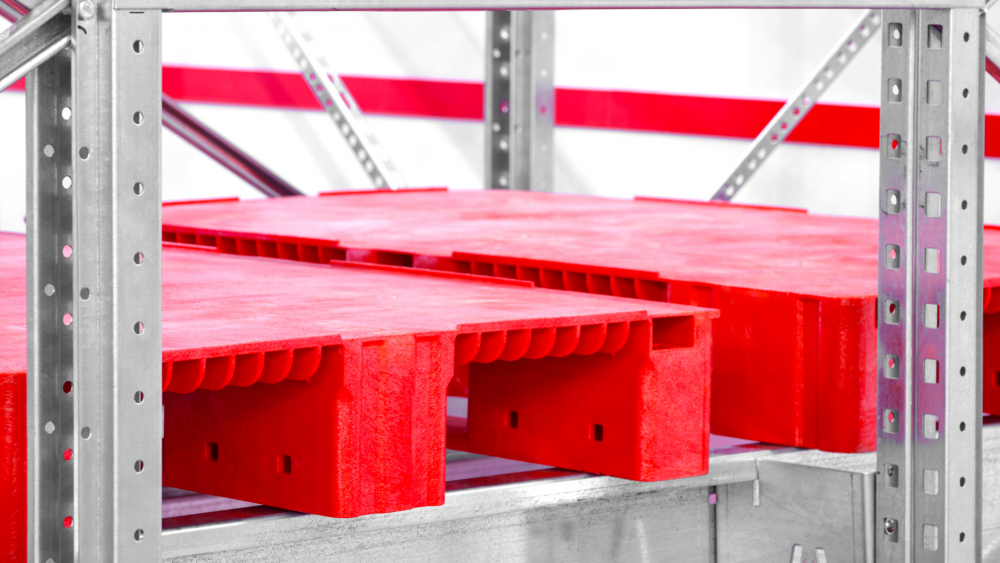
A key highlight of single-deck pallets is that the bottom structure is typically more open than certain other types, providing convenient fork entry and making it easy to inspect the area underneath. However, one should not assume that single-deck pallets can only be used on the floor, as some models are also designed for use on storage racks, conveyor systems, or specialized handling equipment, provided their structure and load-bearing ratings meet the manufacturer's specifications.
What Is a Double-Deck Pallet?
A double-deck pallet has structural decks on both the top and bottom, where the bottom deck may consist of aligned boards, a perimeter base, or other structures that tie the load-bearing components together. Importantly, not all double-deck pallets function the same way, as they are further divided into non-reversible models and those designed for two-sided use.
The first type is the Non-reversible Pallet. Although it features decks on both sides, the top deck is the primary surface for holding goods, while the bottom deck serves as a support base to reinforce the structure and is not intended to replace the top. When turned over, the bottom deck may have more openings, a different configuration than the top, or structural elements that make it unsuitable for full-surface loading. In contrast, the Reversible Pallet is designed so that both sides can function as the load-bearing deck, allowing the other side to remain usable according to the manufacturer's specified conditions once flipped.
However, the term "Reversible" does not mean you can safely flip the pallet while goods are still loaded on it. Flipping with goods is a separate process that requires specific equipment and control methods. In this context, "Reversible" simply means the pallet itself can use either surface to support loads when positioned properly.
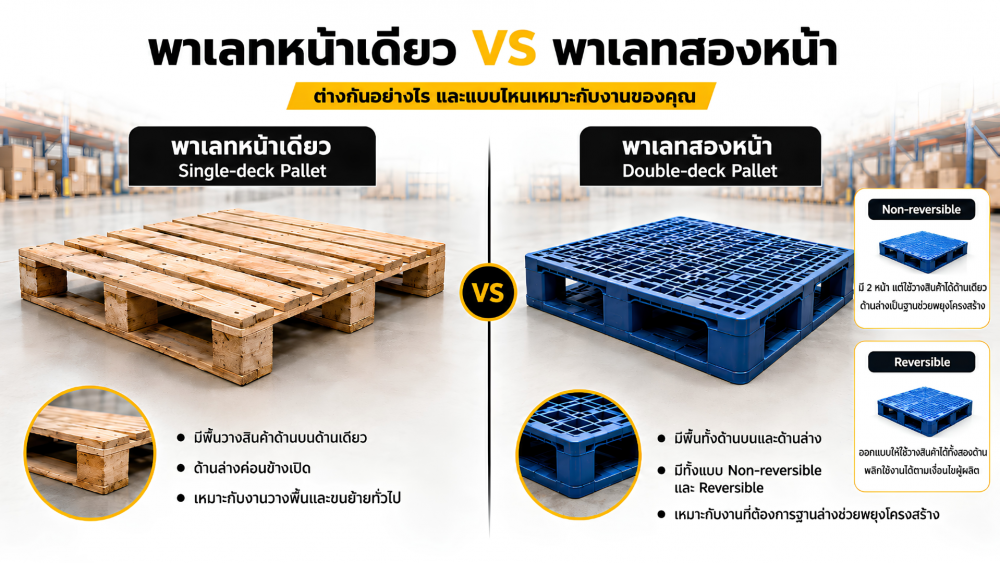
Differences Between Single-Deck and Double-Deck Pallets in Real-World Use
When goods are placed on them, both types of pallets may not look very different, but the bottom structure affects load support, lifting, and storage—especially when the pallet is not resting completely flat on the ground, such as when placed on racking or lifted with certain types of material handling equipment.
When placed on a flat and sturdy floor, both single-deck and double-deck pallets can support goods well, provided the load rating matches the application. Some double-deck pallets have bottom bases connected in multiple directions, providing more surface contact with the ground; however, this does not mean they are more stable than single-deck pallets in every case, because stability also depends on the base pattern, material, pallet size, product characteristics, and floor conditions. If the floor is uneven, has grooves, or has debris trapped beneath the base, any pallet can wobble or tilt.
Using with a Hand Pallet Truck: Look Beyond Just Fork Openings
When choosing a pallet for use with a hand lift or Hand Pallet Truck, you should not just check whether the forks can enter. The tips of the forks have small rollers that must also pass over the pallet's bottom base. If the pallet base has crossbars or insufficient clearance, the rollers may have difficulty rolling through or may prevent the pallet from being fully lifted.
Single-deck pallets with wide-open bottoms can be very convenient to use with certain hand pallet trucks, whereas double-deck pallets with bottom runners spanning the fork openings may require specific profiles or cutouts to let the rollers pass. Still, this does not mean double-deck pallets cannot be used with hand pallet trucks, as many models are designed specifically to support this application. What you should do is check the manufacturer's specifications to see if it supports a Hand Pallet Truck and verify that the fork opening dimensions match your actual equipment.
Using with a Forklift
Forklifts can handle pallets of various structures, but you must check which directions the pallet allows fork entry. Some designs allow 2-way entry, while others allow 4-way entry. When lifting, the forks should be inserted deeply enough and properly spaced to balance the pallet. If the forks are not fully inserted or too much weight is concentrated on one side, the pallet may bend, deform, or become unstable during transport.
Another common issue is recurring damage caused by fork tips bumping into legs, beams, or the pallet base, especially in operations with high daily cycles of lifting and setting down. This type of damage can occur on both single-deck and double-deck pallets; therefore, you should inspect pallet conditions regularly, regardless of whether they are made of wood or plastic.
Double-Deck Pallets Do Not Always Mean They Can Be Used on Racks
A common misconception is seeing a pallet with a bottom deck and assuming it must be better suited for racking. In reality, you must check the specific model's structure and load ratings directly, as the load-bearing characteristics on the floor versus on a rack are vastly different.
When a pallet sits on the floor, the weight is distributed across multiple points on the base. However, on a pallet rack, the pallet usually rests only across specific beams, leaving the center unsupported and subjected to much higher bending forces. Some double-deck models may have a bottom deck that increases rigidity, but if the manufacturer does not specify it for racking use, it should not be used simply because it looks stronger. Likewise, some single-deck pallets can be used on racks if they are engineered and rated specifically for that application.
Load Capacity Matters More Than the Number of Decks
Another factor that should not be judged solely by the number of decks is load-bearing capacity. Double-deck pallets do not always hold more weight than single-deck pallets, because strength depends on the material, thickness, rib patterns, stress points, dimensions, and the overall design of each specific model.
Product specifications often list Static Load, Dynamic Load, and Racking Load, which apply to different support conditions. Static Load generally applies to a pallet resting stationary on the floor and supported under specified conditions. Dynamic Load refers to when the pallet is being lifted or moved according to the manufacturer's conditions. Racking Load applies to pallets placed on a rack at specified spans and support configurations.
These three ratings should never be used interchangeably. For example, a pallet with a high Static Load does not mean it can support the same weight on a rack, because the load distribution is completely different, and each manufacturer may set different testing conditions. Therefore, you should thoroughly review the model's accompanying specifications before putting it into actual use.
What Applications Are Single-Deck Pallets Suitable For?
Single-deck pallets are suitable for applications where goods are stacked in one direction and the focus is on general handling, especially tasks that do not require using both surfaces—such as floor storage, warehouse internal transport, circulation between different plant locations, or systems requiring relatively open bottom spaces.
However, if they need to be used with hand pallet trucks, conveyor systems, or pallet racking, you should review the specific model's data further. Different single-deck pallets have different base designs and limitations: some are intended primarily for floor placement, while others are engineered to handle more specialized applications.
What Applications Are Double-Deck Pallets Suitable For?
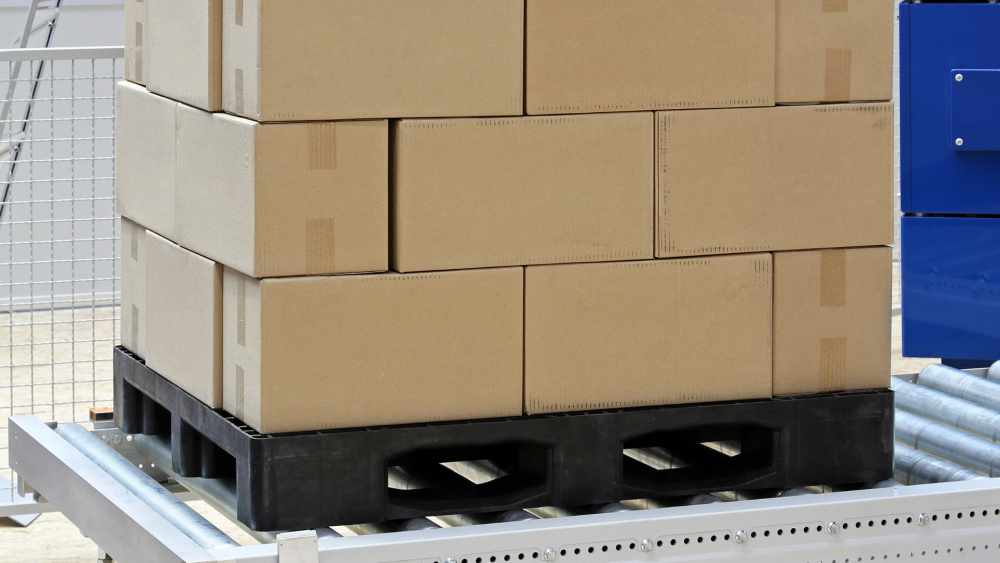
Double-deck pallets are ideal for applications requiring a bottom base to reinforce the structure, or in systems with high-turnover pallet circulation and repeated handling cycles. If there is no need to flip and use both sides, a Non-reversible model may be sufficient, as it already features a bottom deck that functions as a supportive base.
For tasks that genuinely require using both deck surfaces, you should directly choose a Reversible Pallet and clearly verify the manufacturer's specifications regarding load capacity and usage methods. Do not judge solely by the pallet's appearance, as two pallet models that look similar may be engineered for completely different operating conditions.
What should you check before choosing a pallet?
Choosing the right pallet for the job should start with your actual operating conditions rather than merely looking at whether it is single-faced or double-faced. Key factors to know beforehand include the total weight of the goods and packaging, weight distribution characteristics, whether a forklift or pallet jack is used, whether 2-way or 4-way entry is required, and whether the pallet will be placed on the floor, stacked, or stored on racks.
Additionally, consider the operating environment—such as use in wet areas, cold storage, outdoors, or hygiene-controlled zones—as well as the turnover cycle, whether it involves multiple reuse cycles or one-way shipping. Then, compare these details with the manufacturer's specified load ratings and conditions. This approach helps reduce the risk of choosing a pallet that appears suitable but does not fit your actual workflow.
Choose based on operational requirements, not just the number of faces
PalletsSingle-faced pallets are not inferior to double-faced pallets, and double-faced pallets are not suitable for all heavy-duty or racking applications. For floor storage and general handling, a single-faced pallet with an appropriate load capacity may be the ideal solution. Meanwhile, tasks that require bottom-deck support for structural integrity or need usable surfaces on both sides may be better suited to double-faced pallets.
The key is not to assume every "double-faced" pallet is reversible just because of the name. You must distinguish between Non-reversible and Reversible double-deck pallets, and select based on cargo weight, support method, lifting equipment, and manufacturer specifications combined. When these details match your on-site requirements, the pallet will perform more appropriately and safely than if chosen by appearance alone.