


 EN
 ไทย


Customers Also Purchased


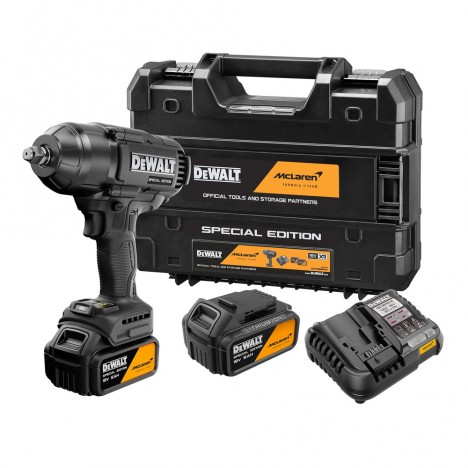


When shopping for an Electric block electric wrench or cordless impact wrench, we might initially start comparing maximum torque figures. Higher numbers suggest a more powerful tool with wider application range and better long-term value. Some electric wrench models offer just a few hundred Newton-meters of torque, while similar-looking models may claim over 1,000 or 2,000 Nm, leading to the idea that If you're going to buy one, should you just pick the most powerful model first, in case you need it for heavy-duty work one day—or not?
Did You Know? Pistol-Grip Impact Wrenches Might Not Suit Every Job In reality, an overly powerful cordless impact wrench may not be suitable for every job, and the maximum torque number isn't the only metric that indicates how well the tool will perform. More importantly, if you choose a tool with more power than necessary, you might have to deal with heavier weight, a larger body, a higher price, and harder torque control—especially for jobs involving small nuts, general assembly, or personal automotive repairs that don't require truck-grade torque levels.
The key question, therefore, isn't which cordless impact wrench is the most powerful, but rather: How much torque is right for the work we actually do? Let's take a look at typical cordless impact wrench torque ranges, the difference between fastening torque and nut-busting torque, and guidelines for choosing a cordless impact wrench that fits the job without paying extra for power you might never use.
What is the torque of a cordless impact wrench?
Torque is the rotational force the tool delivers to the socket to turn, tighten, or loosen bolts and nuts. It is typically expressed in Newton-meters, or Nm. The higher the torque figure, the greater the tool's ability to turn tight or large bolts. However, this does not mean it applies maximum torque the entire time you pull the trigger.
A cordless impact wrench works via an internal impact mechanism. When the motor reaches a certain speed, a hammer mechanism strikes repeatedly to transfer force to the drive anvil in pulses. You may hear continuous impacting sounds once the bolt starts to snug up. The longer you hold the trigger down, the more impact force the bolt may receive.
A high torque rating doesn't mean the cordless impact wrench will tighten every bolt with that level of force right away. Actual performance depends on:
- Speed level
- Operating mode
- Trigger hold time
- Battery
- Socket size
- Thread condition
- Tightness of the nut/bolt
Even so, an extremely high-torque tool is more likely to cause damage if used on nuts or bolts with low load tolerance. So, if you ask: Can a cordless impact wrench be used to drive screws? The answer is: in some cases, but it is not suitable for small screws.
Fastening torque and nut-busting (loosening) torque are not the same value.
Specifications for many electric impact wrench models state different values, such as maximum fastening torque, maximum loosening torque, or nut-busting torque. You should read the details carefully because these numbers do not mean the same thing.
Maximum Fastening Torque
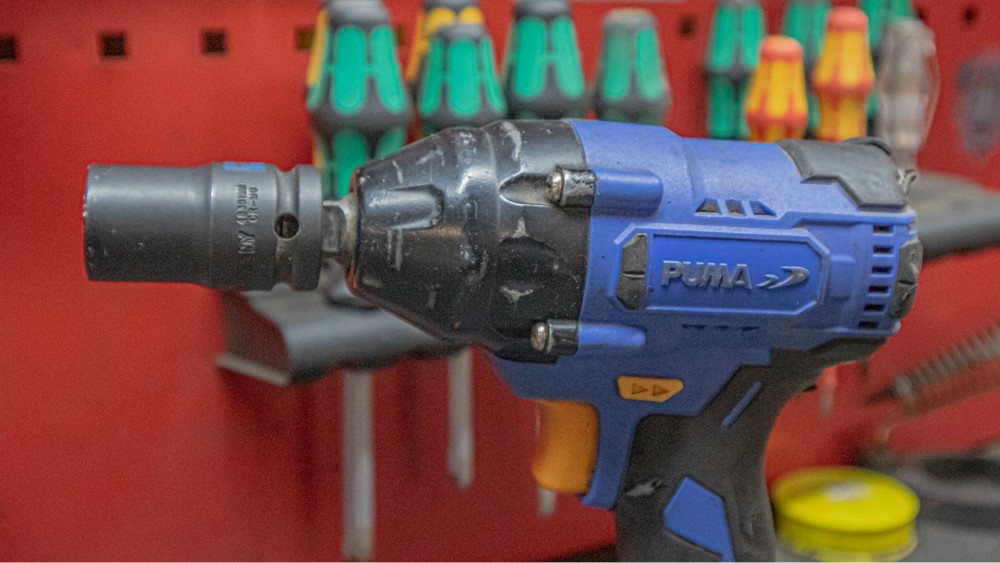
Maximum fastening torque is the tool's capacity to tighten nuts under the manufacturer's test conditions. This value indicates the overall power level of the tool, but it does not mean you should use the electric impact wrench to tighten nuts all the way up to its maximum figure. Over-tightening can strip threads, stretch bolts, snap nuts, or distort workpieces.
Maximum Nut-Busting Torque
Nut-busting torque is typically a higher number than fastening torque. It is a value used to represent the tool's impacting ability to break free already-tightened nuts. This number is useful for assessing how well the tool can handle wheel lug nuts, machinery bolts, or rusted nuts, but it is not the torque the tool applies during normal tightening.
When comparing two electric impact wrench models, you should always compare like-for-like values. If one model advertises a fastening torque of 700 Nm while another shows a nut-busting torque of 1,000 Nm, you cannot immediately conclude how much more powerful the latter is. You should check the full specification sheet from the manufacturers before making a decision.
Electric impact wrenches under 300 Nm: What kind of work are they suitable for?
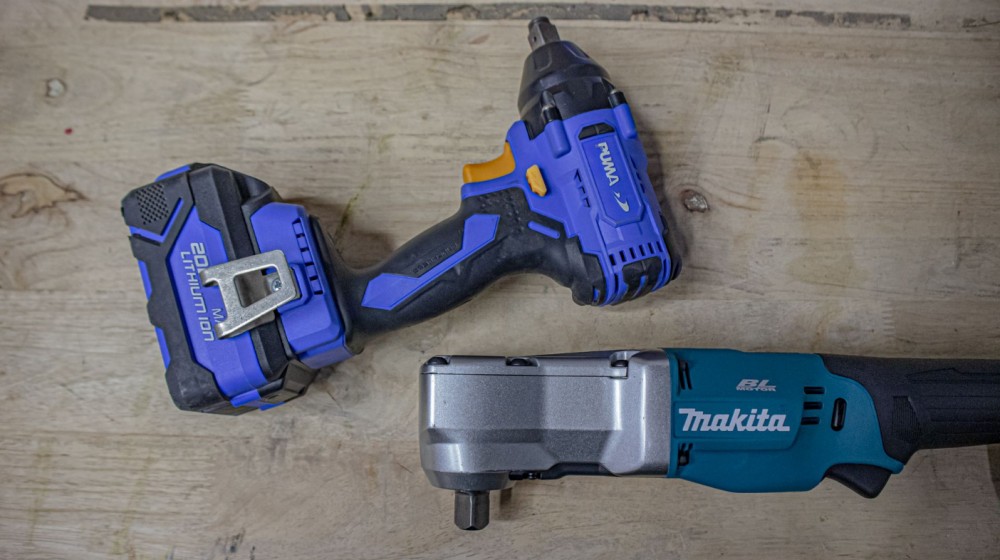
Electric impact wrenches with a torque of around 100–300 Nm are typically compact, lightweight, and easy to control. Tools in this category may use 12V or 18V battery systems, focusing on maneuverability rather than maximum power.
The advantages of compact electric impact wrenches are:
- Can easily access tight and confined spaces
- Can be held for extended periods without excessive fatigue
- Offers easier control over nut rotation
- Suitable for jobs requiring fastening and loosening large quantities of nuts that are not overly tight
Tools in this range may not be suitable for lug nuts on certain vehicle models, especially those previously overtightened with high-powered pneumatic impact wrenches or built up with rust.
For anyone buying an electric impact wrench for home use, tools in this torque range should not be overlooked. Most tasks do not always require hundreds of Newton-meters. A lighter, easier-to-control tool might get picked up and used far more often than a heavy, high-torque unit.
Around 300–600 Nm: The most versatile range?
Mid-range electric impact wrenches with around 300–600 Nm of torque are considered the most versatile range for general tradespeople—handling passenger vehicle repairs, suspension work, small-to-medium structural installations, and general machinery maintenance. Tools of this caliber are not excessively bulky, yet they retain sufficient power to loosen nuts encountered in day-to-day work.
For users wanting to remove passenger car wheels, this torque range is usually sufficient—provided the nuts were torqued to standard specifications and lack severe rust. However, nut-loosening performance also depends on the tool's breakaway torque rating, the battery used, and the condition of the nut. A tool rated at 400 Nm fastening torque with a well-engineered impact mechanism and motor may remove lug nuts more effectively than a model advertising higher numbers that uses an underpowered battery with insufficient current draw.
Around 600–1,000 Nm: Who is it for?
Electric impact wrenches ranging from around 600–1,000 Nm enter the heavy-duty category. They are ideal for auto repair shops servicing various vehicle types, suspension work, axle nuts, machinery, agricultural equipment, and steel structures.
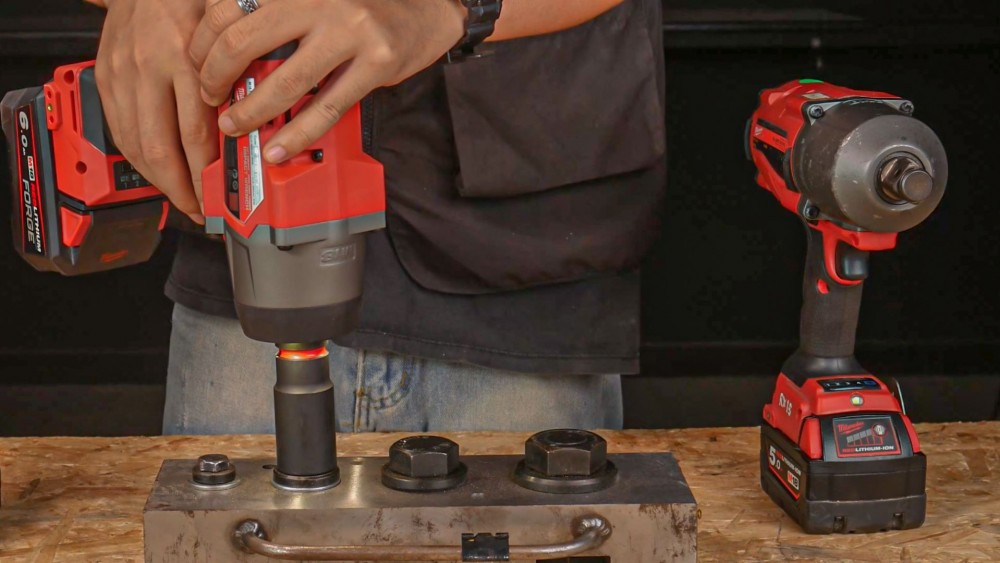
This group of tools can loosen tighter bolts, but the tool body and battery typically increase in weight accordingly. For general tasks that involve occasionally removing car wheels, choosing this level of torque may be more than necessary, as the standard tightening torque for many passenger car wheel lug nuts is many times lower than the tool's maximum power. If used in high-torque mode and the trigger is held down for too long, the nuts may become overtightened—making them difficult to remove next time or causing damage to the threads.
However, if you frequently encounter old bolts, rusted bolts, or perform suspension work regularly, having higher power reserve is indeed useful. The tool doesn't need to impact continuously for long, reducing the chance that the user has to switch to an extension breaker bar or larger tools.
The important factor is to choose a model with speed control and a loosen-auto-stop mode to help prevent nuts from dropping or spinning off wildly once loosened.
Is an electric impact wrench with over 1,000 Nm necessary?
Electric impact wrenches with torque exceeding 1,000 Nm are suitable for trucks, commercial vehicles, agricultural machinery, industrial equipment, large structures, and bolts requiring exceptionally high breakaway torque. These types of tools typically use a 3/4-inch or 1-inch drive anvil, although some models use a 1/2-inch anvil while still delivering extremely high torque.
For general household tasks or removing sedan car wheels, this category of tools is excessively powerful and heavy. In addition to higher tool body and battery costs, the impact sockets and accessories used must also withstand high-impact forces.
What torque rating should you choose for removing car wheels with an electric impact wrench?
Wheel removal is the main reason many people buy an electric impact wrench, but specifying an exact required torque can be difficult. Different vehicle models use different wheel lug nut torque specs, and bolt conditions also vary. If the nuts were tightened with a torque wrench to standard specs, a mid-range tool can easily loosen them. However, if the previous garage overtightened them with a pneumatic impact wrench, even a higher-torque tool might still take significant time to break them loose.
- For general passenger cars, an electric impact wrench with a tightening torque of around 300–600 Nm and appropriate breakaway torque is a practical starting point.
- For pickup trucks, vans, or vehicles used regularly for heavy-duty work, you might consider the 500–800 Nm range to ensure a greater power reserve.
- For trucks or large machinery, step up to models with over 1,000 Nm according to the bolt sizes and job specifications.
After reinstalling the wheel, you should not use the electric impact wrench to impact at full blast. Use the tool to spin the nuts in until the wheel sits flush against the hub, then use a torque wrench to check and tighten them to the proper specification. This ensures each nut receives consistent torque, minimizes overtightening issues, and makes it possible to remove the wheel in an emergency.
Allow for extra torque, but do not overdo it
Choosing an electric impact wrench with slightly more power than your typical jobs require is sensible. Real-world bolt conditions often involve rust, dust, moisture, or prior overtightening beyond standard specs. Having extra reserve power prevents the tool from running at full load constantly. However, jumping from a 400 Nm class tool to 1,500 Nm is unnecessary if most of your work consists of passenger car wheel removal.
The best approach is to select an electric impact wrench that handles the heaviest tasks you must perform regularly, rather than jobs that might only occur once in the future. If a massive job comes along occasionally, using a breaker bar, torque multiplier, or borrowing a larger tool may be more cost-effective than carrying the weight and expense of a high-torque wrench every day.
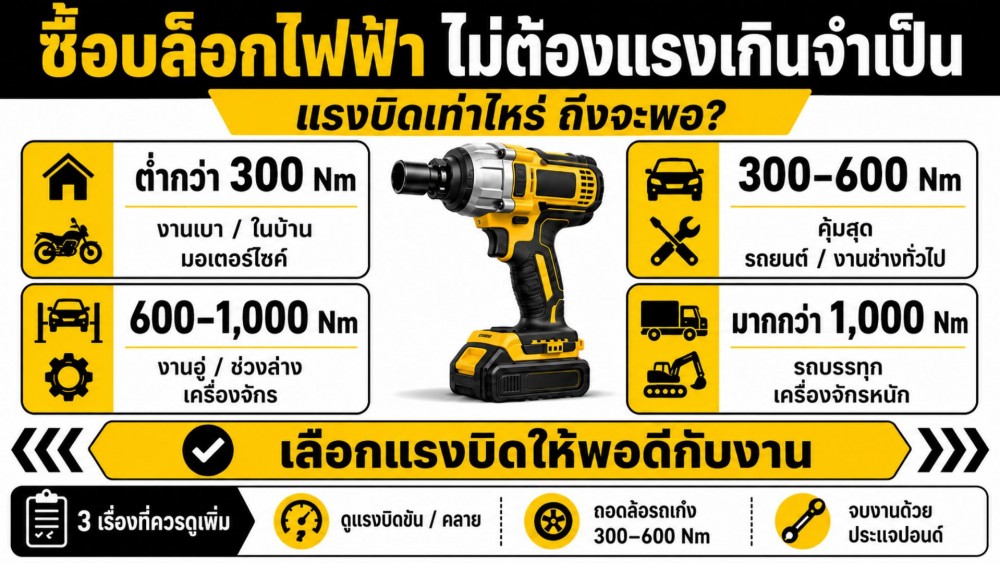
Summary: How much torque does an electric impact wrench really need to be practical?
A practical electric impact wrench must have torque matched to the bolt size and type of work. For assembly and general repair tasks,
- For motorcycles, a tool in the range below 100–300 Nm is sufficient.
- Passenger car work and general technician tasks are well-suited to the 300–600 Nm range.
- Automotive shop work, suspension jobs, machinery, and tasks that regularly encounter tight bolts may call for around 600–1,000 Nm.
- Models over 1,000 Nm should be reserved for trucks, heavy machinery, and structural work requiring truly high force.
Before buying, you should distinguish between fastening torque and breakaway (nut-busting) torque, and check the drive size, weight, number of modes, battery, and control systems. Crucially, an impact wrench is not a final torque verification tool. If a workpiece specifies a torque value, always finish the job with a torque wrench.
Choosing Electric block Matching the tool to the job makes it easier to control, reduces the risk of damaging threads and bolts, saves money, and allows for more agile work than buying an unnecessarily powerful tool.