


 EN
 ไทย


Customers Also Purchased


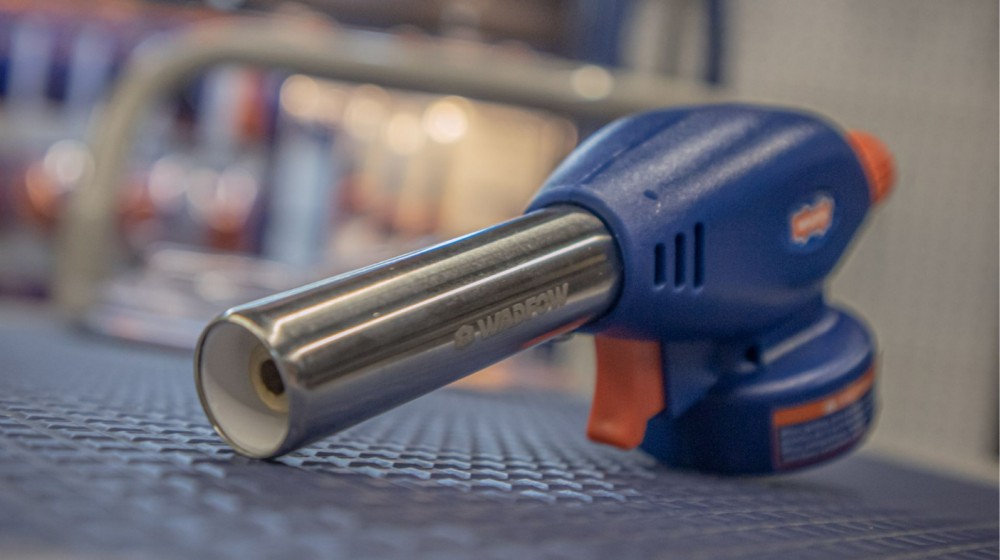
The term Butane Torch It may bring to mind an intensely hot flame capable of quickly burning materials, stripping paint, bending pipes, soldering metals, or handling various repair tasks.
Some blowtorch models reach temperatures up to 1,300°C. And some systems can generate much higher heat than that, raising the question: with a flame this hot, when applied to steel, stainless steel, copper, or certain other metals, why does the metal merely turn red-hot or develop black marks without actually melting or fusing like in welding?
Melting metal requires considering the actual temperature absorbed by the workpiece, the heat output of the blowtorch, the heating duration, the size and thickness of the metal, heat loss to the surrounding environment, as well as the melting point and thermal properties of each metal. Therefore, a high flame temperature does not mean all the heat is transferred to the workpiece, nor that the workpiece will reach the same temperature as the flame.
Flame temperature does not equal workpiece temperature
Besides Factors to consider before purchasing a blowtorch for confident use A common misconception is that when a blowtorch specifies a flame output of 1,200°C or even 1,500°C, applying it to metal will heat the metal to that temperature. In reality, this number usually refers to the maximum flame temperature under ideal conditions It is not the temperature that the workpiece will fully receive.
- As the flame exits the torch nozzle, some heat dissipates into the surrounding air.
- Some of it is blown away from the workpiece surface.
- Some is reflected or lost through thermal radiation.
- Metals also continuously conduct heat away from the heated spot to other parts of the workpiece.
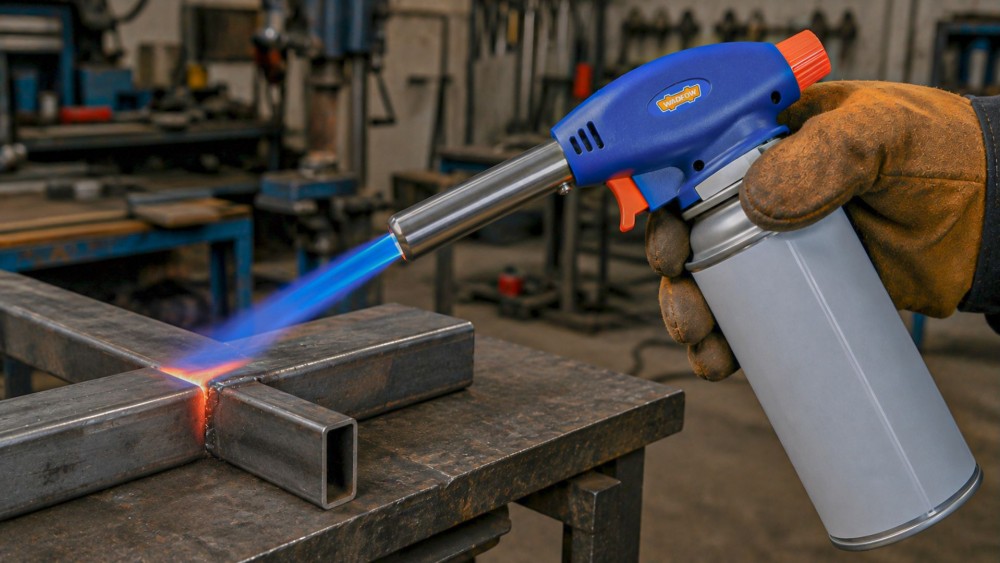
The contact point with the torch flame may become very hot, but the heat dissipates rapidly, preventing the accumulated temperature from reaching the melting point—especially when the workpiece is large, thick, or connected to other metal structures.
Therefore, even if the flame temperature exceeds 1,000°C, the actual metal surface temperature may only reach a few hundred degrees, or approach the melting point only in a tiny spot. If the heat energy entering the workpiece is less than the heat being lost, the metal cannot accumulate enough temperature to melt.
Melting Points Differ for Each Type of Metal
Each type of metal has a distinct melting point. Some melt at relatively low temperatures, while others require heat exceeding 1,000°C or much higher to begin transitioning from solid to liquid. For example:
- Tin has a melting point of approximately 232°C.
- Lead is around 327°C, and zinc is around 420°C.
- Aluminum is around 660°C.
This group of metals is therefore more likely to soften or melt easily when exposed to steady, adequate heat from a blowtorch. On the other hand, copper has a melting point of around 1,085°C, common steel melts roughly above 1,300°C, and many grades of stainless steel have melting ranges between approximately 1,375–1,530°C, depending on the alloy composition.
A blowtorch with a flame temperature above 1,000°C may melt thin aluminum pieces, but it cannot easily melt steel or stainless steel because the peak flame temperature may still be below the melting point, or only slightly higher—insufficient to offset heat loss.
Alloys May Not Have a Single Melting Point Value
Most metals used in practice are not pure metals, but alloys such as steel, stainless steel, and brass. These materials may not transition from solid to liquid at a single specific temperature; instead, they have a temperature range where they soften, start melting, and melt completely, varying according to their composition.
When heating an alloy with a blowtorch, you might notice the workpiece discolors, softens, bends, or scales before melting. This gives the impression that it is about to melt, but in reality, the core material temperature has not yet reached its full melting range.
High Temperature and Heat Quantity Are Two Different Things
To determine whether a blowtorch can melt a metal, one must clearly distinguish between "temperature" and "heat quantity" (thermal energy). Temperature indicates the heat level of the flame, but does not indicate how much energy the flame can transfer into the workpiece over a period of time.
An easy-to-understand example is sparks from a grinder: they may have a very high temperature, but when they briefly hit skin, they don't produce the same effect as touching a large piece of hot metal because the sparks have very little mass and store very little thermal energy. Conversely, hot water at a lower temperature can transfer much more heat if there is a large volume and extended contact time.
A small blowtorch may produce a high-temperature flame, but its energy release rate is not sufficient for large metal objects. The heat entering the metal surface dissipates before it can accumulate to the melting point. Unlike a smelting furnace or welding torch—which are designed to continuously deliver large amounts of heat into a specific area, allowing metal to heat up and melt quickly.
Metal size and thickness have a huge effect.
Small pieces of metal, thin sheets, or thin wires can heat up faster than thick workpieces because they have less mass and require less energy to increase their temperature. A small blowtorch may therefore be able to melt thin aluminum sheets, copper wire, or solder. But if you use that same blowtorch on a thick steel shaft, large steel plate, or structural beam, it might only heat the surface or cause discoloration.
- Large workpieces act like a heat sink.
- Heat from the point exposed to the flame quickly travels into the surrounding metal body.
- The larger the surface area of the workpiece, the more heat dissipates, preventing the target melting area from accumulating sufficient temperature.
- If the metal is resting on a steel table, clamped in a large bench vise, or connected to another structure, heat will also transfer away through that equipment.
It is not unusual for a blowtorch to break or melt metal wire in no time, yet fail to melt a larger bar of the same metal even with prolonged heating.
Some metals conduct heat well, making localized melting difficult.
Thermal conductivity of the metal is another factor that directly affects the use of a blowtorch. Copper and aluminum conduct heat extremely well; once the flame heats a specific area, heat rapidly spreads to other parts, preventing the heated spot from maintaining a high temperature for long.
This property is useful in applications requiring heat dissipation, such as radiators, heat sinks, or heat exchange systems, but it makes soldering, brazing, or localized metal melting more difficult, especially when the workpiece is thick.
Copper is a clear example: although its melting point is around 1,085°C, which may be close to the blowtorch flame temperature, copper is such an efficient heat conductor that using a small torch on a thick copper workpiece cannot raise it to the melting point, because heat dissipates faster than the blowtorch can "replenish" it.
Fuel type affects blowtorch heat.
There are many types of blowtorches: small butane torches, canister gas torches, propane torches, brazing torches, and oxy-fuel systems. The type of fuel and the amount of oxygen used in combustion affect flame temperature, flame shape, and heat transfer rate.
Small butane blowtorches are therefore suitable for localized heating applications, such as: Culinary tasks, heat shrinking tubing, softening adhesives, small soldering jobs, or heating parts with low mass. Even though the flame temperature can exceed 1,000°C, the total heat output is still limited.
Oxide layers and contaminants impede heat transfer.
Metal surfaces with rust, oil stains, paint, grease, or thick oxide layers can cause uneven heat absorption, act like insulation, or burn and generate smoke before heat penetrates directly into the metal.
In soldering or brazing, oxide layers also prevent filler metal from flowing and bonding well with the workpiece surface, potentially giving the false impression that the blowtorch lacks heat.
Environmental conditions prevent the blowtorch from delivering full heat
Wind, humidity, ambient temperature, and work area all affect blowtorch efficiency. If used outdoors in windy conditions, the flame may be blown off target, dispersing heat and causing uneven combustion, which results in the workpiece heating up slower than usual.
Wet or damp workpieces require part of the energy just to evaporate water, slowing down the metal's temperature rise. Meanwhile, large surfaces or supports can continuously draw heat away from the workpiece. The same job performed in an enclosed, wind-controlled space can take noticeably less time than doing it outdoors.
High-temperature blowtorches are not suitable for all metal applications
Selecting a blowtorch shouldn't rely solely on the maximum temperature rating, but should also consider the type of work, workpiece size, flame pattern, fuel consumption rate, and heat output together.
Torches that produce a pinpoint, concentrated flame may be suitable for localized work, but not for heating large workpieces because the heat-affected area is too narrow. Meanwhile, wide-flame torches can distribute heat more evenly, but may not deliver concentrated heat to a small spot.
Loosening seized screws, heat-shrinking plastic tubing, stripping paint, soldering pipes, or preheating parts before assembly naturally have different temperature and heat output requirements, even when using the same blowtorch.
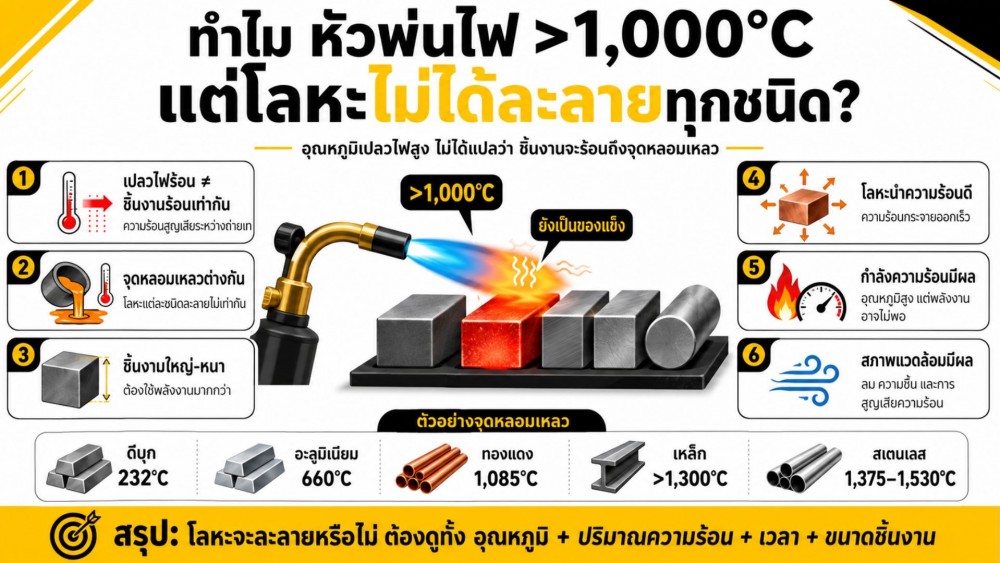
Summary: A flame over 1,000°C does not mean the metal must melt
The reason why blowtorches reach temperatures exceeding 1,000°C yet do not melt all types of metal is because flame temperature is not the actual temperature of the entire workpiece. Melting metal requires temperature level, heat volume, duration, melting point, workpiece size, thermal conductivity, and heat loss to the environment.
Metals with low melting points and small sizes can be melted with standard blowtorches. However, metals with high melting points, large mass, or high thermal conductivity may only get hot, discolor, or soften—even when exposed to a high-temperature flame for a long time.
Therefore, looking solely at the maximum temperature rating in a blowtorch's specifications may not be enough. Before selecting one for use, consider whether you want to warm, soften, solder, braze, or actually melt the workpiece, and verify the metal's type and thickness clearly.
Understanding the difference between flame temperature and heat energy transferred to the workpiece helps in choosing Butane Torch the appropriate one