


 EN
 ไทย


Customers Also Purchased



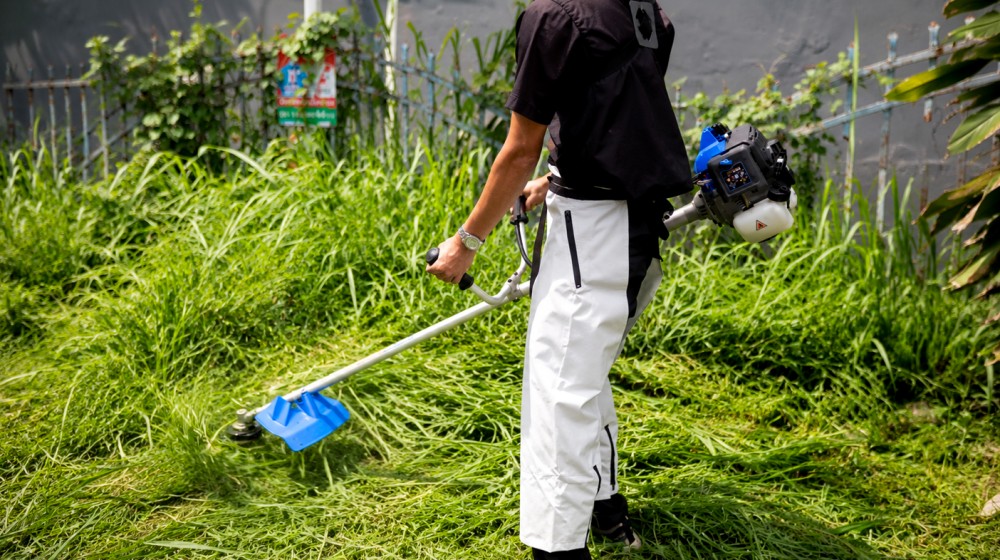
During the rainy season, grass grows so fast that mowing frequency jumps from once a month to every 1-2 weeks; leaving it unattended makes the next cut even harder. The problem is that rapid grass growth often coincides with wet ground and persistently damp grass blades. This raises questions: Can lawn mowers cut wet grass? Can the mower handle it? And if it must be cut, what precautions are needed?
The answer is Lawn mower Many models can cut it, but that does not mean you should, because moisture affects cutting performance, motor/engine load, lawn neatness, and user safety.
Most manufacturers recommend mowing when the grass is dry and avoiding operation during rain or on wet ground. In particular, for electric/cordless lawn mowers, some models have a degree of dust and water resistance, but that does not mean they can be used in the rain or through standing water. Always check the manual for your specific model first.
How does wet grass differ from dry grass?
From the outside, wet grass may not look much different from dry grass, but during cutting, the difference is obvious. Waterlogged grass blades become heavier, softer, flattened, and clump together instead of standing upright for the blades to slice through easily.
As the trimmer head spins through, some grass gets pressed down before being cut, requiring repeat passes. Meanwhile, cut grass clippings clump together, sticking under the protective guard, around the trimmer head, the drive shaft, or inside the discharge chute.
The result is an uneven cut—short in some spots, leaving tall grass tips in others, and piles of clumped grass scattered around. If left unattended, wet grass clippings will smother the ground, blocking light and air. The lawn will look untidy and require extra clean-up. Many manufacturer manuals state that wet grass causes clogs and uneven cuts, recommending that you wait until the grass dries before cutting whenever conditions permit.
Can Lawn Mowers and Trimmers Handle Wet Grass?
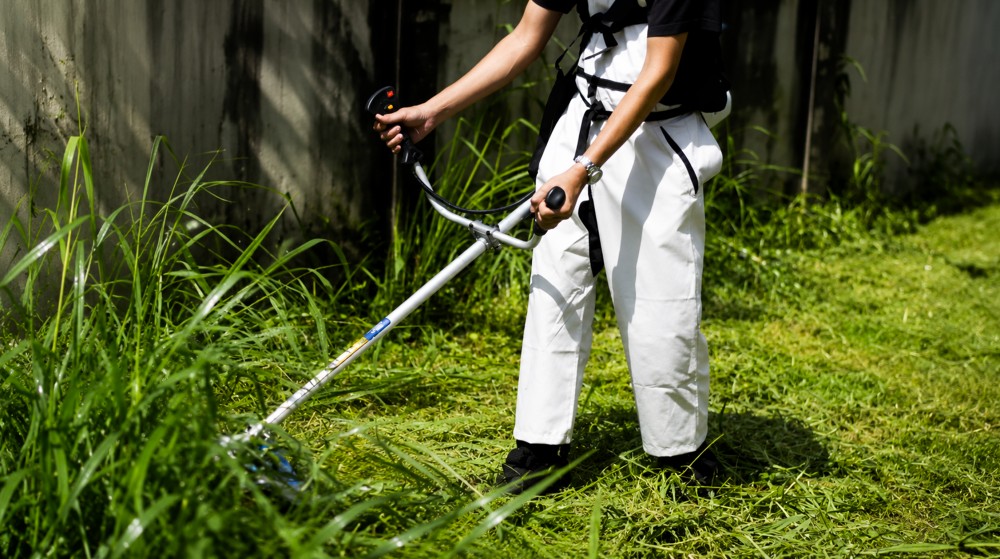
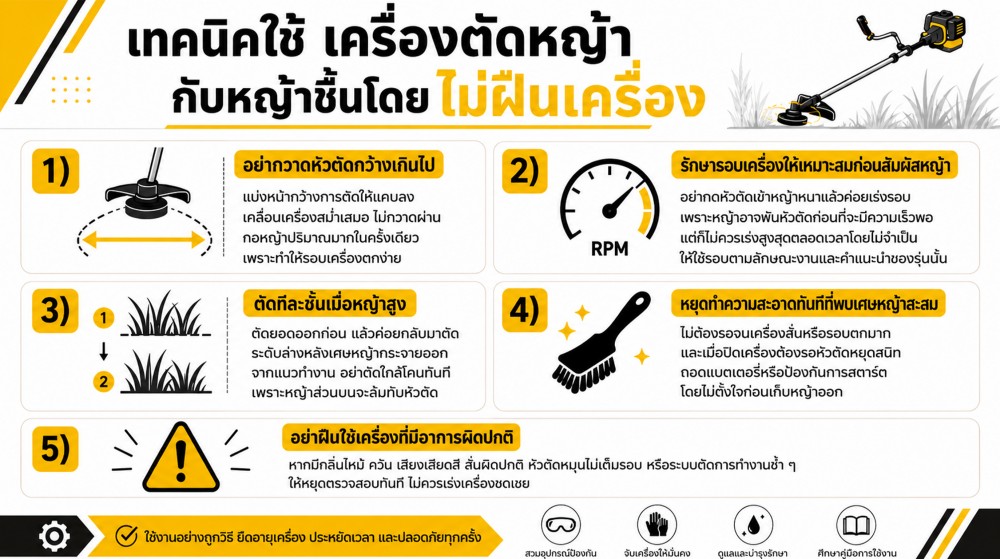
This breaks down into two questions: "Does the machine have enough power?" and "Is the environment safe enough?" High-power gas trimmers typically tackle wet and dense grass better than smaller models. However, swinging the cutting head across too wide a swath or pushing it into thick clumps too quickly still risks dropping engine RPM, tangling grass around the head, and accumulating heat.
High-powered cordless battery trimmers also handle the job well, but encountering thick, heavy grass draws more power, reducing runtime per charge, and some models may shut down automatically if the motor or battery overheats.
Corded electric trimmers require extra caution because power cords, plugs, and extension connections are present in the work area. Do not use them in the rain, over standing water, or anywhere cords might encounter moisture. Strictly follow the user manual and safety guidelines for that specific model.
In summary, even if the machine has ample power, you should not force its operation if the ground is slippery, water is ponding, rain is still falling, or the machine is not designed for wet conditions. Machine power helps with the cutting load, but it does not eliminate the risks of slipping, short circuits, or water damage.
Why Does Wet Grass Make Trimmers Work Harder?
The cutting head relies on high rotational speed to cleanly slice grass. Dry grass stands upright and separated, making it easy to cut. Wet grass, however, clumps together and becomes heavier, forcing the machine to exert much more effort to both cut and discharge the clippings.
If you swing the cutting head into dense grass using the full cutting width, RPM will drop quickly. The sound will change from a continuous hum to a bogged-down whine or groan. A gas engine will struggle to accelerate, while a cordless battery unit will lose RPM and respond more sluggishly.
Allowing the trimmer to run continuously like this can cause heat buildup and lengthen mowing time. This does not mean the machine will break down immediately, but you should reduce the load by cutting narrower passes, walking slower, and avoiding trying to cut tall grass down in a single pass.
Wet grass tangled around the shaft or cutting head adds rotational drag. If the trimmer vibrates abnormally, experiences a sharp RPM drop, or shows heavy grass buildup, stop the tool before inspecting it. Never use your hands to pull grass out while the cutting attachment is still spinning or the machine is live. For cordless tools, remove the battery first; for gas tools, turn off the engine and always wait until all parts come to a complete stop.
The Risk Is Not Just About the Trimmer
The most critical precaution in the rainy season is not machine power, but the ground conditions underfoot. Wet grass is much slicker than it looks, especially on slopes, ditch edges, clay soil, mossy spots, or wet fallen leaves.
Backpack and handheld brush cutters have fast-spinning cutting heads. If the operator loses balance while the tool is running, the cutting head can veer out of control. Even a slight slip can lead to a severe accident.
Before starting work, walk the area to inspect it before powering on the tool. Check whether your footwear provides good traction, look for soft sinking spots or slick mud, and check for hidden branches, stones, wire, rope, bottles, or debris concealed beneath the grass.
During the rainy season, flattened grass frequently hides foreign objects, making them harder to spot. If the cutting head strikes a hard object, debris can be hurled at high velocity. Clear away foreign objects from the area before cutting, and stop the machine immediately if the cutting head jams or the tool operates abnormally.
Can Cordless Trimmers Get Wet in the Rain?
Many believe that because cordless trimmers have no power cords, they are inherently safer to use in wet conditions or the rain than corded models. In reality, "cordless" does not mean "waterproof." Each model offers different levels of ingress protection; some can withstand slight moisture or light water droplets, while others explicitly prohibit use in rain or wet areas. Do not judge a tool solely by its appearance or battery voltage.
If the manual does not specify that it can be used in wet conditions, avoid using it in the rain, and do not place the battery, charger, or connection points on wet ground. If the tool or battery gets wet, stop using it, remove the battery safely, and let it dry according to the manufacturer's instructions before using or charging it again.
The manufacturer's manual states that the tool and battery should always be kept clean and dry. If wet or damp, allow them to dry before continued use, and never charge the battery in the rain or in wet conditions. If the battery is cracked, swollen, emits a strange odor, feels abnormally hot, or leaks fluid, do not use or charge it yourself. Separate it from flammable materials and contact a service center or distributor immediately.
How to Care for a Lawn Mower After Cutting Wet Grass?
After use, do not store the lawn mower with wet grass clippings attached, as residual moisture on the cutting head, guard, blades, screws, shaft, and metal surfaces can easily cause stains, odors, or rust.
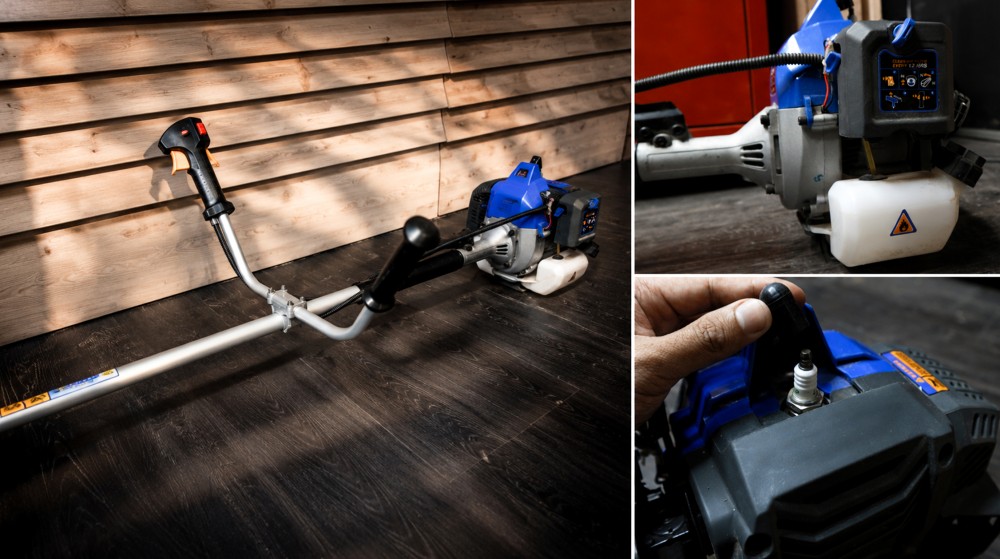
Before cleaning, turn off the lawn mower and prevent accidental starting. For cordless models, remove the battery; for petrol models, turn off the engine, wait for it to cool down, and disconnect the spark plug according to the manual if working near the cutting assembly. Use a brush to clear grass clippings from the cutting head and under the guard. Never touch the blades with bare hands, as they can still cut even when the machine is stopped.
For cordless models, wipe the exterior with a dry cloth. Never spray water into the machine, especially around the vents, battery terminals, switch, and motor. Some models strictly prohibit immersion in water or the use of high-pressure washers. Store the tool in a dry, well-ventilated area protected from rain, and never store it in a sealed bag or box while still damp, as moisture will have difficulty evaporating.
For petrol models, regularly inspect the cooling vents, air filter, cutting head, gear head, and fasteners according to the maintenance schedule, along with wiping them clean, checking grease, inspecting bolts, and checking the cooling system.
Conclusion
Many lawn mower models have enough power for slightly damp grass, but the rainy-season challenge is not just about engine power. Wet grass is heavy, clumps together, and easily tangles around the cutting head, increasing the load on the machine, dropping the RPM, consuming more energy, and resulting in an uneven cut.
More importantly, consider site safety—including slippery ground, standing water, mud, hidden objects concealed by the grass, and risks from moisture to electrical or battery systems. It is therefore usually better to wait until the rain stops and the ground dries.
If it is necessary to cut tall grass during the rainy season, choose a time when it is not raining, where footing is stable, and the grass is as dry as possible. Cut in layers, reduce the cutting width, and stop to clear clippings when there is heavy buildup. After use, remove wet grass clippings, let the tool dry, and store it in a well-ventilated area.
Finally, whether it is a petrol, corded electric, or cordless tool, always read the manual for your specific model first, as requirements regarding water, moisture, cutting heads, and maintenance vary by model. Choosing the right machine for the job and using it properly will help you mow efficiently in the rainy season, minimizing both damage to the tool and risks to the operator.
Select Lawn mower to suit the application