


 EN
 ไทย


Customers Also Purchased
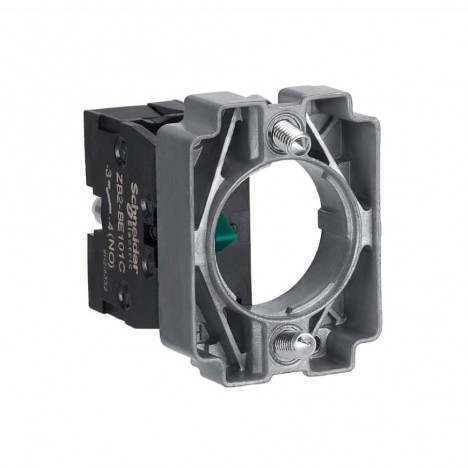
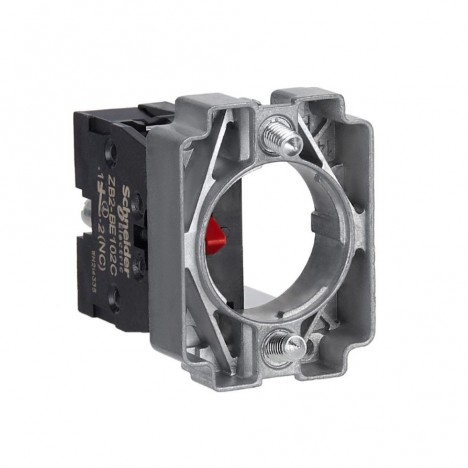
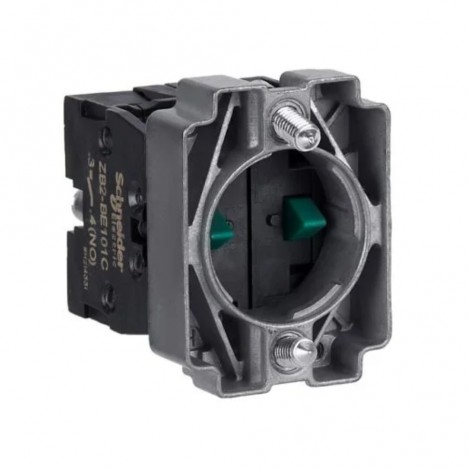
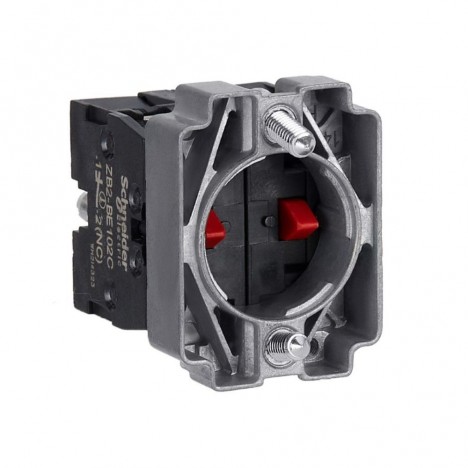
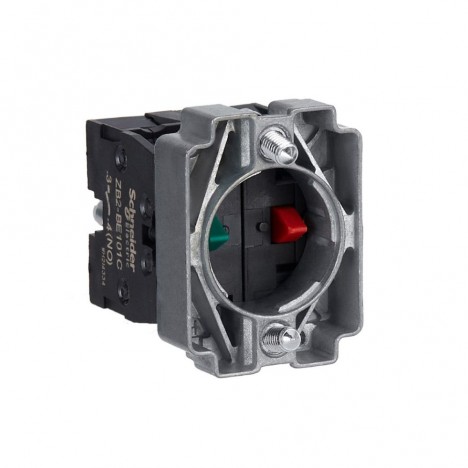
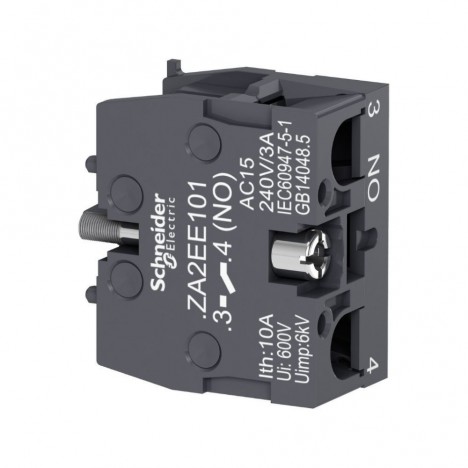
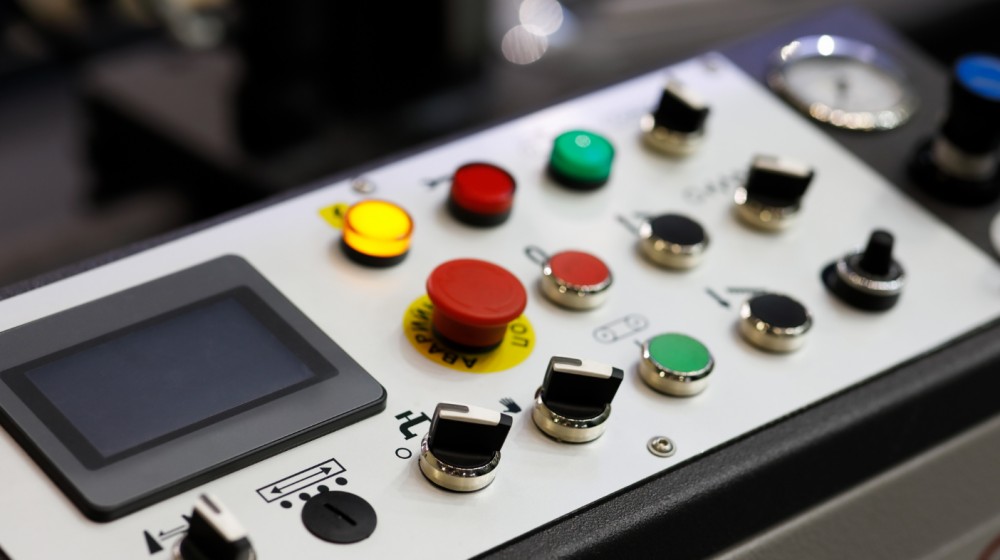
On machine control panels, there are oftenpush button switchesin various styles, ranging from green Start buttons and red Stop buttons to red mushroom-head buttons used to stop machines in emergencies. Although these buttons perform the same function of changing the electrical contact state, their internal details and intended purposes are not the same.
A common misconception is that when an emergency stop button fails, it can be replaced with a standard red push button switch with an NC contact because pressing it stops the circuit just the same. In practice, this method is unsuitable for safety-related positions, as an emergency stop button must feature a latching mechanism, appropriate contact structure, and characteristics meeting specific standards—it is not determined solely by color or contact type.
What is a Standard Push Button Switch?
A standard push button switch is a device used to send commands to a control circuit. When the button is pressed, the internal mechanism changes the contact state to signal relays, contactors, PLCs, or other control devices to operate as designed.
Common examples of applications include:
- Start button for initiating machine operation
- Stop button for normal operation shutdown
- Reset button for clearing alarm statuses or preparing the system
- Jog button for commanding mechanisms to move only while held down
- Forward and reverse buttons
- Buttons to turn on or off specific sub-devices within the system
Push button switches come in both momentary (spring return) and maintained (latching) types. The rear contact blocks can be NO, NC, or a combination of both in a single assembly, depending on the circuit requirements.
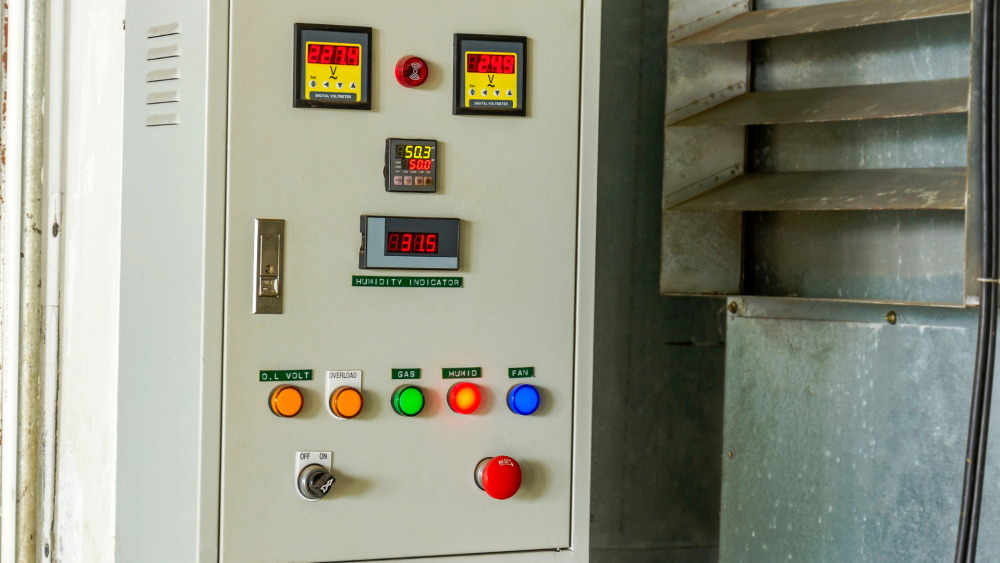
How NO and NC contacts work
NO stands for Normally Open, meaning the contact is open in its normal state and closes the circuit when the button is pressed. NC stands for Normally Closed, meaning the contact is closed in its normal state and opens the circuit when the button is pressed.
Start buttons typically use NO contacts to initiate operation, while Stop buttons commonly use NC contacts to break the circuit when pressed. However, having an NC contact does not automatically make a standard push button switch an emergency stop button.
What is an emergency stop button?
An emergency stop button, or E-Stop button, is a device used to initiate a machine's emergency stop function when a situation arises or is imminent that could pose a danger to operators, machinery, or surrounding areas.
ISO 13850:2015 specifies functional requirements and design principles for the emergency stop function of machinery, regardless of the type of energy used. An emergency stop button is therefore a part of the safety system, not merely a general circuit-interrupting switch.
Situations that may require the use of an emergency stop button include:
- A person or clothing at risk of being pulled into a machine
- A workpiece coming loose and potentially being ejected
- A machine moving in the wrong direction
- The system not responding to normal stop commands
- Safety guards or protective devices failing while the machine is running
- Continued operation that may increase the severity of a hazard
Emergency stop buttons are not intended to replace regular Stop buttons for daily process shutdowns. Using an E-Stop frequently without an actual need can stop the machine out of its normal sequence and diminishes the clear purpose of the device.
The Stop button and Emergency Stop button are not the same
A standard Stop button is used for stopping operation under normal conditions, such as stopping a conveyor belt when a job is finished, stopping a pump to change a tank, or halting a machine to change workpieces. The system may decelerate, shut down equipment sequentially, or complete certain processes before coming to a full stop according to predefined programming.
An Emergency Stop, on the other hand, is used during abnormal situations where hazards must be mitigated urgently. This function must be designed based on the machine's risk assessment to determine how the system should cut power, stop motion, or manage energy once a stop command is initiated in order to minimize risk most appropriately.
Certain types of machinery may not be able to stop by cutting all power immediately, as this could cause rotating parts to freewheel, suspended loads to drop, or braking systems to fail. Therefore, an Emergency Stop does not always mean cutting power to all parts of the machine instantly, but rather ensuring the stopping process reduces hazards according to the machine's design.
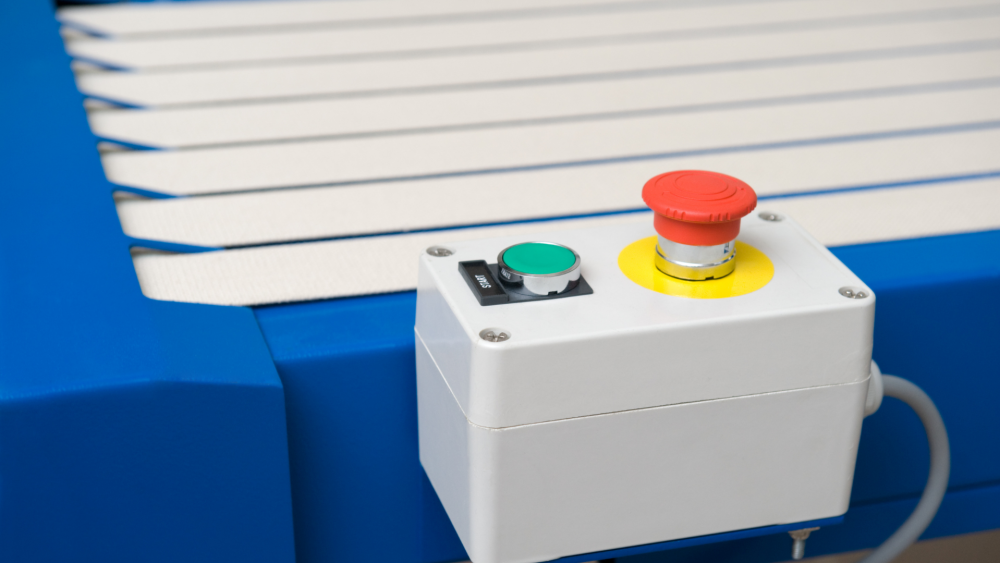
Emergency stop buttons must latch upon pressing
When an emergency stop button is pressed, it must remain in the actuated position even after the operator releases their hand. This mechanism is called mechanical latching, which prevents the stop command from being cancelled immediately once the hand is removed.
IEC 60947-5-5:2026 covers details regarding electrical and mechanical construction, as well as testing specifically for emergency stop devices with a mechanical latching function.
Common reset methods include:
- Turn the actuator in the specified direction
- Pull the actuator back out
- Use a key to unlock
- Use the device model's specific mechanism
Resetting must be an intentional action and should not occur on its own due to vibration, impact, or spring return force. Some standard pushbuttons may also feature latching mechanisms, but this characteristic alone is insufficient for use as an Emergency Stop.
Why Direct Opening Action is important
For NC contacts used in emergency stop devices, it is not enough to simply consider that the circuit is normally closed and opens when pressed; the contact separation structure must also be examined.
Direct Opening Action, commonly known as Positive Opening Operation, is a design where the movement of the actuator applies mechanical force directly to open the contacts, rather than relying solely on spring force to separate them. This reduces the risk in events where contacts stick or the return mechanism fails.
The IEC 60947-5-1 standard covers control circuit devices and switching elements, including the requirements for mechanisms and contacts for this type of equipment, with the current edition being IEC 60947-5-1:2024.
Users should therefore not select a button based solely on the term NC, but should also verify the technical specifications, symbols, and manufacturer documentation to confirm whether that contact block is rated for emergency stop devices.
Why push-type emergency stop buttons are typically red mushroom heads
Push-type emergency stop buttons typically feature a mushroom head because it provides a large actuation area. This allows operators to press it quickly, even when wearing gloves, unable to position their fingers precisely, or in urgent situations.
The red color helps distinguish the emergency stop button from general control devices, while the background area or nameplate provided for the button is often yellow to increase contrast and make its location clearly visible.
However, not every red mushroom-head button is an Emergency Stop. Large-head stop buttons or latching pushbuttons for general control tasks may look very similar. Before using them, you must check the manufacturer's documentation; do not judge based solely on color and appearance.
In addition, emergency stop devices are not limited to mushroom-head buttons. Some types of machinery may use rope pull switches or other actuation devices depending on the area characteristics and the risk assessment results.
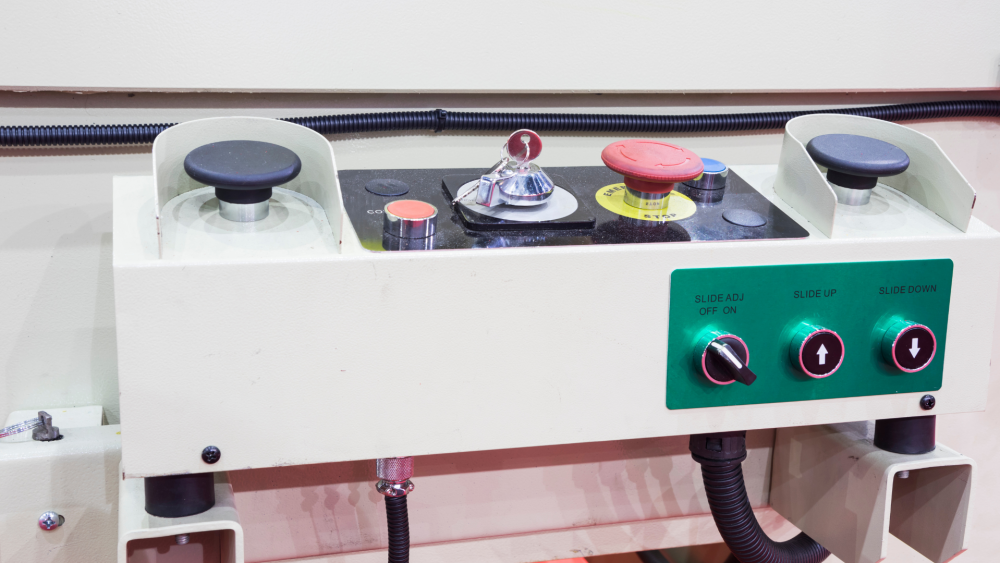
Can a standard pushbutton switch be used in place of an emergency stop button?
In principle, they should not be used interchangeably, especially in positions designated as part of the machine's safety system.
Even if you choose a standard red pushbutton switch with a mushroom head, NC contacts, and a push-to-lock mechanism, that device may lack Direct Opening Action, lack a locking structure tested for emergency stop applications, or not be designed to assemble with contact blocks and mounting bases in the manner specified by the system.
Safety does not depend solely on the button itself. The entire circuit must be considered, from the contact blocks and signal wiring to the Safety Relay or Safety PLC, power disconnecting devices, and the machine's behavior after an anomaly is detected.
The number of contacts and the wiring configuration, such as single-channel or dual-channel circuits, cannot be chosen out of habit; they must be determined by a risk assessment and the safety performance level required by the machine.
Can only the red button head be replaced?
Fitting a red button head or cover onto a standard switch does not turn the device into an Emergency Stop, because most critical features lie in the internal mechanism, contact blocks, assembly method, and connected circuitry.
If an emergency stop button must be replaced, verify at least the following:
- Model and series of the original device
- Mounting hole size
- Button head type and reset method
- Mounting base and contact blocks specified by the manufacturer
- Number and type of contacts
- Direct Opening Action feature
- Wiring method and terminal numbers
- Compatibility with Safety Relays or Safety PLCs
- Ingress protection rating against dust and water
- Standards and certifications of the device
Parts with the same hole size or similar appearance do not always mean they can be assembled together. Some models require the pushbutton head, mounting collar, and contact blocks to be from the same series so that the mechanism can transfer force to the contacts across the full designed stroke.
Should the machine resume running immediately after releasing the emergency stop button?
Releasing the emergency stop button must not cause the machine to restart automatically. Releasing it only cancels the stop command and places the system in a state ready for restart.
The typical restart sequence should be as follows:
- Investigate and resolve the cause that triggered the emergency stop.
- Check that no persons or obstacles are in the hazardous area.
- Release the emergency stop button.
- Press Reset if required by the system.
- Initiate Start through a separate deliberate action.
If the machine starts moving immediately upon twisting or pulling the button back, it can pose a danger to anyone inspecting the machine, retrieving workpieces, or located inside the hazardous zone.
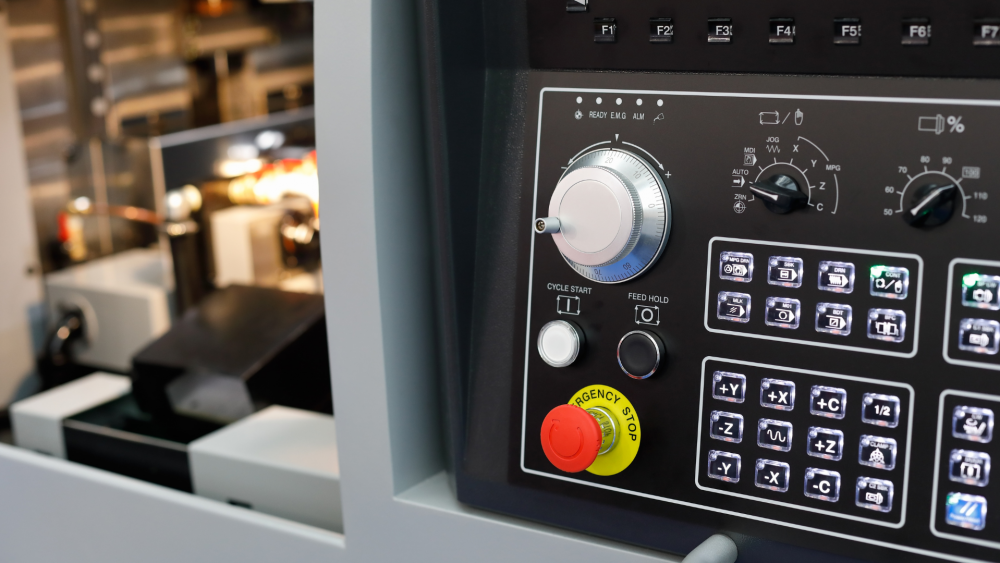
An emergency stop button is not a main power disconnect switch.
After pressing an emergency stop, some parts of the machine may still retain electrical power or other forms of energy, such as control circuits, braking systems, status indicators, pneumatic systems, hydraulic pressure, springs, or suspended parts.
Therefore, pressing an emergency stop button does not mean the machine is immediately safe for maintenance or entry. If disassembling parts, servicing the machine, or entering hazardous areas, hazardous energy must be isolated and controlled according to proper procedures, including verifying stored energy before starting work.
What to consider when choosing an emergency stop button
Selecting an emergency stop button should not be based solely on color, shape, and price, but must align with the existing system and installation environment.
Verify that it is a dedicated Emergency Stop model
The catalog or technical documentation must specify that the model is directly designed for emergency stop applications. Do not assume suitability solely from a red actuator head or generic advertising.
Select contact blocks that match the circuit
Verify the type, quantity, and ratings of the contacts according to the original circuit diagram. Do not change from 2NC to 1NC or alter the wiring configuration without verifying the entire safety system.
Check part dimensions and compatibility
Industrial pushbuttons come in various sizes, such as 22 mm and 30 mm, but parts from different series or manufacturers may not assemble together, even if they use the same mounting hole size.
Check protection ratings according to the environment
In areas with dust, water, oil, chemicals, or washdowns, select an enclosure and protection rating suitable for the actual area, and check the operating temperature range and impact resistance.
Install in quickly accessible locations
The button must be clearly visible and easily pressed from positions where operators may face hazards. It should not be installed behind obstacles, out of reach, or obscured by other equipment making it difficult to find in an emergency.
What to test after replacing the button
After installing a new button, do not just check whether the machine stops when pressed; test the entire system's behavior, including:
- The button properly latches when pressed
- The stop command functions as designed
- All contact blocks change state correctly
- The system detects wire breaks or faults according to its designed capabilities
- The button does not unlock by itself
- The machine does not automatically restart upon unlocking/resetting the button
- A separate Reset or Start command is required
- Components and wiring remain securely fastened after assembly
Work involving emergency stop circuits should be carried out and inspected by qualified personnel with knowledge of control electrical systems and machinery safety. Do not modify circuits or change device types based solely on testing whether pressing the button stops the machine.
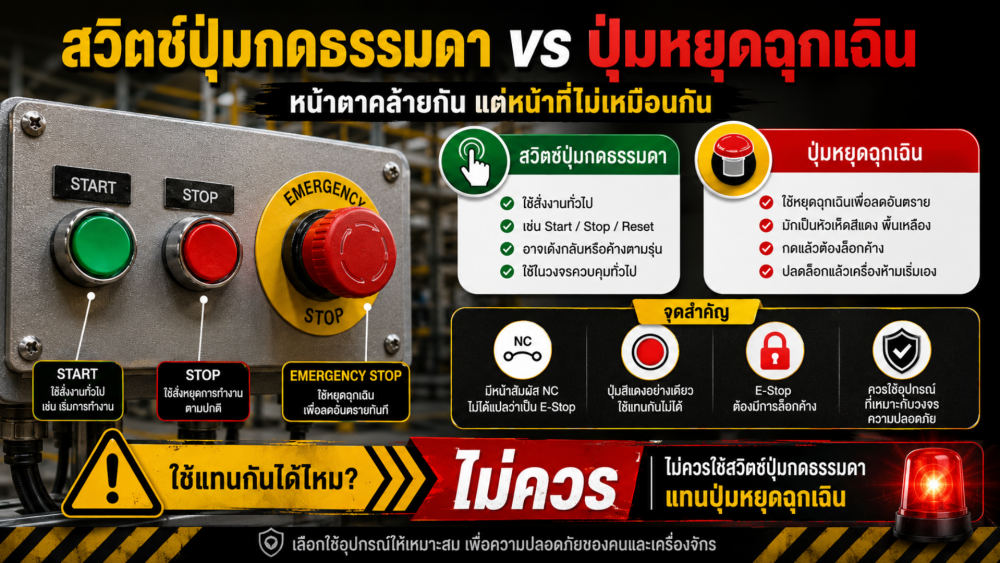
Both are red buttons, but their functions are completely different
push button switchesOrdinary switches are used to send control commands under general operating conditions, whereas emergency stop buttons are part of a safety function designed to help reduce hazards when abnormal situations occur.
Push-type emergency stop buttons must latch after being actuated, be reset only by a deliberate action, and resetting must not cause the machine to restart on its own. The contact block must also have a structure and specifications suitable for the application, and should not be judged merely by the label 'NC' or the color of the button.
For this reason, standard pushbutton switches should not be used in place of an Emergency Stop, even if they look similar or can bring the machine to a halt. If a replacement is required, choose a component specified by the manufacturer for emergency stop applications, verify compatibility with the existing circuit, and test the safety system before putting the machine back into service.